On This Page
Description
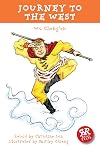
The fanciful adventures of a Tang Dynasty priest, Sanzang, and his three disciples, Monkey, Pig, and Fiar Sand, as they search for a Buddhist Sutra.Tags
Recommendations










Member Reviews
Splendid Wu Cheng'en! If there was one word to describe this book, it would be: entertaining. Wu Cheng'en is writing a story first and foremost for entertainment, and it is one of the greatest virtue a storyteller can possess. Secondly, he is writing a treatise on Confucisim, Taoism, and Buddhism. The characters and the journey can be taken as allegorical, and the author welcomes this interpretative perspective because he sometimes refers the Monkey King as "mind ape". But leaving the allegory in the subconscious plane is not wrong either.
He takes you through the birth, rise, and fall of the notorious Handsome Monkey King, and how he came to become a disciple under the Buddhist monk Sanzang and his adventures to the West (India) to show more retrieve the scriptures back to China.
The story is filled with episodic adventures, each chapter is one really. Journey to the West was written as a serialised novel, and I believe it is best to read it like one--one or two chapters a day. One novel thing about this story is how poetry is integrated into the story. Whenever a new location, character, battle is described, it is always described in poetry. In a way, it gives a similar feeling to the songs from Tolkien's Lord of the Rings, however, while the songs and poems in the Ring cycle are sung by the characters, in Journey to the West, the narrator interjects them into his narrative. For me, they were quite a wonderful experience. There are things only poetry can do, and I believe Wu Cheng'en smartly used poetry to do the heavy-lifting while describing these otherworldly landscape and beings. There is also a chapter where two minor characters have a poetry battle where they improvise verses to traditional Chinese tunes to praise their respective abodes, river and hill.
Journey to the West is great fun. But goodness, is it long. This is just volume 1. Two are left. Reading it is a journey itself. And I will continue on this journey after resting for some time. show less
He takes you through the birth, rise, and fall of the notorious Handsome Monkey King, and how he came to become a disciple under the Buddhist monk Sanzang and his adventures to the West (India) to show more retrieve the scriptures back to China.
The story is filled with episodic adventures, each chapter is one really. Journey to the West was written as a serialised novel, and I believe it is best to read it like one--one or two chapters a day. One novel thing about this story is how poetry is integrated into the story. Whenever a new location, character, battle is described, it is always described in poetry. In a way, it gives a similar feeling to the songs from Tolkien's Lord of the Rings, however, while the songs and poems in the Ring cycle are sung by the characters, in Journey to the West, the narrator interjects them into his narrative. For me, they were quite a wonderful experience. There are things only poetry can do, and I believe Wu Cheng'en smartly used poetry to do the heavy-lifting while describing these otherworldly landscape and beings. There is also a chapter where two minor characters have a poetry battle where they improvise verses to traditional Chinese tunes to praise their respective abodes, river and hill.
Journey to the West is great fun. But goodness, is it long. This is just volume 1. Two are left. Reading it is a journey itself. And I will continue on this journey after resting for some time. show less
Immortals, witches, demons, disciples, Gods, saints, sinners, fairies, tortoises, pigs, monkeys, horses, bears, mountains, lakes, rivers, pilgrims, holy books, scriptures, Buddhists, Taoists, Confucians, Buddhas, saviors, Emperors, Kings, Queens, spells, chants, transformers, shape shifters, magicians, generals, dragons, heaven, hell, judges, palaces, sages, spirits, caves, thieves, poison, gates, gardens, clouds, rain, drought, scholars, libraries, fights, massacres, death, hair, magic fans, monks, thunder, blind men, ancients, beheadings, murders, peaches, wizards, masters, fights, quarrels, wine, attacks, forgiveness, advisers, cannibalism, secrets, register of life and death, officials, lords, gatekeepers, bodyguards, spears, show more swords, priests, robes, etc, etc, etc.
That about sums it up. Mix it up, repeat, mix it up repeat. This ancient text reads like a modern movie based on comic book super heroes. They get into perilous situations where there's no hope only to be saved time and time again. The only constant is they survive. The most surprising piece of this is the repeated times when the demons threatened to eat the pilgrims with the aim of thereby achieving immortality. The pilgrims are supposed to be loosely bases on a real expedition crossing Asia seeking Sacred Scriptures. This tale has been repeated over and over and probably has morphed greatly. This is one book of four. My guess is the rest is more mix it up repeat and repeat. I'll pass. I also don't look forward to the next super hero movie. But if you like those you may want to see where this all "started". show less
That about sums it up. Mix it up, repeat, mix it up repeat. This ancient text reads like a modern movie based on comic book super heroes. They get into perilous situations where there's no hope only to be saved time and time again. The only constant is they survive. The most surprising piece of this is the repeated times when the demons threatened to eat the pilgrims with the aim of thereby achieving immortality. The pilgrims are supposed to be loosely bases on a real expedition crossing Asia seeking Sacred Scriptures. This tale has been repeated over and over and probably has morphed greatly. This is one book of four. My guess is the rest is more mix it up repeat and repeat. I'll pass. I also don't look forward to the next super hero movie. But if you like those you may want to see where this all "started". show less
Wu Cheng'en's 西游记 (Journey to the West) is a timeless classic of Chinese literature that continues to captivate readers with its rich storytelling and imaginative world-building. This Kindle Edition of the novel preserves the depth and complexity of the original work, offering a seamless reading experience.
Suitable for Studying:
西游记 is invaluable for studying Chinese culture, mythology, and literature. The novel's intricate narrative, blending folklore with philosophical insights, provides a comprehensive understanding of traditional Chinese values and beliefs. Its multi-layered characters, such as the Monkey King, Pigsy, and Sandy, offer profound lessons in morality, resilience, and redemption. The novel's allegory and show more symbolism make it an essential text for exploring themes of personal growth and societal norms. show less
Suitable for Studying:
西游记 is invaluable for studying Chinese culture, mythology, and literature. The novel's intricate narrative, blending folklore with philosophical insights, provides a comprehensive understanding of traditional Chinese values and beliefs. Its multi-layered characters, such as the Monkey King, Pigsy, and Sandy, offer profound lessons in morality, resilience, and redemption. The novel's allegory and show more symbolism make it an essential text for exploring themes of personal growth and societal norms. show less
As to the series, please see my review in "the Three Kingdoms" volume.
This volume in particular was a fun taste of what was to come. At this point in my journey through the four classics, I feel like I'm starting to get my sea legs under me, and am picking up on various conceits, themes, and references.
(2024 Review #8)
This volume in particular was a fun taste of what was to come. At this point in my journey through the four classics, I feel like I'm starting to get my sea legs under me, and am picking up on various conceits, themes, and references.
(2024 Review #8)
A classic Chinese novel with origins in oral tradition stretching back well over a thousand years. The standard version was written down in the late 16th century by Wu Cheng'en (or Cheng'en Wu if you're using European name order). It's still extremely influential today, all over Asia: reading this book explained a lot to me about both Chinese and Japanese narrative patterns. If you see a character in a work from either culture named "Goku" or "Wukong," chances are it's related to "Journey to the West."
The basic plot is that a worthy monk travels to the West (here, the "west" is India) to retrieve some holy scriptures, and has all kinds of trouble with demons along the way. Fortunate that he has three disciples to protect him - Friar show more Sand, Brother Pig, and of course Monkey, the Great Sage Equaling Heaven.
Deriving as it does from oral tradition, the format is rather episodic. The version I read contained only 34 of the 100 original chapters, but that was more than enough to get the basic idea. It was also a pretty good read. I found Monkey's means of travel especially amusing (he gets around by "somersault cloud").
It's not well known outside of Asia. Since I finished this version I've enjoyed surprising Chinese acquaintances by casually mentioning Sun Wukong (that's Monkey) in conversation. They all know the story. Works for Japanese, too, though they titled it "Saiyuuki" instead of "Xīyóu Jì" and changed Monkey's name from "Sun Wukong" to "Son Goku."
Well worth a read if you're interested in China or Japan. show less
The basic plot is that a worthy monk travels to the West (here, the "west" is India) to retrieve some holy scriptures, and has all kinds of trouble with demons along the way. Fortunate that he has three disciples to protect him - Friar show more Sand, Brother Pig, and of course Monkey, the Great Sage Equaling Heaven.
Deriving as it does from oral tradition, the format is rather episodic. The version I read contained only 34 of the 100 original chapters, but that was more than enough to get the basic idea. It was also a pretty good read. I found Monkey's means of travel especially amusing (he gets around by "somersault cloud").
It's not well known outside of Asia. Since I finished this version I've enjoyed surprising Chinese acquaintances by casually mentioning Sun Wukong (that's Monkey) in conversation. They all know the story. Works for Japanese, too, though they titled it "Saiyuuki" instead of "Xīyóu Jì" and changed Monkey's name from "Sun Wukong" to "Son Goku."
Well worth a read if you're interested in China or Japan. show less
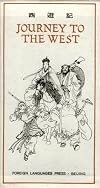
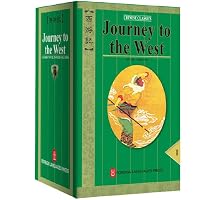
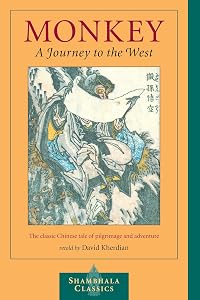
Wu Cheng’en’s sixteenth-century novel Journey to the West tells the story of the pilgrimage of Buddhist monk Xuanzang to the “Western Regions” of Central Asia and India in order to obtain Buddhist sūtras and return them to China between 626 and 645 CE. Xuanzang wrote his own account in 646, Great Tang Records on the Western Regions, which formed the outline of Wu’s novel. The novel is a humorous adventure that satires Chinese bureaucracy while also telling an allegory of enlightenment. Many in the Euro-American world know elements of the story from Arthur Waley’s 1942 abridged translation, Monkey: A Folk-Tale of China, while some elements of the story inspired Akira Toriyama’s Dragon Ball. Along with Luo Guanzhong’s show more fourteenth-century novel Romance of the Three Kingdoms, Shi Nai’an’s fourteenth-century novel Water Margin, and Cao Xueqin’s eighteenth-century novel Dream of the Red Chamber, this novel is one of the Four Classic Novels of Chinese literature. This edition presents the complete novel in four volumes, translated by William John Francis Jenner, a noted sinologist who completed this translation while working for Foreign Languages Press between 1963-1965. It features Qing Dynasty illustrations to supplement the text. show less
Warning: Do not read on an empty stomach or with an empty refrigerator.
Members
- Recently Added By
Lists

Classics you know you should have read but probably haven't
421 works; 408 members

100 Books to Read in a Lifetime (That Are Older Than 200 Years)
415 works; 175 members

Good Buddhist Novels
30 works; 4 members

TED 2013 Summer Reading List
190 works; 13 members

Hayao Miyazaki's 50 Recommended Children's Books
48 works; 6 members

Works Referenced in The League of Extraordinary Gentlemen
122 works; 6 members

New Lifetime Reading Plan by Fadiman and Major
225 works; 5 members
religion, myth, folktales
13 works; 1 member

current
52 works; 1 member

Favorite Books in Translation
320 works; 133 members

DigitalDreamDoor top 300
300 works; 4 members

In Our Time books
4,934 works; 2 members
Author Information

204+ Works 5,385 Members
Wu is the reputed author of the great comic-picaresque novel Journey to the West, or Monkey, as Arthur Waley entitled his translation, which has often been compared for its content and its influence on tradition with Don Quixote in European literature. Wu was a native of Huai-an (in Kiangsu), and in the local history published there in 1625 the show more statement is made about his authorship of the work. However, this was unknown by the general reading public for over 300 years, perhaps partly because Wu died without children to perpetuate his claim to fame. Though the story of the novel is loosely based on the historical pilgrimage of a Chinese Buddhist monk, Hsuan-tsang, to India in the years 629--645 to obtain Buddhist scriptures, in fact the narrative bears little relation to what actually happened. Instead, it is fabricated from the many popular tales told by storytellers, which over the years embellished the factual chronicles left by Hsuan-tsang with many Chinese beliefs about the monsters and demons of the lands he passed through. The novel teems with humor, invention, and memorable characters, and has been a great favorite with Chinese audiences for centuries. Comic book versions of its stories can be found in Chinatowns all over the world. (Bowker Author Biography) show less
Some Editions
Awards and Honors
Awards
Notable Lists
Series

Belongs to Publisher Series
Work Relationships
Contains
Is retold in
Monkey King Wreaks Havoc in Heaven (Adventures of Monkey King Series, Volume 2) (Chinese Edition) by Debby Chen
Journey to the West, Book II: A Humorous Interpretation of the Historical Chinese Classic by Chih-Chung Tsai
Has the adaptation
Journey to the West Book (Chinese-English) (Chinese Traditional Culture Comic Series) (English and Chinese Edition) by Chih-Chung Tsai
Tsai Chih-chung the classic humor comic: Journey to the West - Buddhist sutras(Chinese Edition) by BEN SHE.YI MING
Chinese New Curriculum Series: Journey to the West ( America painted Annotation ) ( Youth Edition )(Chinese Edition) by Wu Cheng En
Chinese Classical Literature: Journey to the West (kids painted version)(Chinese Edition) by Wu Cheng En
life. China s top ten must-read classic Journey to the West (Youth Edition) (Paperback)(Chinese Edition) by Chuang Shi Zhuo Yue
The Rise of the Monkey King: A Story in Simplified Chinese and Pinyin, 600 Word Vocabulary Level: Volume 1 (Journey to the West) by Jeff Pepper
Is abridged in
Inspired
Has as a commentary on the text
Common Knowledge
- Canonical title
- Journey to the West (complete) (complete)
- Original title
- 西遊記
- Original publication date
- circa 1590 CE
- People/Characters
- Tang Sanzang (a/ka Tripitaka or San Zang); Sun Wu Kong (a/k/a Monkey, Monkey King, or Sun Wukong); Pigsy (as Pig or Zhu Bajie); Friar Sand (a/k/a Sha Wu Jing or Sha Wujing); San Zang (a/k/a Tang Sanzang or Tripitaka); Sha Wu Jing (a/k/a Friar Sand) (show all 7); Zhu Bajie (a/k/a Pig or Pigsy)
- Important places
- Ancient China; China
- Important events
- 7th century; Tang Dynasty
- First words
- In the arithmetic of the universe, 129,600 years make one cycle.
- Last words
- (Click to show. Warning: May contain spoilers.)"All the Buddhas of Past, Present, and Future in the Ten Regions, all the Bodhisattvas and Mahasattvas, Maha-prajnaparamita."
- Original language
- Chinese
Classifications
- Genres
- Fiction and Literature, General Fiction
- DDC/MDS
- 895 — Literature & rhetoric Literatures of other languages Literatures of East and Southeast Asia
- LCC
- PL2697 .H75 .E596 — Language and Literature Languages and literatures of Eastern Asia, Africa, Oceania Languages of Eastern Asia, Africa, Oceania Chinese language and literature Chinese literature Individual authors and works
- BISAC
Statistics
- Members
- 664
- Popularity
- 43,381
- Reviews
- 10
- Rating
- (4.07)
- Languages
- 8 — Chinese, traditional, English, French, German, Hungarian, Italian, Russian, Swedish
- Media
- Paper, Audiobook, Ebook
- ISBNs
- 55
- ASINs
- 12