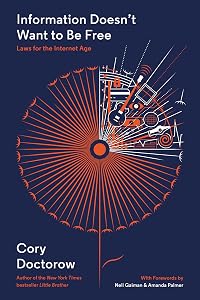
Information Doesn't Want to Be Free: Laws for the Internet Age
by Cory Doctorow
On This Page
Description
Information Doesn't Want to Be Free takes on the state of copyright and creative success in the digital age. Can small artists still thrive in the Internet era? Can giant record labels avoid alienating their audiences? This is a book about the pitfalls and the opportunities that creative industries (and individuals) are confronting today -- about how the old models have failed or found new footing, and about what might soon replace them. Information Doesn't Want to Be Free offers a guide to show more the ways creativity and the Internet interact today, and to what might be coming next. show lessTags
Recommendations
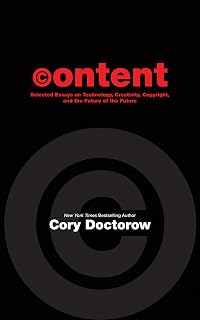
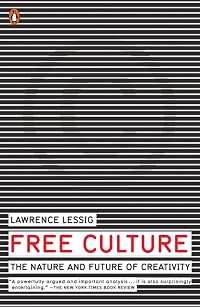
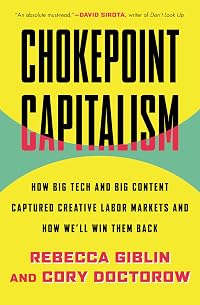
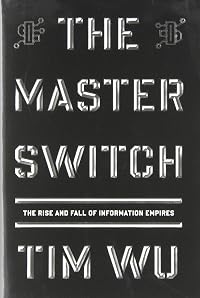
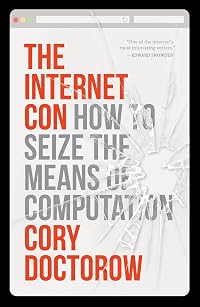
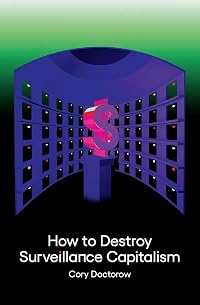
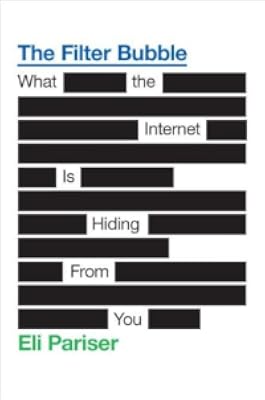
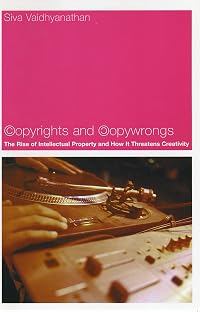
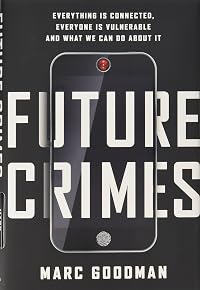
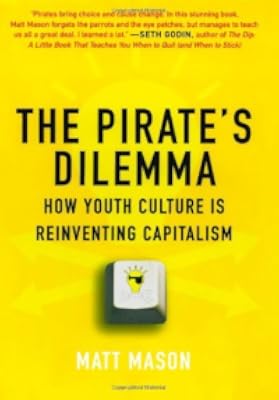
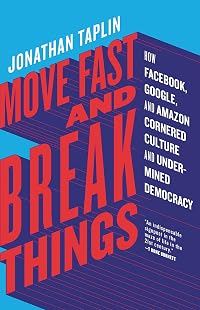
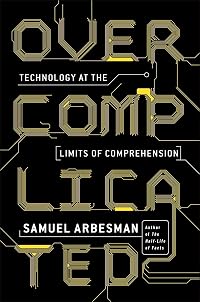
Member Reviews
When I just read the title of this book I was astonished. After all, it directly comments on cyberpunk and cyber-activists slogan, “information wants to be free” and Gary Doctorow (the author of this book) is (was?) one of them. Has he sold his soul to big business, I wondered?
No, he hasn’t.
This book is a great critique on what is wrong with current attempts of entertainment business to limit people, their (potential and actual) clients in what they can do. The fact that digital locks don’t protect the author but the intermediary. That attempts to forbid looking into propertiary software actually creates more problems that it solves. Just an example from the book, one of many:
In 2011, Columbia computer-science grad student Ang show more Cui conducted research into the security of HP printers. HP refused to disclose the inner workings of its printers to him, citing commercial confidentiality, so Cui undertook to reverse-engineer their technology himself, and was able to quickly unravel the system. He found that HP had devoted a lot of resources to preventing the use of refilled cartridges, but almost none to other types of security.
To demonstrate this, Cui wrote a simple two-hundred-line program that could turn any document into a vector for hijacking HP printers. If Cui could convince you to print his document (if, for example, he sent a résumé to your company’s HR department, and they printed it), he could seize control of your printer. Once the printer was under his control, it would no longer accept software updates from its owner, though it would pretend to accept them, and register them as being successfully installed. It would also spy on every document printed, and send copies to Cui’s personal drop box. It could even look for certain words or numbers in documents (say, Social Security numbers) and alter them when the documents were printed
Doctorow doesn’t only criticize. He suggests solutions. And these solutions are needed now, because the internet and digital devices are growing in power every day. show less
No, he hasn’t.
This book is a great critique on what is wrong with current attempts of entertainment business to limit people, their (potential and actual) clients in what they can do. The fact that digital locks don’t protect the author but the intermediary. That attempts to forbid looking into propertiary software actually creates more problems that it solves. Just an example from the book, one of many:
In 2011, Columbia computer-science grad student Ang show more Cui conducted research into the security of HP printers. HP refused to disclose the inner workings of its printers to him, citing commercial confidentiality, so Cui undertook to reverse-engineer their technology himself, and was able to quickly unravel the system. He found that HP had devoted a lot of resources to preventing the use of refilled cartridges, but almost none to other types of security.
To demonstrate this, Cui wrote a simple two-hundred-line program that could turn any document into a vector for hijacking HP printers. If Cui could convince you to print his document (if, for example, he sent a résumé to your company’s HR department, and they printed it), he could seize control of your printer. Once the printer was under his control, it would no longer accept software updates from its owner, though it would pretend to accept them, and register them as being successfully installed. It would also spy on every document printed, and send copies to Cui’s personal drop box. It could even look for certain words or numbers in documents (say, Social Security numbers) and alter them when the documents were printed
Doctorow doesn’t only criticize. He suggests solutions. And these solutions are needed now, because the internet and digital devices are growing in power every day. show less
Every once in a while you come across something that causes you to think again about something you use every day. In this short book, Cory Doctorow takes on "Digital Rights Management" and how the attempt to lock creative work up to "protect it" from being copied is actually counter intuitive to the artist and the art produced itself. He makes a clear case for DRM-free material to become the norm due to the digital locks being for the benefit of corporations at their base and not for the artists themselves. This incorporates his "Doctorow's Law" which is something to the effect that if someone puts a lock on your work and won't give you the key to that lock, then it is likely not for your benefit. As an example, authors are not allowed show more to sell DRM-free versions of their work through Amazon. He further points out that most people do in fact want to support artists they like for the work that they produce and are more that willing to pay for that art. Of course some of his arguments can seem a bit Utopian but it is nonetheless useful to consider alternatives to the locked, for-profit model of digital music and books in today's world. Doctorow helps you to dream of and work towards a possible alternative future of free, respected and appreciated digital content, without corporate control. show less
Information doesn't WANT anything. Creators want to create. Business people want to make money. Investors want high profits.... People can want things. Information can't, but the question of who controls information is really what this book is about. Doctorow's main point is that our current copyright system wrests control away from creators of books and music and gives it to businesses that see them as marketable assets rather than as works of art. This, he says, is not only unfair to the artists but it also stifles creativity. It unnecessarily limits the number of artistic works being created and the audiences that might appreciate them. The copyright system, ideas of fair use, licensing, and information sharing need to be reexamined. show more In our age of computer technology, the attempt to retain tight control of intellectual property is counter productive...and ultimately futile.
His argument brought to mind the recent copyright infringement lawsuit that CBS and Paramount brought against Axanar, the latest of a long string of fan-produced Star Trek films. Although the first Trek fan films were amateurish, they've been getting better as technology improves. But they don’t make a profit. They aren’t intended to. Actually, the creators spend their own money, along with that of contributors, to make them, and they are free to watch on YouTube and other places. Profit is not the goal. Fans produce them as an expression of admiration for Star Trek. You would think the corporate owners of the franchise would welcome fan films because they extend the brand and expand the audience for the franchise. The corporations that 'own' Star Trek apparently don't agree. What I suspect they're worried about is that Axanar, a fan film with a budget of only a million dollars, might be better than their next Trek film, Star Trek Beyond, which has a budget of $150 million. I can't really know what their motivations are, of course, but they're trying to kill an artistic labor of love that, since it's not trying to make money, doesn't seem to me to be infringing on the corporation's 'property'.
I can't say I disagree with Doctorow's insights. He makes several good points, but the book tends to ramble. Better organization would have made his argument clearer. Fortunately, they were summarized for him in the excellent forwards written by Neil Gaiman and Amanda Palmer. show less
His argument brought to mind the recent copyright infringement lawsuit that CBS and Paramount brought against Axanar, the latest of a long string of fan-produced Star Trek films. Although the first Trek fan films were amateurish, they've been getting better as technology improves. But they don’t make a profit. They aren’t intended to. Actually, the creators spend their own money, along with that of contributors, to make them, and they are free to watch on YouTube and other places. Profit is not the goal. Fans produce them as an expression of admiration for Star Trek. You would think the corporate owners of the franchise would welcome fan films because they extend the brand and expand the audience for the franchise. The corporations that 'own' Star Trek apparently don't agree. What I suspect they're worried about is that Axanar, a fan film with a budget of only a million dollars, might be better than their next Trek film, Star Trek Beyond, which has a budget of $150 million. I can't really know what their motivations are, of course, but they're trying to kill an artistic labor of love that, since it's not trying to make money, doesn't seem to me to be infringing on the corporation's 'property'.
I can't say I disagree with Doctorow's insights. He makes several good points, but the book tends to ramble. Better organization would have made his argument clearer. Fortunately, they were summarized for him in the excellent forwards written by Neil Gaiman and Amanda Palmer. show less
'... not savable, not reinstatable, not resuscitatable'
'Every pirate wants to be an admiral'
There were a lot of powerful words and ideas that came out of this book, and a lot of important criticism of the current system of media distribution and copyrighting. He addresses the unsustainable nature of the media industry in light of the internet, and also how we don't necessarily need it to work because creators will always find a way, and fans will always look for a way to compensate and support their favourite creators to ensure their will be future content. He sites examples of free to view web comics that earn their creators a living through merchandising, or Patreon and GoFundMe projects.
It was a fascinating read, with a lot of show more important ideas. Listened to it on audio book and my only criticism was the annoying sound effects between sections, because they really got on my nerves very quickly. show less
'Every pirate wants to be an admiral'
There were a lot of powerful words and ideas that came out of this book, and a lot of important criticism of the current system of media distribution and copyrighting. He addresses the unsustainable nature of the media industry in light of the internet, and also how we don't necessarily need it to work because creators will always find a way, and fans will always look for a way to compensate and support their favourite creators to ensure their will be future content. He sites examples of free to view web comics that earn their creators a living through merchandising, or Patreon and GoFundMe projects.
It was a fascinating read, with a lot of show more important ideas. Listened to it on audio book and my only criticism was the annoying sound effects between sections, because they really got on my nerves very quickly. show less
'... not savable, not reinstatable, not resuscitatable'
'Every pirate wants to be an admiral'
There were a lot of powerful words and ideas that came out of this book, and a lot of important criticism of the current system of media distribution and copyrighting. He addresses the unsustainable nature of the media industry in light of the internet, and also how we don't necessarily need it to work because creators will always find a way, and fans will always look for a way to compensate and support their favourite creators to ensure their will be future content. He sites examples of free to view web comics that earn their creators a living through merchandising, or Patreon and GoFundMe projects.
It was a fascinating read, with a lot of show more important ideas. Listened to it on audio book and my only criticism was the annoying sound effects between sections, because they really got on my nerves very quickly. show less
'Every pirate wants to be an admiral'
There were a lot of powerful words and ideas that came out of this book, and a lot of important criticism of the current system of media distribution and copyrighting. He addresses the unsustainable nature of the media industry in light of the internet, and also how we don't necessarily need it to work because creators will always find a way, and fans will always look for a way to compensate and support their favourite creators to ensure their will be future content. He sites examples of free to view web comics that earn their creators a living through merchandising, or Patreon and GoFundMe projects.
It was a fascinating read, with a lot of show more important ideas. Listened to it on audio book and my only criticism was the annoying sound effects between sections, because they really got on my nerves very quickly. show less
This book challenged my thinking on the relationship between art and copyright. It actually gave me a lot of ideas, though indirectly, on how I hope to proceed with a book I've written.
I've read enough of Cory Doctorow's writing on Boing Boing that very little of this book was new to me, but it is a comprehensive look at how copyright law totally doesn't work on the internet, and how the companies that insist on copyright law are killing the internet and ultimately themselves.
Members
- Recently Added By
Author Information

120+ Works 25,853 Members
Writer and activist Cory Doctorow was born in Toronto, Canada on July 17, 1971. In 1999 he co-founded a free software company called Opencola and served as Canadian Regional Director of the Science Fiction and Fantasy Writers of America. For four years he worked as European Affairs Coordinator for the Electronic Frontier Foundation and in 2007 won show more its Pioneer Award. His first novel, Down and Out in the Magic Kingdom, won a Locus Award for Best First Novel. His short story collection A Place So Foreign and Eight More won a Sunburst Award, and his bestselling novel Little Brother received the 2009 Prometheus Award, a Sunburst Award, and the John W. Campbell Memorial Award. Doctorow also writes nonfiction books and articles, and he co-edits the blog Boing Boing. (Bowker Author Biography) show less
Some Editions
Awards and Honors
Notable Lists
Work Relationships
Is contained in
Common Knowledge
- Canonical title
- Information Doesn't Want to Be Free: Laws for the Internet Age
- Original publication date
- 2014
- Blurbers
- Rushkoff, Douglas; Gaiman, Neil; Kozinski, Alex
Classifications
- Genres
- Technology, General Nonfiction, Nonfiction, Anthropology, Sociology, Politics and Government, Economics, Science & Nature
- DDC/MDS
- 301 — Society, government, & culture Social sciences, sociology & anthropology Sociology and anthropology
- LCC
- KF3020 .D63 — Law Law of the United States Law of the United States (Federal) Intellectual property Copyright
- BISAC
Statistics
- Members
- 500
- Popularity
- 60,059
- Reviews
- 17
- Rating
- (4.01)
- Languages
- Chinese, English
- Media
- Paper, Audiobook, Ebook
- ISBNs
- 15
- ASINs
- 5