On This Page
Description
Marina Warner has loved fairy tales over her long writing career, and she explores here a multitude of tales through the ages, their different manifestations on the page, the stage, and the screen. From the phenomenal rise of Victorian and Edwardian literature to contemporary children's stories, Warner unfolds a glittering array of examples, from classics such as Red Riding Hood, Cinderella, and The Sleeping Beauty, the Grimm Brothers' Hansel and Gretel, and Hans Andersen's The Little show more Mermaid, to modern-day realizations including Walt Disney's Snow White and gothic interpretations such as Pan's Labyrinth. In ten succinct chapters, Marina Warner digs into a rich collection of fairy tales in their brilliant and fantastical variations, in order to define a genre and evaluate a literary form that keeps shifting through time and history. She makes a persuasive case for fairy tale as a crucial repository of human understanding and culture. show lessTags
Recommendations



Member Reviews
This may perhaps be more accurately described not as a history of fairy tale, but as a history of the ways in which people have thought about and related to fairy tales: as facets of a national identity, for instance, or as universal guides to human experience, or through the lens of psychoanalysis or feminism. It definitely is short, though, at 180 pages. But it packs a lot into those 180 pages, giving the interestingly paradoxical sense of an author thinking very, very deeply about the subject even while barely having time to scratch the surface of it. It may, perhaps, be a little bit dense, but it's never dry, and it's full of sharp observations, interesting insights, and compelling food for thought about a genre of storytelling so show more familiar that it's easy to take it for granted, but that seems to contain infinite possibilities for adaptation, interpretation, and engagement.
Fascinating stuff, and the sort of book it seems like one could come back to repeatedly and find new substance in. show less
Fascinating stuff, and the sort of book it seems like one could come back to repeatedly and find new substance in. show less
Many thanks to Oxford University Press for the ARC via NetGalley.
I thought this a charming and comprehensive guide through the multifaceted world of fairy tales. The writing is clean, confident, with numerous relevant examples and quotations provided. Due to its length, it naturally cannot cover all the minutiae of the extensive historical development of the genre, but provides instead a satisfactory overview of the major checkpoints on the way. As such, it makes for a reference book of some substance and authority, especially regarding some of the common themes in fairy stories, as well as some influential theories and literary practices in relation to the same.
The subject matter is approached from several different points of view, show more there are ample illustrations that supplement various points of argument, and the extremely extensive reading list at the end is a useful tool for anybody who considers this book a mere stepping stone on the way to more specified knowledge.
Personally, I particularly enjoyed the author's thoughts on how the existent corpus of fairy tales was explored in feminist theory and literature, and the focus on modern literary retellings in different media that not only completely transform the source material itself, but continue to redefine the genre and its functions even today. show less
I thought this a charming and comprehensive guide through the multifaceted world of fairy tales. The writing is clean, confident, with numerous relevant examples and quotations provided. Due to its length, it naturally cannot cover all the minutiae of the extensive historical development of the genre, but provides instead a satisfactory overview of the major checkpoints on the way. As such, it makes for a reference book of some substance and authority, especially regarding some of the common themes in fairy stories, as well as some influential theories and literary practices in relation to the same.
The subject matter is approached from several different points of view, show more there are ample illustrations that supplement various points of argument, and the extremely extensive reading list at the end is a useful tool for anybody who considers this book a mere stepping stone on the way to more specified knowledge.
Personally, I particularly enjoyed the author's thoughts on how the existent corpus of fairy tales was explored in feminist theory and literature, and the focus on modern literary retellings in different media that not only completely transform the source material itself, but continue to redefine the genre and its functions even today. show less
It’s how all good stories start
Once Upon a Time: A Short History of Fairy Tale by Marina Warner (Oxford University Press, $18.95),
We just can’t get away from fairy tales, and for good reason—these stories speak to us in particular ways that we don’t seem to outgrown. Whether you prefer the classics or TV’s Grimm, in Once Upon a Time: A Short History of Fairy Tale, Marina Warner has written the definitive overview of fairytales for the non-specialist.
Warner organizes the book thematically; we get the low-down on the story’s tellers, adaptations (both over time, across cultures, and for stage and screen), and even the interpreters (Bruno Bettleheim’s the big one, but there are others) who have altered the way we read fairy show more tales. Warner reminds us that fairy tales offer us a window into past generations, a nostalgic look at our own childhoods, insight into our psychology, and plenty of intellectual stimulation.
Stop feeling guilty about your Fables comic books and broaden your horizons with this necessary guide to the incredibly rich legacy of our storytelling traditions.
Reviewed on Lit/Rant: www.litrant.tumblr.com show less
Once Upon a Time: A Short History of Fairy Tale by Marina Warner (Oxford University Press, $18.95),
We just can’t get away from fairy tales, and for good reason—these stories speak to us in particular ways that we don’t seem to outgrown. Whether you prefer the classics or TV’s Grimm, in Once Upon a Time: A Short History of Fairy Tale, Marina Warner has written the definitive overview of fairytales for the non-specialist.
Warner organizes the book thematically; we get the low-down on the story’s tellers, adaptations (both over time, across cultures, and for stage and screen), and even the interpreters (Bruno Bettleheim’s the big one, but there are others) who have altered the way we read fairy show more tales. Warner reminds us that fairy tales offer us a window into past generations, a nostalgic look at our own childhoods, insight into our psychology, and plenty of intellectual stimulation.
Stop feeling guilty about your Fables comic books and broaden your horizons with this necessary guide to the incredibly rich legacy of our storytelling traditions.
Reviewed on Lit/Rant: www.litrant.tumblr.com show less
This little book provides a pretty decent glimpse at the history of fairy tales, along with enough information to allow readers to delve further into this subject. The writing style is very academic, and might be a bit slow-going for readers unused to reading college level academia oriented stuff, but it's still definitely enjoyable. I found the organization of the text within each chapter a bit muddled, which made the book a bit harder to follow at times. I also wished that the author had provided a brief summary of the basic fairy tales she references within the text or in boxes alongside the text where each story is first mentioned. I have read a lot of fairy tales, and the 1001 Arabian Nights collection, but there are still a few show more stories the author mentions in her text as if the reader ought to know them by name, that I don't recall just from their names.
Overall, though, this was a fun book, and anyone who like to read history and/or fairy tales would probably enjoy this book. show less
Overall, though, this was a fun book, and anyone who like to read history and/or fairy tales would probably enjoy this book. show less
I received a copy of this book via NetGalley in exchange for an honest review. This in no way changes my views or opinions of this book.
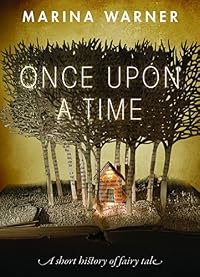
I love fairy tales, hence why I chose to read this book. The cover is absolutely beautiful and captured my attention immediately. However, the book was unsuccessful in doing so. I was expecting a story, some sort of whimsical fairy tale, even a twisted tale would have been okay. Instead, this book breaks down every angle and reason behind what happens in fairy tales, and dissects them. I wasn’t looking for an informative book, instead, I was hoping for something to get lost in. Instead, I just felt lost.
I love fairy tales, hence why I chose to read this book. The cover is absolutely beautiful and captured my attention immediately. However, the book was unsuccessful in doing so. I was expecting a story, some sort of whimsical fairy tale, even a twisted tale would have been okay. Instead, this book breaks down every angle and reason behind what happens in fairy tales, and dissects them. I wasn’t looking for an informative book, instead, I was hoping for something to get lost in. Instead, I just felt lost.
Short, readable overview of the history of fairy tales and some of the cultural impacts they've had over time. Nothing greatly revelatory if you already read about fairy tales a fair bit, but plenty in it despite its short nature.
What it says on the tin: a short history of how fairy tales have been told, written, collected, adapted, and evolved; how they represent the nation’s/cultures they originated from; the sanitization that started long before Disney; how and why modern artists and audiences continue to interact and connect with these age-old stories.
Members
- Recently Added By
Lists

Academic Studies of Fairy Tales and Folklore
28 works; 5 members

Books Read in 2022
5,164 works; 111 members
Author Information

72+ Works 5,545 Members
Marina Warner is Professor of Literature, Film, and Theatre Studies at the University of Essex and a distinguished writer of fiction, criticism, and history.
Some Editions
Series

Common Knowledge
- Alternate titles
- Fairy Tale: A Very Short Introduction
- Original publication date
- 2014
- People/Characters
- Hans Christian Andersen; Lucius Apuleius; Giambattista Basile; Walter Benjamin; Italo Calvino; Lewis Carroll (show all 21); Angela Carter; Samuel Taylor Coleridge; Marie-Catherine D'Aulnoy; Sigmund Freud; Jacob Grimm; Wilhelm Grimm; Andrew Lang; C. S. Lewis; Charles Perrault; Lotte Reiniger; Christina Rossetti; William Shakespeare; Maria Tatar; J. R. R. Tolkien; Jack Zipes
- Dedication
- To Carolina, Riccardo, Sofia, and Hartley
(tesoro meraviglioso) - First words
- Imagine the history of fairy tale as a map, like the Carte du Tendres, the 'Map of Tenderness', drawn by Parisian romancers to chart the peaks and sloughs of the heart's affections: unfurl this imaginary terrain in your mind'... (show all)s eye, and you will first see two prominent landmarks, Charles Perrault's Histoires et Contes du temps passé (Tales of Olden Times, 1697) and a little nearer in the foreground, the Grimm Brothers' Kinder- und Hausmärchen (Children's and Household Tales, 1812-57). (Prologue)
- Last words
- (Click to show. Warning: May contain spoilers.)It is something to start with. (Epilogue)
- Original language
- English
Classifications
- Genres
- Nonfiction, Literature Studies and Criticism, General Nonfiction, History
- DDC/MDS
- 398.209 — Society, Government, and Culture Customs, etiquette & folklore Folklore & Folktales Folk literature History, geographic treatment, biography
- LCC
- GR550 .W39 — Geography, Anthropology and Recreation Folklore Folklore By subject Supernatural beings, demonology, fairies, ghosts,
- BISAC
Statistics
- Members
- 424
- Popularity
- 72,495
- Reviews
- 9
- Rating
- (3.76)
- Languages
- English, Turkish
- Media
- Paper, Ebook
- ISBNs
- 10
- UPCs
- 2
- ASINs
- 2