A Memory of Violets
by Hazel Gaynor
On This Page
Description
"Step into the world of Victorian London, where the wealth and poverty exist side by side. This is the story of two long-lost sisters, whose lives take different paths, and the young woman who will be transformed by their experiences. In 1912, twenty-year-old Tilly Harper leaves the peace and beauty of her native Lake District for London, to become assistant housemother at Mr. Shaw's Home for Watercress and Flower Girls. For years, the home has cared for London's flower girls--orphaned and show more crippled children living on the grimy streets and selling posies of violets and watercress to survive. Soon after she arrives, Tilly discovers a diary written by an orphan named Florrie--a young Irish flower girl who died of a broken heart after she and her sister, Rosie, were separated. Moved by Florrie's pain and all she endured in her brief life, Tilly sets out to discover what happened to Rosie. But the search will not be easy. Full of twists and surprises, it leads the caring and determined young woman into unexpected places, including the depths of her own heart."--Publisher's website. show lessTags
Recommendations


Member Reviews
The story is told in dual timelines beginning in 1876 with Florrie, Rosie's older sister, sharing their daily life as orphans on the streets of London selling posies of violets and watercress. Florrie is disabled from polio, and Rosie is blind, but together they face their hardships until they are separated in a crowd one day. Florrie promises that day that she will never stop looking for Rosie.
In 1912, Tilly Harper left her parent's home in the Lake District to become assistant housemother at Shaw's Training Homes for Watercress and Flower Girls in London. With the discovery of a wooden box in the wardrobe of her room, Tilly begins to read a notebook written by Flora Flynn to her little sister with pressed flowers between some of the show more pages. The entries touch Tilly's heart, and she becomes determined to discover if the sisters were ever reunited.
The story is beautifully written and is as heart-wrenching as it is heartwarming. History and the author's creativity are woven together in storytelling with tenderness and eloquence and found me in tears in both sorrow and joy. Lovely floral illustrations at the beginning of the 4 parts of the story and each chapter enhanced the feelings of discovery of the pressed flowers in Flora's notebook.
Even before the 1st epigraph, I thought of Eliza Doolittle when I read the subtitle, and memories came to mind of playing Eliza in the drama club production of "My Fair Lady" in 9th grade. Reading The Story Behind the Book and the author’s experience deepened the connection to the author’s writing and a novel I will long remember. I postponed writing the review finding it difficult to express in words how it captured my heart and touched the deepest parts of my soul. In my reflections, it is a book that receives more than 5 stars.
At the novel's end, additional meaningful features include The Language of Flowers – The Lost World of Floriography and John Groom: The Real Albert Shaw. Book clubs will be appreciative of the Reading Group Discussion Questions.
For those on Pinterest, make sure to follow Hazel Gaynor. In particular, the inspiration board for this novel is an added delight. show less
In 1912, Tilly Harper left her parent's home in the Lake District to become assistant housemother at Shaw's Training Homes for Watercress and Flower Girls in London. With the discovery of a wooden box in the wardrobe of her room, Tilly begins to read a notebook written by Flora Flynn to her little sister with pressed flowers between some of the show more pages. The entries touch Tilly's heart, and she becomes determined to discover if the sisters were ever reunited.
The story is beautifully written and is as heart-wrenching as it is heartwarming. History and the author's creativity are woven together in storytelling with tenderness and eloquence and found me in tears in both sorrow and joy. Lovely floral illustrations at the beginning of the 4 parts of the story and each chapter enhanced the feelings of discovery of the pressed flowers in Flora's notebook.
Even before the 1st epigraph, I thought of Eliza Doolittle when I read the subtitle, and memories came to mind of playing Eliza in the drama club production of "My Fair Lady" in 9th grade. Reading The Story Behind the Book and the author’s experience deepened the connection to the author’s writing and a novel I will long remember. I postponed writing the review finding it difficult to express in words how it captured my heart and touched the deepest parts of my soul. In my reflections, it is a book that receives more than 5 stars.
At the novel's end, additional meaningful features include The Language of Flowers – The Lost World of Floriography and John Groom: The Real Albert Shaw. Book clubs will be appreciative of the Reading Group Discussion Questions.
For those on Pinterest, make sure to follow Hazel Gaynor. In particular, the inspiration board for this novel is an added delight. show less
A Memory of Violets by Hazel Gaynor is a heart-warming story that opens in the 1880s and deals with the state of many of London’s children, born into poverty, and living lives of misery and starvation. Two small children, Florrie and Rosie are selling flowers on the streets to make enough money to survive. Their father is a drunkard who beats them if they don’t bring their earnings to him, their mother was also a flower seller but she died leaving the girls to fend for themselves. As the elder sister, Florrie, who is crippled herself, takes care of her younger sister, who is practically blind. When one day a man tries to snatch Rosie, the girls are separated and can’t find their way back to each other. Florrie spends the rest of show more her life searching for her little sister. Rosie meanwhile gets away from the man, and hides in a carriage, and eventually is adopted into a rich family.
We move forward a number of years and now follow the story of Tilly, who in 1912, leaves her home in the north of England to come to London to work as a house-mother for a charity that houses and trains young girls to make silk flowers. Tilly learns the story of Florrie and Rosie, and decides to also try and find out what happened to Rosie all those years ago. Tilly has her own family difficulties to work through as she needs to come to terms with her own father’s death and the estrangement with both her mother and her sister.
While the story was perhaps a little overly sentimental and relied upon implausible coincidences to move the plot forward, A Memory of Violets did paint a vivid picture of the terrible conditions that poor and homeless children were faced with. The charity is based on the real life of John Grooms, an engraver and evangelical preacher who became concerned with the plight of poverty-stricken and often disabled girls who faced a hard life on the streets. This is the second book by this author that I have read and both books felt that they were too drawn out and could have been shortened to a better effect. show less
We move forward a number of years and now follow the story of Tilly, who in 1912, leaves her home in the north of England to come to London to work as a house-mother for a charity that houses and trains young girls to make silk flowers. Tilly learns the story of Florrie and Rosie, and decides to also try and find out what happened to Rosie all those years ago. Tilly has her own family difficulties to work through as she needs to come to terms with her own father’s death and the estrangement with both her mother and her sister.
While the story was perhaps a little overly sentimental and relied upon implausible coincidences to move the plot forward, A Memory of Violets did paint a vivid picture of the terrible conditions that poor and homeless children were faced with. The charity is based on the real life of John Grooms, an engraver and evangelical preacher who became concerned with the plight of poverty-stricken and often disabled girls who faced a hard life on the streets. This is the second book by this author that I have read and both books felt that they were too drawn out and could have been shortened to a better effect. show less
Every once in a while, there comes a book that is meant to soften your heart and embed itself into your memories for the rest of your life. And MEMORY OF VIOLETS does so much more than that...
The story is told through a few different point of views, but primarily, it starts with Tilly Harper. Tilly leaves her beautiful home in the mountains to go work as a housemother in Mr. Shaw's Training Homes for Watercress and Flower Girls; a home for orphaned girls who have a physical disability. Tilly is to help care for these girls; girls who are not only cared for and given the opportunity to strive into young ladies, but who are also trained to learn how to live with their disabilities by working in the organizations silk flower factory, and show more then eventually mature enough to go on with their lives as normal as possible.
Upon Tilly's arrival, she comes across a small box containing a few odd momentos and a journal that belonged to one of the girls, Flora aka Florrie, that had stayed in the room she is now occupying. Tilly instantly feels a connection to the flower girl who lost her blind sister in London's streets. Tilly left home to find a way to forget the things that she had done and not feel so guilty anymore. But with Florrie's journal, she finds a way to do the things she must do in order to come to terms with her mistakes and her family secrets.
Florrie painstakingly writes her journal entries to her long lost sister, Rosie. Rosie is the only good that Florrie had in her life. She promised her little sister that she would always take care of her. Until that tragic day where she let go of her hand and Rosie was lost in the crowd of flower sellers and their buyers. Florrie promised that she would look for Rosie until she found her. Every single page of Florrie's journal was filled with such heartfelt longing and loneliness.
"For little sister... I will never stop looking for you."
Tilly is moved by Florrie's love and unanswered prayers. She is determined to find out what happened to Rosie and hopes to give Florrie the peace that she deserves. Little does Tilly know that there will be more ghosts to meet, help and say goodbye to.
The most definitive historical fiction I have ever read. The author's strong and accurate details to this period of time was captivating - I found myself living right alongside these characters. I felt the weather and smelled the stench of the London streets; I felt their moments of pain, love, sadness and more. I was able to close my eyes and not only picture the flowers, but smell them too. Even when I had to put the book aside to tend to my real life moments, I couldn't help but wonder about Florrie and what Tilly was going to do next in order to find Rosie, and what she was going to in regards to her own dilemmas - they became so real to me. And every once in a while, I swear, I could smell roses and sometimes, violets... their story kept calling me back. I needed to know what had happened to Florrie and Rosie, and what was going to become of Tilly, her suitor. her own sister, and others as well.
An unforgettable story that I will be shelving next to my other heartfelt favorites such as The Christmas Box by Richard Paul Evans and Sarah's Key by Tatiana de Rosnay.
*An eARC was provided to me from the publisher for the blog tour and an honest review. All thoughts are my own. show less
The story is told through a few different point of views, but primarily, it starts with Tilly Harper. Tilly leaves her beautiful home in the mountains to go work as a housemother in Mr. Shaw's Training Homes for Watercress and Flower Girls; a home for orphaned girls who have a physical disability. Tilly is to help care for these girls; girls who are not only cared for and given the opportunity to strive into young ladies, but who are also trained to learn how to live with their disabilities by working in the organizations silk flower factory, and show more then eventually mature enough to go on with their lives as normal as possible.
Upon Tilly's arrival, she comes across a small box containing a few odd momentos and a journal that belonged to one of the girls, Flora aka Florrie, that had stayed in the room she is now occupying. Tilly instantly feels a connection to the flower girl who lost her blind sister in London's streets. Tilly left home to find a way to forget the things that she had done and not feel so guilty anymore. But with Florrie's journal, she finds a way to do the things she must do in order to come to terms with her mistakes and her family secrets.
Florrie painstakingly writes her journal entries to her long lost sister, Rosie. Rosie is the only good that Florrie had in her life. She promised her little sister that she would always take care of her. Until that tragic day where she let go of her hand and Rosie was lost in the crowd of flower sellers and their buyers. Florrie promised that she would look for Rosie until she found her. Every single page of Florrie's journal was filled with such heartfelt longing and loneliness.
"For little sister... I will never stop looking for you."
Tilly is moved by Florrie's love and unanswered prayers. She is determined to find out what happened to Rosie and hopes to give Florrie the peace that she deserves. Little does Tilly know that there will be more ghosts to meet, help and say goodbye to.
The most definitive historical fiction I have ever read. The author's strong and accurate details to this period of time was captivating - I found myself living right alongside these characters. I felt the weather and smelled the stench of the London streets; I felt their moments of pain, love, sadness and more. I was able to close my eyes and not only picture the flowers, but smell them too. Even when I had to put the book aside to tend to my real life moments, I couldn't help but wonder about Florrie and what Tilly was going to do next in order to find Rosie, and what she was going to in regards to her own dilemmas - they became so real to me. And every once in a while, I swear, I could smell roses and sometimes, violets... their story kept calling me back. I needed to know what had happened to Florrie and Rosie, and what was going to become of Tilly, her suitor. her own sister, and others as well.
An unforgettable story that I will be shelving next to my other heartfelt favorites such as The Christmas Box by Richard Paul Evans and Sarah's Key by Tatiana de Rosnay.
*An eARC was provided to me from the publisher for the blog tour and an honest review. All thoughts are my own. show less
First, I had never head of this author before but already, I have bought another book of hers that I found at my local used bookstore last week. This was a haunting tale of London's child flower sellers in the 1800s. It is actually 3 interwoven stories taking place in the 1880s and in 1912. I have to say, though, I was absolutely riveted and mesmerized by the narrator, Nicola Barber. She is flawless in her accents of the various London and Irish accents and was able to create characters so well and so easily by changing her voice and mannerisms. I actually got the hard copy out of the library as well because I wanted to go back and check something and couldn't easily do that in the audio format. I am so glad I did that as there is more show more at the end of the book that is absent in the audio. An interview with the author, some historical background, etc. While this is a fictional historical novel, there are aspects and even one character based on real people, places and events. I love this type of historical fiction. I always enjoy googling to learn more but when the author takes the time at the end of her book to go into this process and background, well, it adds a lot, for me.
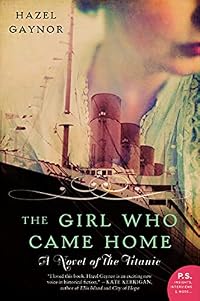
I am looking forward to the other book by her, a novel of the Titanic, called *The Girl Who Came Home*. I wonder if it's on audio, and if it is, and if it's read by Nicola Barber... show less
I am looking forward to the other book by her, a novel of the Titanic, called *The Girl Who Came Home*. I wonder if it's on audio, and if it is, and if it's read by Nicola Barber... show less
I thought this an absolutely lovely read. At first I worried it would be a difficult read due to the grammar of Florrie, but she doesn't narrate the entire story and once I became adjusted to the whats in place of thats, I realized the narrative suited her and her situation and that it also served to make her and Tilly's parts immediately distinguishable. So I advise readers who are often deterred by poor grammar to keep reading.
There's so much going on here, so many stories that will either make you sad, angry, or happy. There's a myriad of emotions within these pages. It's heartbreaking to read about the flower sellers and the extreme poverty of 1800s London. It's uplifting to learn about John Groom (Albert Shaw in the story) and how show more he saved so many orphans, crippled, and blind flower sellers and gave them homes and a purpose: the making of fake flowers. The whole Queen Alexandra day really happened and it's an inspiring thing to read about. It's infuriating to read about a woman who though her intentions were good, her reasons were selfish, when she deprives another of the only person they have in the whole world.
But what I enjoyed the most about this story is how Tilly goes to work with the crippled and blind and at first distinguishes each one by their handicap. As the story continues, she sees the error in that way of thinking and no longer sees their handicaps, but who they are individually. Many people today should take such advice to heart. I also appreciated the difference between Esther--a handicapped child with no purpose in life, coddled, pitied--and the flower girls--handicapped but self-reliant as much as possible and happy to have a purpose each day. It's so important and her story line served to show us this.
I have failed to mention the story itself...a quick bit: There are two story lines, the late 1870s and 1912. In 1912, Tilly leaves her home in Northern England to work in Albert Shaw's home for orphaned flower girls, where she overseas and cares for handicapped young women who work in a flower-making factory. She finds a journal from a previous resident, Florrie, who lost her beloved sister in 1876. While Tilly tries to track down the missing sister, she also comes to find out some truths in her own family life and learns to forgive herself for a past misdemeanor.
Loved the writing, the characters (except Mrs. Ingram. Grrr.), the story itself, and the morals within. My quibble has to be that there were far too many coincidences. Though they mostly tied up very nicely with a beautiful ending, I thought there were a bit too many. Perhaps the final revelation from Tilly's life could have been left out as it was a coincidence that added nothing to the tale really. (I'm trying to avoid spoilers) show less
There's so much going on here, so many stories that will either make you sad, angry, or happy. There's a myriad of emotions within these pages. It's heartbreaking to read about the flower sellers and the extreme poverty of 1800s London. It's uplifting to learn about John Groom (Albert Shaw in the story) and how show more he saved so many orphans, crippled, and blind flower sellers and gave them homes and a purpose: the making of fake flowers. The whole Queen Alexandra day really happened and it's an inspiring thing to read about. It's infuriating to read about a woman who though her intentions were good, her reasons were selfish, when she deprives another of the only person they have in the whole world.
But what I enjoyed the most about this story is how Tilly goes to work with the crippled and blind and at first distinguishes each one by their handicap. As the story continues, she sees the error in that way of thinking and no longer sees their handicaps, but who they are individually. Many people today should take such advice to heart. I also appreciated the difference between Esther--a handicapped child with no purpose in life, coddled, pitied--and the flower girls--handicapped but self-reliant as much as possible and happy to have a purpose each day. It's so important and her story line served to show us this.
I have failed to mention the story itself...a quick bit: There are two story lines, the late 1870s and 1912. In 1912, Tilly leaves her home in Northern England to work in Albert Shaw's home for orphaned flower girls, where she overseas and cares for handicapped young women who work in a flower-making factory. She finds a journal from a previous resident, Florrie, who lost her beloved sister in 1876. While Tilly tries to track down the missing sister, she also comes to find out some truths in her own family life and learns to forgive herself for a past misdemeanor.
Loved the writing, the characters (except Mrs. Ingram. Grrr.), the story itself, and the morals within. My quibble has to be that there were far too many coincidences. Though they mostly tied up very nicely with a beautiful ending, I thought there were a bit too many. Perhaps the final revelation from Tilly's life could have been left out as it was a coincidence that added nothing to the tale really. (I'm trying to avoid spoilers) show less
 This review was written for LibraryThing Early Reviewers.
I really enjoyed this book. It contains several great characters and the central theme is flowers. Specifically it tells the story of London's flower sellers. The character Albert Shaw (based on a real man) takes in disabled orphans and gives them a place to live and a job making artificial flowers to get them off the streets where they once sold flowers and lived in horrendous conditions. It was refreshing to read a book about truly difficult circumstances that left you with a real sense of hope. It was a reminder that there are always people who dedicate their lives to helping those that are less fortunate. That is a powerful message in a time when it can feel like all the news is bad news. I also enjoyed that the language of flowers show more was included. This is the second book I have read that delves into that fascinating subject. The relationship between sisters is another theme in the book and that is one that touches me personally since my sister and I are very close. I like this author's writing style and I would love to read her first novel as well. show less
This review was written for LibraryThing Early Reviewers.A Memory of Violets was my book club, Page Turners, June selection. This historical novel was inspired by the flower sellers of Victorian England — think Eliza Doolittle of My Fair Lady. Gaynor’s meticulous research, her passion for her subject matter, and an outstanding writing talent created a great book for our group’s discussion.
In London of 1876, Florrie is just a child when she takes on the care of her baby sister Rosie. Charged with keeping Rosie safe from the streets of London and the menace at home, Florrie takes her job seriously. When Rosie becomes lost, Florrie vows never to stop searching for her. Thrity-six years later, Tilly Harper discovers the journal of now deceased Florrie who until her dying day looked for show more Rosie. Determined to find out just what happened to Rosie, Tilly must come to terms with the strained relationship with her own sister. A Memory of Violets is a novel of loyalty and betrayal, guilt and forgiveness.
There are so many strengths to A Memory of Violets. The London of both 1876 and 1912 comes to life through the rich descriptions. The plight of London’s poor made me dig deeper into the historical record. The characters are well-developed and easy to relate to. Their struggles become the reader’s struggles. I was fully immersed in this novel. While not a Christian novel, I was impressed with the author’s treatment of Christian characters. These men and women were truly moved by Christ’s love to serve the least of His children. There is a bit of mild profanity and a supernatural angle that is more plot device than theology, but all in all I loved this novel and would recommend it to anyone. There is definitely something for everyone — history, mystery and a bit of romance.
Highly Recommended.
Audience: adults.
Great for Book Clubs. show less
In London of 1876, Florrie is just a child when she takes on the care of her baby sister Rosie. Charged with keeping Rosie safe from the streets of London and the menace at home, Florrie takes her job seriously. When Rosie becomes lost, Florrie vows never to stop searching for her. Thrity-six years later, Tilly Harper discovers the journal of now deceased Florrie who until her dying day looked for show more Rosie. Determined to find out just what happened to Rosie, Tilly must come to terms with the strained relationship with her own sister. A Memory of Violets is a novel of loyalty and betrayal, guilt and forgiveness.
There are so many strengths to A Memory of Violets. The London of both 1876 and 1912 comes to life through the rich descriptions. The plight of London’s poor made me dig deeper into the historical record. The characters are well-developed and easy to relate to. Their struggles become the reader’s struggles. I was fully immersed in this novel. While not a Christian novel, I was impressed with the author’s treatment of Christian characters. These men and women were truly moved by Christ’s love to serve the least of His children. There is a bit of mild profanity and a supernatural angle that is more plot device than theology, but all in all I loved this novel and would recommend it to anyone. There is definitely something for everyone — history, mystery and a bit of romance.
Highly Recommended.
Audience: adults.
Great for Book Clubs. show less
Members
- Recently Added By
Author Information

16+ Works 4,453 Members
Hazel Gaynor's debut novel, The Girl Who Came Home: A Novel of the Titanic, was a New York Times and USA Today bestseller. A Memory of Violets is her second novel. In addition to historical fiction, she writes a popular guest blog, Carry on Writing, for national Irish writing website writing.ie. She shares thoughts and experiences of the writing show more process and has interviewed a number of popular authors, including; Philippa Gregory, Sebastian Faulks, John Boyne and Cheryl Strayed. Hazel received the 2012 Cecil Day Lewis award for Emerging Writers and was selected by Library Journal as one of Ten Big Breakout Authors for 2015. (Bowker Author Biography) show less
Common Knowledge
- Canonical title
- A Memory of Violets
- Alternate titles
- A Memory of Violets: A Novel of London's Flower Sellers
- Original publication date
- 2015
- People/Characters
- Flora Flynn; Rosie Flynn; Tilly Harper
- Important places
- London, England, UK (19th century and 1912)
- Epigraph
- The difference between a lady and a flower girl is not how she behaves, but how she's treated.
--George Bernard Shaw Pygmalion, 1912
For there is no friend like a sister
In calm or stormy weather;
To cheer one on the tedious way,
To fetch one if one goes astray,
To lift one if one totters down,
To strengthen whilst one stands.
--Christina... (show all) Rossetti, "Goblin Market," 1862
Not what we have, what we use;
Not what we see, but what we choose -
These are the things that mar or bless
The sum of human happiness.
--Clarence Urmy, "The Things That Count,"
Inscribed at Woodbridge Chapel i... (show all)n memory of John Groom, founder of the Watercress and Flower Girls' Mission - Dedication
- For Mum - the diamond glints on snow
- First words
- Mammy once told me that all flowers are beautiful, but some are more beautiful than others.
- Last words
- (Click to show. Warning: May contain spoilers.)I hold her hand, tight in mine, and we rush toward the beautiful, beautiful light.
Classifications
Statistics
- Members
- 540
- Popularity
- 54,851
- Reviews
- 58
- Rating
- (3.67)
- Languages
- English
- Media
- Paper, Audiobook, Ebook
- ISBNs
- 13
- UPCs
- 1
- ASINs
- 4