
The Argonauts
by Maggie Nelson
On This Page
Description
An intrepid voyage out to the frontiers of the latest thinking about love, language, and family. Maggie Nelson's The Argonauts is a genre-bending memoir, a work of "autotheory" offering fresh, fierce, and timely thinking about desire, identity, and the limitations and possibilities of love and language. At its center is a romance: the story of the author's relationship with the artist Harry Dodge. This story, which includes Nelson's account of falling in love with Dodge, who is fluidly show more gendered, as well as her journey to and through a pregnancy, is an intimate portrayal of the complexities and joys of (queer) family-making. Writing in the spirit of public intellectuals such as Susan Sontag and Roland Barthes, Nelson binds her personal experience to a rigorous exploration of what iconic theorists have said about sexuality, gender, and the vexed institutions of marriage and child-rearing. Nelson's insistence on radical individual freedom and the value of caretaking becomes the rallying cry of this thoughtful, unabashed, uncompromising book. show lessTags
Recommendations








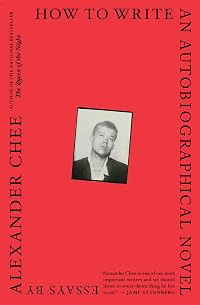
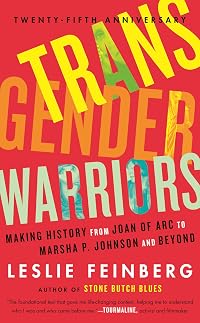
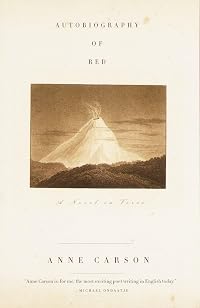
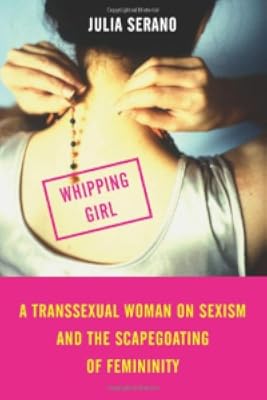
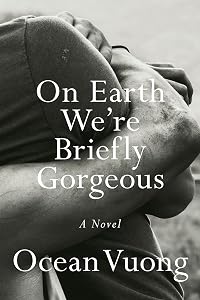
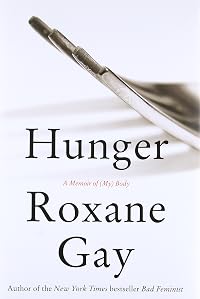
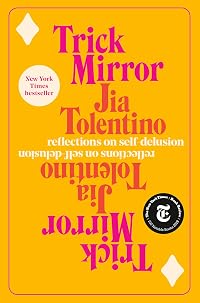
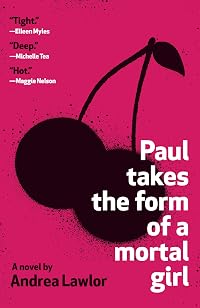









Member Recommendations

Member Reviews
For The Argonauts, genre-fluctuating Maggie Nelson acquires her title from literary theorist Roland Barthes in reference to a mythical Greek ship in which, over time, each piece is replaced by its crew resulting in a completely different ship while retaining the same name, form, and function. This is the shore from which Nelson launches her memoir of modern perception regarding gender, parenthood, marriage, family, language, and identity. The book is a nonlinear, gyroscopic narrative orientating the author/scholar's recent life through the swells of queer pregnancy during the same period Nelson's spouse is gender transitioning. Thrusting Nelson's story are quotations of other theorist, theory, and poets–political, cultural, show more feminist–some she advances–Sedgewick, Lacan, Anne Carson–some she rejects as radically weak–Baudrillard, Badiou, Zizek–because every lover, hater, theorist, poet, so-called radical, and character in Nelson's sea is on a symbolic, Golden-Fleece-esque journey. The Argonauts is a work of autotheory, a form commingling academic theory with autobiography, and it is not for every reader. But, I am absorbed with Nelson's insight into modern American life, her self-critiquing philosophies, and her ability to make poetic prose out of Judith Butler. The Argonauts is structure-modifying pedantry that capsizes one’s own prejudices, and I will keenly return to feel exposed again and again. show less
In this short, strange book, Maggie Nelson reflects on her life with her spouse, who might perhaps be described as something between transgender and nonbinary; on pregnancy and motherhood; on sex and sexuality and being, to use the word she prefers, queer; on art and death and nonconformity and a whole bunch of other complicated things.
I thought at first that I was going to find this a frustrating read. It's disjointed, full of out-of-context quotes and allusions to things like literary theory (a subject with which I have little patience). But Nelson definitely won me over. She's talking about things very much worth talking about (and perhaps not talked about nearly enough) in a way that's somehow simultaneously contemplative and raw. show more And while her life and her experiences and perspectives are wildly different from mine in just about every respect, I found myself feeling a certain kinship with her in our apparently mutual frustration with the way in which categories and labels never seem to do justice to the messy, individual specificity of human lives and identities. show less
I thought at first that I was going to find this a frustrating read. It's disjointed, full of out-of-context quotes and allusions to things like literary theory (a subject with which I have little patience). But Nelson definitely won me over. She's talking about things very much worth talking about (and perhaps not talked about nearly enough) in a way that's somehow simultaneously contemplative and raw. show more And while her life and her experiences and perspectives are wildly different from mine in just about every respect, I found myself feeling a certain kinship with her in our apparently mutual frustration with the way in which categories and labels never seem to do justice to the messy, individual specificity of human lives and identities. show less
The Argonauts is filled with brilliant observations about love, gender, sex, and identity, saying things that I wish I'd heard long ago. The book makes brave, intimate pronouncements and boldly insists upon authoritative uncertainty. The author’s conclusions were hard won, making me almost ashamed to disagree with their points, as the points have the weight of anguish deeply lived and deep breaths that end in a cough. The author does a funny thing where they quote someone else quoting, i.e. “The poem by Johnson can’t help but make me think about Wilson’s article about Sedgwick’s theory about Freud’s analysis of...” It satirizes academia. On one of these bizarre diversions, the author talks about how much they loved a show more certain professor's method of assembling a lecture: "It’s like she’s pulling Post-it notes out of her hair and lecturing from them" and that another student was, "complaining that her lecturing style was like 'throwing a pizza at us.'" The author concludes: "My feeling is, you should be so lucky to get [such a] pizza in the face!" The Argonauts, the book in which the author makes this comment, is structured as one of those flying pizzas. It disassembles in the air as it hurls towards you, cheese and sauce and sprinkles of oregano flailing in suspended gravity, one long, barely structured blog rant filled with spicy toppings that will shortly present distinct challenges to your carefully coiffed pompadour. Whenever anyone quotes in real life, I feel they are running away. Running away is a fantastical thing upon which to build a book about not running away. Don’t quote, she's saying. Don't appeal to anyone or anything else for authority about your gender, your identity, or your pain. What you experience is the final authority, and therefore the most interesting to read or write about. Stay present with it, free of judgement. The author realizes all this with absurd clarity--it's perhaps the central message of the book--but the quoting and referencing continue, as if they are trapped in a hell self-crafted from back issues of the New Yorker. At the end, the author peeks up through it all. The quotes become less and less frequent, and her true, blazing, almost-painful-to-behold personal authority comes through. If you imagine that the author is telling you what you should think, live, or feel, you may be annoyed and argue with this book. There are contradictions, and a deep pain shines through the bold pronouncements of right and wrong. If instead you see the book as a shared window into the author's own argument with themself, trying through a series of events to live life and not put it into an intellectual structure, then you will have sympathy and be astonished at the journey and its intricacies. I am grateful they risked sharing...a messy meal that nourishes. show less
At some point, about a third of the way into this thin memoir, I realized I am going to read everything Maggie Nelson has ever written or ever will write. I sucked it down in one big gulp and am tempted to read it again immediately, this time highlighting, circling and underlining all of the bits I want to study and savor like an over enthusiastic born againer with a Bible. Nelson connects theory to the grounded realities of making a life insightfully and masterfully. The language is doing so many things at once, including exploring the very nature and limits of language itself. The fact that this slim volume happens to do exceptional art criticism effortlessly and as a sort side project is but a cherry on top. I have gushed these show more fangirl words out quite suddenly, and am going to press "save" before I blush and retract it all. show less
Reading The Argonauts was a disorienting experience. Here is a narrator who repeatedly uses an intellectual framework that draws from my own interests in literary and critical theory, whose politics, outwardly at least, largely align with my own, and yet whom I found utterly, poisonously repellent.
"Ah yes, I think, digging a knee into the podium. Leave it to the old patrician white guy to call the lady speaker back to her body, so that no one misses the spectacle of that wild oxymoron, the pregnant woman who thinks. Which is really just a pumped-up version of that more general oxymoron, a woman who thinks." (p. 91)
This passage occurs in a part of the book when Nelson is giving a book talk at a NYC university. Sure, the playwright's show more question was insensitive, but the unspoken thoughts she expresses here give the reader a glimpse into a seething resentment that seems to underlie everything she does.
It's a resentment that is multiplied by her hypocrisy: initially, she looks down on women who are mothers because they follow a traditional, non-queer way of being female, for example, but suddenly she has compassion for the difficulties of motherhood when she has a child of her own.
She rails against the idea of "sameness" in homosexual attraction, insisting that it is all about a shared form of difference, but then has an emotional meltdown when she learns that her own baby is male, since she harbors a fantasy of a daughter she can shape into her own ideal: "I guess I had to mourn something— the fantasy of a feminist daughter, the fantasy of a mini-me. Someone whose hair I could braid, someone who might serve as a femme ally to me" (p. 87).
The Argonauts is a long list of these resentments that, as Nelson actually gains experience of the things she reviles, metamorphose into other resentments. There is no sense of compassion here, just an increasing refinement of Nelson's resentful condescension.
More disturbing, though, is the way in which Nelson engages in the relentless performance of her own virtue. She reads the right books, goes to the right performances, enjoys all the right things. It is clear that this putative moral uprightness does not come intrinsically - there is an inauthenticity to Nelson's desires, a sense that her ethics, politics, tastes, her very identity have been formed in the name of a politically-correct superego that commands: "Thou shalt!"
What is Maggie Nelson if not a postmodern puritan? Sure, it is a puritanism that outwardly preaches a message of revolutionary queerness, but this performative "subversion" operates only at the level of the signifier. Actions are a much better indicator of who we are than our words, so it doesn't matter to me how many references to Barthes or Sedgwick she throws in: The Argonauts reads like an act of revenge, a high-handed admonishment of an existence that has failed to live up to the author's moral standards.
The result is an inauthentic mixture of hypocrisy and resentment, devoid of the love and compassion that is the true remedy for our broken world. show less
"Ah yes, I think, digging a knee into the podium. Leave it to the old patrician white guy to call the lady speaker back to her body, so that no one misses the spectacle of that wild oxymoron, the pregnant woman who thinks. Which is really just a pumped-up version of that more general oxymoron, a woman who thinks." (p. 91)
This passage occurs in a part of the book when Nelson is giving a book talk at a NYC university. Sure, the playwright's show more question was insensitive, but the unspoken thoughts she expresses here give the reader a glimpse into a seething resentment that seems to underlie everything she does.
It's a resentment that is multiplied by her hypocrisy: initially, she looks down on women who are mothers because they follow a traditional, non-queer way of being female, for example, but suddenly she has compassion for the difficulties of motherhood when she has a child of her own.
She rails against the idea of "sameness" in homosexual attraction, insisting that it is all about a shared form of difference, but then has an emotional meltdown when she learns that her own baby is male, since she harbors a fantasy of a daughter she can shape into her own ideal: "I guess I had to mourn something— the fantasy of a feminist daughter, the fantasy of a mini-me. Someone whose hair I could braid, someone who might serve as a femme ally to me" (p. 87).
The Argonauts is a long list of these resentments that, as Nelson actually gains experience of the things she reviles, metamorphose into other resentments. There is no sense of compassion here, just an increasing refinement of Nelson's resentful condescension.
More disturbing, though, is the way in which Nelson engages in the relentless performance of her own virtue. She reads the right books, goes to the right performances, enjoys all the right things. It is clear that this putative moral uprightness does not come intrinsically - there is an inauthenticity to Nelson's desires, a sense that her ethics, politics, tastes, her very identity have been formed in the name of a politically-correct superego that commands: "Thou shalt!"
What is Maggie Nelson if not a postmodern puritan? Sure, it is a puritanism that outwardly preaches a message of revolutionary queerness, but this performative "subversion" operates only at the level of the signifier. Actions are a much better indicator of who we are than our words, so it doesn't matter to me how many references to Barthes or Sedgwick she throws in: The Argonauts reads like an act of revenge, a high-handed admonishment of an existence that has failed to live up to the author's moral standards.
The result is an inauthentic mixture of hypocrisy and resentment, devoid of the love and compassion that is the true remedy for our broken world. show less
I did not like the first page or two of this book. I hate self-consciously opaque beginnings. Yeah, yeah, we know that every book begins in the middle of a thought, but you could also just put in a few paragraphs to orient the reader. After that, though, I was on board. I found the prose and the structure totally compelling and there is a brilliant coherence to the ideas. Nelson ranges from this topic to that, this thinker to that, but the ideas at the heart of her exploration are consistent throughout the book. And she makes progress on those ideas, so that I went from unconvinced of the importance of what she writes about in the first third to wanting to phone my mother by the end.
And what does she write about? Well, a) read the book show more and find out and b) I think it's radical feminism in the sense that it argues feminism can't be ignored or put on hold. It's everywhere and in everything. She makes structural arguments why this is the case, but she also makes biological arguments. The dirtiness and messiness of the maternal sticks to everything it touches. This book is an angry rebuke to the 1950s patriarchal dream of men who never have to deal with bodily filth or mess, apart from the regrettable necessity of a bowel motion every day or two (or three, given 50s diets in the UK and settler colonial countries). Life is full of excretion and mess and blood and general fluids that people without medical backgrounds can't correctly name. In some countries we might have successfully delegated dealing with all of this to women and people of colour, but I think Nelson is claiming that as a triumph for feminism - women deal with the stuff of life while men muck around with some nonsense or other.
Hmm, I might have gone too far down that track, but it's one of the threads of the book. I held back from giving the book five stars because I'm still not entirely convinced on how important this all is. It obviously matters, but then so does so much other stuff. Why should I concentrate on this? Well, in the case of this book, because it's beautiful and satisfying, but I'd love to read a similarly written book about economics or materials science.
PS: I read the ePub version of this and it kind of sucked because all of the references were put at the end, but they weren't superscripted or anything. In the end I had a pdf of the book on my phone and the actual book on my ereader, which still wasn't the ideal way to read it. So get the paper copy of possible.
PPS: It's astonishing to me that this book has 32,000 reviews. Whatever negative reactions people have to this book, to get 32,000 people responding to a work of theory is phenomenal. show less
And what does she write about? Well, a) read the book show more and find out and b) I think it's radical feminism in the sense that it argues feminism can't be ignored or put on hold. It's everywhere and in everything. She makes structural arguments why this is the case, but she also makes biological arguments. The dirtiness and messiness of the maternal sticks to everything it touches. This book is an angry rebuke to the 1950s patriarchal dream of men who never have to deal with bodily filth or mess, apart from the regrettable necessity of a bowel motion every day or two (or three, given 50s diets in the UK and settler colonial countries). Life is full of excretion and mess and blood and general fluids that people without medical backgrounds can't correctly name. In some countries we might have successfully delegated dealing with all of this to women and people of colour, but I think Nelson is claiming that as a triumph for feminism - women deal with the stuff of life while men muck around with some nonsense or other.
Hmm, I might have gone too far down that track, but it's one of the threads of the book. I held back from giving the book five stars because I'm still not entirely convinced on how important this all is. It obviously matters, but then so does so much other stuff. Why should I concentrate on this? Well, in the case of this book, because it's beautiful and satisfying, but I'd love to read a similarly written book about economics or materials science.
PS: I read the ePub version of this and it kind of sucked because all of the references were put at the end, but they weren't superscripted or anything. In the end I had a pdf of the book on my phone and the actual book on my ereader, which still wasn't the ideal way to read it. So get the paper copy of possible.
PPS: It's astonishing to me that this book has 32,000 reviews. Whatever negative reactions people have to this book, to get 32,000 people responding to a work of theory is phenomenal. show less
For a short book, this one manages to contain a lot and covers more ground than plenty of longer works. The Argonauts is Maggie Nelson's memoir and her reflections on her relationship with a gender fluid partner, her pregnancy, and her family. Throughout the book, Nelson questions, criticizes, and engages with identity, sexuality, queer theory, and childrearing. Thoughtful and wide-ranging, I found this book to be eye-opening and I can't recommend it enough to those interested in the concepts explored in this slim volume.
Members
- Recently Added By
Lists

The Guardian's 100 best books of the 21st century
100 works; 21 members

Transgender Characters
91 works; 5 members

Top Five Books of 2016
795 works; 229 members

Best Feminist Literature
188 works; 26 members

Vulture's 100 Best Books of the 21st Century (So Far)
98 works; 9 members

Women's History Month: Suggested Reads
63 works; 6 members

Books Read in 2020
4,379 works; 124 members

Blackwell's Five Foot Bookshelf
72 works; 4 members

Books recommended by Calgary Public Library staff
1,588 works; 4 members

NYT 100 best books of 21st C
100 works; 31 members

Books Read in 2025
4,128 works; 98 members

Sapph-Lit
78 works; 4 members

.
184 works; 1 member
Author Information

17+ Works 5,792 Members
Maggie Nelson is a poet, critic, and nonfiction author of several books including The Argonauts, The Art of Cruelty: A Reckoning, Bluets, and Jane: A Murder: She teaches in the School of Critical Studies at CalArts and lives in Los Angeles, California.
Awards and Honors
Awards
Distinctions
Notable Lists
Common Knowledge
- Canonical title
- The Argonauts
- Original title
- The Argonauts
- Original publication date
- 2015
- People/Characters
- Maggie Nelson; Harry Dodge; Iggy
- Dedication
- for Harry
- First words
- October, 2007. The Santa Ana winds are shredding the bark off the eucalyptus tree in long white stripes.
- Last words
- (Click to show. Warning: May contain spoilers.)I know we're still here, who knows for how long, ablaze with our care, its ongoing song.
- Blurbers
- July, Miranda; Laing, Olivia; Emma Watson
- Original language
- English
- Canonical DDC/MDS
- 306.8508664
- Canonical LCC
- PS3564.E4687
Classifications
- Genres
- LGBTQ+, Biography & Memoir, Nonfiction
- DDC/MDS
- 306.8508664 — Society, government, & culture Social sciences, sociology & anthropology Social Behavior - Dating, Marriage, Divorce Marriage, partnerships, unions; family Family Families of LGBT people
- LCC
- PS3564 .E4687 — Language and Literature American literature American literature Individual authors 1961-
- BISAC
Statistics
- Members
- 2,138
- Popularity
- 9,614
- Reviews
- 90
- Rating
- (3.95)
- Languages
- 11 — Catalan, Danish, Dutch, English, Finnish, French, German, Italian, Portuguese, Spanish, Swedish
- Media
- Paper, Audiobook, Ebook
- ISBNs
- 44
- ASINs
- 11