1811 Dictionary of the Vulgar Tongue
by Francis Grose
On This Page
Description
Throughout history, most dictionaries have served the purpose of preserving the purity of the language, usually preferring the erudite vocabulary of the affluent upper classes to the salty, constantly evolving slang of their working-class counterparts. That began to change in the early modern period, when several innovative lexicographers began publishing collections of slang terms used by particular subcultures, such as criminals. According to scholars, Francis Grose's Dictionary of the show more Vulgar Tongue is one of the most important and complete of these early slang dictionaries. Spend some time with this fascinating volume to learn the slang definitions of words and phrases like "poisoned" (pregnant), "shooting the cat" (vomiting after excess alcohol consumption), and "snoozing ken" (a brothel). show lessTags
Recommendations





















Member Reviews
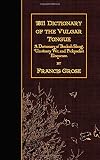
Dictionary of the Vulgar Tongue No, that’s not good enough. The title page of the original (a facsimile is included in this edition) is much more informative as well as entertaining, and is worth reproducing, after a fashion.
Lexicon Balatronicum
A DICTIONARY OF Buckish Slang, University Wit, AND PICKPOCKET ELOQUENCE.
Compiled originally by Captain Grose.
♦
AND NOW CONSIDERABLY ALTERED AND ENLARGED,
WITH THE MODERN CHANGES AND IMPROVEMENTS,
BY A MEMBER OF THE WHIP CLUB.
ASSISTED BY Hell-Fire Dick, and James Gordon, Esqrs. of Cambridge; and William Soames, Esq. of the Hon. Society of Newman’s Hotel.
So just what is this Lexicon Balatonicum and what was its purpose? To answer the last first: it was a spoof dictionary, a compilation of show more obscure and not so obscure words and phrases put together for a laugh. The clue is in its first title: a ‘balatron’ is a joker, a clown, a buffoon. Max Harris’ 1980 foreword informs us that its 1785 precursor was put together by Francis Grose, who died in 1791 (yes, there are a lot of dates here). “The merit,” as Hell-Fire Dick and his colleagues tell us, “of Captain Grose’s Dictionary of the Vulgar Tongue has been long and universally acknowledged. But its circulation was confined almost exclusively to the lower orders of society…” So the 1811 editors incorporated a few extra entries for an audience which could include “the man of worth”, who was now able to “swear with a good grace” and to “talk bawdy before their papas without the fear of detection”.
Moreover, the editors tell us earnestly that the lexicon’s moral influence will be more effective than a Methodist sermon, for by learning how to phrase remarks in this alternative lingo “improper topics can with our assistance be discussed” between brothers and servants of a family in front of the ladies “without raising a blush on the cheek of modesty”. For females, this Dictionary avers, will never comprehend the true meaning of terms such as twiddle diddles…
To be sure, a large proportion of this book of reference is devoted to bodily functions and the like. Even now, two centuries and more later, it’s very hard to acknowledge without the use of asterisks a notoriously vulgar term that is here famously defined as “a nasty name for a nasty thing”, though heaven knows there are enough synonyms for it throughout these pages, such as the quaint euphemism “the Monosyllable”. And I will now never ever knowingly use the term nincompoop, so thank you Max Harris for drawing attention to it. And now I have done the same for you.
But, for the social historian and the linguist, there are plenty of other riches. Here are some terms and customs plucked at random from the pages, which might be used with great advantage even today.
CROW FAIR. A visitation of the clergy.
HABERDASHER OF PRONOUNS. A schoolmaster…
KITTLE PITCHERING. A jocular method of hobbling or bothering a troublesome teller of long stories.
PIGEON’S MILK. Boys and novices are frequently sent on the first of April to buy pigeon’s milk.
RIBALDRY. Vulgar abusive language, such as was spoken by ribalds. Ribalds were originally mercenary soldiers…
Some of the longer entries are fascinating, such as the twenty-three “orders” of the “canting CREW”, from rufflers to priggers, bawdy baskets to doxies; or the unpleasant custom of Riding Skimington. This edition presents the text in facsimile, which adds to its attractiveness, even if the mere recitation of some of the Dictionary’s entries underlines the unattractiveness of contemporary attitudes to all and sundry. At least no one is spared the whips of scorn so none need feel left out of the general opprobrium displayed in all its tawdry glory.
http://wp.me/s2oNj1-vulgar show less
Lexicon Balatronicum
A DICTIONARY OF Buckish Slang, University Wit, AND PICKPOCKET ELOQUENCE.
Compiled originally by Captain Grose.
♦
AND NOW CONSIDERABLY ALTERED AND ENLARGED,
WITH THE MODERN CHANGES AND IMPROVEMENTS,
BY A MEMBER OF THE WHIP CLUB.
ASSISTED BY Hell-Fire Dick, and James Gordon, Esqrs. of Cambridge; and William Soames, Esq. of the Hon. Society of Newman’s Hotel.
So just what is this Lexicon Balatonicum and what was its purpose? To answer the last first: it was a spoof dictionary, a compilation of show more obscure and not so obscure words and phrases put together for a laugh. The clue is in its first title: a ‘balatron’ is a joker, a clown, a buffoon. Max Harris’ 1980 foreword informs us that its 1785 precursor was put together by Francis Grose, who died in 1791 (yes, there are a lot of dates here). “The merit,” as Hell-Fire Dick and his colleagues tell us, “of Captain Grose’s Dictionary of the Vulgar Tongue has been long and universally acknowledged. But its circulation was confined almost exclusively to the lower orders of society…” So the 1811 editors incorporated a few extra entries for an audience which could include “the man of worth”, who was now able to “swear with a good grace” and to “talk bawdy before their papas without the fear of detection”.
Moreover, the editors tell us earnestly that the lexicon’s moral influence will be more effective than a Methodist sermon, for by learning how to phrase remarks in this alternative lingo “improper topics can with our assistance be discussed” between brothers and servants of a family in front of the ladies “without raising a blush on the cheek of modesty”. For females, this Dictionary avers, will never comprehend the true meaning of terms such as twiddle diddles…
To be sure, a large proportion of this book of reference is devoted to bodily functions and the like. Even now, two centuries and more later, it’s very hard to acknowledge without the use of asterisks a notoriously vulgar term that is here famously defined as “a nasty name for a nasty thing”, though heaven knows there are enough synonyms for it throughout these pages, such as the quaint euphemism “the Monosyllable”. And I will now never ever knowingly use the term nincompoop, so thank you Max Harris for drawing attention to it. And now I have done the same for you.
But, for the social historian and the linguist, there are plenty of other riches. Here are some terms and customs plucked at random from the pages, which might be used with great advantage even today.
CROW FAIR. A visitation of the clergy.
HABERDASHER OF PRONOUNS. A schoolmaster…
KITTLE PITCHERING. A jocular method of hobbling or bothering a troublesome teller of long stories.
PIGEON’S MILK. Boys and novices are frequently sent on the first of April to buy pigeon’s milk.
RIBALDRY. Vulgar abusive language, such as was spoken by ribalds. Ribalds were originally mercenary soldiers…
Some of the longer entries are fascinating, such as the twenty-three “orders” of the “canting CREW”, from rufflers to priggers, bawdy baskets to doxies; or the unpleasant custom of Riding Skimington. This edition presents the text in facsimile, which adds to its attractiveness, even if the mere recitation of some of the Dictionary’s entries underlines the unattractiveness of contemporary attitudes to all and sundry. At least no one is spared the whips of scorn so none need feel left out of the general opprobrium displayed in all its tawdry glory.
http://wp.me/s2oNj1-vulgar show less
Some of the entries I knew just by right of being the son of my father, e.g., “BUM FODDER. Soft paper for the necessary house,” (i.e., toilet paper).
It’s entertaining, and useful.
Full of racism against the Irish and Romani.
A few other choice entries, more or less at random:
ADMIRAL OF THE NARROW SEAS. One who from drunkenness vomits into the lap of the person sitting opposite him.
BACK GAMMON PLAYER. A sodomite.
BRISTOL MILK. A Spanish wine called sherry, much drunk at that place, particularly in the morning.
HEMPEN FEVER. A man who was hanged is said to have died of a hempen fever; and, in Dorsetshire, is said to have been stabbed with a Bridport dagger; Bridport being a place famous for manufacturing hemp into cords.
MAMOMETAN show more GRUEL. Coffee: because formerly used chiefly by the Turks.
RESURRECTION MEN. Persons employed by the students in anatomy to steal dead bodies out of church-yards.
RUM CHUB. Among butchers, a customer easily imposed on, as to the quality and price of meat.
SAINT GEOFFREY’S DAY. Never, there being no saint of that name.
SHE HOUSE. A house where the wife rules, or, as the term is, wears the breeches. show less
It’s entertaining, and useful.
Full of racism against the Irish and Romani.
A few other choice entries, more or less at random:
ADMIRAL OF THE NARROW SEAS. One who from drunkenness vomits into the lap of the person sitting opposite him.
BACK GAMMON PLAYER. A sodomite.
BRISTOL MILK. A Spanish wine called sherry, much drunk at that place, particularly in the morning.
HEMPEN FEVER. A man who was hanged is said to have died of a hempen fever; and, in Dorsetshire, is said to have been stabbed with a Bridport dagger; Bridport being a place famous for manufacturing hemp into cords.
MAMOMETAN show more GRUEL. Coffee: because formerly used chiefly by the Turks.
RESURRECTION MEN. Persons employed by the students in anatomy to steal dead bodies out of church-yards.
RUM CHUB. Among butchers, a customer easily imposed on, as to the quality and price of meat.
SAINT GEOFFREY’S DAY. Never, there being no saint of that name.
SHE HOUSE. A house where the wife rules, or, as the term is, wears the breeches. show less
A sometimes jaw dropping collection of definitions of words and phrases in use in the early nineteenth century around Britain. Who knew that, for example, a "snoozing ken" was a brothel? Or that a "Twiddle Poop" was an effeminate looking man? A a good description of your testicles was "twiddle-diddle"? Find these and thousands more at your finger tips in the 1811 Dictionary of the Vulgar Tongue.
This would be a great convenience when reading Georgette Heyer's Regency romances, but mine somehow seems to have become the property of my teenage son.
The Profanisaurus of the 19th century. Some of the entries made me chuckle.
I downloaded it on a whim and it is now part of a devilish exercise of whit and mayhem I have planned for October. This book seriously would have come I handy during a few of
My research projects during senior year and my grad studies!
Members
- Recently Added By
Lists

Good Books for Word Geeks
16 works; 6 members
Author Information

30 Works 776 Members
Some Editions
Common Knowledge
- Canonical title
- 1811 Dictionary of the Vulgar Tongue
- Original publication date
- 1785
- People/Characters
- Francis Grose, vernacular dictionary editor
- Important places
- Grub Street
- First words
- Preface (to the Eric Partridge edition of 1931) -- I had originally planned to reprint the second edition of Grose's Dictionary, but I have good reason to believe that the third edition incorporates many of Grose's addenda an... (show all)d corrigenda, for the second was published three eyars before his death: and Grose was not the sort of man to rest upon his laurels.
Preface (to Grose's second edition) -- The favourable reception with which this Book was honoured by the Public, has encouraged the Editor to present a second edition, more correctly arranged, and very considerably enlarged.
Preface (to Grose's first edition) -- The great approbation with which so polite a nation as France has received the Satirical and Burlesque Dictionary of Monsieur Le Roux, testified by the several editions it has gone throug... (show all)h, will, it is hoped, apologize for an attempt to compile an English dictionary on a similar plan; our language being at least as copious as the French, and as capable of the witty equivoque; besides which, the freedom of thought arising from, and privileged by, our constitution, gives a force and poignancy to the expressions of our common people not to be found under arbitrary governments, where the ebullitions of vulgar wit are checked by the fear of the bastinado, or of lodging during pleasure in some gaol or castle. - Original language
- English UK
- Disambiguation notice
- Please don't combine with the "1811 Dictionary of the vulgar tongue".
Classifications
- Genres
- Reference, Nonfiction, General Nonfiction, History
- DDC/MDS
- 427.09 — Language English & Old English languages Historical and geographic variations, modern nongeographic variations of English standard subdivisions, and by time period [formerly: Modern slang]
- LCC
- PE3721 .G73 — Language and Literature English language English Slang. Argot, etc.
- BISAC
Statistics
- Members
- 368
- Popularity
- 85,028
- Reviews
- 7
- Rating
- (3.82)
- Languages
- English
- Media
- Paper, Ebook
- ISBNs
- 31
- ASINs
- 6