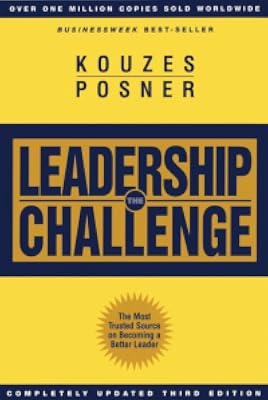
The Leadership Challenge: How to Get Extraordinary Things Done in Organizations
by James M. Kouzes, Barry Z. Posner (Author)
The Leadership Challenge
On This Page
Description
The latest edition of the gold-standard guide for leadership developmentIn the new seventh edition of The Leadership Challenge: How to Make Extraordinary Things Happen in Organizations, best-selling leadership authors and business scholars James Kouzes and Barry Posner deliver an essential strategic playbook for effective leadership. The book's actionable advice is grounded in robust research and deep insights into the complex interpersonal dynamics of the workplace.
Premier authorities in show more the field, the authors frame leadership as both a skill to be learned and as a relationship to be nurtured. They demonstrate how to achieve extraordinary results in the face of contemporary business challenges with engaging stories, current case studies, and straightforward frameworks for those who seek continuous, incremental improvement.
The book also offers:
. show less
Tags
Recommendations
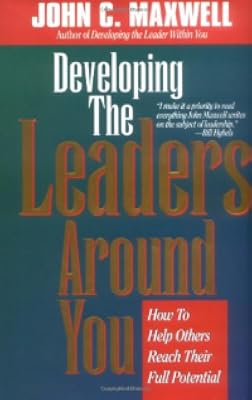
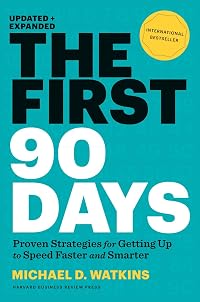
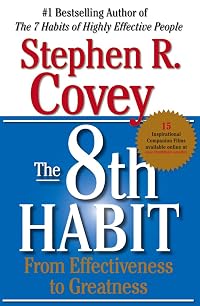

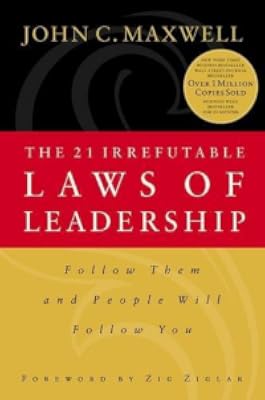
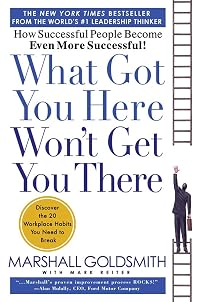
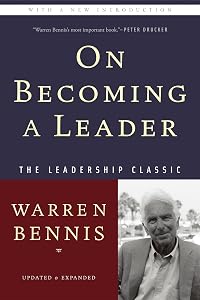
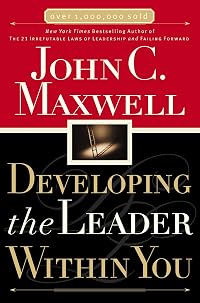
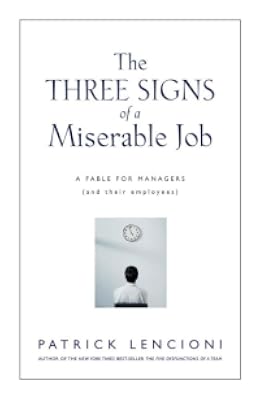
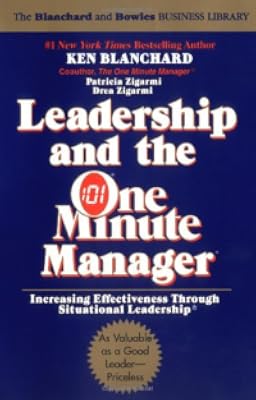
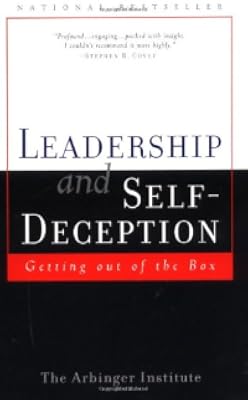
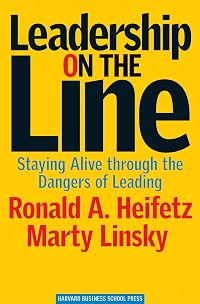
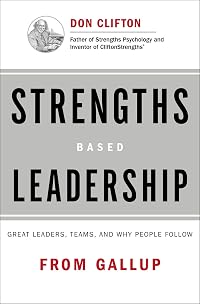
Member Reviews
The best part of this detailed look at leadership in the workplace is its focus on respect of individuals and acknowledgement of the power of teams. Viewing leaders as ones who “enable others to act not by hoarding the power they have but by giving it away,” is critical to the book’s thrust, resulting in advice on how to reward individuals and teams and not only encouraging but actually empowering people to “become heroes.” The authors even conclude that love should be a guiding principle (though this is in part warped by their inclusion of love of product).
What the authors don’t love, however, is wisdom. “How to” advice often encourages leaders to appeal to people’s hopes, dreams, and future visions, while apparently show more not needing to appeal to the reality of the way the world actually works. Consequently, it’s not surprising than, that that they conclude that because their vast survey showed that leaders don’t want to keep things unchanged, effective leaders must therefore pioneer new things. Apparently, historical leaders who fought against “innovators” (who we now exalt as “early adopters”) were wrong-headed anomalies. C.S. Lewis is apt here: “The real job of every moral teacher [which is really what a leader is] is to keep on bringing us back, time after time, to the old simple principles which we are all so anxious not to see; like bringing a horse back and back to the fence it has refused to jump or bringing a child back and back to the bit in its lesson that it wants to shirk.” Constantly seeking to innovate and improve as the authors suggest, will only lead to a “dynamic workplace” where organizations that are “stable, orderly, and run like clockwork” are replaced by ones where employees are on shifting ground where they can’t consistently rely on an organizational structure that is permanent enough to ensure they will always be protected. show less
What the authors don’t love, however, is wisdom. “How to” advice often encourages leaders to appeal to people’s hopes, dreams, and future visions, while apparently show more not needing to appeal to the reality of the way the world actually works. Consequently, it’s not surprising than, that that they conclude that because their vast survey showed that leaders don’t want to keep things unchanged, effective leaders must therefore pioneer new things. Apparently, historical leaders who fought against “innovators” (who we now exalt as “early adopters”) were wrong-headed anomalies. C.S. Lewis is apt here: “The real job of every moral teacher [which is really what a leader is] is to keep on bringing us back, time after time, to the old simple principles which we are all so anxious not to see; like bringing a horse back and back to the fence it has refused to jump or bringing a child back and back to the bit in its lesson that it wants to shirk.” Constantly seeking to innovate and improve as the authors suggest, will only lead to a “dynamic workplace” where organizations that are “stable, orderly, and run like clockwork” are replaced by ones where employees are on shifting ground where they can’t consistently rely on an organizational structure that is permanent enough to ensure they will always be protected. show less
This book has reached classic status, and I can see why. It explains a simple framework of five essential components for motivating and inspiring others. The five make sense and are simple enough to quickly memorize. Within these there are ten sub-components and then a further breakdown of key principles. The examples, while meaningful and instructive, get dry for me. In fairness, it may be that, having already been through a class and the accompanying workbook, I'm already at a different learning stage. While the text itself kept my rating at a 3, the concepts are invaluable and I'd recommend it (and will reference it again myself).
I'm not a fan of alludes and Posner...most of what I've read of theirs is several times longer than necessary - as if they felt a need to justify their position by adding in more anecdotes than normal. This was required reading for a year long management round table and while it does have value, I found less value than most probably would. Much of what they try to convey is intuitively obvious to me, and a I see pretty much daily that heir theories are not intuitively obvious to others, so I acknowledge that they do fill a need, but as with their other books that I've read, this is 8-10 times longer than it needs to be. Make your points, use concise language to convey the supporting evidence, illustrate with maybe one anecdote, and show more recap. If you never read another leadership book, well, read another leadership book. They each claim to have the key to making things happen and they all probably have some merit, but the real leader takes from multiple sources and synthesizes a package that works for him/her. show less
It's about being a leader, and becoming a better leader, and while I usually recoil at business models of leadership, this book is fantastic
James Kouzes and Barry Posner, throughout "The Leadership Challenge," effectively document the obvious and important influences leaders have on those around them. Their “Five Practices and Ten Commitments of Leadership” include reminders that leaders “model the way,” “inspire a shared vision,” “challenge the process,” “enable others to act,” and “encourage the heart,” and their suggested commitments include one to “set the example by aligning actions with shared values” —ideas that we all too often set aside as we’re dealing with the varied and conflicting directives coming our way.
Furthermore, citing the extensive research they have completed, they remind us of the tremendous influence leaders have: show more ‘If you’re a manager in an organization, to your direct reports you are the most important leader in your organization…The leaders who have the most influence on people are those who are the closest to them,” they write. “You have to challenge the myth that leadership is about position and power…” The book has a well deserved reputation as must-read material for leaders and anyone interested in leadership, and provides inspiration for those of us involved in workplace learning and performance (training) since so much of what we do helps develop leadership skills among those we serve. show less
Furthermore, citing the extensive research they have completed, they remind us of the tremendous influence leaders have: show more ‘If you’re a manager in an organization, to your direct reports you are the most important leader in your organization…The leaders who have the most influence on people are those who are the closest to them,” they write. “You have to challenge the myth that leadership is about position and power…” The book has a well deserved reputation as must-read material for leaders and anyone interested in leadership, and provides inspiration for those of us involved in workplace learning and performance (training) since so much of what we do helps develop leadership skills among those we serve. show less
Used this book wihtin a year long leadrehsip course I took wihtin my county. I enjoyed the many case studies and stories that connected the main points of the book and found it an enjoyable read.
Great material, struggled with their writing style.
Members
- Recently Added By
Lists

Office Library
41 works; 1 member
Author Information

73+ Works 5,335 Members
James M. Kouzes and Barry Z. Posner are the bestselling coauthors of The Leadership Challenge, Credibility, The Truth About Leadership, Encouraging the Heart, A Leader's Legacy, and over a dozen other books and workbooks on leadership. They also developed the highly-acclaimed Leadership Practices Inventory (LPI) a 360-degree assessment tool based show more on The Five Practices of Exemplary Leadership. An Executive Professor of Leadership at the Leavey School of Business, Santa Clara University, California, Jim was cited by the Wall Street Journal as one of the top twelve executive educators in the U.S. Barry is Accolti Professor of Leadership at Santa Clara University and former dean of the Leavey School of Business. show less
Some Editions
Awards and Honors
Awards
Series

Work Relationships
Is replied to in
Common Knowledge
- Canonical title
- The Leadership Challenge: How to Get Extraordinary Things Done in Organizations
Classifications
Statistics
- Members
- 2,853
- Popularity
- 6,367
- Reviews
- 12
- Rating
- (3.75)
- Languages
- 8 — English, French, German, Indonesian, Korean, Portuguese, Romanian, Spanish
- Media
- Paper, Audiobook, Ebook
- ISBNs
- 58
- UPCs
- 2
- ASINs
- 22
