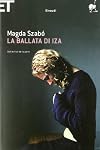
Iza's Ballad
by Magda Szabó
On This Page
Description
"When Ettie's husband dies, her daughter, Iza, insists that she give up the family house in the countryside and move to Budapest. Displaced from her community and her home, Ettie tries to find her place in this new life. Iza's Ballad is the story of a woman who loses her life's companion and a mother trying to get close to a daughter whom she has never truly known. It is about the meeting of the old-fashioned and the modern worlds and the beliefs we construct over a lifetime. Beautifully show more translated by the poet George Szirtes, this is a profoundly moving novel with the unforgettable power of Magda Szabo's award-winning The Door"-- show lessTags
Recommendations
























Member Reviews
Read Szabo's The Door and was blown away, wanted to read more by this fantastic author but couldn't find any other translated works here in the states. Then I saw this one, comes out soon, and started reading and once again this author reached inside and captured me totally. She seems to have such an understanding of all the messy, inside things, memories and habits, misunderstandings and experiences that make us human.
Ettie and Vince has been married for fifty years when he dies. They had lived in the rural area for many years, lived simply, not ever showing they had more than their neighbors, every item in their house had meaning, and suddenly it is gone. They only had one daughter, Iza who became a doctor and often she visited show more providing for her parents in their elderly years. Suddenly it is all gone, Iza decides to take her mother and live with her in her apartment in Budapest, from rural to city, nothing familiar, nothing the same.
A mother who never really understood her daughter and the past against the present, old versus new, and memories, meaningful things. How does one survive when everything one cherished is gone? Szabo put together a multiple faceted story, we learn about some of the characters from other characters, conversations and again memories. A simple, but powerful story. Another winner for me from this author. show less
Ettie and Vince has been married for fifty years when he dies. They had lived in the rural area for many years, lived simply, not ever showing they had more than their neighbors, every item in their house had meaning, and suddenly it is gone. They only had one daughter, Iza who became a doctor and often she visited show more providing for her parents in their elderly years. Suddenly it is all gone, Iza decides to take her mother and live with her in her apartment in Budapest, from rural to city, nothing familiar, nothing the same.
A mother who never really understood her daughter and the past against the present, old versus new, and memories, meaningful things. How does one survive when everything one cherished is gone? Szabo put together a multiple faceted story, we learn about some of the characters from other characters, conversations and again memories. A simple, but powerful story. Another winner for me from this author. show less
Ho capito l'essenza del libro nelle ultime pagine, mi sfuggiva. Ma nonostante questo ho seguito le vicende di Iza, della vecchia madre, del vecchio padre, di Antal con grande coinvolgimento. Per questo motivo questa mia recensione potrebbe essere spoiler, sappiatelo.
Una naturalezza e semplicità nel descrivere un fattore umano assolutamente nascosto: l'incapacità di donarsi agli altri, l'assenza di empatia, l'egoismo assoluto di una donna meravigliosamente altruista, retta, buona, intelligente, adorata e devota figlia.
Una perfezione di donna che manca di quell'indispensabile afflato di umana comprensione del prossimo che nel tempo allontanerà da lei, sia per morte che per vita, chiunque l'abbia tanto amata.
Una naturalezza e semplicità nel descrivere un fattore umano assolutamente nascosto: l'incapacità di donarsi agli altri, l'assenza di empatia, l'egoismo assoluto di una donna meravigliosamente altruista, retta, buona, intelligente, adorata e devota figlia.
Una perfezione di donna che manca di quell'indispensabile afflato di umana comprensione del prossimo che nel tempo allontanerà da lei, sia per morte che per vita, chiunque l'abbia tanto amata.
Frequently, the death of a spouse in a long-term marriage does not end well for the survivor. The problem of what to do when the surviving partner is aged but otherwise enjoys a comfortable lifestyle is all too familiar. Sometimes the best solution is to leave well enough alone. Magda Szabo’s stunning novel (IZA’S BALLAD) explores how over-caring can sometimes have tragic consequences.
Ettie Szócs’ husband, Vince, has died of cancer. With the best of intentions, her daughter, Iza, takes charge of her mother’s welfare following the funeral. While sequestering Ettie at a nearby spa, Iza sells the family home, disposes of most of her parents’ belongings and makes plans to move her mother to Budapest. Ettie does not even get the show more opportunity to bid farewell to her neighbor or the family dog. Iza benevolently believes this will be the best possible way for her mother to live out her remaining days. Even Ettie’s neighbor remarks, "What a delight it must be to move to Budapest, to leave sad memories behind and to enjoy a happy old age in new circumstances.”
This thorough uprooting, combined with mourning for her deceased husband, is profoundly disorienting for Ettie. In Budapest, she is isolated, has no friends and nothing to do. Iza is away at work for most of the day and goes out with friends most evenings. There is even Terez, an efficient housekeeper who prefers to go about her work without assistance from Ettie. Ettie spends her days riding trams around the city and only realizes how much she has lost when she returns to her village to place a stone at Vince’s grave.
Szabo explores this unfortunate situation with skill, subtlety and empathy. Perspectives shift seamlessly evoking the disorientation that Ettie undoubtedly feels while also revealing the backstories of both women. Ettie and Vince had lived quietly in a rural Hungarian village. She distrusted modern conveniences making toast over an open flame and preferring times when power outages necessitated lighting candles.
Iza overlooks the pleasure and solace her mother derived from her environment and the memories it provided. She was close to Vince, who was a judge blacklisted by the right-wing Hungarian regime for a politically sensitive legal decision. She had one brother who died young. Ettie adored her Iza when she was young but does not know what to make of her now.
Iza views herself as a dutiful daughter who is generous to her parents but she has a cold and controlling personality. She has abandoned her past for a life in the modern city. After finishing medical school, she married Antal, a classmate. They lived with her parents while both established their medical careers. The marriage eventually failed for reasons that become more obvious as the novel proceeds. Following the divorce, Iza moved to Budapest, but Antal remained in his rural community where he had deep connections. He now has a fiancée, Lidia, who is a nurse and cared for Vince in his last days. He also purchases Ettie’s house because of his sentimental attachment to the Szócs. Meanwhile Iza’s career and personal life take a different direction. She is a brilliant medical specialist with many friends but few close attachments. Her significant other is a worldly writer, but uses people as raw material for his books.
Szabo’s narrative has a comfortable pace, sifting seamlessly between times and perspectives slowly accumulating facts that begin to define her characters and their relations to one another. Through her deceptively simple tale, she subtly tackles a large array of important human themes—mother-daughter relationships, traditional versus modern values, rural and city existences, balance between home and work, meditations on grief and loss of loved ones, and the importance of memories. This is a remarkable book that speaks eloquently to the difficulties we all experience connecting to one another. show less
Ettie Szócs’ husband, Vince, has died of cancer. With the best of intentions, her daughter, Iza, takes charge of her mother’s welfare following the funeral. While sequestering Ettie at a nearby spa, Iza sells the family home, disposes of most of her parents’ belongings and makes plans to move her mother to Budapest. Ettie does not even get the show more opportunity to bid farewell to her neighbor or the family dog. Iza benevolently believes this will be the best possible way for her mother to live out her remaining days. Even Ettie’s neighbor remarks, "What a delight it must be to move to Budapest, to leave sad memories behind and to enjoy a happy old age in new circumstances.”
This thorough uprooting, combined with mourning for her deceased husband, is profoundly disorienting for Ettie. In Budapest, she is isolated, has no friends and nothing to do. Iza is away at work for most of the day and goes out with friends most evenings. There is even Terez, an efficient housekeeper who prefers to go about her work without assistance from Ettie. Ettie spends her days riding trams around the city and only realizes how much she has lost when she returns to her village to place a stone at Vince’s grave.
Szabo explores this unfortunate situation with skill, subtlety and empathy. Perspectives shift seamlessly evoking the disorientation that Ettie undoubtedly feels while also revealing the backstories of both women. Ettie and Vince had lived quietly in a rural Hungarian village. She distrusted modern conveniences making toast over an open flame and preferring times when power outages necessitated lighting candles.
Iza overlooks the pleasure and solace her mother derived from her environment and the memories it provided. She was close to Vince, who was a judge blacklisted by the right-wing Hungarian regime for a politically sensitive legal decision. She had one brother who died young. Ettie adored her Iza when she was young but does not know what to make of her now.
Iza views herself as a dutiful daughter who is generous to her parents but she has a cold and controlling personality. She has abandoned her past for a life in the modern city. After finishing medical school, she married Antal, a classmate. They lived with her parents while both established their medical careers. The marriage eventually failed for reasons that become more obvious as the novel proceeds. Following the divorce, Iza moved to Budapest, but Antal remained in his rural community where he had deep connections. He now has a fiancée, Lidia, who is a nurse and cared for Vince in his last days. He also purchases Ettie’s house because of his sentimental attachment to the Szócs. Meanwhile Iza’s career and personal life take a different direction. She is a brilliant medical specialist with many friends but few close attachments. Her significant other is a worldly writer, but uses people as raw material for his books.
Szabo’s narrative has a comfortable pace, sifting seamlessly between times and perspectives slowly accumulating facts that begin to define her characters and their relations to one another. Through her deceptively simple tale, she subtly tackles a large array of important human themes—mother-daughter relationships, traditional versus modern values, rural and city existences, balance between home and work, meditations on grief and loss of loved ones, and the importance of memories. This is a remarkable book that speaks eloquently to the difficulties we all experience connecting to one another. show less
"(Old people's) pasts are explanations and values, the key to the present", 20 Mar. 2016
This review is from: Iza's Ballad (Paperback)
When Etty's husband dies, her successful, utterly capable daughter Iza - a doctor in Budapest - sends her to recuperate in a hotel while she arranges for her to give up her country home and come and share her flat. Right at this point the reader foresees conflict ahead, as Etty sits in her hotel: "she made a drawing of the flat using her imagination and planned where she would put everything, finding room for all the furniture. it might be a little crowded but it would all be there ... she took great delight in the effort, drawing little semicircles for chairs ... There'd be plenty to do once they got to show more Pest. But it would be good work and it made her happy to think about it. Making a home."
Iza does everything for her mother but in the new, luxurious flat, with a housekeeper to attend to all the tasks, Etty is at a loss as to how to spend her days.
This novel's focus moves from Etty to Iza's ex-husband Antal, who has purchased Etty's old house, and lastly to Iza herself; as it progresses we understand more of the feelings and motivations of each.
Writing a novel of personalities where there are no 'goodies' or 'baddies', just ordinary people striving to rub along with one another - and bringing them so vividly to life and evoking our feelings for each of them - is the mark of a truly brilliant writer. show less
This review is from: Iza's Ballad (Paperback)
When Etty's husband dies, her successful, utterly capable daughter Iza - a doctor in Budapest - sends her to recuperate in a hotel while she arranges for her to give up her country home and come and share her flat. Right at this point the reader foresees conflict ahead, as Etty sits in her hotel: "she made a drawing of the flat using her imagination and planned where she would put everything, finding room for all the furniture. it might be a little crowded but it would all be there ... she took great delight in the effort, drawing little semicircles for chairs ... There'd be plenty to do once they got to show more Pest. But it would be good work and it made her happy to think about it. Making a home."
Iza does everything for her mother but in the new, luxurious flat, with a housekeeper to attend to all the tasks, Etty is at a loss as to how to spend her days.
This novel's focus moves from Etty to Iza's ex-husband Antal, who has purchased Etty's old house, and lastly to Iza herself; as it progresses we understand more of the feelings and motivations of each.
Writing a novel of personalities where there are no 'goodies' or 'baddies', just ordinary people striving to rub along with one another - and bringing them so vividly to life and evoking our feelings for each of them - is the mark of a truly brilliant writer. show less
Such interesting characters, developed slowly through the book. The relationship between the widowed mother and adult daughter is so well-drawn—it’s a bit painful watching them both trying to do their best, which invariably is not the best for the other.
It’s set against a backdrop of conflicts—pre- and post WWII, village and city, old and young, crumbling empire (the peasants here) and communism—which never gets old for me. Looking forward to reading more of Szabo!
It’s set against a backdrop of conflicts—pre- and post WWII, village and city, old and young, crumbling empire (the peasants here) and communism—which never gets old for me. Looking forward to reading more of Szabo!
Iza, babası ölünce yalnız kalan annesini yanına almak ister. Doktor kızıyla gurur duyan yaşlı kadın, sürdürdüğü taşra hayatını, anılarını, alışkanlıklarını, bir anlamda kimliğini bırakıp başkente taşınır. Ne yazık ki, yirminci yüzyılın ikinci yarısında, savaş sonrasında büyük bir hızla değişen Macar toplumunda, yalnızlık ve kuşak çatışması anlamına gelmektedir bu.
Szabó ilk kez 1963 yılında yayımlanan romanında, insani değerlere en bağlı, en idealist kişilerin bile yakınlarını anlamakta nasıl yetersiz kalabileceğini, insan ilişkilerine sızan empati yoksunluğunu anlatıyor.
Magda Szabó’yu keşfettiyseniz altın bir balık yakaladınız demektir. Yazmakta olduğu show more bütün kitapları alın, ileride yazacaklarını da. show less
Szabó ilk kez 1963 yılında yayımlanan romanında, insani değerlere en bağlı, en idealist kişilerin bile yakınlarını anlamakta nasıl yetersiz kalabileceğini, insan ilişkilerine sızan empati yoksunluğunu anlatıyor.
Magda Szabó’yu keşfettiyseniz altın bir balık yakaladınız demektir. Yazmakta olduğu show more bütün kitapları alın, ileride yazacaklarını da. show less
This translation by George Szirtes is from 2014, but the novel first appeared in Hungary in 1963, and is set in around 1960. The novel opens in a traditional small town in Hungary, later moving to the rapidly changing city of Budapest. For people of the older generation, the war and earlier government oppressions live long in their memory – their world was shaped by such events. So many of these past events are shrouded in silence – and the reader only gradually pieces together the history of these characters – very ordinary people, who we find have done small extraordinary things.
The novel begins with a death, Ettie’s husband Vince dies from cancer in a clinic, the news brought to Ettie by Antal her former son-in-law. Szabó show more portrays Ettie’s bewildered grief with utter perfection, she expects nothing more from life now – and in her weary sadness is relieved by the arrival of Iza – her capable, doctor daughter from the city – where she moved following her divorce from Antal.
“Everything has changed,’ the old woman thought. ‘I can’t tell what is what any more, only that nothing is as it was.”
Iza is a very managing type of person, Ettie may not have any vision of her own future – but Iza does. She tells her mother that she will come and live with her in Budapest – and Ettie is overwhelmingly grateful that she won’t be alone, proud to be going to live in her doctor daughter’s city apartment. Following Vince’s funeral, Iza packs Ettie of for a week’s holiday while she organises everything. Wearily Ettie agrees to leaving the packing up of her things to Iza, and prepares to endure a week’s holiday she doesn’t want. She keeps herself from complete despair by imagining how she will look after her busy daughter’s city apartment, cook for her, place all her lovely things in the apartment to make it look like home.
Upon her arrival in Budapest, nothing is as she had imagined it, only a few possessions have made it to the city – everything else has been disposed of by Iza. The dog Captain, who had lived with Ettie and Vince for years, has stayed with Antal who has bought Ettie’s old house – and Ettie misses his reliable presence. The grief stricken old woman doesn’t want to blame Iza for anything, she feels she must be grateful, unable to speak of her grief and bewilderment.
“She sat in the armchair and tried to cry silently, afraid that Iza would hear her through the thin walls and come in and accuse her of being ungrateful. As indeed she was. The girl had told her she would sell the house and anything inessential, and it was her fault for not thinking it through, not including everything that would make a dwelling look harmonious, comfortable and attractive.”
Ettie finds herself unwittingly annoying Iza when she tries to help – poor Ettie gets everything wrong. Iza has a daily housekeeper – Teréz, and Ettie is soon made aware that her help isn’t wanted – she isn’t allowed to cook, she makes coffee the wrong way. Iza tells her mother with great patience that this is her time to rest – she hasn’t brought her to Budapest to work. So, the old woman sits in her room, looks out the window and tries not to get in Teréz’s way. In time, she starts to venture out into the city – so unrecognisable from the days of her one visit on her honeymoon – riding the trams and sitting in the park. Slowly, Ettie becomes more and more diminished with this new life she is unprepared for. Iza is enraged when in her desperate loneliness Ettie invites an ageing prostitute to tea who she meets in the park, as delighted as a child to have made a new friend. Iza’s world is a very tightly controlled one, and Ettie can’t adjust to it – married for fifty years to Vince their life in rural Hungary has been all Ettie has known, every shabby item in their home had a story – Ettie’s life had always been one of physical work and support.
In a later part of the novel we have some of Antal and Iza’s story – another story of things unsaid – shaped by Hungary’s history. It’s an extraordinary story, one of hardship, determination and political activism. As a student during the war, Iza had smuggled grenades in her bag. Antal, educated thanks to a scholarship, had been befriended by Vince – Iza’s father – a judge who had once had his job taken from him after he refused to convict a group of peasants.
“She didn’t stay a word until they reached the edge of the wood, then stopped and looked at him again and spoke very clearly as if she wanted to emphasize every word to him. ‘Politics will be my life as long as I live, she said.
He knew it was crazy but at that moment he was sure he would marry her.”
Iza’s Ballad is a sad, deeply poignant novel, there is an inevitability to the ending – and like The Door, the characters will live long in my memory. show less
The novel begins with a death, Ettie’s husband Vince dies from cancer in a clinic, the news brought to Ettie by Antal her former son-in-law. Szabó show more portrays Ettie’s bewildered grief with utter perfection, she expects nothing more from life now – and in her weary sadness is relieved by the arrival of Iza – her capable, doctor daughter from the city – where she moved following her divorce from Antal.
“Everything has changed,’ the old woman thought. ‘I can’t tell what is what any more, only that nothing is as it was.”
Iza is a very managing type of person, Ettie may not have any vision of her own future – but Iza does. She tells her mother that she will come and live with her in Budapest – and Ettie is overwhelmingly grateful that she won’t be alone, proud to be going to live in her doctor daughter’s city apartment. Following Vince’s funeral, Iza packs Ettie of for a week’s holiday while she organises everything. Wearily Ettie agrees to leaving the packing up of her things to Iza, and prepares to endure a week’s holiday she doesn’t want. She keeps herself from complete despair by imagining how she will look after her busy daughter’s city apartment, cook for her, place all her lovely things in the apartment to make it look like home.
Upon her arrival in Budapest, nothing is as she had imagined it, only a few possessions have made it to the city – everything else has been disposed of by Iza. The dog Captain, who had lived with Ettie and Vince for years, has stayed with Antal who has bought Ettie’s old house – and Ettie misses his reliable presence. The grief stricken old woman doesn’t want to blame Iza for anything, she feels she must be grateful, unable to speak of her grief and bewilderment.
“She sat in the armchair and tried to cry silently, afraid that Iza would hear her through the thin walls and come in and accuse her of being ungrateful. As indeed she was. The girl had told her she would sell the house and anything inessential, and it was her fault for not thinking it through, not including everything that would make a dwelling look harmonious, comfortable and attractive.”
Ettie finds herself unwittingly annoying Iza when she tries to help – poor Ettie gets everything wrong. Iza has a daily housekeeper – Teréz, and Ettie is soon made aware that her help isn’t wanted – she isn’t allowed to cook, she makes coffee the wrong way. Iza tells her mother with great patience that this is her time to rest – she hasn’t brought her to Budapest to work. So, the old woman sits in her room, looks out the window and tries not to get in Teréz’s way. In time, she starts to venture out into the city – so unrecognisable from the days of her one visit on her honeymoon – riding the trams and sitting in the park. Slowly, Ettie becomes more and more diminished with this new life she is unprepared for. Iza is enraged when in her desperate loneliness Ettie invites an ageing prostitute to tea who she meets in the park, as delighted as a child to have made a new friend. Iza’s world is a very tightly controlled one, and Ettie can’t adjust to it – married for fifty years to Vince their life in rural Hungary has been all Ettie has known, every shabby item in their home had a story – Ettie’s life had always been one of physical work and support.
In a later part of the novel we have some of Antal and Iza’s story – another story of things unsaid – shaped by Hungary’s history. It’s an extraordinary story, one of hardship, determination and political activism. As a student during the war, Iza had smuggled grenades in her bag. Antal, educated thanks to a scholarship, had been befriended by Vince – Iza’s father – a judge who had once had his job taken from him after he refused to convict a group of peasants.
“She didn’t stay a word until they reached the edge of the wood, then stopped and looked at him again and spoke very clearly as if she wanted to emphasize every word to him. ‘Politics will be my life as long as I live, she said.
He knew it was crazy but at that moment he was sure he would marry her.”
Iza’s Ballad is a sad, deeply poignant novel, there is an inevitability to the ending – and like The Door, the characters will live long in my memory. show less
Members
- Recently Added By
Lists

Top Five Books of 2019
387 works; 111 members

Mothers and Daughters
114 works; 11 members

Books Read in 2017
4,248 works; 129 members

Books Read in 2019
4,052 works; 108 members
Author Information

90+ Works 4,426 Members
Some Editions
Awards and Honors
Awards
Distinctions
Series
Belongs to Publisher Series
Common Knowledge
- Canonical title
- Iza's Ballad
- Original title
- Pilatus
- Alternate titles*
- Die Elemente; ...und wusch ihre Hände in Unschuld
- Original publication date
- 1963
- People/Characters
- Etel Szocs; Vince Szocs; Iza Szocs; Antal Antal; Domokos; Lidia (show all 7); Gica
- Important places
- Budapest, Hungary
- First words
- The news arrived just as she was toasting bread.
- Last words
- (Click to show. Warning: May contain spoilers.)The dead did not answer.
- Original language
- Hungarian
*Some information comes from Common Knowledge in other languages. Click "Edit" for more information.
Classifications
- Genres
- Fiction and Literature, General Fiction
- DDC/MDS
- 894.511332 — Literature & rhetoric Literatures of other languages Literatures of Altaic, Uralic, Hyperborean, Dravidian languages; literatures of miscellaneous languages of south Asia Finno-Ugric languages Ugric languages Hungarian Hungarian fiction 1900–2000 Early 20th century 1900–1945
- LCC
- PH3351 .S592 .P513 — Language and Literature Uralic languages. Basque language Uralic. Basque Hungarian
- BISAC
Statistics
- Members
- 404
- Popularity
- 76,491
- Reviews
- 15
- Rating
- (4.31)
- Languages
- 11 — English, French, German, Hungarian, Italian, Lithuanian, Norwegian (Bokmål), Portuguese (Portugal), Spanish, Swedish, Turkish
- Media
- Paper, Ebook
- ISBNs
- 29
- ASINs
- 7