
George Szirtes
Author of Reel
About the Author
George Szirtes was born in Budapest in 1948, and came to England with his family after the 1956 Hungarian Uprising. He was educated in England, training as a painter, and has always written in English. In recent years he has worked as a translator of Hungarian literature, producing editions of such show more writers as Ott Orbn, Zsuzsa Rakovszky and gnes Nemes Nagy, and novelists such as Sndor Mrai and Lszl Krasznahorkai. His other Bloodaxe titles include Reel, winner of the T.S. Eliot Prize, New Collected Poems; The Burning of the Books and other poems; Bad Machine; and Mapping the Delta. His memoir, The Photographer at Sixteen (MacLehose Press, 2019), won the James Tait Black Memorial Prize for Biography. He lives in Norfolk and is a freelance writer, having retired from teaching at at the University of East Anglia. show less
Image credit: Caroline Forbes
Works by George Szirtes
Leopard V: An Island of Sound: Hungarian Poetry and Fiction Before and Beyond the Iron Curtain (2004) 13 copies
Fortinbras at the Fishhouses: Responsibility, the Iron Curtain and the Sense of History as Knowledge (Newcastle/Bloodaxe Poetry) (2010) 6 copies
Associated Works
Iza's Ballad (1963) — Translator, some editions; Introduction, some editions — 409 copies, 16 reviews
The Adventures of Sindbad (1944) — Translator, some editions; Introduction, some editions — 249 copies, 2 reviews
Sunlight on the River: Poems About Paintings, Paintings About Poems (2015) — Contributor — 11 copies, 2 reviews
Poetry Introduction 4, with Clothier, Cluysenaar, Alan Hollinghurst, Craig Raine and Szirtes (1978) — Contributor — 2 copies
Tagged
Common Knowledge
- Birthdate
- 1948-05-09
- Gender
- male
- Occupations
- poet
translator
university teacher - Organizations
- University of East Anglia
- Awards and honors
- Ovid Prize (2006)
- Relationships
- Upchurch, Clarissa (wife)
- Nationality
- Hungary (birth)
UK - Birthplace
- Budapest, Hungary
- Places of residence
- London, England, UK
Wymondham, Norfolk, England, UK - Associated Place (for map)
- England, UK
Members
Reviews

Starting with her death and working backwards in time, George Szirtes tries to reconstruct the life of his mother Magda with the help of his own memories, poems that he has written about his family at various times, fragments of testimony from his father and others, and, in particular, photographs. Magda trained and worked as a professional photographer, so the pictures are especially relevant in this case, and he digs quite deeply into what the images seem to be telling us and why.
We go show more back through the various houses the family lived in after coming to Britain as refugees in 1956, their escape from Hungary, the Budapest apartment they lived in when George was a child and his father an important official in a ministry, and then before his birth to how his parents met (typically, there are several versions), and to the most difficult part of the story, Magda’s experience as a holocaust survivor and her life before the war in a Jewish family in Cluj, where Szirtes is almost completely in the dark, since apart from Magda only one distant cousin escaped being murdered by the Nazis. But there is a tantalising group of early photos showing Magda as a child with her mother and brother.
A delicate and rather beautiful exploration of how much and how little we really know about even the people we have the most intimate connection with. And a lot of interesting background on Hungary in the forties and fifties. show less
We go show more back through the various houses the family lived in after coming to Britain as refugees in 1956, their escape from Hungary, the Budapest apartment they lived in when George was a child and his father an important official in a ministry, and then before his birth to how his parents met (typically, there are several versions), and to the most difficult part of the story, Magda’s experience as a holocaust survivor and her life before the war in a Jewish family in Cluj, where Szirtes is almost completely in the dark, since apart from Magda only one distant cousin escaped being murdered by the Nazis. But there is a tantalising group of early photos showing Magda as a child with her mother and brother.
A delicate and rather beautiful exploration of how much and how little we really know about even the people we have the most intimate connection with. And a lot of interesting background on Hungary in the forties and fifties. show less

I was disappointed by Krasznahorkai's Seiobo, and a little concerned that my disappointment was actually exhaustion, either my own with him, or him with his style. But The World was far more enjoyable--perhaps not as 'great,' but much better. For a start, many of the pieces avoid the unnecessary single-sentenceness that marred Seibo; in that book, the sentences were less intriguing and fascinating than mildly dull. The same goes here for the stories that feature it, but as with any literary show more style, it reads better when surrounded by different styles. The same goes for the form of the pieces; there's much more variation here, with some pensees, some very short fictions, some longer stories (as in the previous volume), some shorter. And there's a very good Elizabeth Costello meets something much better than Elizabeth Costello piece, in which Krasznahorkai thinks over his previous work, and wonders if it was all that good. It was, but he's not satisfied. This is as it should be.
Another reviewer, who has my utmost respect, expressed his dislike of 'That Gagarin.' I actually thought it was very interesting: an interpretation of a photograph of Gagarin. That's a literary form I'd like to see more of, whether in Krasznahorkai or others.
Otherwise, it has the intelligence and dark irony you expect. I grew frustrated by the footloose globe-trotting (stories are narrated in Shanghai, Portugal, Ukraine, India, Italy, Russia, and Turkey); on the other hand, if I was Krasznahorkai, I'd be pretty happy to spend as much time outside Hungary as I could right now. show less
Another reviewer, who has my utmost respect, expressed his dislike of 'That Gagarin.' I actually thought it was very interesting: an interpretation of a photograph of Gagarin. That's a literary form I'd like to see more of, whether in Krasznahorkai or others.
Otherwise, it has the intelligence and dark irony you expect. I grew frustrated by the footloose globe-trotting (stories are narrated in Shanghai, Portugal, Ukraine, India, Italy, Russia, and Turkey); on the other hand, if I was Krasznahorkai, I'd be pretty happy to spend as much time outside Hungary as I could right now. show less
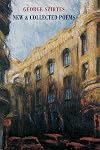
George Szirtes came to Britain as an eight-year-old refugee after the Hungarian Uprising in 1956. Educated in England, he trained as a painter, and has always written in English. This comprehensive retrospective of his work covers poetry from over a dozen collections written over four decades, with a substantial gathering of new poems. It is published on his 60th birthday at the same time as the first critical study of his work, "Reading George Szirtes" by John Sears. Haunted by his family's show more knowledge and experience of war, occupation and the Holocaust, as well as by loss, danger and exile, all of Szirtes' poetry covers universal themes: love, desire and illusion; loyalty and betrayal; history, art and memory; and, humanity and truth. Throughout his work there is a conflict between two states of mind, the possibility of happiness and apprehension of disaster. These are played out especially in his celebrated long poems and extended sequences, "The Photographer in Winter", "Metro", "The Courtyards", "An English Apocalypse" and "Reel", all included here. show less
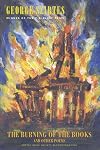
I like specific poems by Szirtes across the whole spectrum of his published works: I can't be bound by just this edition. I would be reviewing the poet as a whole. Szirtes has a unique turn of phrase, and more than anyone i've read, he has the ability to cross refer to famous/iconic pictures/poets/photographers/writers/etc without sounding pompous and like he's too big for his britches so to speak. Take his prologue to burning of the books. He says:
Through the wainscoted corridors of the show more rathaus
And the Groszbeggars stirred and shook a leg
And the Dixwounded rattled their small change of limbs
How cool is that? And then, I find out both Dix and Gosz were these marvelous artists in the 1950s (check them out) I'm personally going to rattle my small change of grey matter and read some more Szirtes show less
Through the wainscoted corridors of the show more rathaus
And the Groszbeggars stirred and shook a leg
And the Dixwounded rattled their small change of limbs
How cool is that? And then, I find out both Dix and Gosz were these marvelous artists in the 1950s (check them out) I'm personally going to rattle my small change of grey matter and read some more Szirtes show less
Lists
Awards


You May Also Like


Associated Authors
Statistics
- Works
- 41
- Also by
- 24
- Members
- 303
- Popularity
- #77,623
- Rating
- 3.8
- Reviews
- 8
- ISBNs
- 43
- Favorited
- 2