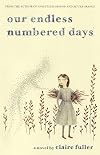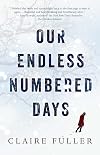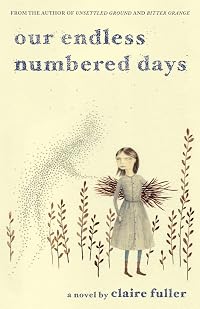
Our Endless Numbered Days
by Claire Fuller
On This Page
Description
"Peggy Hillcoat is eight years old when her survivalist father, James, takes her from their home in London to a remote hut in the woods and tells her that the rest of the world has been destroyed. Deep in the wilderness, Peggy and James make a life for themselves. They repair the hut, bathe in water from the river, hunt and gather food in the summers and almost starve in the harsh winters. They mark their days only by the sun and the seasons. When Peggy finds a pair of boots in the forest show more and begins a search for their owner, she unwittingly unravels the series of events that brought her to the woods and, in doing so, discovers the strength she needs to go back to the home and mother she thought she'd lost. After Peggy's return to civilization, her mother begins to learn the truth of her escape, of what happened to James on the last night out in the woods, and of the secret that Peggy has carried with her ever since"-- show lessTags
Recommendations





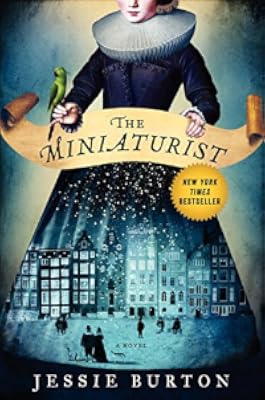
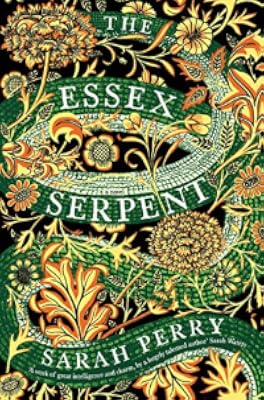

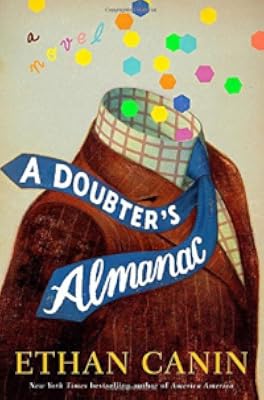
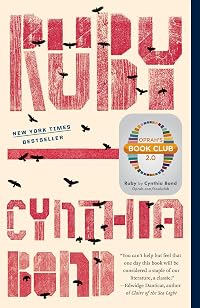
Member Recommendations

Member Reviews
I don't think I've ever read a book that was so close to losing me and managed to suck me back in before I put it down. And not just manage to pull me back but to make me re-frame all the things that were bothering me. Ultimately, I loved this book, but I do feel a little bit short-changed by it at the same time.
First; things I loved about the book. I loved the writing. Fuller does an excellent job of making a really believable and interesting child character in the first person without resorting to emulating child speak. Personally, I often have a hard time with child narrators in adult fiction eg. I began reading Room, and while I could tell that it was done extremely well and I could see why people were raving about that book, it show more just took me out of the story. But, here, Fuller has managed to put some objective distance between the actual events and Peggy's recounting of them that allows for a really wonderful unfolding of the story that are full of very shrewd child-like observations and imaginings without sacrificing the lyricism of the prose.
There is a direct quality to Peggy's narration of first-hand events in the first portion of the book that I really loved, and during the portion of the book set in the forest while she's a teenager, some first-hand events are now described in vague and ambiguous terms. I generally enjoy being asked, as a reader, to read between the lines, or parse allusions, but this seemed so at odds to the storytelling in the rest of the book that I found it jarring and frustrating. "Is she saying that x-y-and-z just happened, or isn't she?" But then the denouement of the book was such a feat, and miraculously caused me to look at all the things before it that had frustrated me in a series of "a-ha" moments. The ending is not unpredictable per se, I was not particularly surprised by any of the twists, but the way it unfolds and changes certain moments and illuminates them in a different way was so impressive. It struck me as a risk that nearly didn't pay off, as I did come quite close to putting the book down.
Once those frustrations were stopped in their tracks, rolled back, and reworked much to my delight, the only real criticism I was left with was pacing. We get the beginning and the end of Peggy and her father's nine years in the woods, and nothing in between, and we also get moments of life after she's returned to London (not a spoiler, the first page starts here). Frankly, I wanted much more. It's not that the jump from eight to seventeen isn't done well from a technical perspective, I just wanted to spend more time there. I wanted the psychological environment of those last few months or year to have had more time to develop and be explored. And the time we spend with Peggy in London readjusting to life was so, so good that the fact that there isn't more of it seems like a missed opportunity.
It's a beautiful book and Fuller is an excellent writer - I'll definitely keep an eye out for other books from her - and ultimately I was left very satisfied but just wanting more. show less
First; things I loved about the book. I loved the writing. Fuller does an excellent job of making a really believable and interesting child character in the first person without resorting to emulating child speak. Personally, I often have a hard time with child narrators in adult fiction eg. I began reading Room, and while I could tell that it was done extremely well and I could see why people were raving about that book, it show more just took me out of the story. But, here, Fuller has managed to put some objective distance between the actual events and Peggy's recounting of them that allows for a really wonderful unfolding of the story that are full of very shrewd child-like observations and imaginings without sacrificing the lyricism of the prose.
There is a direct quality to Peggy's narration of first-hand events in the first portion of the book that I really loved, and during the portion of the book set in the forest while she's a teenager, some first-hand events are now described in vague and ambiguous terms. I generally enjoy being asked, as a reader, to read between the lines, or parse allusions, but this seemed so at odds to the storytelling in the rest of the book that I found it jarring and frustrating. "Is she saying that x-y-and-z just happened, or isn't she?" But then the denouement of the book was such a feat, and miraculously caused me to look at all the things before it that had frustrated me in a series of "a-ha" moments. The ending is not unpredictable per se, I was not particularly surprised by any of the twists, but the way it unfolds and changes certain moments and illuminates them in a different way was so impressive. It struck me as a risk that nearly didn't pay off, as I did come quite close to putting the book down.
Once those frustrations were stopped in their tracks, rolled back, and reworked much to my delight, the only real criticism I was left with was pacing. We get the beginning and the end of Peggy and her father's nine years in the woods, and nothing in between, and we also get moments of life after she's returned to London (not a spoiler, the first page starts here). Frankly, I wanted much more. It's not that the jump from eight to seventeen isn't done well from a technical perspective, I just wanted to spend more time there. I wanted the psychological environment of those last few months or year to have had more time to develop and be explored. And the time we spend with Peggy in London readjusting to life was so, so good that the fact that there isn't more of it seems like a missed opportunity.
It's a beautiful book and Fuller is an excellent writer - I'll definitely keep an eye out for other books from her - and ultimately I was left very satisfied but just wanting more. show less
I believe that this book was a rather nice breath of fresh air, or at least it remained so until the end, when it kinda turned my stomach.
If any of you remember the neat stuff of The Wasp Factory or Life of Pi, you'll get a taste of all that here, but definitely not as crazy in either sense. All of the action and twist is much more homely and down to earth, sticking to the forest, so to speak.
It's definitely a cross between survivalist fiction and a coming of age novel, but all that doesn't quite surprise you will at least give you very nice taste of reading. Peggy's voice is very strong and the pacing is excellent, sometimes moving back and forward to the aftermath, never giving anything away until the right time.
It was a pleasant show more read, but I won't quite go so far as to say I was blown away by anything in particular. The surprises are merely horrifying, not mind-blowing.
YA, or not? I suppose it is. No one ought to lie that things like this revelation happens, but it only makes it a good novel because we're treated to the survivalist bits as well. All the characters are and will remain quite memorable. There's much worse praise out there.
Hell, it's a sight better than a number of the more recent SF classics I've read lately, and heads and shoulders above some other classic traditional fiction tomes I've had the pleasure (or not) of reading.
Still, the novel is only bold... to a point. There's no magical realism (which I probably would have gushed about) or severe twists of plot (which I would have applauded). No gimmicks, either. Just a solid tale told solidly, with beauty and strength. show less
If any of you remember the neat stuff of The Wasp Factory or Life of Pi, you'll get a taste of all that here, but definitely not as crazy in either sense. All of the action and twist is much more homely and down to earth, sticking to the forest, so to speak.
It's definitely a cross between survivalist fiction and a coming of age novel, but all that doesn't quite surprise you will at least give you very nice taste of reading. Peggy's voice is very strong and the pacing is excellent, sometimes moving back and forward to the aftermath, never giving anything away until the right time.
It was a pleasant show more read, but I won't quite go so far as to say I was blown away by anything in particular. The surprises are merely horrifying, not mind-blowing.
YA, or not? I suppose it is. No one ought to lie that things like this revelation happens, but it only makes it a good novel because we're treated to the survivalist bits as well. All the characters are and will remain quite memorable. There's much worse praise out there.
Hell, it's a sight better than a number of the more recent SF classics I've read lately, and heads and shoulders above some other classic traditional fiction tomes I've had the pleasure (or not) of reading.
Still, the novel is only bold... to a point. There's no magical realism (which I probably would have gushed about) or severe twists of plot (which I would have applauded). No gimmicks, either. Just a solid tale told solidly, with beauty and strength. show less
"Dates only make us aware how numbered our days are, how much closer to death we are for each one we cross off...our days will be endless."
This book is the reason I was staring at the ceiling and blinking furiously while holding the shattered pieces of my brain together at midnight. If that's not enough of a recommendation, the title is derived from an Iron and Wine song. There you go.
Our Endless Numbered Days follows a young English girl, Punzel, whose dad takes her on an "adventure" to a remote cabin in Germany after her mom leaves them for several weeks to tour with an orchestra. Their adventure lasts nine years, as Punzel's dad tells her that the world has ended in their absence. The years slip by as they struggle to survive, show more until the day Punzel finds strange boot prints in the forest. The ensuing plot twist is never completely resolved, leaving me both deeply satisfied and puzzled. If you like books with neat endings, pass this one over. If you're willing to take a chance on a book that stands out from the blur of identical mass market offal that authors keep churning out, please read this one.
This is not a happy book, but as a farm boy once said, "Life is pain, and anyone who says differently is selling something." The story is often bleak and gritty, yet haunting. Fuller manages to offset the dark plot with beautiful language and images that keep the book balanced, from the descriptions of the isolated forest to the image of Punzel learning to play the piano on a primitive wooden table in their hut. This book is also written in first person narrative, and as a reader, you trust Punzel's narrative until it's too late. I'm not usually a fan of this narrative style, but it's what makes this book possible.
Our Endless Numbered Days is billed as YA, which I don't understand. A teenage protagonist does not YA make, and many of the situations in this book are very mature/intense. That's not to say teenage readers wouldn't enjoy it, but it struck me as an adult book. I'm afraid many adults will pass this one over because of its prescribed reading level. Don't be one of them. Our Endless Numbered Days is the best book I've read this year. show less
This book is the reason I was staring at the ceiling and blinking furiously while holding the shattered pieces of my brain together at midnight. If that's not enough of a recommendation, the title is derived from an Iron and Wine song. There you go.
Our Endless Numbered Days follows a young English girl, Punzel, whose dad takes her on an "adventure" to a remote cabin in Germany after her mom leaves them for several weeks to tour with an orchestra. Their adventure lasts nine years, as Punzel's dad tells her that the world has ended in their absence. The years slip by as they struggle to survive, show more until the day Punzel finds strange boot prints in the forest. The ensuing plot twist is never completely resolved, leaving me both deeply satisfied and puzzled. If you like books with neat endings, pass this one over. If you're willing to take a chance on a book that stands out from the blur of identical mass market offal that authors keep churning out, please read this one.
This is not a happy book, but as a farm boy once said, "Life is pain, and anyone who says differently is selling something." The story is often bleak and gritty, yet haunting. Fuller manages to offset the dark plot with beautiful language and images that keep the book balanced, from the descriptions of the isolated forest to the image of Punzel learning to play the piano on a primitive wooden table in their hut. This book is also written in first person narrative, and as a reader, you trust Punzel's narrative until it's too late. I'm not usually a fan of this narrative style, but it's what makes this book possible.
Our Endless Numbered Days is billed as YA, which I don't understand. A teenage protagonist does not YA make, and many of the situations in this book are very mature/intense. That's not to say teenage readers wouldn't enjoy it, but it struck me as an adult book. I'm afraid many adults will pass this one over because of its prescribed reading level. Don't be one of them. Our Endless Numbered Days is the best book I've read this year. show less
A beautifully written, haunting debut that left me conflicted. The story itself was mesmerizing -- a 1970s survivalist (part of a "North London Retreaters" club), takes his 8-year-old daughter to live in the Bavarian wilderness. Nine years later, she's been reunited with her mother. The story unfolds in both time lines, which was skillful and slowly revealed all the secrets of why "Papa" took little Peggy in the first place and how she finally came back on her own.
While the writing is lovely, the details of the story are not. They're filthy, half-starved during the first winter, and "Papa" is emotionally and physically abusive. Teenage Peggy has not survived her ordeal unscathed in any aspect.
I saw the twists coming, because I'm show more unusually good at that.As soon as Oliver and James had their fight, it was obvious to me that Oliver had slept with Ute and the baby might be his. As soon as Peggy crossed the river and couldn't find Reuben, I guessed that he was a figment of her imagination, although I didn't draw the conclusion that she'd actually been having sex with "Papa" until it was revealed that she was pregnant. I don't think that affected my enjoyment of the overall book, but the ending did seem really abrupt. I mean, how the hell do Peggy and Ute move on from something like that? show less
While the writing is lovely, the details of the story are not. They're filthy, half-starved during the first winter, and "Papa" is emotionally and physically abusive. Teenage Peggy has not survived her ordeal unscathed in any aspect.
I saw the twists coming, because I'm show more unusually good at that.
I felt so very sad when I was reading this book, as Peggy's father takes her away to a remote cabin and tells her that everyone else in the world is dead. They are the only survivors after the hilariously named 'Ruskies' obliterated the world. The desolation of the cabin is described meticulously as Peggy and her father forage for food in their quest for survival.
Peggy's mother is a famous pianist, although Peggy has never been taught the piano. Her father crafts a make-shift piano out of bits of wood that Peggy plays every day, hearing the music in her head. I loved the piano being a constant reminder of her mother, leading us nicely on to interspersed chapters when Peggy is reunited with her mother years later.
There are some things show more left up to the reader's imagination with Claire Fuller dropping hints along the way about the strangely evolving relationship between Peggy and her father. The sanity of both Peggy and her father is called in to question on numerous occasions and it's hardly any wonder, being so isolated with only each other for company.
I really enjoyed this book. I think it was such an unusual subject to write about and with so few characters involved, it effortlessly drew the reader into the snow covered cabin, so much so that I felt I was almost watching it on a screen inside my head.
Brilliantly descriptive, it messed with my head equally as much as Peggy's father messed with her head. I wasn't sure who was real and who was imagined in the solitary world of Die Hütte.
I received this e-book from the publisher, Penguin, via NetGalley in exchange for an honest review. show less
Peggy's mother is a famous pianist, although Peggy has never been taught the piano. Her father crafts a make-shift piano out of bits of wood that Peggy plays every day, hearing the music in her head. I loved the piano being a constant reminder of her mother, leading us nicely on to interspersed chapters when Peggy is reunited with her mother years later.
There are some things show more left up to the reader's imagination with Claire Fuller dropping hints along the way about the strangely evolving relationship between Peggy and her father. The sanity of both Peggy and her father is called in to question on numerous occasions and it's hardly any wonder, being so isolated with only each other for company.
I really enjoyed this book. I think it was such an unusual subject to write about and with so few characters involved, it effortlessly drew the reader into the snow covered cabin, so much so that I felt I was almost watching it on a screen inside my head.
Brilliantly descriptive, it messed with my head equally as much as Peggy's father messed with her head. I wasn't sure who was real and who was imagined in the solitary world of Die Hütte.
I received this e-book from the publisher, Penguin, via NetGalley in exchange for an honest review. show less
I always approach a book with an open mind, no matter the genre or topic. But that being said, I didn't expect this book to be in my limited favorites shelf.
I was amazed on many levels with this book. The authors description of the setting was vivid. I read before I fall asleep and upon closing my eyes I still could see the tree's, the hut and the rest of the scenery in detail. It was like I was right there.
The turn of events at every corner made it a hard book to put down. It was amazing how the author writes and makes everything flow together, but then at the end she makes you doubt and question things and you can see how things could have been different. I can't really explain better without spoiling the whole story.
I got so into show more the book that upon ranting and raving about certain events in the book to my husband he turns and laughs, saying "You really got into this book didn't you." Yes, Yes I did. I have nothing bad to say about this book.
This book has the potential to be one of the must read books of 2015.
I received this book for free for my honest review. All opinions are my own and I have not promised nor am I required to give a positive review for this book. show less
I was amazed on many levels with this book. The authors description of the setting was vivid. I read before I fall asleep and upon closing my eyes I still could see the tree's, the hut and the rest of the scenery in detail. It was like I was right there.
The turn of events at every corner made it a hard book to put down. It was amazing how the author writes and makes everything flow together, but then at the end she makes you doubt and question things and you can see how things could have been different. I can't really explain better without spoiling the whole story.
I got so into show more the book that upon ranting and raving about certain events in the book to my husband he turns and laughs, saying "You really got into this book didn't you." Yes, Yes I did. I have nothing bad to say about this book.
This book has the potential to be one of the must read books of 2015.
I received this book for free for my honest review. All opinions are my own and I have not promised nor am I required to give a positive review for this book. show less
Our Endless Summer Days by Claire Fuller is a strange and haunting hybrid hat combines the outdoor adventures of Roughing It in the Bush with a psychological thriller. You know something bad happens, but you don’t know what. Much is hidden and our narrator is only a child when the story begins.
Ute, James and Peggy were not your typical family. Ute was a world-class pianist whose wealth freed James to care for their eight-year old daughter the few times she traveled. James was a bit of a prepper survivalist, though they called it “retreater” in 1970s London. He and his retreatist friends loved to chat and speculate and argue about the end times and how to prepare.
James was not the most responsible father, keeping Peggy home from show more school so they could play and practice retreater skills in the back yard, for example. Then one day, James gets a call while Ute is a way and clearly something important and urgent was relayed on that call. James gathers his things, having Peggy gather hers as he has drilled her in so many times over the years. They fly to Germany and hike several days into the forest, their goal “Die Hutte” a retreater refuge that one of James’s friends had mentioned. It’s not exactly the glorious retreat they expected and after a big storm, Peggy is ready to head home, but James tells her that Ute, her mother is dead and all of the world has been destroyed in that storm.
But we know this is not true, we know this is not a tale of post-apocalyptic survival because the first chapter begins in her mother’s house nine years later. We have two narratives then, the 1975 post-apocalyptic survival in the wild and the 1985 restoration to society and coming to understand what happened during those nine years.
Most of the story lingers on that first year, when James and Peggy, whom her dad took to calling Punzel thanks to her long, matted hair that she tried to plait. The lore and the skills of living off the land sometimes make it seem like an idyll, though when winter hunger eats away at their spirit and substance, the romance is lost. James is a loving father, who creates imaginative stories and delightful games to entrance his daughter. He even builds s soundless piano ofr her to learn to play, a feat of imagination that was as lovely as it was worrisome and foolish as the time spent on that would have been better spent stocking up for the winter.
Obviously other people have used the hut, the name Reuben is carved into one of the walls. But no one comes for many years. Why would they? The entire world has been destroyed. Then, after many years, she sees a pair of shoes, shoes on the feet of a stranger walking by her hideout in the woods. The role this stranger plays in her return to the world is shocking and the surprises keep coming.
I enjoyed Our Endless Numbered Days or maybe more accurately I was engrossed in the story. I loved the dismantling of the back to nature mythology. Living many years without running water, that stuff has no romance for me and there was something satisfying about draining every bit of the romance away. I could not thoroughly enjoy the fun and good times Peggy had with her father since I knew, thanks to the first chapter that her mother was alive, so obviously worried and missing her.
The sense of place in this book is powerful. It was hot and muggy when I was reading this, but I felt a chill on my back during the storm. The description of crossing the river was harrowing. The hardships were made very clear, but the beauty and magic of the forest was as well. Peggy and her father were well-developed characters, complex and surprising. The fact that our narrator Peggy is unreliable makes sense, living in this false world her father constructed and eating an unbalanced diet that lacked nutrients, she has understandable memory blanks. Ute is more in the background, so happy to have her daughter home, but a bit unknowable.
In the end, things come to light, things that help explain why James fled with Peggy and why Peggy was so lucky to find Reuben when she did. This is not the happiest story in the world, but it is moving, fascinating and beautifully written.
https://tonstantweaderreviews.wordpress.com/2016/07/29/our-endless-numbered-days... show less
Ute, James and Peggy were not your typical family. Ute was a world-class pianist whose wealth freed James to care for their eight-year old daughter the few times she traveled. James was a bit of a prepper survivalist, though they called it “retreater” in 1970s London. He and his retreatist friends loved to chat and speculate and argue about the end times and how to prepare.
James was not the most responsible father, keeping Peggy home from show more school so they could play and practice retreater skills in the back yard, for example. Then one day, James gets a call while Ute is a way and clearly something important and urgent was relayed on that call. James gathers his things, having Peggy gather hers as he has drilled her in so many times over the years. They fly to Germany and hike several days into the forest, their goal “Die Hutte” a retreater refuge that one of James’s friends had mentioned. It’s not exactly the glorious retreat they expected and after a big storm, Peggy is ready to head home, but James tells her that Ute, her mother is dead and all of the world has been destroyed in that storm.
But we know this is not true, we know this is not a tale of post-apocalyptic survival because the first chapter begins in her mother’s house nine years later. We have two narratives then, the 1975 post-apocalyptic survival in the wild and the 1985 restoration to society and coming to understand what happened during those nine years.
Most of the story lingers on that first year, when James and Peggy, whom her dad took to calling Punzel thanks to her long, matted hair that she tried to plait. The lore and the skills of living off the land sometimes make it seem like an idyll, though when winter hunger eats away at their spirit and substance, the romance is lost. James is a loving father, who creates imaginative stories and delightful games to entrance his daughter. He even builds s soundless piano ofr her to learn to play, a feat of imagination that was as lovely as it was worrisome and foolish as the time spent on that would have been better spent stocking up for the winter.
Obviously other people have used the hut, the name Reuben is carved into one of the walls. But no one comes for many years. Why would they? The entire world has been destroyed. Then, after many years, she sees a pair of shoes, shoes on the feet of a stranger walking by her hideout in the woods. The role this stranger plays in her return to the world is shocking and the surprises keep coming.
I enjoyed Our Endless Numbered Days or maybe more accurately I was engrossed in the story. I loved the dismantling of the back to nature mythology. Living many years without running water, that stuff has no romance for me and there was something satisfying about draining every bit of the romance away. I could not thoroughly enjoy the fun and good times Peggy had with her father since I knew, thanks to the first chapter that her mother was alive, so obviously worried and missing her.
The sense of place in this book is powerful. It was hot and muggy when I was reading this, but I felt a chill on my back during the storm. The description of crossing the river was harrowing. The hardships were made very clear, but the beauty and magic of the forest was as well. Peggy and her father were well-developed characters, complex and surprising. The fact that our narrator Peggy is unreliable makes sense, living in this false world her father constructed and eating an unbalanced diet that lacked nutrients, she has understandable memory blanks. Ute is more in the background, so happy to have her daughter home, but a bit unknowable.
In the end, things come to light, things that help explain why James fled with Peggy and why Peggy was so lucky to find Reuben when she did. This is not the happiest story in the world, but it is moving, fascinating and beautifully written.
https://tonstantweaderreviews.wordpress.com/2016/07/29/our-endless-numbered-days... show less
Members
- Recently Added By
Lists

Powell's Indiespensable
79 works; 6 members

Works by Authors I have Yet to Read
8 works; 1 member

Dysfunctional Families
133 works; 7 members

Books Read in 2016
4,666 works; 197 members
Books Read in 2015
3,299 works; 126 members
International Dublin Literary Award Longlist 2017
147 works; 3 members

Dublin Literary Award Longlist 2017
147 works; 2 members

Llibres que he llegit el 2025
81 works; 2 members
Author Information

8+ Works 3,421 Members
Claire Fuller is the author of Our Endless Numbered Days which won the £10,000 (A$20,438) Desmond Elliott Prize for new fiction. This was her debut novel. (Bowker Author Biography)
Some Editions
Awards and Honors
Common Knowledge
- Canonical title
- Our Endless Numbered Days
- Original title
- Our Endless Numbered Days
- Original publication date
- 2015
- People/Characters
- Peggy Hillcoat; Ute Hillcoat; James Hillcoat; Reuben
- Important places
- Highgate, London, England, UK; Germany
- Dedication
- For Tim, India, and Henry
- First words
- Highgate, London, November 1985
This morning I found a black-and-white photograph of my father at the back of the bureau drawer. He didn't look like a liar. - Last words
- (Click to show. Warning: May contain spoilers.)I closed my eyes and remembered the warm summer sun turning the tips of Rueben's hair orange.
- Blurbers
- Hunt, Rebecca; Esther Freud
- Original language*
- Anglès
*Some information comes from Common Knowledge in other languages. Click "Edit" for more information.
Classifications
Statistics
- Members
- 893
- Popularity
- 30,193
- Reviews
- 57
- Rating
- (3.65)
- Languages
- 6 — Catalan, Czech, Dutch, English, French, German
- Media
- Paper, Audiobook, Ebook
- ISBNs
- 24
- ASINs
- 9