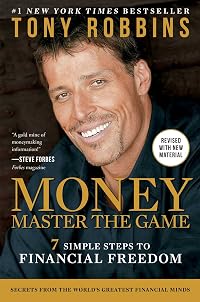
MONEY Master the Game: 7 Simple Steps to Financial Freedom
by Tony Robbins
On This Page
Description
Based on extensive research and one-on-one interviews with more than 50 of the most legendary financial experts in the world -- from Carl Icahn and Warren Buffett to Ray Dalio and Steve Forbes -- Tony Robbins has created a simple 7-step blueprint that anyone can use for financial freedom as well as a lifetime income plan.Tags
Recommendations

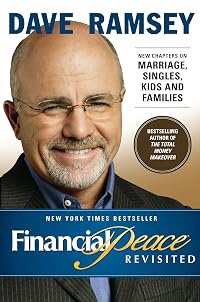
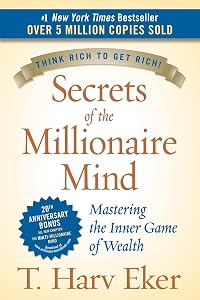
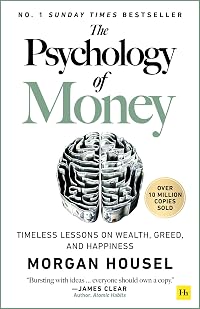
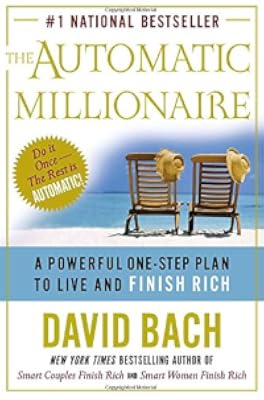
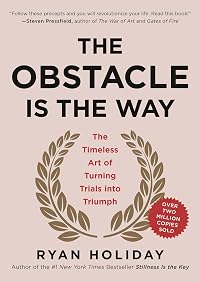
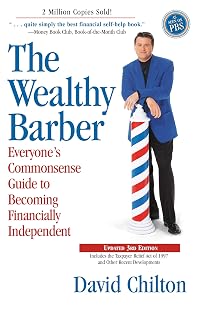
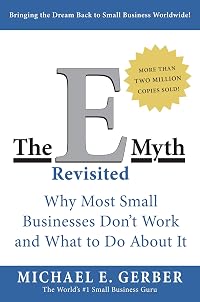
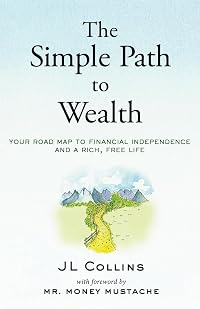
Member Recommendations
Member Reviews
I am not into self-help and motivational gurus so even though I heard Tony Robbins name I didn't read his books or watched him speak. Somebody recommended me this book and I was very surprised. It's a combination of motivational rhetoric and logical concrete steps to try to get your finances in order by the retirement time. It's simplified and often too absolute but I think it will be invaluable for many people. I give discount for annoying repetitions and sales technique, which probably come with motivational territory. But it looks like this method of writing works. Tony Robbins is a good writer and is able to explain some complicated financial matters in a very simple language. His advice is sometimes contradicting but I am ready to show more overlook this for the overall value of his advice. show less
First off, this is a review for Smiley360 (https://smiley.socialmedialink.com). I received a sample chapter of the book for review, so this review is not based on the complete book. Reader be warned.
The book begins as any hyped-up book does - with numerous pages of positive reviews. I generally skip these because I really don't want them to color my opinion of the actual book. But I feel obliged to note that there were, in fact, 5 pages of hype before the title of the book. This is followed by a Foreward and Introduction that is basically drawn out examples of the same thing. All of the hype is designed to 'prime' you for what the author is trying to sell.
The book itself does not begin until about page 30 (30 of 55 on the pdf version I show more was asked to review). The first chapter, appropriate to the book's title, deals with money. It goes on to emphasize the importance of money in our day-to-day lives with "I want to remind you, this is a game that you and your family can’t afford to lose." This impresses on the reader their need to continue reading this book. This is further implied by the following: "My promise to you is this: if you will stay with me and follow the 7 Simple Steps in this book—the steps that have been distilled from the world’s most successful financial players—you and your family will win this game. And you can win big!"
Not too subtle. "I hope you’ll let me be your translator as well as your guide on this journey. Together we’ll break the code and cut through the complexity that keeps most of us feeling like outsiders in the world of finance." Okay. I'm game... "Before you know it, you’ll be an insider too." Wait... what? So, this is basically a book about Insider Trading for Dummies?
And then comes the name-dropping. (I won't bother quoting the list. Just know that for someone this famous, name-dropping is bad form.) While some of the tips and suggestions hinted at in the first chapter do seem intriguing, they are not enough to answer the question posed at the end of the first chapter: "Do I have you hooked on what’s really possible for your life now?"
This may be a book I come back to later, to read the full story, and thus update my review, but as things stand, I cannot bring myself to place this on the top of my "Reading Shelf". For those looking to get into investing, this is a good place to turn, but for everyone else... do yourself a favor and pass. show less
The book begins as any hyped-up book does - with numerous pages of positive reviews. I generally skip these because I really don't want them to color my opinion of the actual book. But I feel obliged to note that there were, in fact, 5 pages of hype before the title of the book. This is followed by a Foreward and Introduction that is basically drawn out examples of the same thing. All of the hype is designed to 'prime' you for what the author is trying to sell.
The book itself does not begin until about page 30 (30 of 55 on the pdf version I show more was asked to review). The first chapter, appropriate to the book's title, deals with money. It goes on to emphasize the importance of money in our day-to-day lives with "I want to remind you, this is a game that you and your family can’t afford to lose." This impresses on the reader their need to continue reading this book. This is further implied by the following: "My promise to you is this: if you will stay with me and follow the 7 Simple Steps in this book—the steps that have been distilled from the world’s most successful financial players—you and your family will win this game. And you can win big!"
Not too subtle. "I hope you’ll let me be your translator as well as your guide on this journey. Together we’ll break the code and cut through the complexity that keeps most of us feeling like outsiders in the world of finance." Okay. I'm game... "Before you know it, you’ll be an insider too." Wait... what? So, this is basically a book about Insider Trading for Dummies?
And then comes the name-dropping. (I won't bother quoting the list. Just know that for someone this famous, name-dropping is bad form.) While some of the tips and suggestions hinted at in the first chapter do seem intriguing, they are not enough to answer the question posed at the end of the first chapter: "Do I have you hooked on what’s really possible for your life now?"
This may be a book I come back to later, to read the full story, and thus update my review, but as things stand, I cannot bring myself to place this on the top of my "Reading Shelf". For those looking to get into investing, this is a good place to turn, but for everyone else... do yourself a favor and pass. show less
50 pg of good investment advice & 600 pg of infomercial
I was pretty disappointed. This was my first Tonny Robbins book, and for someone whose net worth is $500 million, you would expect a better product.
Do you really need 650 pages to say: save money from your work and invest in index funds and make sure you diversify and allocate assets between equities, bonds, commodities, gold, real estate? Then, keep rebalancing your portfolio from year to year. Then repeat this multiple times with various anecdotes and scenarios and mention that being rich is fabulous and he knows a lot of rich and famous people. That's torture. I don't understand why the book was not reviewed in more detail and then recommended by Oprah? I don't think Oprah read show more it. I think she is a wise woman and would never put herself through this torture.
There were a few important ideas in the book. Main one -- investment and asset allocation advice by David Swensen, Yale chief investment officer who invested money not for himself but for his favorite institution (and who passed away this year, unfortunately):
Smart asset allocation:
--70% in equity-like --> 30% in US stocks; 10% emerging markets, 15% in foreign development, 15% in real estate investment trusts;
--30% in fixed income --> 15% in Treasuries; 15% in inflation-protected TIPS.
Invest in index funds instead of managed funds, which charge high fees.
--Check on your 401k fees.
--Considering hiring a fiduciary advisor rather than just a financial advisor. Use National Association of Personal Financial Advisors (NAPFA).
What I liked about the book:
Interviews with the top 12 famous investors made billionaires. However, only one woman was interviewed. Warren Buffett didn't want to give an interview b/u he said he had already said everything he had to say in previous interviews.
Tony's enthusiasm and passion.
Few stories were interesting.
What I didn't like about the book:
-650 pages of paraphrasing information, not getting to the point;
-Super small font - 8 or 9 pt? 650 pages long?
-Stories and anecdotes and more tales;
-It feels like an infomercial and is very sellsy.
-The apparent conflict of interest, funneling readers to his advisory arm, Anthony Robins companies such as Namale Resort and Spa, Fortune Practice Management, Advisor Excel, a Coaching company,
-Name dropping which alienates average investors;
-Constant references to 'I will teach you this later," "we'll come back to that in more detail in a later chapter," etc.
-Advice about life insurance, which can be very tricky if you hire someone who doesn't know what they are doing. Therefore, recommending the expensive companies related to Tony.
-Total self-promotion.
-The book being more motivational than actual financial education, you still won't learn 'how to do things.
-Tools that don't work: PortfoliocheckUp website, for All Season portfolio options, doesn't work. You have to schedule a consultation with Tony's partner company.
-The Lifetimeincome website is a sale for life insurance products.
-The masterthegame app has been defunct since 2016, according to Wayback machine. It is now changed to TR Money app.
-The book is used as a giveaway at Tony's $500, $2,000, and up events.
-There are no footnotes or sources to any of the information. The access to resources on the masterthegame website doesn't work.
-I understand having a content magnet as a giveaway and not expecting much, but people buy this book for $28 as the main product and get a lot of nothing.
Total 2.3/5
*Readability - 2.5
*Scope - 2.5
*Depth - 2
*Format - 2
*Clarity -2.5
Read this book if:
-You need the same information repeated over and over and over again.
-You love Tony Robbins so much that you don't mind that a man of that $500 million net worth would make you buy an inferior product.
-You need a lot of motivation to believe that making money is good and fancy being sold to. show less
I was pretty disappointed. This was my first Tonny Robbins book, and for someone whose net worth is $500 million, you would expect a better product.
Do you really need 650 pages to say: save money from your work and invest in index funds and make sure you diversify and allocate assets between equities, bonds, commodities, gold, real estate? Then, keep rebalancing your portfolio from year to year. Then repeat this multiple times with various anecdotes and scenarios and mention that being rich is fabulous and he knows a lot of rich and famous people. That's torture. I don't understand why the book was not reviewed in more detail and then recommended by Oprah? I don't think Oprah read show more it. I think she is a wise woman and would never put herself through this torture.
There were a few important ideas in the book. Main one -- investment and asset allocation advice by David Swensen, Yale chief investment officer who invested money not for himself but for his favorite institution (and who passed away this year, unfortunately):
Smart asset allocation:
--70% in equity-like --> 30% in US stocks; 10% emerging markets, 15% in foreign development, 15% in real estate investment trusts;
--30% in fixed income --> 15% in Treasuries; 15% in inflation-protected TIPS.
Invest in index funds instead of managed funds, which charge high fees.
--Check on your 401k fees.
--Considering hiring a fiduciary advisor rather than just a financial advisor. Use National Association of Personal Financial Advisors (NAPFA).
What I liked about the book:
Interviews with the top 12 famous investors made billionaires. However, only one woman was interviewed. Warren Buffett didn't want to give an interview b/u he said he had already said everything he had to say in previous interviews.
Tony's enthusiasm and passion.
Few stories were interesting.
What I didn't like about the book:
-650 pages of paraphrasing information, not getting to the point;
-Super small font - 8 or 9 pt? 650 pages long?
-Stories and anecdotes and more tales;
-It feels like an infomercial and is very sellsy.
-The apparent conflict of interest, funneling readers to his advisory arm, Anthony Robins companies such as Namale Resort and Spa, Fortune Practice Management, Advisor Excel, a Coaching company,
-Name dropping which alienates average investors;
-Constant references to 'I will teach you this later," "we'll come back to that in more detail in a later chapter," etc.
-Advice about life insurance, which can be very tricky if you hire someone who doesn't know what they are doing. Therefore, recommending the expensive companies related to Tony.
-Total self-promotion.
-The book being more motivational than actual financial education, you still won't learn 'how to do things.
-Tools that don't work: PortfoliocheckUp website, for All Season portfolio options, doesn't work. You have to schedule a consultation with Tony's partner company.
-The Lifetimeincome website is a sale for life insurance products.
-The masterthegame app has been defunct since 2016, according to Wayback machine. It is now changed to TR Money app.
-The book is used as a giveaway at Tony's $500, $2,000, and up events.
-There are no footnotes or sources to any of the information. The access to resources on the masterthegame website doesn't work.
-I understand having a content magnet as a giveaway and not expecting much, but people buy this book for $28 as the main product and get a lot of nothing.
Total 2.3/5
*Readability - 2.5
*Scope - 2.5
*Depth - 2
*Format - 2
*Clarity -2.5
Read this book if:
-You need the same information repeated over and over and over again.
-You love Tony Robbins so much that you don't mind that a man of that $500 million net worth would make you buy an inferior product.
-You need a lot of motivation to believe that making money is good and fancy being sold to. show less
Tony Robbins isn’t the first person you’d think would be the one to write a book on money, but on Tim Ferriss’ recommendation I picked up a copy. As a finance major with an MBA to my name, I was skeptical that I could learn much about money from a “feelings” guru like Tony. I was wrong – this book probably gave me more useful lessons in finance than my entire formal education.
Tony began building this book by interviewing a litany of investment titans – Warren Buffett, Charles Schwab, Carl Icahn, Ray Dalio – pretty much the entire investing all-star team. Most of us would never get the chance to gain access to any of these masters’ knowledge, but Tony used his conversations with all of them to synthesize a money show more manifesto.
Section 1: Welcome to the Jungle: The Journey Begins with This First Step
The first chapter is an introduction to classic Robbins psychology. Tony begins by lamenting that money is somewhat of a taboo subject, asserting that money is an essential part of our holistic well-being, and explaining how he went about building the book by interviewing the best of the best. His first conclusion is that it’s very difficult to earn enough money through your job to have financial freedom, so you need to save and invest. Develop the mindset of an investor, rather than being only a consumer. The only way to overcome ingrained human psychology and actually save is to create a plan and automate your investing, so set up the automatic withdrawals and forget about them.
Section 2: Become the Insider: Know the Rules Before You Get in the Game
Because money is such a misunderstood topic, especially by those who think they know what they’re doing, Tony goes into the nine financial myths that have to be busted in order to start building a correct understanding of how money works.
Myth #1: The market can be beat. Only a few gifted people can beat the market’s returns consistently, and neither you nor your financial advisor are one of them. Less than 4% of actively managed mutual funds beat the market, which is far, far worse than a coin toss. You’re much better off buying a passively managed index fund, which simply matches the overall market.
Myth #2: People are telling the truth about fees. The average cost of owning a mutual fund is 3.17% a year when you include all the hidden fees – expense ratio, transaction costs, cash drag, unseen taxes, etc. That may not sound like much, but for each 1% increase in fees, 20% of the final value of the typical retirement portfolio is eaten away. The end result is that even though the percent looks small, it can result in (literally) most of your savings ending up in someone else’s pocket. Again, investing in index funds with fees around 1% will make an enormous difference in your financial storehouse.
Myth #3: People are telling the truth about returns. A core truth about investing is that it is much more important to avoid losses than to get gains. Why? If you have $100 in your portfolio and you lose 50% the first year, you then have $50. If you then gain 50% in the second year, you end up with only $75. Your average (time-weighted) return was 0% (up 50%, then down 50%), but your real (dollar-weighted) return was negative 25%. Which type of returns do you think mutual funds like to report?
Myth #4: Your broker is on your side. Most brokers are perfectly good and honest people. However, most of them also probably don’t understand the three myths we’ve just covered. On top of that, the broker model is a serious conflict of fiduciary duties. Your broker has a responsibility to increase your money as well as a responsibility to increase his company’s money, and the two duties are mutually exclusive. A much better decision is to go with a registered investment advisor (RIA), who gets an annual fee from you rather than commissions from the mutual funds, to manage your investments. Go to the National Association of Personal Financial Advisors or Stronghold Financial website to find an RIA.
Myth #5: Your 401(k) will set you up for retirement. In my mind before I read this book, I had a mental image of the 401(k) as some kind of timeless bastion of classic investment best practice. Not so – the 401(k) is a (failed) social experiment that has only been around for 30 years. The unique bull market conditions of the 80’s and 90’s blinded society to a point where we believed that the 401(k) system was effectively setting people up for retirement, but with the recent financial crisis, it became more apparent that the system is a failure. The factors listed in Myths 1 – 3 severely limit the growth of your retirement portfolio, and taxes on withdrawals will slash your nest egg further. On top of that, the 401(k) doesn’t do anything to protect against the unfortunate retirement timing that left many people with a fraction of their savings after the financial crisis.
Hopefully you’ve already avoided the traditional 401(k) or IRA in favor of a Roth, in order to solve the tax problem. You can use an IRA instead of a 401(k) to avoid the factors in Myths 1 – 3, but IRAs have much lower contribution limits, and don’t let you take advantage of matching contributions from your employer. Tony recommends that you go to the online fee checker here, which will show how much you’re really paying in fees in your company’s 401(k), and then approach your employer with the results. Because of a new law passed in 2012, employers are legally required to compare their 401(k) plans to make sure the fees are reasonable. Hopefully this combination of information will be enough to convince your employer to consider offering low-cost index funds in your plan.
Myth #6: Target date funds are a good way to allocate your investments. Since ordinary investors have no idea how to diversify their investments, many choose a “target date” fund where their mix of investments changes based on their age. The point is to get higher returns when you’re young and can afford more risk, and then to preserve your capital when you’re getting closer to retirement (typically less in stocks and more in bonds). While it’s a helpful idea in theory, the “experts” who put these plans together operate under two gravely mistaken assumptions: that bonds are safer than stocks, and that bonds and stocks move in opposite directions. We’ll cover more on that later.
Myth #7: Annuities are bad. Conventional wisdom will tell you that annuities as an investment class are overpriced and a bad investment. While this is true in general (largely due to exorbitant fees that are even worse than mutual funds), it would be unwise to paint this entire investment class with the same brush. At least one type of annuity (the tax-free fixed indexed annuity) is an invaluable investment tool. We’ll revisit that soon, as well. (Side note: If you already own a bad investment like a variable rate annuity, ask your advisor about using a feature called a 1035 exchange to switch it for a good annuity without having to pay taxes.)
Myth #8: You have to take big risks to get big returns. One of the most important rules of investing is to risk a little for the potential to make a lot. Some easy ways for the individual to do this are structured notes, market-linked CDs, and fixed indexed annuities, which all share the common feature of protecting your invested principle but also giving you access to upside potential if the market moves the right way.
Myth #9: Success is determined by something beyond our control. We take a detour here for some more classic Tony Robbins psychology, applied to money: a change in mindset is necessary to succeed. With these myths busted, you don’t have any excuse not to turn around your financial life for the better.
____________________________________________
Read the rest at http://www.deconstructingexcellence.com/money-master-the-game/ show less
Tony began building this book by interviewing a litany of investment titans – Warren Buffett, Charles Schwab, Carl Icahn, Ray Dalio – pretty much the entire investing all-star team. Most of us would never get the chance to gain access to any of these masters’ knowledge, but Tony used his conversations with all of them to synthesize a money show more manifesto.
Section 1: Welcome to the Jungle: The Journey Begins with This First Step
The first chapter is an introduction to classic Robbins psychology. Tony begins by lamenting that money is somewhat of a taboo subject, asserting that money is an essential part of our holistic well-being, and explaining how he went about building the book by interviewing the best of the best. His first conclusion is that it’s very difficult to earn enough money through your job to have financial freedom, so you need to save and invest. Develop the mindset of an investor, rather than being only a consumer. The only way to overcome ingrained human psychology and actually save is to create a plan and automate your investing, so set up the automatic withdrawals and forget about them.
Section 2: Become the Insider: Know the Rules Before You Get in the Game
Because money is such a misunderstood topic, especially by those who think they know what they’re doing, Tony goes into the nine financial myths that have to be busted in order to start building a correct understanding of how money works.
Myth #1: The market can be beat. Only a few gifted people can beat the market’s returns consistently, and neither you nor your financial advisor are one of them. Less than 4% of actively managed mutual funds beat the market, which is far, far worse than a coin toss. You’re much better off buying a passively managed index fund, which simply matches the overall market.
Myth #2: People are telling the truth about fees. The average cost of owning a mutual fund is 3.17% a year when you include all the hidden fees – expense ratio, transaction costs, cash drag, unseen taxes, etc. That may not sound like much, but for each 1% increase in fees, 20% of the final value of the typical retirement portfolio is eaten away. The end result is that even though the percent looks small, it can result in (literally) most of your savings ending up in someone else’s pocket. Again, investing in index funds with fees around 1% will make an enormous difference in your financial storehouse.
Myth #3: People are telling the truth about returns. A core truth about investing is that it is much more important to avoid losses than to get gains. Why? If you have $100 in your portfolio and you lose 50% the first year, you then have $50. If you then gain 50% in the second year, you end up with only $75. Your average (time-weighted) return was 0% (up 50%, then down 50%), but your real (dollar-weighted) return was negative 25%. Which type of returns do you think mutual funds like to report?
Myth #4: Your broker is on your side. Most brokers are perfectly good and honest people. However, most of them also probably don’t understand the three myths we’ve just covered. On top of that, the broker model is a serious conflict of fiduciary duties. Your broker has a responsibility to increase your money as well as a responsibility to increase his company’s money, and the two duties are mutually exclusive. A much better decision is to go with a registered investment advisor (RIA), who gets an annual fee from you rather than commissions from the mutual funds, to manage your investments. Go to the National Association of Personal Financial Advisors or Stronghold Financial website to find an RIA.
Myth #5: Your 401(k) will set you up for retirement. In my mind before I read this book, I had a mental image of the 401(k) as some kind of timeless bastion of classic investment best practice. Not so – the 401(k) is a (failed) social experiment that has only been around for 30 years. The unique bull market conditions of the 80’s and 90’s blinded society to a point where we believed that the 401(k) system was effectively setting people up for retirement, but with the recent financial crisis, it became more apparent that the system is a failure. The factors listed in Myths 1 – 3 severely limit the growth of your retirement portfolio, and taxes on withdrawals will slash your nest egg further. On top of that, the 401(k) doesn’t do anything to protect against the unfortunate retirement timing that left many people with a fraction of their savings after the financial crisis.
Hopefully you’ve already avoided the traditional 401(k) or IRA in favor of a Roth, in order to solve the tax problem. You can use an IRA instead of a 401(k) to avoid the factors in Myths 1 – 3, but IRAs have much lower contribution limits, and don’t let you take advantage of matching contributions from your employer. Tony recommends that you go to the online fee checker here, which will show how much you’re really paying in fees in your company’s 401(k), and then approach your employer with the results. Because of a new law passed in 2012, employers are legally required to compare their 401(k) plans to make sure the fees are reasonable. Hopefully this combination of information will be enough to convince your employer to consider offering low-cost index funds in your plan.
Myth #6: Target date funds are a good way to allocate your investments. Since ordinary investors have no idea how to diversify their investments, many choose a “target date” fund where their mix of investments changes based on their age. The point is to get higher returns when you’re young and can afford more risk, and then to preserve your capital when you’re getting closer to retirement (typically less in stocks and more in bonds). While it’s a helpful idea in theory, the “experts” who put these plans together operate under two gravely mistaken assumptions: that bonds are safer than stocks, and that bonds and stocks move in opposite directions. We’ll cover more on that later.
Myth #7: Annuities are bad. Conventional wisdom will tell you that annuities as an investment class are overpriced and a bad investment. While this is true in general (largely due to exorbitant fees that are even worse than mutual funds), it would be unwise to paint this entire investment class with the same brush. At least one type of annuity (the tax-free fixed indexed annuity) is an invaluable investment tool. We’ll revisit that soon, as well. (Side note: If you already own a bad investment like a variable rate annuity, ask your advisor about using a feature called a 1035 exchange to switch it for a good annuity without having to pay taxes.)
Myth #8: You have to take big risks to get big returns. One of the most important rules of investing is to risk a little for the potential to make a lot. Some easy ways for the individual to do this are structured notes, market-linked CDs, and fixed indexed annuities, which all share the common feature of protecting your invested principle but also giving you access to upside potential if the market moves the right way.
Myth #9: Success is determined by something beyond our control. We take a detour here for some more classic Tony Robbins psychology, applied to money: a change in mindset is necessary to succeed. With these myths busted, you don’t have any excuse not to turn around your financial life for the better.
____________________________________________
Read the rest at http://www.deconstructingexcellence.com/money-master-the-game/ show less
I enjoyed the emphasis on giving and the breakdown of an asset allocation from a well-known money manager. Too much weight on avoiding fees and on retirement.
If you are a fan of Tony Robbins then you will love this book. If you are not a fan yet...you will be. Is advice is common sense which many of use forget to utilize in our day to day lives. By the way, I received a free sampler of the book for the purpose of my review. Worry not my opinions are 100% my own.
I received the first chapter of the book via Smiley360 but it leaves me in disappointment because the first chapter only covers 'Introduction', and how he met lots of successful people all over the world. I finished reading all 55 pages, and I don't even get the point on how to master the game of money. Not straight-forward. I was hoping that the 1st chapter has some insights on how to master the game of money. Alas, it only leaves me wasting my time reading for nothing.
I received a free sampler of the book for the purpose of my review. Opinions are 100% my own.
I received a free sampler of the book for the purpose of my review. Opinions are 100% my own.
Members
- Recently Added By
Lists

Money & finances
42 works; 1 member
Author Information

167+ Works 7,103 Members
Tony Robbins was born on February 29, 1960 in North Hollywood, California. He is a life coach and self-help author. His books include Unlimited Power, Unleash the Power Within, Awaken the Giant Within, Money - Master the Game: 7 Simple Steps to Financial Freedom and Unshakable: Your Financial Freedom Playbook. (Bowker Author Biography)
Common Knowledge
- Blurbers
- Bogle, John C.
Classifications
Statistics
- Members
- 885
- Popularity
- 30,605
- Reviews
- 8
- Rating
- (3.74)
- Languages
- English, German
- Media
- Paper, Audiobook, Ebook
- ISBNs
- 16
- ASINs
- 6