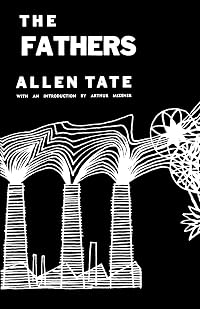
The Fathers
by Allen Tate
On This Page
Description
Old Major Buchan of Pleasant Hill, Fairfax County, Virginia, lived by a gentlemen's agreement to ignore what was base or rude, to live a life which was gentle and comfortable because it was formal. Into this life George Posey came dashing, as Henry Steele Commager observed, "to defy Major Buchan, marry Susan, betray Charles and Semmes, dazzle young Lacy, challenge and destroy the old order of things." The Fathers was published in 1938. It sold respectably in both the United States and show more England, perhaps because people expected it to be another Gone With the Wind, wheras it is in fact the novel Gone With the Wind ought to have been. Since its publication it has received very little attention, considering that it is one of the most remarkable novels of our time. Its occasion is a public one, the achievement and the destruction of Virginia's antebellum civilization. Within that occasion it discovers a terrible conflict between two fundamental and irreconcilable modes of existence, a conflict that has haunted American experience, but exists in some form at all times. The Fathers moves between the public and the private aspects of this conflict with an ease very unusual in American novels, and this ease is the most obvious illustration of the novel's remarkable unity of idea and form, for it is itself a manifestation of the novel's central idea, that "the belief widely held today, that men may live apart from the political order, that indeed the only humane and honorable satisfactions must be gained in spite of the public order, "is a fantasy." show lessTags
Recommendations


















Member Reviews
Members
- Recently Added By
Author Information

55+ Works 913 Members
Tate---poet, essayist, novelist, biographer, and critic---began his literary career in 1922 as an editor of The Fugitive The Fugitive, a magazine of southern poets and critics, many of them associated with Vanderbilt University. As editor and in his own works, Tate advocated regionalism, explaining that "only a return to the provinces, to the show more small self-contained centers of life, will put the all-destroying abstraction America safely to rest." In 1943 he held the chair of poetry in the Library of Congress. From 1944 to 1947, he edited another important journal of literary criticism, Sewanee Review. Tate claimed to be "on record as a casual essayist of whom little consistency can be expected." Nevertheless, as editor of The Fugitive and the Sewanee Review, he had a dramatic impact on the availability and evaluation of poets and prose writers. He made significant contributions to modern poetry and modern literary criticism. His poetry, usually identified as "modern metaphysical," he described as "gradually circling round a subject, threatening it and using the ultimate violence upon it." As a critic, he is generally placed with the "new" or formalist critics, though he adds a strong strain of religious humanism, reflected by his conversion in 1950 to Roman Catholicism. Tate was elected to the National Institute of Arts and Letters in 1949 and won the Bollingen Prize in poetry in 1956. (Bowker Author Biography) show less
Awards and Honors
Notable Lists
Series
Belongs to Publisher Series
Common Knowledge
- Canonical title
- The Fathers
- Original title
- The Fathers
- Original publication date
- 1938
- First words*
- È un'antica e proficua usanza letteraria quella di paragonare le cose come sono oggi con le cose com'erano un tempo.
Prefazione, di Frank Kermode (riproduce la recensione uscita sulla rivista Encounter nell... (show all)'agosto del 1960, in occasione della ristampa americana di The Fathers)
Oggi soltanto mentre andavo al fiume lungo Fayette Street mi è giunto un odor di pesce secco su una folata di vento, e ho ricordato il giorno in cui stavo sotto il grande corniolo a Colle Ameno. - Quotations*
- Una volta, quand'ero bimbo, avevano condotto a Colle Ameno il toro d'un nostro vicino, e alcune giovanette chiesero a mia madre per qual motivo ci fosse venuto. "È qui per ragioni di lavoro", essa rispose, e ripensando a que... (show all)lla spiegazione, vedo in lei una persona convinta che il proprio piccolo mondo contenesse la vita nella sua interezza, e di conoscere, attraverso tale convincimento, tutto quanto era necessario del mondo in senso lato.
- Last words*
- (Click to show. Warning: May contain spoilers.)Grazie a un audace espediente, l'intervento di un fantasma, l'autore ci consegna quest'immagine al di là di tre generazioni di Buchan; ne viene come sancita da una comunanza di sentimenti che ha la meglio sul tempo, e la vita ch'essa racchiude è valida e trasmissibile oltreché tragica e avvincente.
(Click to show. Warning: May contain spoilers.)Bisogna ch'io vada fino in fondo perché a lui non è stato possibile. Se resto ucciso non importa nulla. Se resto ucciso sarà perché gli voglio bene come non voglio bene a nessun uomo.
*Some information comes from Common Knowledge in other languages. Click "Edit" for more information.
Classifications
Statistics
- Members
- 112
- Popularity
- 290,986
- Reviews
- 1
- Rating
- (2.75)
- Languages
- English
- Media
- Paper, Ebook
- ISBNs
- 5
- ASINs
- 4