On This Page
Description
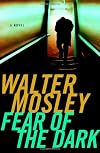
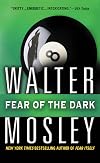
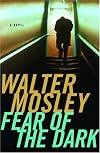
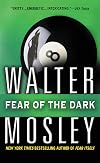
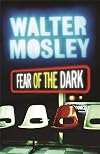
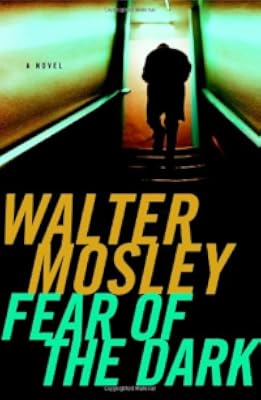
HTML:Fearless Jones and Paris Minton, stars of the bestsellers Fearless Jones and Fear Itself, return in a high-velocity, larger-than-life thriller about family, betrayal, and revenge."I'm in trouble, Paris." Paris Minton has heard these words before. They mean only one thing: that his neck is on the line too. So when they are uttered by his lowlife cousin Ulysses S. Grant, Paris keeps the door firmly closed. With family like Ulysses — useless to everyone except his mother — who needs show more enemies?
But trouble always finds an open window, and when "Useless" Ulysses' mother, Three Hearts, shows up from Louisiana to look for her son, Paris has no choice but to track down his wayward cousin. Finding a con artist like Useless is easier said than done. But with the aid of his ear-to-the-ground friend Fearless Jones, Paris gets a hint that Useless may have expanded his range of enterprise to include blackmail.
Now he has disappeared, and Paris's mission is to discover whether he is hiding from his vengeful victims — or already dead. Traversing the complicated landscape of 1950s Los Angeles, where a wrong look can get a black man killed, Paris and Fearless find desperate women, secret lives, and more than one dead body along the way.
Fear of the Dark is filled with the sheer-nerve plotting and brilliant characterizations that prompted The Nation to credit Walter Mosley for "the finest detective oeuvre in American literature.". African American Fiction. Fiction. Mystery. show less
Tags
Recommendations




Member Reviews
This was my first book from Walter Mosley’s "Fearless Jones" series. The main character – the narrator—is Paris Minton, a skinny and somewhat cowardly owner of a bookstore. Fearless Jones is everything Paris is not – handsome, strong, and brave, and a success with the ladies. The setting is the Watts neighborhood of Los Angeles in the 1950s, and the overtones of racial disharmony permeate the story.
Auntie Three-Hearts (who nearly raised Paris) arrives by bus from Louisiana, and asks Paris to help find her son Ulysses (a.k.a., “Useless”), a small-time crook. Ulysses is Paris’ cousin, but he would rather not have anything to do with him – in their last encounter, Ulysses stashed a bag of stolen jewelry in Paris’ shop, show more and Paris managed to get rid of it just before the cops arrived. However, Paris agrees to search for Useless, and recruits Fearless, plus a bail bondman (Milo), and a PI named Whisper. The search involves treks through the dregs of society, and beatings, murder, blackmail and trouble with the police are all involved.
There’s a strong element of Raymond Chandler in Mosley’s fiction, but the racial undercurrents are all Mosley’s, reflecting the author's own ethnicity (he identifies as black and Jewish). The story is interesting and imaginative, with flashes of inspired dialogue and unexpected plot elements. On the down side, I did find it hard to keep track of the numerous secondary characters, but taking notes on them was a help. show less
Auntie Three-Hearts (who nearly raised Paris) arrives by bus from Louisiana, and asks Paris to help find her son Ulysses (a.k.a., “Useless”), a small-time crook. Ulysses is Paris’ cousin, but he would rather not have anything to do with him – in their last encounter, Ulysses stashed a bag of stolen jewelry in Paris’ shop, show more and Paris managed to get rid of it just before the cops arrived. However, Paris agrees to search for Useless, and recruits Fearless, plus a bail bondman (Milo), and a PI named Whisper. The search involves treks through the dregs of society, and beatings, murder, blackmail and trouble with the police are all involved.
There’s a strong element of Raymond Chandler in Mosley’s fiction, but the racial undercurrents are all Mosley’s, reflecting the author's own ethnicity (he identifies as black and Jewish). The story is interesting and imaginative, with flashes of inspired dialogue and unexpected plot elements. On the down side, I did find it hard to keep track of the numerous secondary characters, but taking notes on them was a help. show less
If anyone out there has anything against Walter Mosley, you might want to un-follow me for a couple weeks. I’m on a Mosley bender these days, and I ain’t apologizing for it—mostly because Walter Mosley’s books are literary crack. But if you’re one of the cool kids, you know that already. I’m currently listening to his very first novel, Devil in a Blue Dress, and I plan to raid the local library for everything Mosley at the first opportunity. Right now, however, I’m all about another Mosley novel, Fear of the Dark.
It’s the third in the Fearless Jones line of mysteries, one of Mosley’s many [Insert main character here] novels series. Seems like he’s got a ton of those things. I’ve read three of his novels this year, show more and I still haven’t read two from the same series. The Fearless Jones novels are different in their narrative style, though. Like most of Mosley’s work, it’s told in first person; however, in this case the narrator isn’t the titular character. The narrator is Paris Minton, a short, skinny black man who owns a used bookshop in the Watts neighborhood of L.A. during the 1950s. He’s also scared of his own shadow. Paris’ friend Fearless Jones is his exact foil. Fearless is tall, strong, stalwart, and handsome. He’s universally respected by the black community, loved by women of all kinds, and—true to his name—utterly fearless. It would be a rather Holmesian narrative structure, except for the fact that in this case Dr. Watson is the protagonist of the story. It’s an interesting concept, though—naming a series after a supporting character. It takes a certain kind of balls to do that in today’s publishing world.
Anyhow, the book begins as Paris’ troublesome cousin Ulysses S. Grant IV (a.k.a., “Useless”) drops by his bookshop for a visit. The last time Useless dropped in for a social call, he stashed a bag of stolen jewelry in the tank of Paris’ toilet. Paris managed to find the goods and dispose of them just before the cops arrived to search the place, but he still learned a valuable lesson—that is, don’t trust Useless farther than you can throw him. That’s why he tells his cousin to get lost and goes back to reading his books. Minutes later, the white girl Paris has been messing with—a bag of rabid weasels named Jessa—swings by for a roll in the hay. She’s all hot and bothered ‘cos Paris has a big honking wang (it even says that in the book) and she needs money for the rent. Their exchange of services is interrupted by Jessa’s white boyfriend who busts through the door of his shop and goes after Paris. Being the craven soul that he is, Paris bolts, dashing out a window, through his back yard, and onto the street. He barely manages to escape and goes to find Fearless for help in reclaiming his store—you know, ‘cos Jessa’s boyfriend might still be waiting for him and all. When he and Fearless return, they find the boyfriend’s body lying in the foyer with a couple of neat holes in his forehead. Paris wants to run for the hills, but Fearless calms him down and helps him dispose of the body.
By the way, has anyone else noticed the Homeric parallels to these characters? I mean, Mosley’s Paris is weak, cowardly, and amorous just like Paris of The Iliad. To get out of trouble he depends on his friend Fearless, the allegorical representation of Paris’ older, warlike brother Hector. And wouldn’t you know it? In the original Greek, the name Hector means “anchor” or “steadfast”—or in other words, “fearless.” There’s even a character in the book named Ulysses. I could act like a real academic (rather than one of the armchair variety) and stretch the limits of time and space to make even more comparisons, but I don’t think that’s necessary. Suffice to say that Mosley infuses all of his novels—not just Fear of the Dark—with boatloads of references to classical literature, which is one of the many reasons I’m so gung-ho about Walter Mosley.
Anyway, back to the plot. The next day Paris is surprised by yet another visitor at his store. This time it’s his Auntie Three-Hearts, just off a bus all the way from Louisiana and looking for her son Useless. Unable to say no to the woman who practically raised him (and who is purported to possess an “evil eye” no man can cross and live), Paris agrees to help her look for her son. Along the way he enlists the help of Fearless, a bail bondsman named Milo, and a private detective named Whisper. What ensues is an odyssey in its own right, a days-long trek through the dregs of L.A. society, through beatings and murder and blackmail, all to find his worthless cousin. It quickly becomes obvious that Useless has gotten himself into some extra-serious trouble this time, and Paris has to overcome his own foibles to yank his cousin out of the fire.
I won’t go into what happens after that (wouldn’t want to spoil the surprise, now would we?), but there is one thing I’d like to touch on. Throughout the novel, Mosley peppers the plot with little details and incidences depicting the racial atmosphere in 1950s Los Angeles. Someone with an axe to grind might say the racial bent of some of the scenes is off putting, or that Mosley concentrates overly much on race. But I would say such a person is full of crap. To write a novel from the Black perspective in the 1950s and ignore racial issues is like writing a physics textbook without including the concept of gravity. Part of the power and authenticity of the novel is that it deals with those uncomfortable issues, and I applaud Mosley for not softballing certain things to make the novel more palatable to the general public. Plus, it’s not as if the novel downs on white folks the whole time. There are multiple instances in which kindness passes between characters of varying race, almost as if to foreshadow the events of the years to come.
But again, I digress. Let’s carry on, shall we?
Mosley’s books are a litany of characters and personalities. It seems as though every scene introduces a new player who is simultaneously larger than life and tangibly real. But just as important as the characters are their relationships to the community, a web of interpersonal relationships that plays heavily into the plot and resolution of nearly every one of Mosley’s books. His setting and diction are excellent as well, and even though one might argue that the plot of the story has been done before (just not with characters living in Watts), it doesn’t bother me. The strongest point of his work, however, has to be his voice. The tone—both in dialogue and general narration—has a style and power unique to Mosley’s work. Part of it is African American twist on the whole Noir experience, but that’s not all of it. Merely putting a new spin on an old concept can’t make a work phenomenal. There has to be more too it than that, and Fear of the Dark has it. Mosley’s writing is a marriage of the sublime and the vulgar that makes me slack-jawed with awe.
Given all of that, I would be remiss in giving Fear of the Dark anything less than five stars. Mosley is a modern master of the Crime and neo-Noir genres. If you haven’t read anything by him, you need to get on that, and damn quick.
http://readabookonce.blogspot.com/2012/05/review-fear-of-dark-by-walter-mosley-5... show less
It’s the third in the Fearless Jones line of mysteries, one of Mosley’s many [Insert main character here] novels series. Seems like he’s got a ton of those things. I’ve read three of his novels this year, show more and I still haven’t read two from the same series. The Fearless Jones novels are different in their narrative style, though. Like most of Mosley’s work, it’s told in first person; however, in this case the narrator isn’t the titular character. The narrator is Paris Minton, a short, skinny black man who owns a used bookshop in the Watts neighborhood of L.A. during the 1950s. He’s also scared of his own shadow. Paris’ friend Fearless Jones is his exact foil. Fearless is tall, strong, stalwart, and handsome. He’s universally respected by the black community, loved by women of all kinds, and—true to his name—utterly fearless. It would be a rather Holmesian narrative structure, except for the fact that in this case Dr. Watson is the protagonist of the story. It’s an interesting concept, though—naming a series after a supporting character. It takes a certain kind of balls to do that in today’s publishing world.
Anyhow, the book begins as Paris’ troublesome cousin Ulysses S. Grant IV (a.k.a., “Useless”) drops by his bookshop for a visit. The last time Useless dropped in for a social call, he stashed a bag of stolen jewelry in the tank of Paris’ toilet. Paris managed to find the goods and dispose of them just before the cops arrived to search the place, but he still learned a valuable lesson—that is, don’t trust Useless farther than you can throw him. That’s why he tells his cousin to get lost and goes back to reading his books. Minutes later, the white girl Paris has been messing with—a bag of rabid weasels named Jessa—swings by for a roll in the hay. She’s all hot and bothered ‘cos Paris has a big honking wang (it even says that in the book) and she needs money for the rent. Their exchange of services is interrupted by Jessa’s white boyfriend who busts through the door of his shop and goes after Paris. Being the craven soul that he is, Paris bolts, dashing out a window, through his back yard, and onto the street. He barely manages to escape and goes to find Fearless for help in reclaiming his store—you know, ‘cos Jessa’s boyfriend might still be waiting for him and all. When he and Fearless return, they find the boyfriend’s body lying in the foyer with a couple of neat holes in his forehead. Paris wants to run for the hills, but Fearless calms him down and helps him dispose of the body.
By the way, has anyone else noticed the Homeric parallels to these characters? I mean, Mosley’s Paris is weak, cowardly, and amorous just like Paris of The Iliad. To get out of trouble he depends on his friend Fearless, the allegorical representation of Paris’ older, warlike brother Hector. And wouldn’t you know it? In the original Greek, the name Hector means “anchor” or “steadfast”—or in other words, “fearless.” There’s even a character in the book named Ulysses. I could act like a real academic (rather than one of the armchair variety) and stretch the limits of time and space to make even more comparisons, but I don’t think that’s necessary. Suffice to say that Mosley infuses all of his novels—not just Fear of the Dark—with boatloads of references to classical literature, which is one of the many reasons I’m so gung-ho about Walter Mosley.
Anyway, back to the plot. The next day Paris is surprised by yet another visitor at his store. This time it’s his Auntie Three-Hearts, just off a bus all the way from Louisiana and looking for her son Useless. Unable to say no to the woman who practically raised him (and who is purported to possess an “evil eye” no man can cross and live), Paris agrees to help her look for her son. Along the way he enlists the help of Fearless, a bail bondsman named Milo, and a private detective named Whisper. What ensues is an odyssey in its own right, a days-long trek through the dregs of L.A. society, through beatings and murder and blackmail, all to find his worthless cousin. It quickly becomes obvious that Useless has gotten himself into some extra-serious trouble this time, and Paris has to overcome his own foibles to yank his cousin out of the fire.
I won’t go into what happens after that (wouldn’t want to spoil the surprise, now would we?), but there is one thing I’d like to touch on. Throughout the novel, Mosley peppers the plot with little details and incidences depicting the racial atmosphere in 1950s Los Angeles. Someone with an axe to grind might say the racial bent of some of the scenes is off putting, or that Mosley concentrates overly much on race. But I would say such a person is full of crap. To write a novel from the Black perspective in the 1950s and ignore racial issues is like writing a physics textbook without including the concept of gravity. Part of the power and authenticity of the novel is that it deals with those uncomfortable issues, and I applaud Mosley for not softballing certain things to make the novel more palatable to the general public. Plus, it’s not as if the novel downs on white folks the whole time. There are multiple instances in which kindness passes between characters of varying race, almost as if to foreshadow the events of the years to come.
But again, I digress. Let’s carry on, shall we?
Mosley’s books are a litany of characters and personalities. It seems as though every scene introduces a new player who is simultaneously larger than life and tangibly real. But just as important as the characters are their relationships to the community, a web of interpersonal relationships that plays heavily into the plot and resolution of nearly every one of Mosley’s books. His setting and diction are excellent as well, and even though one might argue that the plot of the story has been done before (just not with characters living in Watts), it doesn’t bother me. The strongest point of his work, however, has to be his voice. The tone—both in dialogue and general narration—has a style and power unique to Mosley’s work. Part of it is African American twist on the whole Noir experience, but that’s not all of it. Merely putting a new spin on an old concept can’t make a work phenomenal. There has to be more too it than that, and Fear of the Dark has it. Mosley’s writing is a marriage of the sublime and the vulgar that makes me slack-jawed with awe.
Given all of that, I would be remiss in giving Fear of the Dark anything less than five stars. Mosley is a modern master of the Crime and neo-Noir genres. If you haven’t read anything by him, you need to get on that, and damn quick.
http://readabookonce.blogspot.com/2012/05/review-fear-of-dark-by-walter-mosley-5... show less
Walter Mosley writes a barn-burner of a novel! This is my first Mosley, and certainly won't be my last. I loved the setting...gritty Los Angeles. I loved the character development...the awkward, reticent bookstore owner, who happened to be a "enriched" lothario, the bail bondsman and his competent assistant. The characters were rich, the women strong...and sometimes deadly. Throw in some smoky jazz, some blackmailed cheaters, some crazy relatives, and a good mystery, and you have a winning formula...good job, I'll be back!
Paris Minton serves as narrator of stories about Fearless Jones here, including his own part in Fearless's exploits. Owner of a small used bookstore, Paris is happy to sit among his books and entertain the occasional visitor. But it is not to be. His cousin Ulysses calls on him for help and Paris gets caught in "Useless"'s world. He reaches out to friend Fearless to explore what can be done when Paris is faced with a dead body.
The search for Useless takes many turns and many altercations with bad guys. Fearless is always up to the challenge, while Paris tries to avoid it or, instead, go to bed with some babe.
The adventures of the two pals take place in the fifties, when just being negro (Mosley uses the term that was current then) is show more practically a death sentence at times, and the tales dwell in Noir-land. Consistent with the pulp novels of that time, these feature female bombshells whose main reason for being is to be decorative and to fall all over the leading men.
I found this aspect of these novels depressing and annoying. Paris, while small and cowardly, somehow holds a fascination for women sexually. Tiresome, honestly. I have read several of Mosley's novels and while I appreciate the humor and the change in skin color of the heroes, this is one of their features that I am done with. show less
The search for Useless takes many turns and many altercations with bad guys. Fearless is always up to the challenge, while Paris tries to avoid it or, instead, go to bed with some babe.
The adventures of the two pals take place in the fifties, when just being negro (Mosley uses the term that was current then) is show more practically a death sentence at times, and the tales dwell in Noir-land. Consistent with the pulp novels of that time, these feature female bombshells whose main reason for being is to be decorative and to fall all over the leading men.
I found this aspect of these novels depressing and annoying. Paris, while small and cowardly, somehow holds a fascination for women sexually. Tiresome, honestly. I have read several of Mosley's novels and while I appreciate the humor and the change in skin color of the heroes, this is one of their features that I am done with. show less
This book has all of the excellent qualities any fan of Walter Mosley's masterful noir detective fiction have come to expect -- taut pacing and plot, and sly social commentary on the realities of being black in modern America, and above all compelling characterization. Here the timid intellectual Paris Minton and his the courageous, simple virtue of Fearless Jones continues Mosley's exploration of the virtues and meaning of valor, honor and loyalty.
That said, this is far from his strongest work overall and a bit of a comedown after his two previous excellent books in the Fearless Jones series. The main problem for me was that the the book -- unlike most of Mosley' detective fiction -- took a while to really get ontrack. But on p. 36, show more when Paris Minton finds himself in the chilling situation that gives the book its title. One of the creepiest scenes in detective fiction I think.
My other reservation is about the new character the book also introduces -- the African-American private detective Whisper Natly. This is the first African-American character in Mosley's detective oeuvre who is officially a detective. There is clearly a potential for Natley to become a regular in the Fearless Jones series, or perhaps Mosley is contemplating building a new series around him. A fuller characterization will probably make Natly as intriguing as Mosley's other characters, but at this point his presence seems a bit strained and distracting.
On the whole, followers of the Minton/Jones series will not want to miss this book. Newcomers to Mosley or this series should start with some of his earlier books. show less
That said, this is far from his strongest work overall and a bit of a comedown after his two previous excellent books in the Fearless Jones series. The main problem for me was that the the book -- unlike most of Mosley' detective fiction -- took a while to really get ontrack. But on p. 36, show more when Paris Minton finds himself in the chilling situation that gives the book its title. One of the creepiest scenes in detective fiction I think.
My other reservation is about the new character the book also introduces -- the African-American private detective Whisper Natly. This is the first African-American character in Mosley's detective oeuvre who is officially a detective. There is clearly a potential for Natley to become a regular in the Fearless Jones series, or perhaps Mosley is contemplating building a new series around him. A fuller characterization will probably make Natly as intriguing as Mosley's other characters, but at this point his presence seems a bit strained and distracting.
On the whole, followers of the Minton/Jones series will not want to miss this book. Newcomers to Mosley or this series should start with some of his earlier books. show less
Paris Minton is an interesting guy and one after my own heart: he owns a bookstore. This doesn't stop him from getting into troubles when his cousin, Ulysses "Useless" Grant, IV shows up at his door asking for help then disappears again ... on the heels of Paris' cousin comes Ulysses' mother Three Hearts (that's what her name sounds like to me), who is a force to be reckoned with in her own right [she carries a .44 in her purse]. Throw in blackmail money, crooked cops, Paris' friend Fearless Jones, and a lot of running around and you have a pretty good book worth listening to.
Although this is called “a Fearless Jones” novel, Fear of the Dark is really a book about Fearless’s friend, Paris Minton. Minton is a used book dealer and amateur sleuth in 1950s Los Angeles. His cousin, “Useless” S. Grant, pulls him into a mystery that reaches from the black community of post-WWII Watts to the white world of moneyed institutions. The book is chock-a-block with interesting characters with clever nicknames, big-finned American cars, jazz clubs, and pool halls.
Sound familiar? It is the basic recipe for Moseley’s Easy Rawlins series. Unfortunately, while the Rawlins series was snappy and fresh, Fear of the Dark is a stale rehash. It never really takes off, it didn’t keep my attention, and Minton’s show more digressions about the books he’s reading (all MAJOR literary classics) come off as barely-relevant intellectual showmanship. show less
Sound familiar? It is the basic recipe for Moseley’s Easy Rawlins series. Unfortunately, while the Rawlins series was snappy and fresh, Fear of the Dark is a stale rehash. It never really takes off, it didn’t keep my attention, and Minton’s show more digressions about the books he’s reading (all MAJOR literary classics) come off as barely-relevant intellectual showmanship. show less
Members
- Recently Added By
Author Information

105+ Works 26,642 Members
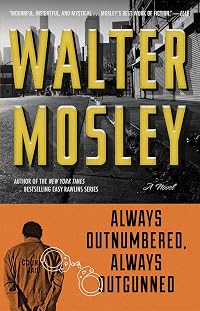
Walter Mosley was born in Los Angeles, California on January 12, 1952. He graduated from Johnson State College in Vermont. His first book, Devil in a Blue Dress, was published in 1990, won a John Creasy Award for best first novel, and was made into a motion picture starring Denzel Washington in 1995. He is the author of the Easy Rawlins Mystery show more series, the Leonid McGill Mystery series, and the Fearless Jones series. His other works include Always Outnumbered, Always Outgunned, 47, Last Days of Ptolemy Grey, and Twelve Steps toward Political Revelation. He has received numerous awards, including an O. Henry Award, the Carl Brandon Society Parallax Award, and PEN America's Lifetime Achievement Award. (Bowker Author Biography) Walter Mosley is the author of the acclaimed Easy Rawlins series of mysteries, the novels "Blue Light" and "RL's Dream", and two collections of stories featuring Socrates Fortlow, "Always Outnumbered", "Always Outgunned", for which he received the Anisfield-Wolf Award, and "Walkin' the Dog". He is a member of the board of directors of the National Book Awards and the founder of the PEN American Center's Open Book Committee. At various times in his life he has been a potter, a computer programmer, & a poet. He was born in Los Angeles & now lives in New York. (Publisher Provided) show less
Series

Common Knowledge
- Canonical title
- Fear of the Dark
- Original publication date
- 2006-09-19
- People/Characters
- Fearless Jones; Paris Minton; Whisper Natly
- Important places
- Los Angeles, California, USA
- Dedication
- To Ken Brecher, Michelle Satter, and all my friends at the Sundance Screenwriter Lab
- First words
- I was expecting one kind of trouble when an other came knocking at my door.
- Original language
- English
Classifications
Statistics
- Members
- 397
- Popularity
- 78,409
- Reviews
- 10
- Rating
- (3.60)
- Languages
- English, Russian
- Media
- Paper, Audiobook, Ebook
- ISBNs
- 15
- ASINs
- 8