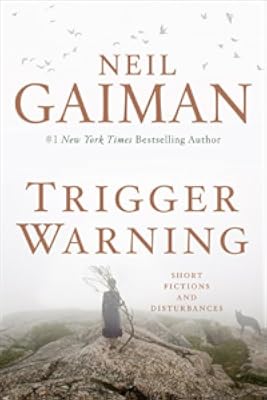
Trigger Warning: Short Fictions and Disturbances
by Neil Gaiman
On This Page
Description
Multiple award winning, #1 New York Times bestselling author Neil Gaiman returns to dazzle, captivate, haunt, and entertain with this third collection of short fiction following Smoke and Mirrors and Fragile Things-which includes a never-before published American Gods story, "Black Dog," written exclusively for this volume. In this new anthology, Neil Gaiman pierces the veil of reality to reveal the enigmatic, shadowy world that lies beneath. Trigger Warning includes previously published show more pieces of short fiction-stories, verse, and a very special Doctor Who story that was written for the fiftieth anniversary of the beloved series in 2013-as well "Black Dog," a new tale that revisits the world of American Gods, exclusive to this collection. Trigger Warning explores the masks we all wear and the people we are beneath them to reveal our vulnerabilities and our truest selves. Here is a rich cornucopia of horror and ghosts stories, science fiction and fairy tales, fabulism and poetry that explore the realm of experience and emotion. In Adventure Story-a thematic companion to The Ocean at the End of the Lane-Gaiman ponders death and the way people take their stories with them when they die. His social media experience A Calendar of Tales are short takes inspired by replies to fan tweets about the months of the year-stories of pirates and the March winds, an igloo made of books, and a Mother's Day card that portends disturbances in the universe. Gaiman offers his own ingenious spin on Sherlock Holmes in his award-nominated mystery tale The Case of Death and Honey. And Click-Clack the Rattlebag explains the creaks and clatter we hear when we're all alone in the darkness. A sophisticated writer whose creative genius is unparalleled, Gaiman entrances with his literary alchemy, transporting us deep into the realm of imagination, where the fantastical becomes real and the everyday incandescent. Full of wonder and terror, surprises and amusements, Trigger Warning is a treasury of delights that engage the mind, stir the heart, and shake the soul from one of the most unique and popular literary artists of our day. show lessTags
Recommendations



Member Recommendations
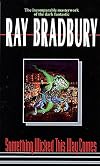
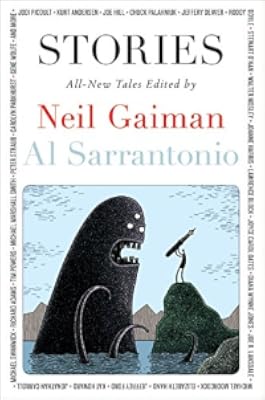
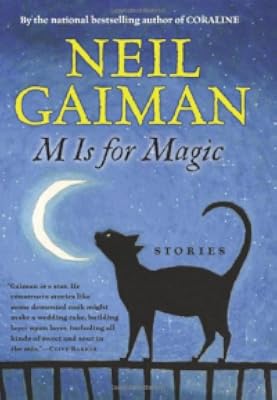
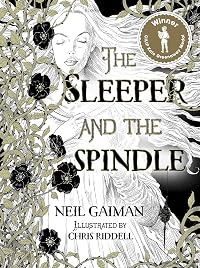
sturlington A short story in Trigger Warning is an homage to Ray Bradbury.
40
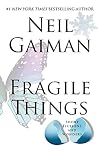
LAKobow Another short story collection by Neil Gaiman.
20
Member Reviews
3.5 stars? This collection felt well-crafted but mostly insubstantial. Then again, Gaiman's often an understated writer who works better read aloud, so I can imagine different people having totally different reactions to these stories.
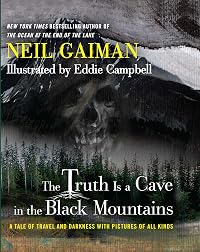
The stories that worked best for me were the long ones—"The Truth is a Cave in the Black Mountains" and "Black Dog" were both immersive and wonderful and worth the price of admission (ahem, my free library card and 2 months waiting on the hold list).
Some good short stories as well, though. "The Man Who Forgot Ray Bradbury" is exactly what it sets out to be, and is therefore perhaps a perfect short story. "The Spindle and the Sleeper," ditto (and twice as satisfyingly so). "The Truth About Cassandra" is show more frustrating but possibly (?) genius. "The Return of the Thin White Duke" is exactly the sort of thing I read Neil Gaiman for, but the ending didn't really do it for me.
I was TREMENDOUSLY ILL while reading the second half of this book, so thank you, Neil Gaiman, for being my nursemaid on Easter Sunday, 2015, and please note that I reserve my right to change my opinion about any of these stories later.
The title still kind of bothers me; I appreciate its sentiment, but in my opinion the debate over trigger warnings is mostly a series of inane misunderstandings and dipping one's toe into that debate does no one any good, not even for the sake of Art. show less
The stories that worked best for me were the long ones—"The Truth is a Cave in the Black Mountains" and "Black Dog" were both immersive and wonderful and worth the price of admission (ahem, my free library card and 2 months waiting on the hold list).
Some good short stories as well, though. "The Man Who Forgot Ray Bradbury" is exactly what it sets out to be, and is therefore perhaps a perfect short story. "The Spindle and the Sleeper," ditto (and twice as satisfyingly so). "The Truth About Cassandra" is show more frustrating but possibly (?) genius. "The Return of the Thin White Duke" is exactly the sort of thing I read Neil Gaiman for, but the ending didn't really do it for me.
I was TREMENDOUSLY ILL while reading the second half of this book, so thank you, Neil Gaiman, for being my nursemaid on Easter Sunday, 2015, and please note that I reserve my right to change my opinion about any of these stories later.
The title still kind of bothers me; I appreciate its sentiment, but in my opinion the debate over trigger warnings is mostly a series of inane misunderstandings and dipping one's toe into that debate does no one any good, not even for the sake of Art. show less
Summary: Trigger Warning is Neil Gaiman's latest collection of short stories (and a few poems). As he explains in the introduction, which sets the stage for the works that are to come, we use the phrase "trigger warning" to warn people that they might be encountering something disturbing or upsetting, or that might trigger traumatic memories. But all good stories should trigger something in their readers, whether those memories or associations or emotions are positive or negative are going to vary with the reader. The stories and the poems in this collection don't have a lot in common - there's no real theme running through them, although the arrangement of the stories was masterfully done, with ideas or themes occurring in one piece show more carrying over into the next ("Observing the Formalities" and "The Sleeper and the Spindle" are two very different takes on Sleeping Beauty, "'And Weep, Like Alexander'" and "Nothing O'Clock" both involve things being erased from history, and the fight between the saints in "In Relig Odhráin" ties very clearly into what Shadow (from American Gods) discovers in the final story, "Black Dog"). Some stories are very short, some are substantially longer, some are poems; most have some kind of fantasy or horror edge to them - it is Neil Gaiman, after all - but not all. But all of them have other edges, sharper edges, edges that just maybe will pry at a little piece of your consciousness, and trigger some kind of reaction.
Review: Normally for collections and anthologies, I review each piece separately; I'm not going to do that this time. As is the case with most anthologies, some of the stories didn't do much for me, some were fine but (I thought) not long enough to really develop into something interesting, and some just blew me away, and I'd rather spend my time talking about the latter category.
This collection did contain several of Gaiman's stories that I'd read before: "The Thing About Cassandra" from Songs of Love and Death, "Orange" from My Mother She Killed Me, My Father He Ate Me and The Starry Rift, and The Spindle and the Sleeper, which I'd just listened to from Harper Audio. I liked all of these stories as much as I did when I'd previously encountered them.
But for the most part, the stories that really stood out in this collection were those that triggered associations with other things I loved. "Nothing O'Clock" is a Doctor Who story, set in the first year of Matt Smith's tenure as the Doctor, and it captured the feeling of Doctor Who very well, which is perhaps not so surprising given that Gaiman's written for the show itself (although his Amy was a little more obnoxious than I remember Amy being). "'The Truth is a Cave in the Black Mountains…'" had just enough Scottish Highlands tinge to it that my current bingeing on the Outlander TV series carried over into goodwill for the story - plus it had a great ending, and a twist I didn't see coming. "The Case of Death and Honey" is a Sherlock Holmes story involving what Holmes does with himself after he retires, with a take on that subject that I thought was equally interesting (and plausible) as The Beekeeper's Apprentice. "A Calendar of Tales" didn't necessarily remind me of anything else (except maybe a little of Gaiman's own story "October in the Chair" from Fragile Things), but it did have some really lovely short pieces with some really evocative imagery that felt like their respective months - the bleak pebbly beach of February and the igloo of books in July, especially.
But the story that affected me the most was "The Man Who Forgot Ray Bradbury". It touches on one of my own big fears - losing my memory - and focuses on one of my favorite authors. It feels a little strange to talk so much about Ray Bradbury in a review of another author's book, but Gaiman brought him up, so I'm going to carry on. I love Ray Bradbury. I don't remember how he came into my hands - probably through my dad? and we definitely read "A Sound of Thunder" and "The Veldt" in middle school, although I'm pretty sure I already knew about him by then - but the book that was mine was The Martian Chronicles. I can't even tell you how many times I've read it. I would check the cassette tapes of the audiobook out of the library basically constantly, and listen to Ray Bradbury read me his stories in his comfortable Midwestern voice every night until I fell asleep (and then was always woken by the click of the play button releasing when I reached the end of the tape.) His stories and his worlds are so much a part of my consciousness that I'm always a little shocked when I reference a story of his and someone doesn't get it, and I'm still not sure if I'm nostalgic for the summers and autumns of my own childhood, or of his. Ray Bradbury is a master of the short story, and I really think that my exposure to him as a kid is the reason why I enjoy short stories now. So for Gaiman to write a story about Ray Bradbury's stories, and about a protagonist who also loves his stories, but who has forgotten his name and is worried that he's forgetting the stories themselves, and if he forgets the stories maybe they'll be lost from the world… well, that really affected me. So much that even though I had more time that morning to keep reading, I had to set the book down and go run errands, because I knew that diving straight into the next story would be doing a disservice to both.
But that's me. Someone else might find that story totally forgettable, if they're not a Bradbury fan, and might be affected equally much by one of the other stories, and that's kind of the point. Gaiman does do a good job here of making each of them unique - the problem I've had with his other collections where it sounds like all the protagonists are him, Neil Gaiman, wasn't much in evidence here. Just a solid collection of interesting, haunting, and triggering tales, that I very much enjoyed. 4 out of 5 stars.
Recommendation: If you like fantasy or horror-flavored short stories, or Neil Gaiman's books, then this is definitely worth checking out. The stories, like in any collection, are not all hits, but there are some gems, and I think they fit together more smoothly than in some of his previous collections. show less
Review: Normally for collections and anthologies, I review each piece separately; I'm not going to do that this time. As is the case with most anthologies, some of the stories didn't do much for me, some were fine but (I thought) not long enough to really develop into something interesting, and some just blew me away, and I'd rather spend my time talking about the latter category.
This collection did contain several of Gaiman's stories that I'd read before: "The Thing About Cassandra" from Songs of Love and Death, "Orange" from My Mother She Killed Me, My Father He Ate Me and The Starry Rift, and The Spindle and the Sleeper, which I'd just listened to from Harper Audio. I liked all of these stories as much as I did when I'd previously encountered them.
But for the most part, the stories that really stood out in this collection were those that triggered associations with other things I loved. "Nothing O'Clock" is a Doctor Who story, set in the first year of Matt Smith's tenure as the Doctor, and it captured the feeling of Doctor Who very well, which is perhaps not so surprising given that Gaiman's written for the show itself (although his Amy was a little more obnoxious than I remember Amy being). "'The Truth is a Cave in the Black Mountains…'" had just enough Scottish Highlands tinge to it that my current bingeing on the Outlander TV series carried over into goodwill for the story - plus it had a great ending, and a twist I didn't see coming. "The Case of Death and Honey" is a Sherlock Holmes story involving what Holmes does with himself after he retires, with a take on that subject that I thought was equally interesting (and plausible) as The Beekeeper's Apprentice. "A Calendar of Tales" didn't necessarily remind me of anything else (except maybe a little of Gaiman's own story "October in the Chair" from Fragile Things), but it did have some really lovely short pieces with some really evocative imagery that felt like their respective months - the bleak pebbly beach of February and the igloo of books in July, especially.
But the story that affected me the most was "The Man Who Forgot Ray Bradbury". It touches on one of my own big fears - losing my memory - and focuses on one of my favorite authors. It feels a little strange to talk so much about Ray Bradbury in a review of another author's book, but Gaiman brought him up, so I'm going to carry on. I love Ray Bradbury. I don't remember how he came into my hands - probably through my dad? and we definitely read "A Sound of Thunder" and "The Veldt" in middle school, although I'm pretty sure I already knew about him by then - but the book that was mine was The Martian Chronicles. I can't even tell you how many times I've read it. I would check the cassette tapes of the audiobook out of the library basically constantly, and listen to Ray Bradbury read me his stories in his comfortable Midwestern voice every night until I fell asleep (and then was always woken by the click of the play button releasing when I reached the end of the tape.) His stories and his worlds are so much a part of my consciousness that I'm always a little shocked when I reference a story of his and someone doesn't get it, and I'm still not sure if I'm nostalgic for the summers and autumns of my own childhood, or of his. Ray Bradbury is a master of the short story, and I really think that my exposure to him as a kid is the reason why I enjoy short stories now. So for Gaiman to write a story about Ray Bradbury's stories, and about a protagonist who also loves his stories, but who has forgotten his name and is worried that he's forgetting the stories themselves, and if he forgets the stories maybe they'll be lost from the world… well, that really affected me. So much that even though I had more time that morning to keep reading, I had to set the book down and go run errands, because I knew that diving straight into the next story would be doing a disservice to both.
But that's me. Someone else might find that story totally forgettable, if they're not a Bradbury fan, and might be affected equally much by one of the other stories, and that's kind of the point. Gaiman does do a good job here of making each of them unique - the problem I've had with his other collections where it sounds like all the protagonists are him, Neil Gaiman, wasn't much in evidence here. Just a solid collection of interesting, haunting, and triggering tales, that I very much enjoyed. 4 out of 5 stars.
Recommendation: If you like fantasy or horror-flavored short stories, or Neil Gaiman's books, then this is definitely worth checking out. The stories, like in any collection, are not all hits, but there are some gems, and I think they fit together more smoothly than in some of his previous collections. show less
 This review was written for LibraryThing Early Reviewers.
I received this as part of LT's Early Reviewer program and couldn't be more excited! I adore Neil Gaiman's whimsically terrifying writing. With that being said, this was not my favorite collection of stories by him. As usual, there were a few entries that left me slightly dazed and confused sprinkled in with the otherwise amazing selections. In "Nothing O'clock" we are privy to a short tale of Dr. Who that made me want to go and watch every single episode of the wonderful series. "Feminine Endings" made me want to go and check every shadow in my home. In "The Sleeper and the Spindle," the beautifully written tale encourages the reader to see fairytales with new eyes. All of these are the reason I love Gaiman's work, but none drew me in show more quite like "Orange". The craziness of the story comes out in small snippets of statements in response to unseen questions. It is truly ingenious writing and perhaps one of my favorite shorts in a long while. Enjoy! show less
This review was written for LibraryThing Early Reviewers.This one took a bit of time, not because it was tedious or boring but because after reading every piece (I prefer to call them pieces because the collection consists of short stories, novellas, poems et al) I felt the need to pause and reflect on ... what the hell did I just read?!
I actually quite liked this collection. I think it was a rubbish choice as a horror selection, but as something to just pick up and read, I found it enjoyable.
Given the title of the book, and the introductory material about trigger warnings, masks, and such, I'll admit, I spent a fair bit of time trying to think of why each tale might have found its way to this collection. It was, as advertised in the introduction, a little bit of everything: poetry, horror, ghosts, faerie tales, folklore, Doctors and detectives.
Favourites? The Thing About Cassandra, Down to a Sunless Sea, My Last Landlady, October and November from A Calendar of Tales, The Man Who Forgot Ray Bradbury, The Sleeper and the Spindle, and Black Dog.
Feminine Endings gets an show more honourable mention for being creepy as hell and apparently finding my buttons. Diamonds and Pearls, also evoked some level of emotion. Orange was cool if only for being a novel way of telling a story.
TLDR: Don't pick this up expecting a full-on horror collection. Do pick it up if you're up for a mixed bag of Gaiman fiction that might shake up your senses for a bit. show less
Given the title of the book, and the introductory material about trigger warnings, masks, and such, I'll admit, I spent a fair bit of time trying to think of why each tale might have found its way to this collection. It was, as advertised in the introduction, a little bit of everything: poetry, horror, ghosts, faerie tales, folklore, Doctors and detectives.
Favourites? The Thing About Cassandra, Down to a Sunless Sea, My Last Landlady, October and November from A Calendar of Tales, The Man Who Forgot Ray Bradbury, The Sleeper and the Spindle, and Black Dog.
Feminine Endings gets an show more honourable mention for being creepy as hell and apparently finding my buttons. Diamonds and Pearls, also evoked some level of emotion. Orange was cool if only for being a novel way of telling a story.
TLDR: Don't pick this up expecting a full-on horror collection. Do pick it up if you're up for a mixed bag of Gaiman fiction that might shake up your senses for a bit. show less
A Trigger warning is that thing stuck on just about everything from music to books to TV shows that warns us that the material may be disturbing to some of us. As Neil Gaiman explains it
“There are things that upset us…images or words or ideas that drop like trapdoors beneath us, throwing us out of our safe, sane world into a place much more dark and less welcoming. Our hearts skip a ratatat drum-beat in our chests and we fight for breath. Blood retreats from our faces and our fingers, leaving us pale and gasping and shocked…
What do we need to be warned about? We each have our own little triggers.”
So, given Neil Gaiman’s ability to write stories that are guaranteed to disturb, it is certainly appropriate that this latest show more collection of his short stories has been titled Trigger Warning. Most of the stories have been published previously but, unless you’re that intrepid super fan that has hunted for every crumb of Gaiman ephemera, there’s sure to be something here to please or better yet send chills up the spine.
Granted not all of these stories are creepy or scary or even a little spine-tingling and, as in every collection of short stories, I like some better than others but they are all great fun to read and they all have Gaiman’s signature twist, making even the most familiar tale seem new again. My personal favourites were The Truth is a Cave in the Black Mountains in which two men set out in search of gold and revenge and Orange which is a strange list of answers to a questionnaire about aliens, jam, and other assorted things. But I thoroughly enjoyed all of the others including a Sherlock Holmes tale, The Case of Death and Honey and a Doctor Who story, Nothing O’clock. There are also a couple of fairly well-known fairy tales that Gaiman has rewritten in very interesting ways.
Gaiman is that rare writer who never fails to enchant, entertain, and ensnare the imagination of his readers and Trigger Warning is typical Gaiman. If you’re a fan or even if you’re not, there’s bound to be something here to delight as well as disturb. Heck, I even enjoyed reading his Introduction almost as much as I did the stories. show less
“There are things that upset us…images or words or ideas that drop like trapdoors beneath us, throwing us out of our safe, sane world into a place much more dark and less welcoming. Our hearts skip a ratatat drum-beat in our chests and we fight for breath. Blood retreats from our faces and our fingers, leaving us pale and gasping and shocked…
What do we need to be warned about? We each have our own little triggers.”
So, given Neil Gaiman’s ability to write stories that are guaranteed to disturb, it is certainly appropriate that this latest show more collection of his short stories has been titled Trigger Warning. Most of the stories have been published previously but, unless you’re that intrepid super fan that has hunted for every crumb of Gaiman ephemera, there’s sure to be something here to please or better yet send chills up the spine.
Granted not all of these stories are creepy or scary or even a little spine-tingling and, as in every collection of short stories, I like some better than others but they are all great fun to read and they all have Gaiman’s signature twist, making even the most familiar tale seem new again. My personal favourites were The Truth is a Cave in the Black Mountains in which two men set out in search of gold and revenge and Orange which is a strange list of answers to a questionnaire about aliens, jam, and other assorted things. But I thoroughly enjoyed all of the others including a Sherlock Holmes tale, The Case of Death and Honey and a Doctor Who story, Nothing O’clock. There are also a couple of fairly well-known fairy tales that Gaiman has rewritten in very interesting ways.
Gaiman is that rare writer who never fails to enchant, entertain, and ensnare the imagination of his readers and Trigger Warning is typical Gaiman. If you’re a fan or even if you’re not, there’s bound to be something here to delight as well as disturb. Heck, I even enjoyed reading his Introduction almost as much as I did the stories. show less
Neil Gaiman’s newest book, Trigger Warning, is a collection of short fiction (and a few poems) that, as with most such things (although not this one!), is made up mostly of works that have appeared elsewhere. Moreover, many of these stories were prepared for certain people under certain circumstances and, therefore, might not be the most representative of Gaiman’s original work. Nonetheless, it’s a pretty good collection, rising and falling (as it must) on the strength of each selection.
The works tied to others include stories from the worlds of Sherlock Holmes, Dr. Who, and Gene Wolfe in addition to stories springing from a photo essay about David Bowie and Gaiman’s wife’s work as a human statue. It’s fun to see Gaiman work show more within these various confines, such as “A Calendar of Tales,” a series of 12 short short stories (one for each month) based on prompts drawn from readers.
Of those stories the one that stood out most to me was “Nothing O’clock,” the Dr. Who story (set during the Matt Smith/Karen Gillan era). It’s got a hint of “Get ’em Out By Friday” in the setup (aliens buying up real estate) and is genuinely creepy. Gaiman makes good use of the fact that it’s a written story rather than a TV show, a well, with some imagery (and doppelgangers of prominent British folks) that you just couldn’t pull off on screen.
The Holmes story, “The Case of Death and Honey,” doesn’t fare as well. Full confession – I’m not a Sherlock Holmes fan, so I’m not in the target audience. Nonetheless, the minute details of beekeeping that the story used got in the way of the larger story. I know from reading his blog that Gaiman has recently taken up beekeeping, so I can understand the desire to share a new passion, but it just didn’t work.
Of the completely original works, several stand out. “The Thing About Cassandra” also starts out a bit like a Genesis tune (“Me and Sarah Jane” this time) with a guy being stalked by his imaginary girlfriend, but it takes a wicked twist in the end. “Orange” is a great story – of a girl who achieves a kind of malevolent ascendance – told in a really neat way – it’s entirely made up of answers to questions posed to a witness to the events. Meanwhile “My Last Landlady” involves a guy who – well, let’s just say his need for a landlady doesn’t go away because he buys a nice house in the country.
But two originals are the best reason to get this collection. The first, “The Truth Is a Cave In the Black Mountains . . .,” began life as a mixed media thing, with Gaiman reading the story on stage, complete with background illustrations and music from a string quartet. In spite of that, the story – an atmospheric tale of revenge and, well, truth – works really well just on the printed page (or, on the Audible version, with Gaiman narrating). It’s one of those classic Gaiman stories that sounds like it should take place in the real world but thankfully doesn’t.
The second is “Black Dog,” which is not based on the Led Zeppelin tune but rather is a further entry in Gaiman’s own American Gods cannon. Shadow is still wandering, this time finding his way to a pub in the English countryside that, at one point, had a mummified cat built into the walls. He falls in with a couple that has some secrets (naturally) which requires Shadow to get in touch with one of his deific pals. It’s a cracking read, full of weird and chilling little details.
www.jdbyrne.net show less
The works tied to others include stories from the worlds of Sherlock Holmes, Dr. Who, and Gene Wolfe in addition to stories springing from a photo essay about David Bowie and Gaiman’s wife’s work as a human statue. It’s fun to see Gaiman work show more within these various confines, such as “A Calendar of Tales,” a series of 12 short short stories (one for each month) based on prompts drawn from readers.
Of those stories the one that stood out most to me was “Nothing O’clock,” the Dr. Who story (set during the Matt Smith/Karen Gillan era). It’s got a hint of “Get ’em Out By Friday” in the setup (aliens buying up real estate) and is genuinely creepy. Gaiman makes good use of the fact that it’s a written story rather than a TV show, a well, with some imagery (and doppelgangers of prominent British folks) that you just couldn’t pull off on screen.
The Holmes story, “The Case of Death and Honey,” doesn’t fare as well. Full confession – I’m not a Sherlock Holmes fan, so I’m not in the target audience. Nonetheless, the minute details of beekeeping that the story used got in the way of the larger story. I know from reading his blog that Gaiman has recently taken up beekeeping, so I can understand the desire to share a new passion, but it just didn’t work.
Of the completely original works, several stand out. “The Thing About Cassandra” also starts out a bit like a Genesis tune (“Me and Sarah Jane” this time) with a guy being stalked by his imaginary girlfriend, but it takes a wicked twist in the end. “Orange” is a great story – of a girl who achieves a kind of malevolent ascendance – told in a really neat way – it’s entirely made up of answers to questions posed to a witness to the events. Meanwhile “My Last Landlady” involves a guy who – well, let’s just say his need for a landlady doesn’t go away because he buys a nice house in the country.
But two originals are the best reason to get this collection. The first, “The Truth Is a Cave In the Black Mountains . . .,” began life as a mixed media thing, with Gaiman reading the story on stage, complete with background illustrations and music from a string quartet. In spite of that, the story – an atmospheric tale of revenge and, well, truth – works really well just on the printed page (or, on the Audible version, with Gaiman narrating). It’s one of those classic Gaiman stories that sounds like it should take place in the real world but thankfully doesn’t.
The second is “Black Dog,” which is not based on the Led Zeppelin tune but rather is a further entry in Gaiman’s own American Gods cannon. Shadow is still wandering, this time finding his way to a pub in the English countryside that, at one point, had a mummified cat built into the walls. He falls in with a couple that has some secrets (naturally) which requires Shadow to get in touch with one of his deific pals. It’s a cracking read, full of weird and chilling little details.
www.jdbyrne.net show less
Members
- Recently Added By
Published Reviews
ThingScore 67
Lists

Favorite Fairy Tale Retellings
210 works; 62 members

Best Fantasy Novels
821 works; 361 members

Best Horror Books
281 works; 85 members

Best 21st Century Books (So Far)
670 works; 86 members

Books Read in 2015
3,299 works; 129 members

Most Frequently Tagged "Read in 2015"
70 works; 1 member

Books read in 2015
213 works; 5 members
Top Five Books of 2015
811 works; 241 members
Books Read in 2016
4,666 works; 199 members

Favorite Books Based on Sherlock Holmes Stories
20 works; 10 members

Short Story and Novella Collections
47 works; 6 members

Speculative Fiction
40 works; 2 members

Books Read in 2017
4,249 works; 130 members

Magic Realism
371 works; 52 members
Author Information

844+ Works 450,032 Members
Neil Gaiman was born in Portchester, England on November 10, 1960. He worked as a journalist and freelance writer for a time, before deciding to try his hand at comic books. Some of his work has appeared in publications such as Time Out, The Sunday Times, Punch, and The Observer. His first comic endeavor was the graphic novel series The Sandman. show more The series has won every major industry award including nine Will Eisner Comic Industry Awards, three Harvey Awards, and the 1991 World Fantasy Award for best short story, making it the first comic ever to win a literary award. He writes both children and adult books. His adult books include The Ocean at the End of the Lane, which won a British National Book Awards, and the Locus Award for Best Fantasy Novel for 2014; Stardust, which won the Mythopoeic Award as best novel for adults in 1999; American Gods, which won the Hugo, Nebula, Bram Stoker, SFX, and Locus awards; Anansi Boys; Trigger Warning: Short Fictions and Disturbances; and The View from the Cheap Seats: Selected Nonfiction, which is a New York Times Bestseller. His children's books include The Day I Swapped My Dad for Two Goldfish; Coraline, which won the Elizabeth Burr/Worzalla, the BSFA, the Hugo, the Nebula, and the Bram Stoker awards; The Wolves in the Walls; Odd and the Frost Giants; The Graveyard Book, which won the Newbery Award in 2009 and The Sandman: Overture which won the 2016 Hugo Awards Best Graphic Story. (Bowker Author Biography) show less
Awards and Honors
Awards
Distinctions
Work Relationships
Contains
Common Knowledge
- Canonical title*
- Signal d'alerte
- Original title
- Trigger Warning: Short Fictions and Disturbances
- Original publication date
- 2015-02-03
- People/Characters
- Shadow; Sherlock Holmes; The Doctor (11th)
- Dedication
- I'm not sure how I wound up with an honourable Hollywood agent who reads books for pleasure but I did, eighteen years ago. He's still my agent, still honourable, and he still likes short stories best of all. This book of tale... (show all)s is for Jon Levin.
- First words
- There are things that upset us.
- Last words
- (Click to show. Warning: May contain spoilers.)Shadow thought about the matter for a little while, and told her that he guessed that it probably did.
- Original language
- English
*Some information comes from Common Knowledge in other languages. Click "Edit" for more information.
Classifications
Statistics
- Members
- 4,636
- Popularity
- 3,121
- Reviews
- 207
- Rating
- (3.93)
- Languages
- 10 — Chinese, Czech, English, French, Hungarian, Italian, Polish, Spanish, Ukrainian, Portuguese (Brazil)
- Media
- Paper, Audiobook, Ebook
- ISBNs
- 38
- ASINs
- 19
