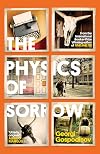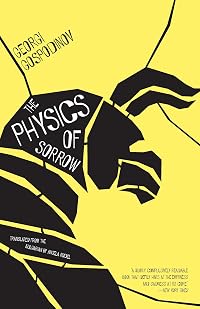
The Physics of Sorrow
by Georgi Gospodinov
On This Page
Description
The precursor to the award-winning "Time Shelter". Georgi Gospodinov's "The Physics of Sorrow" became an underground cult classic upon its 2012 release. In a radical reimagining of the minotaur myth, a narrator named Georgi meanders through the past to find the melancholy child at the center of it all. Spanning from antiquity to the Anthropocene, he catalogs curious instances of abandonment, recounts scenes of a turbulent boyhood in 1970s Bulgaria, and even has a bizarre run-in with an show more eccentric flâneur named Gaustine. show lessTags
Recommendations


















Member Reviews
True to his signature style, Georgi Gospodinov wields time—both in its physical and metaphysical dimensions—as the driving force behind The Physics of Sorrow. His prose functions as a kind of transmission, skillfully shifting the narrative backward and forward while weaving together the delicate yet unbreakable threads of personal memory, world history, and mythological realms. In doing so, he delves into the nature of time itself—one of humanity’s greatest mysteries.
The myth of the Minotaur is refracted through the many faceted prism of Gospodinov’s imagination, offering a perspective that diverges from the familiar Greek archetype. Rather than portraying the creature as a monstrous, bloodthirsty devourer of human flesh, he show more reimagines it as a lonely and misunderstood being—one burdened by its difference, yearning for acceptance, love, and a sense of belonging. The Minotaur transcends time and space, appearing across different cities and historical epochs, allowing every reader, if only for a fleeting moment, to step into its skin and feel the weight of its horns.
Both deeply philosophical and profoundly intimate, The Physics of Sorrow challenges the reader’s imagination while provoking introspection. Gospodinov’s narrative is as thought-provoking as it is heartfelt, blending existential depth with an almost dreamlike fluidity of time and identity. show less
The myth of the Minotaur is refracted through the many faceted prism of Gospodinov’s imagination, offering a perspective that diverges from the familiar Greek archetype. Rather than portraying the creature as a monstrous, bloodthirsty devourer of human flesh, he show more reimagines it as a lonely and misunderstood being—one burdened by its difference, yearning for acceptance, love, and a sense of belonging. The Minotaur transcends time and space, appearing across different cities and historical epochs, allowing every reader, if only for a fleeting moment, to step into its skin and feel the weight of its horns.
Both deeply philosophical and profoundly intimate, The Physics of Sorrow challenges the reader’s imagination while provoking introspection. Gospodinov’s narrative is as thought-provoking as it is heartfelt, blending existential depth with an almost dreamlike fluidity of time and identity. show less
«Prima mi immedesimavo negli altri, ora mi tocca comprare. Posso presentarmi anche così: sono l’uomo che compra passato. Mercante di storie. Altri commerciano col tè, col coriandolo, azioni, orologi d’oro, terreni… Io cammino e compro grosse partite di passato. Chiamatemi come volete, trovatemi un nome. Chi possiede terreni è un proprietario terriero, io sono un proprietario di tempi, proprietario del tempo altrui, il proprietario di storie e del passato di altri. Sono un compratore onesto, non chiedo mai sconti. Compro solo un passato privato, il passato di persone concrete. Una volta provarono a vendermi il passato di una nazione intera, lo rifiutai».
Prima delicato romanzo famigliare, poi saggio iconografico, poi un affondo show more nel vissuto personale e nell’autobiografia della nazione bulgara ("il posto più triste del mondo"), poi un viaggio nelle time capsule e nella morte, poi la fisica della malinconia, una serie di fine che si ricongiungono con l’inizio. Con il minotauro e il labirinto (e il personaggio Gaustin) a tenere insieme questo eccezionale esempio di innovazione letteraria. Libro prezioso che emerge in maniera prepotente dalla produzione contemporanea. Autore da seguire. show less
Prima delicato romanzo famigliare, poi saggio iconografico, poi un affondo show more nel vissuto personale e nell’autobiografia della nazione bulgara ("il posto più triste del mondo"), poi un viaggio nelle time capsule e nella morte, poi la fisica della malinconia, una serie di fine che si ricongiungono con l’inizio. Con il minotauro e il labirinto (e il personaggio Gaustin) a tenere insieme questo eccezionale esempio di innovazione letteraria. Libro prezioso che emerge in maniera prepotente dalla produzione contemporanea. Autore da seguire. show less
Brilliant! Before reading this brilliant piece of literature, I recommend pondering the notion that "ontogeny recapitulates phylogeny", and familiarizing yourself with the legend of the Minotaur. Both are central to this collection/series/story. Can you fathom being able to enter someone else's memory and then experiencing the memory as if it is yours? The experience of reading this literary wonder was akin to being in an intellectual and emotional labyrinth. And lest you be misled, this is also a tribute to Bulgarian life, pre-1989, which is likened to living in a basement for almost an entire lifetime. I laughed out loud and cringed with sadness because of this wonderful writer's use of language. If it is this powerful in a show more translation, I am envious of those who are priveleged to read it in the original. show less
An enjoyable metafictional novel about many things, including the narrator’s grandfather, his own childhood in late Communist-era Bulgaria, and minotaurs. The minotaur and the labyrinth are related to various events and themes of the book, although there are ramblings about many random subjects. Early on in the novel, the narrator (who is named Georgi Gospodinov, along with his grandfather) describes two magic realist elements, which are threaded through the rest of the narrative: as a child, he had the ability to enter someone else’s memories and find all their secrets; when he did this with his grandfather, he learned about an incident when his grandfather saw a minotaur at a fair. The narrator learns other secrets from his show more family, most notably the time when his grandfather was briefly abandoned at a mill.
From here, the narrator further describes his grandfather’s experiences in the war and his own lonely childhood, but there are all sorts of tangents and random musings and even a whole chapter in defense of the minotaur. The minotaur, he notes, is an abandoned child, which he relates to the mill incident and his own childhood stuck in a basement apartment. The narrator loses his ability to enter memories as he grows older and undertakes various projects in response to this loss–obsessing over time capsules and paying strangers for their stories. He also muses on his friend, the eccentric and ambitious Gaustine, who may be a time traveler.
The early sections, even with all the weirdness, were terrific. His descriptions of growing up in Communist-era Bulgaria are interesting, vivid, funny and sometimes sad. Later on, the narrator describes some of his middle-aged ennui and moving numbly around Europe, which was less interesting. I was also hoping for more stories about his grandfather and his family, and the Gaustine plot sort of petered out. Still, overall, the book was smoothly written, thoughtful and entertaining. Although revisionist takes on fairy tales and myths are common now, I don’t think I’ve read one with a defense of the minotaur, so those parts were fun. The book is structured into chapters about one (often random) topic with many short sections. Although it seems like the book should be easy to pick up and put down, I found I was most engaged when I read large chunks at a time. There are also many metafictional/experimental bits--pictures, lists, writing in invisible ink, etc. I liked all this weirdness, but some might find it irritating. Definitely recommended, although maybe for people who like metafiction. show less
From here, the narrator further describes his grandfather’s experiences in the war and his own lonely childhood, but there are all sorts of tangents and random musings and even a whole chapter in defense of the minotaur. The minotaur, he notes, is an abandoned child, which he relates to the mill incident and his own childhood stuck in a basement apartment. The narrator loses his ability to enter memories as he grows older and undertakes various projects in response to this loss–obsessing over time capsules and paying strangers for their stories. He also muses on his friend, the eccentric and ambitious Gaustine, who may be a time traveler.
The early sections, even with all the weirdness, were terrific. His descriptions of growing up in Communist-era Bulgaria are interesting, vivid, funny and sometimes sad. Later on, the narrator describes some of his middle-aged ennui and moving numbly around Europe, which was less interesting. I was also hoping for more stories about his grandfather and his family, and the Gaustine plot sort of petered out. Still, overall, the book was smoothly written, thoughtful and entertaining. Although revisionist takes on fairy tales and myths are common now, I don’t think I’ve read one with a defense of the minotaur, so those parts were fun. The book is structured into chapters about one (often random) topic with many short sections. Although it seems like the book should be easy to pick up and put down, I found I was most engaged when I read large chunks at a time. There are also many metafictional/experimental bits--pictures, lists, writing in invisible ink, etc. I liked all this weirdness, but some might find it irritating. Definitely recommended, although maybe for people who like metafiction. show less
This may be the first Bulgarian book I have read, thanks to its selection as a group read in 21st Century Literature this month. I don't want to preempt that discussion too much at this stage, but I found it quite a beguiling mixture of what could pass as autofiction and digressions on a wide range of subjects both ancient and modern. The unifying theme is the legend of the Minotaur, who the narrator instinctively sympathises with, and the structure of the book is deliberately labyrinthine. There is also a family history element, as the narrator inhabits the memories of his late grandfather.
I found the opening a little confusing, but once the pieces started to fit together I found it a very enjoyable read, full of warmth, intriguing show more perspectives and humour. I am looking forward to the discussion. show less
I found the opening a little confusing, but once the pieces started to fit together I found it a very enjoyable read, full of warmth, intriguing show more perspectives and humour. I am looking forward to the discussion. show less
The “quirky [and] compulsively readable” (New York Times) precursor to the 2023 International Booker Prize-winning Time Shelter.
Written with a “formal playfulness [that] suggests Kundera with A.D.D.” (Village Voice), Georgi Gospodinov’s The Physics of Sorrow became an underground cult classic upon its 2012 release. In a radical reimagining of the minotaur myth, a narrator named Georgi meanders through the past to find the melancholy child at the center of it all. Spanning from antiquity to the Anthropocene, he catalogs curious instances of abandonment, recounts scenes of a turbulent boyhood in 1970s Bulgaria, and even has a bizarre run-in with an eccentric flâneur named Gaustine. The result is a profoundly moving portrait of show more communist Bulgaria, in which the “real quest… is to find a way to live with sadness, to allow it to be a source of empathy and salutary hesitation,” (Garth Greenwell, New Yorker).
Winner of the Jan Michalski Prize for Literature and finalist for both the PEN Literary Award for Translation and the Strega Europeo. show less
Written with a “formal playfulness [that] suggests Kundera with A.D.D.” (Village Voice), Georgi Gospodinov’s The Physics of Sorrow became an underground cult classic upon its 2012 release. In a radical reimagining of the minotaur myth, a narrator named Georgi meanders through the past to find the melancholy child at the center of it all. Spanning from antiquity to the Anthropocene, he catalogs curious instances of abandonment, recounts scenes of a turbulent boyhood in 1970s Bulgaria, and even has a bizarre run-in with an eccentric flâneur named Gaustine. The result is a profoundly moving portrait of show more communist Bulgaria, in which the “real quest… is to find a way to live with sadness, to allow it to be a source of empathy and salutary hesitation,” (Garth Greenwell, New Yorker).
Winner of the Jan Michalski Prize for Literature and finalist for both the PEN Literary Award for Translation and the Strega Europeo. show less
This was a struggle to finish. No organizing structure. No themes. No character development. No settings. In my view, pretty much a mess. I kept reading hoping to find something useful, but alas there didn't seem to be much there.
Members
- Recently Added By
Lists

Books Read in 2017
4,249 works; 129 members

International Dublin Literary Award Longlist 2017
147 works; 3 members

Dublin Literary Award Longlist 2017
147 works; 2 members
Author Information

48+ Works 1,944 Members
Georgi Gospodinov (1968-) is a researcher at the Institute of Literature at the Bulgarian Academy of Sciences
Some Editions
Awards and Honors
Awards
Distinctions
Common Knowledge
- Canonical title*
- Fisica della malinconia
- Original title
- Физика на тъгата
- Original publication date
- 2015-04-14
- People/Characters
- Minotaur
- Important places
- Bulgaria
- Blurbers
- Rosenthal, Randy; Greenwell, Garth
- Original language
- Bulgarian
*Some information comes from Common Knowledge in other languages. Click "Edit" for more information.
Classifications
- Genres
- General Fiction, Fiction and Literature
- DDC/MDS
- 891.8134 — Literature & rhetoric Literatures of other languages East Indo-European and Celtic literatures West and South Slavic languages (Bulgarian, Slovene, Polish, Czech, Slovak, Serbo-Croatian, and Macedonian) Bulgarian and other South Slavic languages Bulgarian fiction 1991–
- LCC
- PG1038.17 .O85 .F5913 — Language and Literature Slavic languages and literatures. Baltic languages. Albanian language Slavic. Baltic. Albanian Bulgarian
- BISAC
Statistics
- Members
- 415
- Popularity
- 74,984
- Reviews
- 14
- Rating
- (3.77)
- Languages
- 11 — Bulgarian, Danish, Dutch, English, French, German, Greek, Italian, Polish, Spanish, Turkish
- Media
- Paper, Audiobook, Ebook
- ISBNs
- 31
- ASINs
- 10