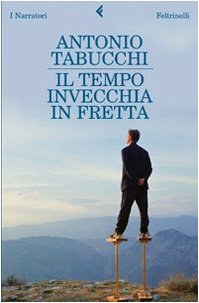
Time Ages in a Hurry
by Antonio Tabucchi
On This Page
Description
As the collection's title suggests, time's passage is the fil rouge of these stories. All of Tabucchi's characters struggle to find routes of escape from a present that is hard to bear, and from places in which political events have had deeply personal ramifications for their own lives.Tags
Recommendations


























Member Reviews
abucchi’s notion of time (e.g., aging) is a weird one. I grew up thinking it didn't really exist, that it was just something us humans invented as a measurement, like cm or mm. But I also used to think tomato soup was lava. Time is the only God, because it behaves in exactly the way any self-respecting God should: it continues to do its thing utterly dependably, and ignores everything else. The problem, I think, is that our scientific knowledge of time is so limited that in any discussion, we can't avoid drifting into metaphysics, which doesn't really add to the discussion. Regarding "time" as an entity, I feel we are like a caveman looking at the Mona Lisa and wondering how it was done what it could mean. We simply don't understand show more the extent of what we're looking at, and, like every generation, fall into the familiar trap that, because we are the here-and-now, we are the cleverest there's ever been, so we KNOW the answer, when, in fact, we're not much smarter than all the thousands of generations before us. The generations who follow us will behave in exactly the same way.
They don’t understand. When you are young, you don't really believe it will happen to you. 'The old' are a different species. By the time you get it, you are old yourself. Age sneaks up on us. I look in the mirror and ask 'Who are you and what did you do with my body'? Old age is just are the last pages of a tale told by an idiot, full of sound and fury, signifying only the rare pearls you found in an ocean of manure, and letting the glowing memory of those rare pearls play you out into oblivion. Hand me my single malt, please. The upside of being dead? Much of the bad, maybe even the worst, is behind you. You feel no pain, or even mild frustration, when you are dead. That's good!
I used to think I was old when I was 30. Getting old is not something that worries me rather than the inability to do certain things that comes with age. There are many things we do not understand. But I have come to understand two very important things due to personal experience. The first one is that we are not alone, and that there are beings who treat us in a similar way that conservationists treat wild animals by tagging and observing them. I have come to accept this, and I do not need have a need for anyone to accept this, I accept it myself, and that is good enough for me! The point is: Am I getting on in years? We all are! But I can still pedal the living arse off any of the teenagers or 20 somethings around here. I'm still reading about string theory, loop quantum gravity and topology. As Petruchio puts it in “The Taming of the Shrew”: “Where is the life that late I led?” I had this sentence come at me about 10 times in my life, but it's true (I know it’s all in Shakespeare you dumb ass!). The real meaning of this sentence dawned on me a long time ago, but the sentence only neon-ed up two years ago when I re-read all of my Shakespeare.
I don't doubt that someone, finally, will unravel the mystery of "time", but I don't realistically expect it for hundreds, if not thousands, of years. Meanwhile I’m still on this wonderful journey of reading all of Tabucchi’s body of work. Aging, Time? Bah! Read Tabucchi! It’s all there. show less
They don’t understand. When you are young, you don't really believe it will happen to you. 'The old' are a different species. By the time you get it, you are old yourself. Age sneaks up on us. I look in the mirror and ask 'Who are you and what did you do with my body'? Old age is just are the last pages of a tale told by an idiot, full of sound and fury, signifying only the rare pearls you found in an ocean of manure, and letting the glowing memory of those rare pearls play you out into oblivion. Hand me my single malt, please. The upside of being dead? Much of the bad, maybe even the worst, is behind you. You feel no pain, or even mild frustration, when you are dead. That's good!
I used to think I was old when I was 30. Getting old is not something that worries me rather than the inability to do certain things that comes with age. There are many things we do not understand. But I have come to understand two very important things due to personal experience. The first one is that we are not alone, and that there are beings who treat us in a similar way that conservationists treat wild animals by tagging and observing them. I have come to accept this, and I do not need have a need for anyone to accept this, I accept it myself, and that is good enough for me! The point is: Am I getting on in years? We all are! But I can still pedal the living arse off any of the teenagers or 20 somethings around here. I'm still reading about string theory, loop quantum gravity and topology. As Petruchio puts it in “The Taming of the Shrew”: “Where is the life that late I led?” I had this sentence come at me about 10 times in my life, but it's true (I know it’s all in Shakespeare you dumb ass!). The real meaning of this sentence dawned on me a long time ago, but the sentence only neon-ed up two years ago when I re-read all of my Shakespeare.
I don't doubt that someone, finally, will unravel the mystery of "time", but I don't realistically expect it for hundreds, if not thousands, of years. Meanwhile I’m still on this wonderful journey of reading all of Tabucchi’s body of work. Aging, Time? Bah! Read Tabucchi! It’s all there. show less
Antes de deixar o livro esfriar, e, dar o tempo de lê-lo fechado, na mente, enumerarei minhas primeiras impressões ainda frescas, de bate pronto: é um pequeno grande livro, míseras cem páginas, mas dotadas de estilo, e, com diversos tempos como tema, lembranças, deja-vu, falha de memória, sonho; tudo baseado em histórias reais contadas a ele por amigos — no final há dedicatória e tudo. Os contos, são bastante estilísticos, e não há aquela disparidade gritante tão incômoda (tanto de tamanho quanto de qualidade) em livros de contos. O maior deles é justamente o melhor: "Núvens"; e o último é memorável pelo narrador lhe dar uma volta caso você tente encurralá-lo, qualquer tentativa de acompanhá-lo é frustrada (no show more bom sentido); e, pelo que entendi, implica em um looping de personagem-narrador alheio ao seu papel. show less
The characters in these nine pieces (late 20th c. Europeans) wander along the boundary between interiority and history, and Tabucchi lets the reader share in the formulation of meaning.
The path continued down toward a clinic in the middle of the grounds. They'd stopped talking, but he could hear the noise of the wheelchair rolling over the gravel. He wanted to turn around but was unable to. The most beautiful thing in the world. That's what the girl has said, this bald girl, being hauled in a wheelchair by a nurse. She knew what the most beautiful thing in the world was. He, however, did not. How was it possible at his age, with all he'd seen and experienced, that he still didn't know what the most beautiful thing in the world was?
The path continued down toward a clinic in the middle of the grounds. They'd stopped talking, but he could hear the noise of the wheelchair rolling over the gravel. He wanted to turn around but was unable to. The most beautiful thing in the world. That's what the girl has said, this bald girl, being hauled in a wheelchair by a nurse. She knew what the most beautiful thing in the world was. He, however, did not. How was it possible at his age, with all he'd seen and experienced, that he still didn't know what the most beautiful thing in the world was?
This collection of nine short stories written toward the end of the author's career all concern the passage of time, and how the different characters in them confront significant life challenges and overcome them. I only liked one of the stories, "Clouds", in which a young girl and a former military man both on holiday have a conversation about his past while sitting on a beach. I found the other stories to be unfocused, uninteresting and lacking in insight.
Tutti i personaggi di questo libro sembrano impegnati a confrontarsi col tempo: il tempo delle vicende che hanno vissuto o stanno vivendo e quello della memoria o della coscienza. Ma è come se nelle loro clessidre si fosse alzata una tempesta di sabbia: il tempo fugge e si ferma, gira su se stesso, si nasconde, riappare a chiedere i conti. Dal passato emergono fantasmi beffardi, le cose prima nettamente distinte ora si assomigliano, le certezze implodono, le versioni ufficiali e i destini individuali non coincidono.
Mar 18, 2020Italian
Todos los personajes de este libro parecen empeñados en confrontarse con el tiempo: el tiempo de las vicisitudes que han vivido o están viviendo y el de la memoria y la conciencia. Pero es como si en sus clepsidras se hubiera levantado una tormenta de arena: el tiempo huye y se detiene, da vueltas sobre sí mismo, se oculta, reaparece para exigir cuentas.
Un ex agente de la difunta República Democrática Alemana, que durante años se encargó de espiar a Bertolt Brecht, deambula sin meta por Berlín hasta llegar a la tumba del escritor para confiarle un secreto. En una localidad turística, un oficial italiano que ha sufrido radiaciones de uranio empobrecido en Kosovo enseña a una muchacha el arte de leer el futuro en las nubes. Un show more hombre que engaña su propia soledad contándose historias a sí mismo se convierte en protagonista de las mismas vicisitudes que se había inventado en una noche de insomnio.
Como culminación, ha sido elegido por la revista Lire el mejor libro de relatos publicado en Francia en 2009. El jurado consideró que «Tabucchi siempre ha sido un maestro de los cuentos. Nueve relatos difíciles de resumir, ya que el arte tan sutil del italiano no reside solo en las historias que cuenta». show less
Un ex agente de la difunta República Democrática Alemana, que durante años se encargó de espiar a Bertolt Brecht, deambula sin meta por Berlín hasta llegar a la tumba del escritor para confiarle un secreto. En una localidad turística, un oficial italiano que ha sufrido radiaciones de uranio empobrecido en Kosovo enseña a una muchacha el arte de leer el futuro en las nubes. Un show more hombre que engaña su propia soledad contándose historias a sí mismo se convierte en protagonista de las mismas vicisitudes que se había inventado en una noche de insomnio.
Como culminación, ha sido elegido por la revista Lire el mejor libro de relatos publicado en Francia en 2009. El jurado consideró que «Tabucchi siempre ha sido un maestro de los cuentos. Nueve relatos difíciles de resumir, ya que el arte tan sutil del italiano no reside solo en las historias que cuenta». show less
Apr 23, 2010Spanish
Fantastiskt bra bok, det bästa jag läst på länge - rekommenderas
Aug 17, 2012Swedish
Members
- Recently Added By
Author Information

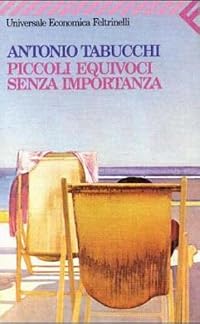
Antonio Tabucchi was born in Pisa, Italy on September 24, 1943. He studied literature and philosophy at the city's university. He was a writer and academic. He was professor of Portuguese literature at the University of Siena and the Italian Cultural Institute in Lisbon. His works include Piazza d'Italia, Piccoli Equivoci Senza Importanza (Little show more Misunderstandings of No Importance), Requiem, uma Alucinaçaõ (Requiem: A Hallucination), Tristano Muore (Tristan Is Dying), and Racconti con Figure. Many of his works were adapted into films including Sostiene Pereira (Pereira Maintains) and Notturno Indiano (Indian Nocturne). In addition to his fictional writing, he translated works by Fernando Pessoa and other Portuguese writers into Italian. He received numerous literary prizes including the Chevalier des Arts et des Lettres in France. In 1993, he was one of the founder members of the International Parliament of Writers and contributed articles to its journal, Autodafé. He died of cancer on March 25, 2012 at the age of 68. (Bowker Author Biography) show less
Some Editions
Series
Belongs to Publisher Series
Gallimard, Folio (5154)
Common Knowledge
- Canonical title
- Time Ages in a Hurry
- Original title
- Il tempo invecchia in fretta
- Original publication date
- 2009
- First words*
- Le pregunté sobre aquellos tiempos en que éramos aún tan jóvenes, ingenuos, entusiastas, tontos, inexpertos.
- Original language
- Italian
*Some information comes from Common Knowledge in other languages. Click "Edit" for more information.
Classifications
- Genres
- Fiction and Literature, General Fiction
- DDC/MDS
- 853.914 — Literature & rhetoric Italian, Romanian & related literatures Italian fiction 1900- 20th Century 1945-1999
- LCC
- PQ4880 .A24 .T4613 — Language and Literature French, Italian, Spanish and Portuguese literatures Italian literature Individual authors, 1961-2000
- BISAC
Statistics
- Members
- 239
- Popularity
- 134,302
- Reviews
- 8
- Rating
- (3.56)
- Languages
- 10 — Catalan, English, French, German, Italian, Japanese, Polish, Portuguese, Spanish, Swedish
- Media
- Paper, Ebook
- ISBNs
- 20
- ASINs
- 4