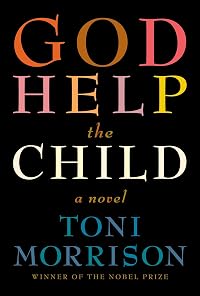
God Help the Child
by Toni Morrison
On This Page
Description
Spare and unsparing, God Help the Child--the first novel by Toni Morrison to be set in our current moment--weaves a tale about the way the sufferings of childhood can shape, and misshape, the life of the adult. At the center: a young woman who calls herself Bride, whose stunning blue-black skin is only one element of her beauty, her boldness and confidence, her success in life, but which caused her light-skinned mother to deny her even the simplest forms of love. There is Booker, the man show more Bride loves, and loses to anger. Rain, the mysterious white child with whom she crosses paths. And finally, Bride's mother herself, Sweetness, who takes a lifetime to come to understand that "what you do to children matters. And they might never forget." show lessTags
Recommendations

Member Reviews
A girl named Lula Ann is born, dark black, to her light-skinned mother, who promptly rejects her and treats her without love as a child, demanding that Lula call her "Sweetness" instead of "Mother". As an adult, Lula Ann renames herself Bride and wears only white, exulting in her beauty, but still dealing with the abuse she endured as a child. A teacher that was put into jail largely on her testimony is released and then her boyfriend leaves, dealing with his own childhood demons.
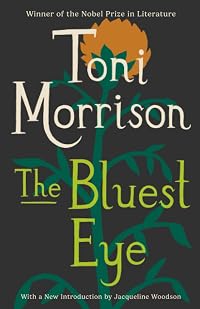
A story that explores racism, colorism, childhood trauma, and more with Morrison's signature fine writing and complex characters. It makes an interesting counterpoint to The Bluest Eye, which I read most recently, as it addresses some of those same ideas of show more self-love in a world that doesn't accept you, but in a very different way. Not my favorite of Morrison's work, but still well worth reading. show less
A story that explores racism, colorism, childhood trauma, and more with Morrison's signature fine writing and complex characters. It makes an interesting counterpoint to The Bluest Eye, which I read most recently, as it addresses some of those same ideas of show more self-love in a world that doesn't accept you, but in a very different way. Not my favorite of Morrison's work, but still well worth reading. show less
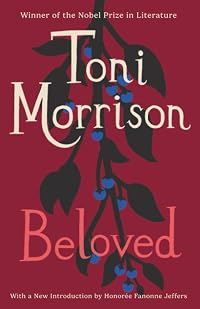
No one writes only masterpieces. So long as human beings write novels and short stories (and, of course, a host of other things), quality will vary. It is nevertheless disappointing—sometimes very disappointing—to read a work whose quality simply doesn’t rise to the level an author’s best works. Sadly, that is the case with this book, the last novel that Toni Morrison wrote. Childhood trauma can have lifelong consequences: that’s the message here and it is, of course, inarguable. What also seems inarguable is that this is really no more than a novella bulked up with repetition and unnecessary tangents, hampered by a lack of any real character development, and suffering from characters who are—with a single exception who show more doesn’t fully appear until very late in the book—simply neither sympathetic nor all that interesting. The book was not especially well-received and it is easy to see why. There is little here that Morrison hasn’t addressed in other books and much better in every case. If you’re new to Morrison, I would urge you to read her other books: read The Bluest Eye if you want to know what she can do oh-so-powerfully with cruelty, abuse, color consciousness, and the vulnerability of children. Read Sula if you want to know how effectively Morrison has written about the betrayal of female friendship and the irresistible allure of a sexual connection. Read Beloved if you want to experience her extraordinary abilities depicting the lasting effects of trauma (slavery in this case) or the essence of community and the power of love. But don’t read this one unless you’re a completist. show less
When Bride is born with significantly darker skin than her parents, she is raised without love. Her mother even insists on being called "Sweetness" rather than any maternal name. When Bride is still young, she falsely testifies against a teacher in "Satanic Panic" type of child abuse case, just so she can get a moment of affection from Sweetness.
As an adult, Bride has become successful in the beauty industry and plans to bring skin care products to the former teacher when she's released from prison as a means of atonement. This causes Bride's current partner Booker Starbern to leave her. The bulk of the book details Bride's meeting with the teacher and her later search for Booker, both of which lead to a great amount of pain and show more suffering for Bride. In flashbacks to their past, we learn that Bride and Booker's experiences with child abuse have arrested their development as adults (in Bride's case this becomes quite literal in a magical realist way). It's a powerful story of learning to deal with the trauma of abuse and racism and finding redemption in relationships with others. show less
As an adult, Bride has become successful in the beauty industry and plans to bring skin care products to the former teacher when she's released from prison as a means of atonement. This causes Bride's current partner Booker Starbern to leave her. The bulk of the book details Bride's meeting with the teacher and her later search for Booker, both of which lead to a great amount of pain and show more suffering for Bride. In flashbacks to their past, we learn that Bride and Booker's experiences with child abuse have arrested their development as adults (in Bride's case this becomes quite literal in a magical realist way). It's a powerful story of learning to deal with the trauma of abuse and racism and finding redemption in relationships with others. show less
Ah, Toni Morrison. She;s deceptively simple, while all the while being terribly complex. I wasn't surprised at the reveal when it came, but I think that in some ways it isn't the crux of the book - at least not in the traditional sense. I loved the exploration of how childhood hurts become us, even if the de-maturing of Bride seemed a little much at times. I often wondered while reading, if the bits and pieces of her that were becoming childlike again were only in her mind, rather than Morrison injecting an element of the supernatural into the work. I think some may argue either way, but I prefer to think of it as merely in Bride's own perception (even if, in some ways it functions as a slightly heavy handed telescoping of the reveal show more that isn't). So why do I like this book after saying that? For the dipping into the human psyche. For the little beautiful moments of the work that turn those childhood horrors into something else (for example, Bride's blue-black skin that her mother hated, that turns out to be Bride's most spectacular feature and part of her ethereal beauty). I loved that even though there were moments of positive closure, that not all the moments of closure were. We're not given the pretty of the fairy tale, only the prequel, and some faint hopes that the next story will be better. And, after all, isn't that what we're all after? Something just a little bit better than what we, ourselves, had? show less
This is a terse read with an even more terse theme: the things we do to children matter. Because children who are raised in pain grow up to be adults in pain, which pain they then pass on to those they love and those who love them.
God help all the children in this book, for all of them have suffered in one way or another. There’s the protagonist, Bride, denied love by her mother because of her black skin. There’s her inamorata Booker, permanently scarred by the death of a beloved brother at the hands of a pedophile. Booker’s aunt Queen has left a trail of abandoned children in her wake, all of whom hate her. And Rain, the only actual child in the book, has fled from a mother who sold her into prostitution. Each of them seeks to show more mend their wounds in dysfunctional or ineffective ways: through sex, through music, through poetry, through sensory stimulation, through betrayal. Morrison’s message is clear – lest you miss it, Morrison hammers the message home at the end of the first, brutal chapter: “But it’s not my fault. It’s not my fault. It’s not my fault. It’s not.”
Don’t worry about the plot – it scarcely matters, and Morrison scarcely bothers to justify the story’s many improbabilities or inconsistencies. Besides, who reads Morrison for plot? This novel delivers what Morrison’s novels infallibly deliver: memorable characters, lyrical prose, a little magical realism (for example, Bride’s body literally reverting back to adolescence), a whopping dose of empathy for all the damaged people in the world, and the hope of redemption through love. show less
God help all the children in this book, for all of them have suffered in one way or another. There’s the protagonist, Bride, denied love by her mother because of her black skin. There’s her inamorata Booker, permanently scarred by the death of a beloved brother at the hands of a pedophile. Booker’s aunt Queen has left a trail of abandoned children in her wake, all of whom hate her. And Rain, the only actual child in the book, has fled from a mother who sold her into prostitution. Each of them seeks to show more mend their wounds in dysfunctional or ineffective ways: through sex, through music, through poetry, through sensory stimulation, through betrayal. Morrison’s message is clear – lest you miss it, Morrison hammers the message home at the end of the first, brutal chapter: “But it’s not my fault. It’s not my fault. It’s not my fault. It’s not.”
Don’t worry about the plot – it scarcely matters, and Morrison scarcely bothers to justify the story’s many improbabilities or inconsistencies. Besides, who reads Morrison for plot? This novel delivers what Morrison’s novels infallibly deliver: memorable characters, lyrical prose, a little magical realism (for example, Bride’s body literally reverting back to adolescence), a whopping dose of empathy for all the damaged people in the world, and the hope of redemption through love. show less
Toni Morrison is one of my favorite authors. Her writing is as insightful as it is beautiful to read. As tragic as her stories are, they still present a nobility of character, wonderful characters that stay with you. This is a slight, beautifully written book with alternating narrators, presenting various views of Lula Ann, a very beautiful, very black girl whose mother hardly touched her because she was so dark. "I always knew she didn’t like touching me. I could tell. Distaste was all over her face when I was little and she had to bathe me. Rinse me, actually, after a halfhearted rub with a soapy washcloth. I used to pray she would slap my face or spank me just to feel her touch. " Lula Ann changed her name to Bride as she gained show more confidence and become part of a growing make up business called Go Girl. The novel weaves in and out of time, giving us various narrators. But the defining moment for Lula Ann is when she testified against one of her teachers, sent her away for child molesting. This made her mother proud and she walked with her hand and hand after the ordeal. Her boyfriend , Booker, walks out on her when he hears that she wants to help the child molester as she is released from prison, 15 years later. Her attempt at some kind gesture does not go well. Three of the novel's characters have some life changing experience with molestation. The Times' critic notes, " Child abuse cuts a jagged scar through Toni Morrison’s “God Help the Child,” a brisk modern-day fairy tale with shades of the Brothers Grimm: imaginative cruelties visited on children; a journey into the woods; a handsome, vanished lover; witchy older women and a blunt moral — “What you do to children matters. And they might never forget.” Their stories haunt them, preventing them from moving on. Only in the end after another tragedy, is there some hope that new life can make them whole. show less
This is a short but dense novel. It focuses on a woman who calls herself Bride. She has very dark skin - so dark that her mother was afraid of her when she was born and feared what kind of life this dark child would live, and was cruel to her as a way of preparing her for the cruelty the rest of the world would inflict on her. Bride has a successful career in cosmetics, and has learned to embrace her dark skin.
Two events in Bride's life set off the action of the book: Bride's lover, Booker, leaves her, and a woman who was jailed for 15 years largely because of Bride's courtroom testimony as a child is released on parole. Bride wants to give this woman a lot of money to make up for her role in incarcerating the woman.
There are a few show more themes that tie the book together: child abuse comes up over and over. There is a lot of very overt child abuse (including a very graphic rape scene), but there is also more subtle abuse (Bride's mother's inability to love her dark child) and some abuse that is questionable (a kind couple kidnapping a child who has been the victim of abuse, Booker's parents' inability to help him handle the consequences of his brother's death). A related theme is an exploration of how parents can damage their children by trying to protect them: some of the abuse in the book comes from a place of love, particularly in the case of Bride's mother.
The book is also about how you have to let go of the past to be able to heal from it and move on.
Morrison's writing is always a pleasure to read, and her characters feel very real. However, this book doesn't seem to hold together very well. There's one character (a friend/coworker of Bride) who seems unnecessary to the whole book and who kind of disappears halfway through. There's a very weird episode where Bride is in a car accident and ends up living with a family out in the middle of nowhere while her broken ankle heals. This episode has elements of magical realism: Bride's body changes inexplicably while she heals, and she also undergoes mental/emotional transformations. But the rest of the book is very realistic, so it is jarring that she would just sleep on a couch in a shack for 6 weeks and not bother to call her friend to tell her why she's gone, or call her boss to see if she will still have a job when she gets back. It seems that a writer as experienced as Morrison would be able to handle these elements more gracefully. show less
Two events in Bride's life set off the action of the book: Bride's lover, Booker, leaves her, and a woman who was jailed for 15 years largely because of Bride's courtroom testimony as a child is released on parole. Bride wants to give this woman a lot of money to make up for her role in incarcerating the woman.
There are a few show more themes that tie the book together: child abuse comes up over and over. There is a lot of very overt child abuse (including a very graphic rape scene), but there is also more subtle abuse (Bride's mother's inability to love her dark child) and some abuse that is questionable (a kind couple kidnapping a child who has been the victim of abuse, Booker's parents' inability to help him handle the consequences of his brother's death). A related theme is an exploration of how parents can damage their children by trying to protect them: some of the abuse in the book comes from a place of love, particularly in the case of Bride's mother.
The book is also about how you have to let go of the past to be able to heal from it and move on.
Morrison's writing is always a pleasure to read, and her characters feel very real. However, this book doesn't seem to hold together very well. There's one character (a friend/coworker of Bride) who seems unnecessary to the whole book and who kind of disappears halfway through. There's a very weird episode where Bride is in a car accident and ends up living with a family out in the middle of nowhere while her broken ankle heals. This episode has elements of magical realism: Bride's body changes inexplicably while she heals, and she also undergoes mental/emotional transformations. But the rest of the book is very realistic, so it is jarring that she would just sleep on a couch in a shack for 6 weeks and not bother to call her friend to tell her why she's gone, or call her boss to see if she will still have a job when she gets back. It seems that a writer as experienced as Morrison would be able to handle these elements more gracefully. show less
Members
- Recently Added By
Published Reviews
ThingScore 75
As the book flies toward its conclusion, the speed bumps in its early pages quickly recede in the rearview mirror. Writing with gathering speed and assurance as the book progresses, Ms. Morrison works her narrative magic, turning the Ballad of Bride and Booker into a tale that is as forceful as it is affecting, as fierce as it is resonant.
added by ozzer
"Although deeply embedded in African-American history, Toni Morrison's writings have always gone beyond standard representations of African Americans as victimized or marginalized individuals drifting along the outskirts of white concerns. She has instead presented them as central cosmic presences wading their way through currents of unique human experience shaped by powerful confluences of show more historical developments. As an author, Toni Morrison in some important ways is to American fiction what the late W.E.B. Du Bois and Howard Zinn were to American history: a revisionist of themes and texts who expanded narratives on the American story to validate the testimonies of those whose lives and voices had been classified as 'minor'.” -- Aberjhani show less
added by Aberjhani
Lists

Recommendations
17 works; 1 member

Kirkus Starred Fiction Reviews of Books Published in 2015
310 works; 6 members

Kirkus Reviews Best Fiction of 2015
98 works; 6 members

Books recommended by Calgary Public Library staff
1,588 works; 4 members

Vlogbrothers Book Recommendations
307 works; 4 members
Author Information

103+ Works 80,182 Members
Some Editions
Awards and Honors
Awards
Distinctions
Series
Belongs to Publisher Series
Keltainen kirjasto (470)
Common Knowledge
- Canonical title
- God Help the Child
- Original title
- God Help the Child
- Original publication date
- 2015-04-21
- People/Characters
- Lula Ann "Bride" Bridewell; Booker Starbern; Sweetness Bridewell; Rain; Queen Olive
- Epigraph
- Suffer little children to come unto me, and forbid them not. Luke 18:16
- Dedication
- For You
- First words
- It's not my fault.
- Quotations
- I always knew she didn't like touching me. I could tell. Distaste was all over her face when I was little and she had to bathe me...I used to pray she would slap my face or spank me just to feel her touch.
- Last words
- (Click to show. Warning: May contain spoilers.)Good Luck and God help the child.
- Original language
- English
Classifications
Statistics
- Members
- 1,523
- Popularity
- 15,122
- Reviews
- 78
- Rating
- (3.78)
- Languages
- 11 — Catalan, Dutch, English, Finnish, French, German, Italian, Portuguese, Spanish, Swedish, Turkish
- Media
- Paper, Audiobook, Ebook
- ISBNs
- 49
- ASINs
- 14