On This Page
Description
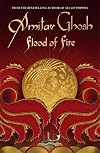
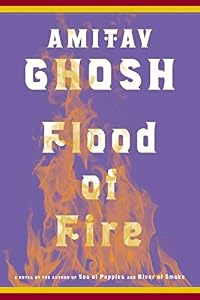
"The stunningly vibrant final novel in the bestselling Ibis Trilogy It is 1839 and China has embargoed the trade of opium, yet too much is at stake in the lucrative business and the British Foreign Secretary has ordered the colonial government in India to assemble an expeditionary force for an attack to reinstate the trade. Among those consigned is Kesri Singh, a soldier in the army of the East India Company. He makes his way eastward on the Hind, a transport ship that will carry him from show more Bengal to Hong Kong. Along the way, many characters from the Ibis Trilogy come aboard, including Zachary Reid, a young American speculator in opium futures, and Shireen, the widow of an opium merchant whose mysterious death in China has compelled her to seek out his lost son. The Hind docks in Hong Kong just as war breaks out and opium "pours into the market like monsoon flood." From Bombay to Calcutta, from naval engagements to the decks of a hospital ship, among embezzlement, profiteering, and espionage, Amitav Ghosh charts a breathless course through the culminating moment of the British opium trade and vexed colonial history. With all the verve of the first two novels in the trilogy, Flood of Fire completes Ghosh's unprecedented reenvisioning of the nineteenth-century war on drugs. With remarkable historic vision and a vibrant cast of characters, Ghosh brings the Opium Wars to bear on the contemporary moment with the storytelling that has charmed readers around the world"-- show lessTags
Recommendations














Member Reviews
Flood of Fire completes Amitav Ghosh’s colourful trilogy of the linked histories of China, India and the colonizing forces, particularly Britain. I enjoyed it more than the last book, which got bogged down in ideological argument, but perhaps not quite as much as the first, which revealed a detailed story of people and places in the opium trade. This novel takes us into the early phases of the British invasion of China now known as the Opium Wars.
Looking at the history from a South Asian perspective, Ghosh brings in the Indian traders who hoped to profit from the opium sales and Indian soldiers who had to fight the wars, as well as an educated noble class that found itself disposessed from its former privilege in India. The character show more of the mystic gomusta, Baboo Nob Kissin, adds a slightly comic viewpoint as he helps bring all the forces together for what he hopes will be a destructive cataclysm that will launch a new spiritual world. The British, the Chinese and the Americans all have characters representing their viewpoints, but the main focus is the characters from the Indian subcontinent.
I found the clash of these varying national and personal interests brought a lot of interest to events that I knew of only as a historical note. Ghosh describes home life, ship life and warfare in concrete detail that gives a real sense of what’s involved and what’s at stake for the characters that he chooses for his story. (Except for a few soldiers, he chooses only relatively wealthy middle and upper class characters.) The Indian soldier Kesri, for example, lives the farce of military bureaucracy as well as 19th century cannon fire and hand-to-hand combat in conditions where food, water and ammunition had to be carried to soldiers by hand. The advantage of modern weapons over traditional ones is violently clear.
Each character’s personal motivations also develops and plays into the broader historical forces. Zachery becomes a key character as he develops from a naïve and generous American sailor with mixed-heritage into a self-interested businessman who wants status and wealth. He finds his way to prove his merit by making vast profits in the drug trade. In this, he follows the model and the moral justification of the British. They regard him as a useful tool in facilitating their own acquisition, and his anger at the emotional and social costs he has to pay is key to his motivation. However, it is Zachery that Baboo Nob Kissin is thinking of when he envisions the destruction of the world through greed. Pointedly, Zachery sees the bombardnent of Canton as the high point of rational civilization, where technology and science come together to project modern comercial values on a recalcitrant country.
There are some things in the novel that, for me, don’t entirely fit. The characters are all drawn to travel together on the Hind in their passage from ancient India to modern Hong Kong, but somehow they are all connected through the Ibis, the schooner that was at the centre of the first novel in the trilogy. The Ibis was carrying its characters to a range of new lives in Mauritius when it was hit by a storm. The ghost of a key Indian trader appears on the Ibis before another storm sinks the ship in Hong Kong harbour. This is all a bit mystical and I’m not sure what it adds to the story. Modern transport and communications are the instrument that links new and old and brings about their destruction? It is obviously a factor, but it’s not the only one or the most powerful one, and it doesn’t act in a mystical way.
Nevertheless, the narrative is a gripping way of looking at the history of southeast Asia. It shows not only the economic and political forces at work, but also their impacts on individuals of many classes. The narrative and the characters are interesting and keep the story moving along through its considerable length. show less
Looking at the history from a South Asian perspective, Ghosh brings in the Indian traders who hoped to profit from the opium sales and Indian soldiers who had to fight the wars, as well as an educated noble class that found itself disposessed from its former privilege in India. The character show more of the mystic gomusta, Baboo Nob Kissin, adds a slightly comic viewpoint as he helps bring all the forces together for what he hopes will be a destructive cataclysm that will launch a new spiritual world. The British, the Chinese and the Americans all have characters representing their viewpoints, but the main focus is the characters from the Indian subcontinent.
I found the clash of these varying national and personal interests brought a lot of interest to events that I knew of only as a historical note. Ghosh describes home life, ship life and warfare in concrete detail that gives a real sense of what’s involved and what’s at stake for the characters that he chooses for his story. (Except for a few soldiers, he chooses only relatively wealthy middle and upper class characters.) The Indian soldier Kesri, for example, lives the farce of military bureaucracy as well as 19th century cannon fire and hand-to-hand combat in conditions where food, water and ammunition had to be carried to soldiers by hand. The advantage of modern weapons over traditional ones is violently clear.
Each character’s personal motivations also develops and plays into the broader historical forces. Zachery becomes a key character as he develops from a naïve and generous American sailor with mixed-heritage into a self-interested businessman who wants status and wealth. He finds his way to prove his merit by making vast profits in the drug trade. In this, he follows the model and the moral justification of the British. They regard him as a useful tool in facilitating their own acquisition, and his anger at the emotional and social costs he has to pay is key to his motivation. However, it is Zachery that Baboo Nob Kissin is thinking of when he envisions the destruction of the world through greed. Pointedly, Zachery sees the bombardnent of Canton as the high point of rational civilization, where technology and science come together to project modern comercial values on a recalcitrant country.
There are some things in the novel that, for me, don’t entirely fit. The characters are all drawn to travel together on the Hind in their passage from ancient India to modern Hong Kong, but somehow they are all connected through the Ibis, the schooner that was at the centre of the first novel in the trilogy. The Ibis was carrying its characters to a range of new lives in Mauritius when it was hit by a storm. The ghost of a key Indian trader appears on the Ibis before another storm sinks the ship in Hong Kong harbour. This is all a bit mystical and I’m not sure what it adds to the story. Modern transport and communications are the instrument that links new and old and brings about their destruction? It is obviously a factor, but it’s not the only one or the most powerful one, and it doesn’t act in a mystical way.
Nevertheless, the narrative is a gripping way of looking at the history of southeast Asia. It shows not only the economic and political forces at work, but also their impacts on individuals of many classes. The narrative and the characters are interesting and keep the story moving along through its considerable length. show less
'Flood of Fire' is the final volume of the Ibis trilogy. I read the second, [b:River of Smoke|9783627|River of Smoke|Amitav Ghosh|https://i.gr-assets.com/images/S/compressed.photo.goodreads.com/books/1310286525l/9783627._SY75_.jpg|14673463], four years ago so was a little concerned that I'd struggle to keep up with events. Thankfully, 'Flood of Fire' centres upon a slightly different cast, so it was enough to vaguely recall names and the context of the Opium Wars. Ghosh adeptly plunges the reader into the dynamics of colonised India, imperial China, and aggressively expansionist Britain, via a fascinating coterie of characters caught in between them. All are all vivid and compelling. I was especially struck by the story of Kesri, an show more Indian sepoy who finds himself in China fighting for Britain's ability to sell opium. While less sympathetic, Zachary Reid also has a fascinating plot arc. His affair with Mrs Burnham, which could have been merely sordid, is greatly enlivened by her constant use of hilarious sexual euphemisms. By the end some characters suffer sad fates, notably Freddie Lee, while others escape to the happy future with Deeti glimpsed in [b:River of Smoke|9783627|River of Smoke|Amitav Ghosh|https://i.gr-assets.com/images/S/compressed.photo.goodreads.com/books/1310286525l/9783627._SY75_.jpg|14673463]. Paulette's ending was ambiguous, suggesting possible of reconciliation with Zachary once he's become a monstrous avatar of capitalist greed. The suicides of Captain Mee and Mrs Burnham were suitably tragic, as well as indicative of the tight grip that propriety exerted even upon the most privileged. Shireen and Kesri, by contrast, manage to break free from social expectations and pursue happiness. Both seemed much more clear-sighted and imaginative than the white British characters.
Having read [b:The Great Derangement: Climate Change and the Unthinkable|29362082|The Great Derangement Climate Change and the Unthinkable|Amitav Ghosh|https://i.gr-assets.com/images/S/compressed.photo.goodreads.com/books/1462497923l/29362082._SY75_.jpg|49607520] and [b:Gun Island|42436500|Gun Island|Amitav Ghosh|https://i.gr-assets.com/images/S/compressed.photo.goodreads.com/books/1551563543l/42436500._SY75_.jpg|66156716] in recent years, I could see in 'Flood of Fire' seeds of Ghosh's strong interest in climate change fiction. Baboo, a major character in the previous book if I recall correctly, takes only a cameo role in this one. However his occasional pronouncements place the whole plot in the wider context of fossil fuel-based imperialism. Early steam ships, including the first to have an iron hull, are deployed against the Chinese during a series of battles that constituted the first Opium War. These of course required great quantities of coal. Baboo appears to foresee the climate chaos that will be unleashed by so-called free trade, and seeks to accelerate it by encouraging greed amongst the opium traders he works for. The novel as a whole certainly shows the violent reality of so-called free trade in 1839 very effectively. It is only free for the British, because they have the naval forces to impose the terms of trade they desire. Ghosh depicts the brutality of the first Opium War partly through the eyes of children employed as fifers and drummers by the British forces, which is especially moving.
Overall I enjoyed 'Flood of Fire' a great deal, albeit not quite as much as [b:River of Smoke|9783627|River of Smoke|Amitav Ghosh|https://i.gr-assets.com/images/S/compressed.photo.goodreads.com/books/1310286525l/9783627._SY75_.jpg|14673463]. Unusually, the middle book in a trilogy proved to be my favourite! That might say as much about my mood while reading each as about the novels themselves, however. 'Flood of Fire' is due back at the library tomorrow so I intended to read it over the weekend, then finished it on Saturday. That certainly speaks to how involving I found it. The quality and style of writing are very consistent throughout the trilogy. World-building through language is a particular strength, coupled with the high density of historical details. Although I assumed the progression of the Opium Wars was historically accurate, I was disconcerted to discover from the afterword that at least some of the characters depicted were real people. I'm unsure how many of them, though. Given the indignity and intimacy of how closely the reader observes their fictionalised actions in the trilogy, I felt somewhat embarrassed on behalf of the real people involved. Such details certainly give the narrative a lot of texture and conviction, though, bringing a turbulent period of history vividly to life. show less
Having read [b:The Great Derangement: Climate Change and the Unthinkable|29362082|The Great Derangement Climate Change and the Unthinkable|Amitav Ghosh|https://i.gr-assets.com/images/S/compressed.photo.goodreads.com/books/1462497923l/29362082._SY75_.jpg|49607520] and [b:Gun Island|42436500|Gun Island|Amitav Ghosh|https://i.gr-assets.com/images/S/compressed.photo.goodreads.com/books/1551563543l/42436500._SY75_.jpg|66156716] in recent years, I could see in 'Flood of Fire' seeds of Ghosh's strong interest in climate change fiction. Baboo, a major character in the previous book if I recall correctly, takes only a cameo role in this one. However his occasional pronouncements place the whole plot in the wider context of fossil fuel-based imperialism. Early steam ships, including the first to have an iron hull, are deployed against the Chinese during a series of battles that constituted the first Opium War. These of course required great quantities of coal. Baboo appears to foresee the climate chaos that will be unleashed by so-called free trade, and seeks to accelerate it by encouraging greed amongst the opium traders he works for. The novel as a whole certainly shows the violent reality of so-called free trade in 1839 very effectively. It is only free for the British, because they have the naval forces to impose the terms of trade they desire. Ghosh depicts the brutality of the first Opium War partly through the eyes of children employed as fifers and drummers by the British forces, which is especially moving.
Overall I enjoyed 'Flood of Fire' a great deal, albeit not quite as much as [b:River of Smoke|9783627|River of Smoke|Amitav Ghosh|https://i.gr-assets.com/images/S/compressed.photo.goodreads.com/books/1310286525l/9783627._SY75_.jpg|14673463]. Unusually, the middle book in a trilogy proved to be my favourite! That might say as much about my mood while reading each as about the novels themselves, however. 'Flood of Fire' is due back at the library tomorrow so I intended to read it over the weekend, then finished it on Saturday. That certainly speaks to how involving I found it. The quality and style of writing are very consistent throughout the trilogy. World-building through language is a particular strength, coupled with the high density of historical details. Although I assumed the progression of the Opium Wars was historically accurate, I was disconcerted to discover from the afterword that at least some of the characters depicted were real people. I'm unsure how many of them, though. Given the indignity and intimacy of how closely the reader observes their fictionalised actions in the trilogy, I felt somewhat embarrassed on behalf of the real people involved. Such details certainly give the narrative a lot of texture and conviction, though, bringing a turbulent period of history vividly to life. show less
Eeek, this wound up a lot bleaker than I expected. Lots of cannon fire and troop movements as the opium war erupts. How the free trade rhetoric is just a cover for cut-throat greed... Ghosh shows how personal this gets. Tracing the roots of our present global crisis.... well, back to 1841, anyway!
I finally did it, I ate the whole thing. What an end to the series. A lot of this book, especially the latter third, was a slog and I will admit to skimming my share of military history and battle particulars. I was reading this for the characters, not Ghosh's prodigious research though I admit that was impressive. But it's the characters that really drive this series for me and watching their destinies unfold was mesmerizing. Folks from Sea of Poppies returned and the stories started in River of Smoke were ended too; Zachary Reid, Paulette, the Burnhams and more return, and we meet Kesri Singh, Shireen Modi and more too. It was a great book. It's just long, and you absolutely must have read the previous volumes. Although honestly it's show more been so long since I read the prior books that this one might as well have been a stand-alone. But you should read the whole series, because it's incredible immersive historical fiction you'll never forget.
http://www.bostonbibliophile.com/2015/12/review-flood-of-fire-by-amitav-ghosh.ht... show less
http://www.bostonbibliophile.com/2015/12/review-flood-of-fire-by-amitav-ghosh.ht... show less
This book answered most of my questions about what had gone on in the first two books of the trilogy. I now understand more clearly how commerce and greed can affect common sense and world affairs. England argued that the right to free trade was being impeded by the Chinese government when they sought to ban the opium imports that were "poisoning" their citizens. Despite the tenacious fighting of Chinese soldiers, they were no match for the might of British warships aided by Indian troops who also had much at stake considering that the opium was grown in their country. I didn't know much about the Opium War before I began Ghosh's books on the subject, and I certainly didn't know how badly the Chinese were beaten in their own waters. No show more wonder the recent return of Hong Kong to Chinese control was such a big event. It's interesting that events taking place in the 1800s can still have repercussions today.
Ghosh wove together some very memorable characters into his impeccable research. He is a good storyteller who doesn't forget his goal of making history accessible and accurate without judgment. He even made this reader chuckle over the many Victorian euphemisms for sexual urges. Poor Zachary! No wonder he lost his innocence and underwent such a personality change. I would highly recommend this trilogy to lovers of good historical fiction. I wish there hadn't been several years between the publications of the books. I think I might have fit the pieces together a bit more easily had I read the books over the course of one year rather than seven years. show less
Ghosh wove together some very memorable characters into his impeccable research. He is a good storyteller who doesn't forget his goal of making history accessible and accurate without judgment. He even made this reader chuckle over the many Victorian euphemisms for sexual urges. Poor Zachary! No wonder he lost his innocence and underwent such a personality change. I would highly recommend this trilogy to lovers of good historical fiction. I wish there hadn't been several years between the publications of the books. I think I might have fit the pieces together a bit more easily had I read the books over the course of one year rather than seven years. show less
I loved the first two books in the Ibis trilogy and there is much to admire in this one, but I have to admit that I struggled at times to get through it.
The positives first. It’s a brilliantly researched account of events leading up to the First Opium War, showing the perspectives of characters from around the world, in particular Britain, India and China. It gives anyone unfamiliar with events a great insight into the period and the places. It shows, in particular, the paradoxical position which the Indian participants find themselves in, invaluable to both camps, but not quite at home in either.
Characters from the earlier books find themselves on opposite sides, for entirely intelligible reasons. The author raises important show more questions about ethnicity, identity and the rampant march of capital, which resonate today.
Where I felt a little let down was in the storytelling. I missed the humour of the earlier books, and the inventiveness of the language as characters from different cultures and classes were thrown together. Some of the characters’ storylines felt a little soapy (particularly Zachary’s) and others, like Shireen, a bit prosaic. Other plot lines relied on coincidence.
The battle scenes were very long and the amount of detail seemed to deaden rather than enhance the drama. It also felt like the author himself might have been overwhelmed by the amount of exposition. Neel’s narration in the early stages of the book takes the form of a journal, which is very dry and limiting as he writes mainly about the political and military situation. This is abruptly abandoned part way through and the author returns to a conventional third-person narration.
It might be that the weight of expectation was too much. And I’m now familiar with the world of the trilogy that felt so vivid and fresh when I first encountered it. But for me this book didn’t have the magic of the first two. show less
The positives first. It’s a brilliantly researched account of events leading up to the First Opium War, showing the perspectives of characters from around the world, in particular Britain, India and China. It gives anyone unfamiliar with events a great insight into the period and the places. It shows, in particular, the paradoxical position which the Indian participants find themselves in, invaluable to both camps, but not quite at home in either.
Characters from the earlier books find themselves on opposite sides, for entirely intelligible reasons. The author raises important show more questions about ethnicity, identity and the rampant march of capital, which resonate today.
Where I felt a little let down was in the storytelling. I missed the humour of the earlier books, and the inventiveness of the language as characters from different cultures and classes were thrown together. Some of the characters’ storylines felt a little soapy (particularly Zachary’s) and others, like Shireen, a bit prosaic. Other plot lines relied on coincidence.
The battle scenes were very long and the amount of detail seemed to deaden rather than enhance the drama. It also felt like the author himself might have been overwhelmed by the amount of exposition. Neel’s narration in the early stages of the book takes the form of a journal, which is very dry and limiting as he writes mainly about the political and military situation. This is abruptly abandoned part way through and the author returns to a conventional third-person narration.
It might be that the weight of expectation was too much. And I’m now familiar with the world of the trilogy that felt so vivid and fresh when I first encountered it. But for me this book didn’t have the magic of the first two. show less
It took a while, but I finally persevered and finished this series. It wasn't easy in many ways, but well worth the effort. In this 3rd book of the series, many people from previous books come together for the conclusion, where the some of them sail off into the sunset (hopefully, this won't be a spoiler).
It's hard for me to write a review of this series; anything I say will seem small compared to the power of the story, and the writing of a great author. The story was truly epic.
I learned a lot about the opium war (one of them, I suppose), and I'll have to say that the Chinese outlook made a lot more sense to me than that of the British, Indian, and American rationales. The poor viceroy, Lin, that was appointed to take care of the show more problem, thought it should be simple. After all, opium was illegal in Britain, and if the Chinese were to try to sell opium there, Britain would surely object, so why should the reverse not be true. But he underestimated the greed of the opium sellers, and the pride and hypocrisy of Britain - not to mention the effects of the trade imbalance between China and Britain. Britain was buying a lot of goods from China, and was forced to pay for them with silver, which they needed to purchase from other countries using gold. So opium was their solution; they used that to get back some of that imbalance.
I think Lin was an honorable man, and I feel bad that he ended up being treated so badly by both his own country and the foreigners. But the Chinese Emperor was far away, and got incorrect reports from his advisors, who were afraid to tell him the real truth, so I blame the emperor for the lack of a workable solution. Perhaps China was just too big for that period to deal effectively with something like this.
The difficult part of reading this is mostly the language used, which Ghosh tried to replicate without explaining; this was harder in the earlier books because after a while, I learned to just let it flow, and got the meanings out of context, or sometimes just didn't worry about not understanding it - much like in normal life, I think. Often, the idioms added spice and humor to the book.
In addition to the idiomatic language, keeping up with the sheer number of characters and their unfamiliar-sounding names made it a bit difficult. And some characters had more than one name. show less
It's hard for me to write a review of this series; anything I say will seem small compared to the power of the story, and the writing of a great author. The story was truly epic.
I learned a lot about the opium war (one of them, I suppose), and I'll have to say that the Chinese outlook made a lot more sense to me than that of the British, Indian, and American rationales. The poor viceroy, Lin, that was appointed to take care of the show more problem, thought it should be simple. After all, opium was illegal in Britain, and if the Chinese were to try to sell opium there, Britain would surely object, so why should the reverse not be true. But he underestimated the greed of the opium sellers, and the pride and hypocrisy of Britain - not to mention the effects of the trade imbalance between China and Britain. Britain was buying a lot of goods from China, and was forced to pay for them with silver, which they needed to purchase from other countries using gold. So opium was their solution; they used that to get back some of that imbalance.
I think Lin was an honorable man, and I feel bad that he ended up being treated so badly by both his own country and the foreigners. But the Chinese Emperor was far away, and got incorrect reports from his advisors, who were afraid to tell him the real truth, so I blame the emperor for the lack of a workable solution. Perhaps China was just too big for that period to deal effectively with something like this.
The difficult part of reading this is mostly the language used, which Ghosh tried to replicate without explaining; this was harder in the earlier books because after a while, I learned to just let it flow, and got the meanings out of context, or sometimes just didn't worry about not understanding it - much like in normal life, I think. Often, the idioms added spice and humor to the book.
In addition to the idiomatic language, keeping up with the sheer number of characters and their unfamiliar-sounding names made it a bit difficult. And some characters had more than one name. show less
Members
- Recently Added By
Author Information

44+ Works 15,814 Members
Born in Calcutta, and spent his childhood in Bangladesh, Sri Lanka, and Northern India. He studied in Delhi, Oxford, and Egypt and taught at various Indian and American universities. Author of a travel book and three acclaimed novels. Ghosh has also written for GRANTA, THE NEW YORKER, THE NEW YORK TIMES, and THE OBSERVER. He lives in New York City show more with his wife and two children. (Publisher Provided) Amitav Ghosh was born in Calcutta, India on July 11, 1956. He studied in Delhi, Oxford and Alexandria. His first book, The Circle of Reason, won France's Prix Médicis. He has won several other awards including the Sahitya Akademi Award and the Ananda Puraskar for The Shadow Lines, the Arthur C. Clarke award for The Calcutta Chromosome, and the Crossword Book Prize for The Hungry Tide and Sea of Poppies. His other works include In an Antique Land, Dancing in Cambodia, The Glass Palace, and River of Smoke. In 2007, he was awarded the Padma Shri, one of India's highest honors, by the President of India. He made the New Zealand Best Seller List in 2015 with his title Flood of Fire. (Bowker Author Biography) show less
Awards and Honors
Awards
Series

Work Relationships
Is contained in
Common Knowledge
- Canonical title
- Flood of Fire
- Original publication date
- 2015
- People/Characters
- Zachary Reid; Mrs Cathy Burnham; Kesri Singh; Mr Mee; Shireen Modi; Zadig Bey (show all 13); Neel Rattan Halder; Raj Rattan; Compton; Paulette Lambert; Ah Fatt; Kalua; Jodu
- Important places
- Guangzhou, Guangdong, China; Calcutta, India; Hong Kong; Macau
- Important events
- Opium Wars
- Dedication
- To Debbie for our 25th
- First words
- Havildar Kesri Singh was the kind of soldier who liked to take the lead, particularly on days like this one, when his battalion was marching through a territory that had already been subdued and the advance-guard's job was on... (show all)ly to fly the paltan's colours and put on their best parade-faces for the benefit of the crowds that had gathered by the roadside.
- Last words
- (Click to show. Warning: May contain spoilers.)In a trice the sails are hoisted and filling with wind, and by the time the auction ends, the schooner is long out of sight...
- Original language*
- Englisch
*Some information comes from Common Knowledge in other languages. Click "Edit" for more information.
Classifications
- Genres
- Fiction and Literature, General Fiction, Historical Fiction
- DDC/MDS
- 823.914 — Literature & rhetoric English & Old English literatures English fiction 1900- 1901-1999 1945-1999
- LCC
- PR9499.3 .G536 .F58 — Language and Literature English English Literature English literature: Provincial, local, etc.
- BISAC
Statistics
- Members
- 704
- Popularity
- 40,265
- Reviews
- 19
- Rating
- (4.05)
- Languages
- 6 — Dutch, English, French, German, Hindi, Italian
- Media
- Paper, Audiobook, Ebook
- ISBNs
- 37
- ASINs
- 10