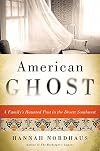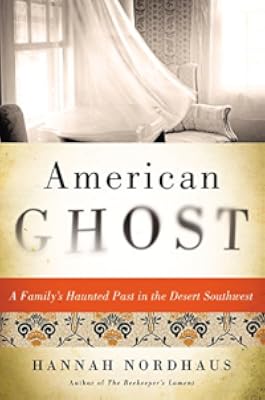
American Ghost: A Family's Haunted Past in the Desert Southwest
by Hannah Nordhaus
On This Page
Description
Biography & Autobiography. History. New Age. Nonfiction. The dark-eyed woman in the long black gown was first seen in the 1970s standing near a fireplace. She was sad and translucent, present and absent at once. Strange things began to happen in the Santa Fe hotel where she was seen. Gas fireplaces turned off and on without anyone touching a switch. Glasses flew off shelves. And in one second-floor suite with a canopy bed and arched windows looking out to the mountains, guests reported show more alarming events: blankets ripped off while they slept, the room temperature plummeting, disembodied breathing, and dancing balls of light. La Posada-"place of rest"-had been a grand Santa Fe home before it was converted to a hotel. The room with the canopy bed had belonged to Julia Schuster Staab, the wife of the home's original owner. She died in 1896, nearly a century before the hauntings were first reported. In American Ghost, Hannah Nordhaus traces the life, death, and unsettled afterlife of her great-great-grandmother, Julia, from her childhood in Germany to her years in the American West with her Jewish merchant husband. As she traces the strands of Julia's life, Nordhaus uncovers a larger tale of how a true-life story becomes a ghost story and how difficult it can sometimes be to separate history and myth. show lessTags
Recommendations










Member Reviews
Hannah Nordhaus’ family memoir, [American Ghost], can easily be misunderstood if the subtitle is ignored as the book is cracked open for reading. Some of the reviews claimed it wasn’t the ghost story they had hoped for, or that it was flat boring. But those readers seem to have missed what her mission was in mining family history for information about a woman who is thought to haunt one of the most famous hotel properties in New Mexico. Sure, the woman she’s studying her great-grandmother, a woman wrapped in mystery because of her own button-downed character as much as the fact that she may be a ghost. But what Nordhaus is really looking for is her own identity, a creation cobbled together from several different cultures and show more ethnic histories.
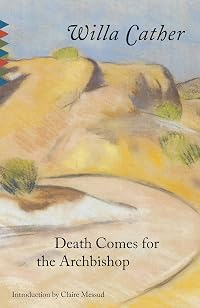
Julia Staab was a Jew who followed her husband from a tiny town Germany to the territorial West in New Mexico. Little remains of her, and most of what does is seen through the histories of relatives and New Mexican personalities from her time. Nordhaus sifts through historical accounts from Staab’s husband, Staab’s daughter, Bishop Lamy – the man who built the famous cathedral from [Death Comes for the Archbishop – and Sister Blandina Seagle – a Catholic nun who could talk gunslingers down from a stage coach robbery and who is being considered for sainthood. As she works through these accounts, she manages not just to find her own identity, but New Mexico’s, as well. [American Ghost] is a rich and detailed history of a territory boiling toward statehood.
Since Staab is thought to haunt La Posada – translation, “place of rest” – Nordhaus also does some supernatural digging, as well, consulting mediums and psychics to contact her ancestor. Others found these passages distracting, but they are as much a part of New Mexico’s history as the historical accounts. Santa Fe, where La Posada stands, and New Mexico are rich in other-worldly and new age pursuits. Nordhaus pauses to dabble in the extra-ordinary, and it lends another level to the identity of the place she is examining. New Mexico is populated by many ghosts, and the story of how and why they haunt the land is a necessary part of understanding the place.
As a New Mexican always looking for another perspective on New Mexico’s diverse backstory, Nordhaus’ [American Ghost] was a wonderful read. She brings a journalist’s eye to the research, and an insider’s understanding to the strange place. Don’t pay attention to the negative reviews, especially if you’re a fan of the Old West and eccentric people.
Bottom Line: More of a history of New Mexico and the territorial West than a true ghost story, but the supernatural informs the history.
5 bones!!!!!
A favorite for the year. show less
Julia Staab was a Jew who followed her husband from a tiny town Germany to the territorial West in New Mexico. Little remains of her, and most of what does is seen through the histories of relatives and New Mexican personalities from her time. Nordhaus sifts through historical accounts from Staab’s husband, Staab’s daughter, Bishop Lamy – the man who built the famous cathedral from [Death Comes for the Archbishop – and Sister Blandina Seagle – a Catholic nun who could talk gunslingers down from a stage coach robbery and who is being considered for sainthood. As she works through these accounts, she manages not just to find her own identity, but New Mexico’s, as well. [American Ghost] is a rich and detailed history of a territory boiling toward statehood.
Since Staab is thought to haunt La Posada – translation, “place of rest” – Nordhaus also does some supernatural digging, as well, consulting mediums and psychics to contact her ancestor. Others found these passages distracting, but they are as much a part of New Mexico’s history as the historical accounts. Santa Fe, where La Posada stands, and New Mexico are rich in other-worldly and new age pursuits. Nordhaus pauses to dabble in the extra-ordinary, and it lends another level to the identity of the place she is examining. New Mexico is populated by many ghosts, and the story of how and why they haunt the land is a necessary part of understanding the place.
As a New Mexican always looking for another perspective on New Mexico’s diverse backstory, Nordhaus’ [American Ghost] was a wonderful read. She brings a journalist’s eye to the research, and an insider’s understanding to the strange place. Don’t pay attention to the negative reviews, especially if you’re a fan of the Old West and eccentric people.
Bottom Line: More of a history of New Mexico and the territorial West than a true ghost story, but the supernatural informs the history.
5 bones!!!!!
A favorite for the year. show less
I received this book as free edition for a review. The book title implies that it is a book about ghosts, but it is actually about how we can be haunted by our ancestry and the desire to know who we are through who our ancestors. The book is a delightful accounting of the author's genealogical search for the reason why her one ancestor was supposedly haunting a hotel in the southwest.
If you are even remotely interesting in tracing your family roots, this book is not only entertaining but provides ideas on how to do your own genealogical research. The book takes you along on the author's travels and shares her triumphs and disappointments during her research.
I found the book engrossing especially since genealogy has been my passion for show more the past fifteen years. show less
If you are even remotely interesting in tracing your family roots, this book is not only entertaining but provides ideas on how to do your own genealogical research. The book takes you along on the author's travels and shares her triumphs and disappointments during her research.
I found the book engrossing especially since genealogy has been my passion for show more the past fifteen years. show less
American Ghost: A Family's Haunted Past in the Desert Southwest by Hannah Nordhaus is a 2015 Harper publication. I was provided a copy of this book by the publisher and Edelweiss in exchange for an honest review.
With a title like this one, I was sure this book would make an excellent Halloween read. I'm not a slasher, blood and gore type horror fan, but instead lean toward the creepy, chiller ghost and haunted house stories. So, I was all set to immerse myself in a little history, a little haunting, and maybe a few thrills and spine tingling moments to cap it off.
Sadly, this book was, well, to be totally honest, boring. The history provided about Julia would definitely be interesting to one's own family, but to anyone else, it was show more very dry reading.
The ghost story is apparently one of note and concerns the author's great, great, grandmother Julia Schuster Staab, who allegedly haunts a hotel in Sante Fe. Through the years, those who spent the night in Julia's room have complained of various unexplained temperature drops, orbs of dancing lights and other very unsettling occurrences. The story grew to epic proportions and of course embellishments went without saying.
So, the author began a quest to learn of Julia's past, her heritage, her marriage to a man many believe treated her cruelly, her supposed descent into madness, and her death. Determined to separate fact from fiction, the author employed mediums, did intense historical research, and was often surprised by her findings.
I think the title will throw some people off, and although I did read the synopsis, as a person who also enjoys history, I felt I had a good understanding of what to expect from the book. It was an interesting journey in many aspects, but it was such a personal quest, that I often failed to connect to the author's enthusiasm, frustrations, and at times her methods.
I will confess, I did think of abandoning this one by the half way mark, but couldn't let it go without knowing what the final verdict would be. I was pleased by the way the book ended, which will give the reader a sense of peace and closure.
This story is also a kind of cautionary tale, in which we are reminded how myths can grow to outlandishness, leaving only a particle of truth behind. The myth and legend of this haunting will be impossible to extinguish now that it's been embedded in the minds of the public, who prefer to fiction most of the time in order to capitalize on the public's curiosity. Still, for the author, I felt that in the end, she at least derived a sense of accomplishment from her research and it was worth her while in the end.
2.5 stars show less
With a title like this one, I was sure this book would make an excellent Halloween read. I'm not a slasher, blood and gore type horror fan, but instead lean toward the creepy, chiller ghost and haunted house stories. So, I was all set to immerse myself in a little history, a little haunting, and maybe a few thrills and spine tingling moments to cap it off.
Sadly, this book was, well, to be totally honest, boring. The history provided about Julia would definitely be interesting to one's own family, but to anyone else, it was show more very dry reading.
The ghost story is apparently one of note and concerns the author's great, great, grandmother Julia Schuster Staab, who allegedly haunts a hotel in Sante Fe. Through the years, those who spent the night in Julia's room have complained of various unexplained temperature drops, orbs of dancing lights and other very unsettling occurrences. The story grew to epic proportions and of course embellishments went without saying.
So, the author began a quest to learn of Julia's past, her heritage, her marriage to a man many believe treated her cruelly, her supposed descent into madness, and her death. Determined to separate fact from fiction, the author employed mediums, did intense historical research, and was often surprised by her findings.
I think the title will throw some people off, and although I did read the synopsis, as a person who also enjoys history, I felt I had a good understanding of what to expect from the book. It was an interesting journey in many aspects, but it was such a personal quest, that I often failed to connect to the author's enthusiasm, frustrations, and at times her methods.
I will confess, I did think of abandoning this one by the half way mark, but couldn't let it go without knowing what the final verdict would be. I was pleased by the way the book ended, which will give the reader a sense of peace and closure.
This story is also a kind of cautionary tale, in which we are reminded how myths can grow to outlandishness, leaving only a particle of truth behind. The myth and legend of this haunting will be impossible to extinguish now that it's been embedded in the minds of the public, who prefer to fiction most of the time in order to capitalize on the public's curiosity. Still, for the author, I felt that in the end, she at least derived a sense of accomplishment from her research and it was worth her while in the end.
2.5 stars show less
First of all I would just like to mention that there is a fight over who gets to keep this book - my sister or myself. As of this moment she is going to snatch it away while having it disappear in her collections although I have dibs on getting it back if she chooses not to keep it.
When I read the first few pages I was caught up and then came upon the part with the first psychic. I was thinking to myself this isn't going to be good since she is going to weaken the book with all this drivel but the very real search using various psychics, ghost hunters and others grounded this book while also lightening the atmosphere. The more you get into the back story further into the book the more it weaves it together.
Although it starts off to show more find out about a ghost the story isn't truly a ghost story. Instead the story is a beautiful journey to weave together the missing parts of the past, to find oneself and to be able to learn just what the world is about. In her hopes to solve a mystery Hannah was also showing us the way of resolving the mystery of herself.
I loved how the book dived into the past and brought 19th century Santa Fe to us and what it was like to live in a world where funds removed obstacles where things were still untamed. Furthermore the book offers a tantalizing taste of Jewish life that is barely ever offered in history books. And the best part is when she goes off on a rabbit trail to explain what happened to her great-great-aunt it didn't detract from the story but added it.
Hannah is a master storyteller and I loved this unexpected surprise that rested within these pages. And it had me crying when I read the simple yet powerful ending to this book. A true gem!
**Received this book as part of the Giveaway at Goodreads.com for free in exchange for a review** show less
When I read the first few pages I was caught up and then came upon the part with the first psychic. I was thinking to myself this isn't going to be good since she is going to weaken the book with all this drivel but the very real search using various psychics, ghost hunters and others grounded this book while also lightening the atmosphere. The more you get into the back story further into the book the more it weaves it together.
Although it starts off to show more find out about a ghost the story isn't truly a ghost story. Instead the story is a beautiful journey to weave together the missing parts of the past, to find oneself and to be able to learn just what the world is about. In her hopes to solve a mystery Hannah was also showing us the way of resolving the mystery of herself.
I loved how the book dived into the past and brought 19th century Santa Fe to us and what it was like to live in a world where funds removed obstacles where things were still untamed. Furthermore the book offers a tantalizing taste of Jewish life that is barely ever offered in history books. And the best part is when she goes off on a rabbit trail to explain what happened to her great-great-aunt it didn't detract from the story but added it.
Hannah is a master storyteller and I loved this unexpected surprise that rested within these pages. And it had me crying when I read the simple yet powerful ending to this book. A true gem!
**Received this book as part of the Giveaway at Goodreads.com for free in exchange for a review** show less
The author's great-great-grandmother, Julia Staab, is said to haunt her old house, now a hotel in Santa Fe. The ghost stories talk of abuse and insanity, contrary to family lore, so she decides to see if she can track down the truth about her supposedly restless ancestor. All her substantial information comes from traditional sources - newspaper articles, diaries, other archives - but she also tries alternative methods, including ghost hunters and psychics. These yield interesting speculation but nothing especially helpful. That said, the rest of the book is quite interesting. It's the story of an American family: German Jews who immigrated in the 1800s and made their fortune, and what later became of them and their descendants. There show more are a couple of side journeys about cousins and aunts and uncles, including an especially moving part about a relative lost in the Holocaust, but it all weaves together into a single family history. The ending, which returns to the spiritualist side of things, was a tad hokey for my taste, but on the whole it was an engaging look at society life in Victorian New Mexico. Recommended. show less
There is not a direction this book takes that is without interest - from Willa Cather to Franz Kafka, Burro Alley to Theresienstadt, genealogists to ghost hunters. There are a few visits that last too long and some that end at hello, the story and writing is compelling.
What tales can we believe? The submersive force of history-the sedimentary layers of narrative-seems to bury even the hardest facts, and only the physical clues jut above the surface: the hotel; the cathedral; the chiseled Hebrew letters; the apricot trees; and also DNA, those four letters that can peel open, tetragrammatically, our genetic past.
This is not an "I really wanted to like this" review. I picked this book up not expecting much of anything, just a quick read, a history of a haunting. No. This is an "I really want to rate this higher" review. Because as it unfolded, I found that the author really can write, and even managed some very nice musings. (Truly, this is a rare time when I'm rating a book two stars and actually still show more recommending it as a read.) Unfortunately, the author has no self discipline. She has a beauty of a history to tell out of her family's past, but she just cannot resist playing out every gimmick, throwing in every tangent she can lay hold of to make the book. I have no tolerance for that kind of self indulgence anymore.Not even for the two chapters she throws in on her youngest great-great aunt's experience of the Holocaust. (begin rant) Stay on topic, authors! If you meander, your meanderings had best be ultimately grounded in where you're going! Especially when you're writing me a specific history! (end rant)
Her story is that of her great-great grandmother, Julia Staub, born in 1844 and died in 1896, pioneer wife of turn of the century Jewish self-made millionaire Abraham Staub, inspiration for [b:The German Bride|1756928|The German Bride|Joanna Hershon|https://d.gr-assets.com/books/1320397438s/1756928.jpg|1754800], who lived and died in Santa Fe, New Mexico prior to statehood, and who is now (maybe) haunting the hotel, La Posada, that was once her home. Ms. Nordhaus circles in slowly (at times very slowly!) on Julia's memory, primarily by exploration of other works of literature of the time, but also by dint of an admirable exploration of archives, news articles, family trees, diaries, and interviews of various descendants and persons of interest. The family history is fascinating; the view of life in the Western territories from a specifically Jewish and mercantile point of view is well worth the read. (Honestly, if she had confined herself to matters contemporary to Julia and at least connected to Julia and her family, I might have followed this writer anywhere. Her excursions into the history of women's health at the time and into the history of Spiritualism were both very nice. Also, when she begins to speculate as to whether Julia could have had an affair with Archbishop Jean-Baptiste Lamy, the real life inspiration for [b:Death Comes for the Archbishop|545951|Death Comes for the Archbishop|Willa Cather|https://d.gr-assets.com/books/1436632846s/545951.jpg|1457974], she at least has the decency to get a DNA test to see if she can eliminate the possibility herself. I found that very admirable.)
However, she is an unreliable historian: she persists in leaping to conclusions about Julia's life and family relationships (often based on completely unrelated literature, such as [a:Franz Kafka|5223|Franz Kafka|https://d.gr-assets.com/authors/1412460277p2/5223.jpg]'s [b:Letter to His Father|187569|Letter to His Father|Franz Kafka|https://d.gr-assets.com/books/1371828205s/187569.jpg|2735799]) that appear to me completely unsupported by the amazing primary history she is able to piece together. Specifically, she drops dark hints about Abraham through the whole book, but the story that comes through in her history is one of a wealthy, doting father and husband who was also a shrewd, litigious businessman. (Land grabs are discussed, but nothing definitive is presented.)
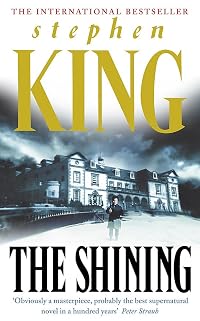
The other main problem with the book is the ghost hunt itself. This book is essentially long-form journalism, and she appears to belong to the school of journalism that says all you have to do to have a great story is put yourself through some odd-ball experience and write about it. I lost count of how many mediums and/or psychics she visited. She went on two ghost tours, including one to the totally unrelated site of [b:The Shining|11588|The Shining (The Shining, #1)|Stephen King|https://d.gr-assets.com/books/1353277730s/11588.jpg|849585]. (Probably because it was close to home for her; she's from my neck of the woods). She tried edible marijuana to reach out to Julia's ghost. She finally stays in Julia's room at the hotel and visit's the grave, but the book ends back in Boulder with, what, exactly? Not an exorcism. Maybe I'll call it a sending. The entire ghost hunt could have been written in poignant fashion, but since the author does not appear to harbor one scrap of belief in the paranormal, it all comes off as very gimmicky and hokey and seriously mars the book.
And yet. And yet! This story is worth reading. This book is worth reading, if only for the awesome bibliography. (I have hardly scratched the surface in this review of the books this book led me too, which is its own kind of rating of the value of a history, and in this case a very high one.) At the very least, I will definitely be reading [b:At the End of the Santa Fe Trail|991004|At the End of the Santa Fe Trail|Blandina Segale|https://d.gr-assets.com/books/1180039298s/991004.jpg|976499], the diary of a nun that aided Julia and her children, and [b:Ten Days in a Mad-House|1642216|Ten Days in a Mad-House|Nellie Bly|https://d.gr-assets.com/books/1394107458s/1642216.jpg|1636567] for [a:Nellie Bly|4372012|Nellie Bly|https://d.gr-assets.com/authors/1285099323p2/4372012.jpg]'s expose on the treatment of female insanity at the time.
What to do? I am staying firm on the two stars. But I will give the author's other book, [b:The Beekeeper's Lament: How One Man and Half a Billion Honey Bees Help Feed America|10129668|The Beekeeper's Lament How One Man and Half a Billion Honey Bees Help Feed America|Hannah Nordhaus|https://d.gr-assets.com/books/1327940879s/10129668.jpg|15027533], a try. Maybe she will be a better journalist when she does not have a ghost to chase. show less
This is not an "I really wanted to like this" review. I picked this book up not expecting much of anything, just a quick read, a history of a haunting. No. This is an "I really want to rate this higher" review. Because as it unfolded, I found that the author really can write, and even managed some very nice musings. (Truly, this is a rare time when I'm rating a book two stars and actually still show more recommending it as a read.) Unfortunately, the author has no self discipline. She has a beauty of a history to tell out of her family's past, but she just cannot resist playing out every gimmick, throwing in every tangent she can lay hold of to make the book. I have no tolerance for that kind of self indulgence anymore.
Her story is that of her great-great grandmother, Julia Staub, born in 1844 and died in 1896, pioneer wife of turn of the century Jewish self-made millionaire Abraham Staub, inspiration for [b:The German Bride|1756928|The German Bride|Joanna Hershon|https://d.gr-assets.com/books/1320397438s/1756928.jpg|1754800], who lived and died in Santa Fe, New Mexico prior to statehood, and who is now (maybe) haunting the hotel, La Posada, that was once her home. Ms. Nordhaus circles in slowly (at times very slowly!) on Julia's memory, primarily by exploration of other works of literature of the time, but also by dint of an admirable exploration of archives, news articles, family trees, diaries, and interviews of various descendants and persons of interest. The family history is fascinating; the view of life in the Western territories from a specifically Jewish and mercantile point of view is well worth the read. (Honestly, if she had confined herself to matters contemporary to Julia and at least connected to Julia and her family, I might have followed this writer anywhere. Her excursions into the history of women's health at the time and into the history of Spiritualism were both very nice. Also, when she begins to speculate as to whether Julia could have had an affair with Archbishop Jean-Baptiste Lamy, the real life inspiration for [b:Death Comes for the Archbishop|545951|Death Comes for the Archbishop|Willa Cather|https://d.gr-assets.com/books/1436632846s/545951.jpg|1457974], she at least has the decency to get a DNA test to see if she can eliminate the possibility herself. I found that very admirable.)
However, she is an unreliable historian: she persists in leaping to conclusions about Julia's life and family relationships (often based on completely unrelated literature, such as [a:Franz Kafka|5223|Franz Kafka|https://d.gr-assets.com/authors/1412460277p2/5223.jpg]'s [b:Letter to His Father|187569|Letter to His Father|Franz Kafka|https://d.gr-assets.com/books/1371828205s/187569.jpg|2735799]) that appear to me completely unsupported by the amazing primary history she is able to piece together. Specifically, she drops dark hints about Abraham through the whole book, but the story that comes through in her history is one of a wealthy, doting father and husband who was also a shrewd, litigious businessman. (Land grabs are discussed, but nothing definitive is presented.)
The other main problem with the book is the ghost hunt itself. This book is essentially long-form journalism, and she appears to belong to the school of journalism that says all you have to do to have a great story is put yourself through some odd-ball experience and write about it. I lost count of how many mediums and/or psychics she visited. She went on two ghost tours, including one to the totally unrelated site of [b:The Shining|11588|The Shining (The Shining, #1)|Stephen King|https://d.gr-assets.com/books/1353277730s/11588.jpg|849585]. (Probably because it was close to home for her; she's from my neck of the woods). She tried edible marijuana to reach out to Julia's ghost. She finally stays in Julia's room at the hotel and visit's the grave, but the book ends back in Boulder with, what, exactly? Not an exorcism. Maybe I'll call it a sending. The entire ghost hunt could have been written in poignant fashion, but since the author does not appear to harbor one scrap of belief in the paranormal, it all comes off as very gimmicky and hokey and seriously mars the book.
And yet. And yet! This story is worth reading. This book is worth reading, if only for the awesome bibliography. (I have hardly scratched the surface in this review of the books this book led me too, which is its own kind of rating of the value of a history, and in this case a very high one.) At the very least, I will definitely be reading [b:At the End of the Santa Fe Trail|991004|At the End of the Santa Fe Trail|Blandina Segale|https://d.gr-assets.com/books/1180039298s/991004.jpg|976499], the diary of a nun that aided Julia and her children, and [b:Ten Days in a Mad-House|1642216|Ten Days in a Mad-House|Nellie Bly|https://d.gr-assets.com/books/1394107458s/1642216.jpg|1636567] for [a:Nellie Bly|4372012|Nellie Bly|https://d.gr-assets.com/authors/1285099323p2/4372012.jpg]'s expose on the treatment of female insanity at the time.
What to do? I am staying firm on the two stars. But I will give the author's other book, [b:The Beekeeper's Lament: How One Man and Half a Billion Honey Bees Help Feed America|10129668|The Beekeeper's Lament How One Man and Half a Billion Honey Bees Help Feed America|Hannah Nordhaus|https://d.gr-assets.com/books/1327940879s/10129668.jpg|15027533], a try. Maybe she will be a better journalist when she does not have a ghost to chase. show less
Members
- Recently Added By
Published Reviews
Hannah Nordhaus' new book, American Ghost, is an offbeat mishmosh of memoir, cultural history, genealogical detective story and paranormal investigation, but it opens in the classic manner of spooky tales — with a sighting....The enigmatic figure of Julia Staab has materialized, not only within the confines of La Posada but also in novels, histories of the Southwest and as a star attraction show more on "ghost tours" of Santa Fe....As Nordhaus points out, Julia's ghost story, like the mansion that once was her home, has been remodeled over and over to suit changing fashions....Whether you believe in ghosts or are just intrigued by their persistence in popular culture, American Ghost is itself a haunting story about the long reach of the past. show less
added by Lemeritus
Journalist Nordhaus (The Beekeeper’s Lament) embarks on a “ghost hunt” for her great-great-grandmother, German immigrant Julia Schuster Staab, in this unique collision of family history, Wild West adventure, and ghost story.... Nordhaus uncovers a strain of mental illness that runs through one branch of her family, delves into the lore of the 19th-century spiritualist movement, and show more discovers how a true-life story can become a paranormal one. Perceptive, witty, and engaging, Nordhaus observes that “it’s not so much the ghost that keeps the dead alive... as it is the story.” show less
added by Lemeritus
A journalist’s account of how she went in search of the true story behind her great-great-grandmother’s life and ghostly reappearances almost a century after her mysterious death.... A trained historian, the author tracked down information about Julia, the Staab family and the worlds they inhabited in archives and libraries and through testing her own DNA. The objective evidence she show more gathered pointed to an unhappy marriage to a solicitous but dictatorial man, a possible liaison with a powerful archbishop and an attempted suicide....She ultimately discovered that the truth about Julia and her life did not reside in the facts but rather in the spaces between facts: In the end, she writes, those spaces contain the details “that tell us who we are.” A thoughtful and intriguing chronicle of familial investigation. show less
added by Lemeritus
Lists

Must-Read Books About the Southwest
98 works; 2 members

Fiction: Supernatural Horror
97 works; 1 member
Author Information
5 Works 582 Members
Award-winning journalist Hannah Nordhaus has written for the Los Angeles Times, the Financial Times, the Village Voice, Outside magazine, and other publications. She lives with her family in Boulder, Colorado.
Awards and Honors
Common Knowledge
- Canonical title
- American Ghost: A Family's Haunted Past in the Desert Southwest
- Epigraph
- If thou hast any sound, or use of voice Speak to me. - William Shakespeare, Hamlet
- Dedication
- To my father, Bob Norhaus, who gave me this story, and so much more.
- First words
- It began late at night, as these stories do. -Aura of Sadness, Chapter One
- Quotations
- "It is true those are heaps of unburnt bricks, nevertheless they are houses—this is the city of Santa Fe.’” It was a colony of mud. “It was possible to be utterly disgusted with it at first sight, second sight, and la... (show all)st sight,” wrote the Vermonter R. L. Duffus. “To enjoy it thoroughly one had to have a flair for such things. Literal-minded persons did not, puritanical persons did not.” What Julia thought of the city—whether she had a flair for such things—I don’t know.
I wondered if revisiting these sad truths restored the humanity of the lost, or if it simply served to gratify the tellers and the listeners; if the act of retelling kept those who suffered imprisoned in their unhappy endings... (show all).
Emilie had lived almost fifty years longer than her sister Julia—who, in all her sadness, had been lucky enough in the end to die with a house to haunt. Emilie had prospered in life, but she had died amid unimaginable horro... (show all)r: the last of the sisters, the last of her generation.
Our children always grow to live in a foreign country, removed not necessarily by ships across the sea but by era and disposition.
In Jewish tradition, it is said that we die twice. Once when we take our last breath, and again the last time somebody speaks our name.
Soul piled on soul in that harsh country of serial conquest—Indian, Spanish, Anglo, Jew. Story piled upon story: land taken and sold away, lives interrupted and truths lost, faith and superstition and sun and shadow.
The philosopher Hannah Arendt once said that posthumous fame is the saddest sort. That is the bitter reward to which Julia has been consigned.
The dead are past our help, though it’s hard, sometimes, to live without them. They take a piece of us with them when they leave, and we must learn to live reduced. We must live and let the dead be dead. “Look at me,” E... (show all)urydice begged Orpheus, and he did. We look hard at those who have left us, and then we let them go—that is what it is to love them. - Last words
- (Click to show. Warning: May contain spoilers.)I brush the ants and earth from Teddy's stone so the sun could once again shine on his name - so it could be read.
- Canonical DDC/MDS
- 133.10978956
- Canonical LCC
- BF1472.N484
Classifications
- Genres
- Nonfiction, Biography & Memoir
- DDC/MDS
- 133.10978956 — Philosophy & psychology Parapsychology & occultism Specific topics in parapsychology and occultism Apparitions North America Western U.S. New Mexico
- LCC
- BF1472 .N484 — Philosophy, Psychology and Religion Psychology Occult sciences Ghosts. Apparitions. Hauntings
- BISAC
Statistics
- Members
- 273
- Popularity
- 118,338
- Reviews
- 21
- Rating
- (3.39)
- Languages
- English
- Media
- Paper, Audiobook, Ebook
- ISBNs
- 9
- ASINs
- 2