On This Page
Description
"Welcome to a world of wind and bone, songs and silence, betrayal and courage. Kirit Densira cannot wait to pass her wingtest and begin flying as a trader by her mother's side, being in service to her beloved home tower and exploring the skies beyond. When Kirit inadvertently breaks Tower Law, the city's secretive governing body, the Singers, demand that she become one of them instead. In an attempt to save her family from greater censure, Kirit must give up her dreams to throw herself into show more the dangerous training at the Spire, the tallest, most forbidding tower, deep at the heart of the City. As she grows in knowledge and power, she starts to uncover the depths of Spire secrets. Kirit begins to doubt her world and its unassailable Laws, setting in motion a chain of events that will lead to a haunting choice, and may well change the city forever--if it isn't destroyed outright"-- show lessTags
Recommendations


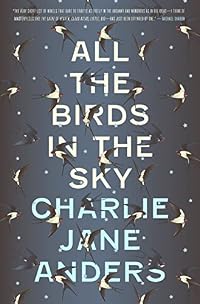
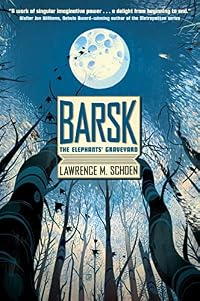

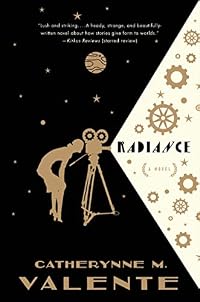
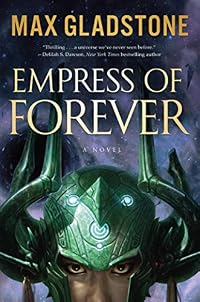

Member Recommendations
evymac Strong female character set in a world that is much harsher than our own fights to survive.
Member Reviews
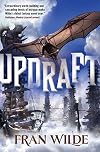
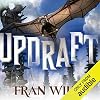
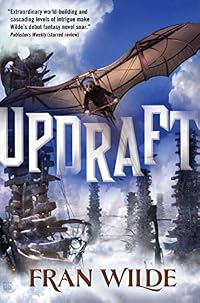
Updraft was the June read in a Goodreads group I'm a member of called The Sword and Laser. It was an interesting world of bone towers rising above the clouds, where the primary method of transportation is for individuals to fly using what sounds like a type of hanglider contraption but with more detailed movement. The picture above looks much larger and more framed than what is described in the book, in my opinion. Not everyone flies, there are some bridges between towers, and there are flying traders that take goods between towers, of which Kirit's mother is one. Kirit dreams of being like, and flying with her mother as a trader, but that is not to be, her fate lies elsewhere with other talents.
The structure of this world just brings show more up so many questions to me. The bone is living, it grows, it fills in the lower spaces, the Singers can coax it to grow on the top of the towers, adding new living tiers. So that hints at something very large living below the clouds that these bone towers, spires/spines? are a part of, doesn't it? They are fairly sturdy, but they do sometimes break, toppling those who live there out of the sky, most likely to their deaths, what other outcome could there be? What came about to cause a people to live that way? I hope we learn more in the next book!
I liked Kirit, she knew exactly what she wanted, and it wasn't unreasonable. The problem was there were so many secrets and past events stacked against her, she really had no chance of realizing her goals. She was presented with many difficult dilemmas for young adult, and it seemed like the odds were constantly against her. Sometimes the decisions she made were very unpleasant, in trying for the greater good, and there was a lot of weight on her shoulders.
Overall an interesting read with a very different structure of world, good characters and a plot full of intrigue. I'm looking forward to the next book, Cloudbound, due out in September of this year. show less
The structure of this world just brings show more up so many questions to me. The bone is living, it grows, it fills in the lower spaces, the Singers can coax it to grow on the top of the towers, adding new living tiers. So that hints at something very large living below the clouds that these bone towers, spires/spines? are a part of, doesn't it? They are fairly sturdy, but they do sometimes break, toppling those who live there out of the sky, most likely to their deaths, what other outcome could there be? What came about to cause a people to live that way? I hope we learn more in the next book!
I liked Kirit, she knew exactly what she wanted, and it wasn't unreasonable. The problem was there were so many secrets and past events stacked against her, she really had no chance of realizing her goals. She was presented with many difficult dilemmas for young adult, and it seemed like the odds were constantly against her. Sometimes the decisions she made were very unpleasant, in trying for the greater good, and there was a lot of weight on her shoulders.
Overall an interesting read with a very different structure of world, good characters and a plot full of intrigue. I'm looking forward to the next book, Cloudbound, due out in September of this year. show less
This is a coming-of-age tale that is completely fresh and new because of the utter brilliance of the setting: towers made of bone and a society that relies on constructed wings for survival in the homes among the clouds. The politics are dark, the secrets deep. Kirit is a headstrong young woman who cares nothing for convention, and her agency and attitude make her a strong heroine. This book is fantastic (and a very appropriate one to read when traveling by plane, as I did).
Review Originally Posted At: FictionForesight
In accordance with current FTC Guidelines, please let it be known this book was received through NetGalley in exchange for a fair and honest review.
In her debut novel, author Fran Wilde weaves us a fascinating world in the sky: where humanity ekes out an existence in the shelter of giant living bone towers. There is no way to move up and down on the towers, or between the towers, other than through the open air – thus every citizen learns how to fly on silken glider wings, strapped to their backs. Every young person coming of age is assigned an apprenticeship upon passing their wingtest. Kirit Densira wants nothing more than to follow her mother’s hard-won footsteps and become a trader. show more But only a week before her wingtest, she has an unfortunate encounter with a Singer – a member of the secretive sect who lives in the central Spire and enforces the traditional Laws of the city. Will she pass her wingtest? What happened to her and her best friend’s fathers? Will the story take us to learn more about the intricate traditions of the City? From the first moment Kirit straps her wings on to her shoulders, we are strapped in with her to witness the exhilaration of flying, falling, and rising.
I’ll admit, I had to let Updraft percolate in the back of my brain before I could sit down to review it. It is definitely a slow-burn sort of novel. It has its moments, both slow and fast, and at a first nearsighted glance there’s not much to it. But with a little bit of distance, it becomes clear that it is neatly crafted, thorough, and discusses some heavy themes. Updraft starts off as your standard coming-of-age tale. But it evolves into a discussion of tradition and revolution; of the ties that bind a close-knit society together. As I explain it, I realize to summarize it like that makes it seem a little… uninventive. These are familiar topics, and have been seen time and time again. The characters and plot points fulfill any number of literary tropes. But the context, the world in which these themes develop, is so fresh and full that it gives the discussion a new perspective. The towers that comprise the city are made of living, growing bone, and citizens must move upward as the bone on lower tiers grows thicker to support the weight of the tower. Towers are plagued by yearly migrations of Skymouths, invisible tentacled creatures that devour the unsuspecting flyer. The gray-robed Singers govern the City with a tight fist, while shrouding themselves in mystery to prevent any questioning from regular citizens.
Kirit’s world is simultaneously full and complete, while being neatly contained to exactly the things the reader needs to know. I delighted in the fact that the City’s vocabulary changed to fit their aerial lifestyle. Heirlooms are not passed down, they are passed up. To honor the fallen, we look skyward. Lawbreakers are physically weighed down with tiles displaying their crimes, or have their wings taken away. Language and sociological cues are a thing easily abandoned in creating a world, but to me this makes the difference between a setting and a whole, functional place. The characters all stand out in the mind, despite their foreign-sounding names, and the fact that this society is fairly homogenous makes this distinction a feat. In fact, it strikes me as perhaps deliberate that the pacing of the story mirrors the world and its denizens. This is not a fast-paced, action-packed story. Instead, it ebbs and flows. There is just a modicum of detachment, maybe because I am an extremely visual person and Wilde’s style of description just doesn’t mesh for me. But for all the moments when the world is subdued and reserved, thoughtful – the high points of the story more than make up for it. Wilde somehow captures the roller coaster freedom of unpowered flight. She makes the stomach sink when Kirit faces a decision with inconceivable consequences. And while I thought the conclusion of the book took its time in arriving, it is one of the better endings I’ve read in a while. A contained, full-circle, symbolic and satisfying closure without being too neat or answering too many questions.
It’s obvious that Fran Wilde worked tirelessly on Updraft to give the best story experience she could. When researching her name I found multiple articles discussing her theories on building a story, and the role of language in story building. All the parts of a 5-star book are there. To be honest, I’m not sure why I can’t give this book 5 stars. It was inventive, sometimes exhilarating, and whole. Theoretically a top-notch effort. I think the sticking point for me is that I never felt entirely connected to the characters or the City. It was lacking that magic spell that makes a reader (or a reader like me, anyway) really personally invested. As much as I hate the term “je-ne-sais-quoi,” that’s exactly what Updraft is missing. But I will certainly recommend it to anyone who has ever experienced the joy of flying, who has ever wanted to beat the system, or has ever had a coming-of-age.
(www.FictionForesight.com) show less
In accordance with current FTC Guidelines, please let it be known this book was received through NetGalley in exchange for a fair and honest review.
In her debut novel, author Fran Wilde weaves us a fascinating world in the sky: where humanity ekes out an existence in the shelter of giant living bone towers. There is no way to move up and down on the towers, or between the towers, other than through the open air – thus every citizen learns how to fly on silken glider wings, strapped to their backs. Every young person coming of age is assigned an apprenticeship upon passing their wingtest. Kirit Densira wants nothing more than to follow her mother’s hard-won footsteps and become a trader. show more But only a week before her wingtest, she has an unfortunate encounter with a Singer – a member of the secretive sect who lives in the central Spire and enforces the traditional Laws of the city. Will she pass her wingtest? What happened to her and her best friend’s fathers? Will the story take us to learn more about the intricate traditions of the City? From the first moment Kirit straps her wings on to her shoulders, we are strapped in with her to witness the exhilaration of flying, falling, and rising.
I’ll admit, I had to let Updraft percolate in the back of my brain before I could sit down to review it. It is definitely a slow-burn sort of novel. It has its moments, both slow and fast, and at a first nearsighted glance there’s not much to it. But with a little bit of distance, it becomes clear that it is neatly crafted, thorough, and discusses some heavy themes. Updraft starts off as your standard coming-of-age tale. But it evolves into a discussion of tradition and revolution; of the ties that bind a close-knit society together. As I explain it, I realize to summarize it like that makes it seem a little… uninventive. These are familiar topics, and have been seen time and time again. The characters and plot points fulfill any number of literary tropes. But the context, the world in which these themes develop, is so fresh and full that it gives the discussion a new perspective. The towers that comprise the city are made of living, growing bone, and citizens must move upward as the bone on lower tiers grows thicker to support the weight of the tower. Towers are plagued by yearly migrations of Skymouths, invisible tentacled creatures that devour the unsuspecting flyer. The gray-robed Singers govern the City with a tight fist, while shrouding themselves in mystery to prevent any questioning from regular citizens.
Kirit’s world is simultaneously full and complete, while being neatly contained to exactly the things the reader needs to know. I delighted in the fact that the City’s vocabulary changed to fit their aerial lifestyle. Heirlooms are not passed down, they are passed up. To honor the fallen, we look skyward. Lawbreakers are physically weighed down with tiles displaying their crimes, or have their wings taken away. Language and sociological cues are a thing easily abandoned in creating a world, but to me this makes the difference between a setting and a whole, functional place. The characters all stand out in the mind, despite their foreign-sounding names, and the fact that this society is fairly homogenous makes this distinction a feat. In fact, it strikes me as perhaps deliberate that the pacing of the story mirrors the world and its denizens. This is not a fast-paced, action-packed story. Instead, it ebbs and flows. There is just a modicum of detachment, maybe because I am an extremely visual person and Wilde’s style of description just doesn’t mesh for me. But for all the moments when the world is subdued and reserved, thoughtful – the high points of the story more than make up for it. Wilde somehow captures the roller coaster freedom of unpowered flight. She makes the stomach sink when Kirit faces a decision with inconceivable consequences. And while I thought the conclusion of the book took its time in arriving, it is one of the better endings I’ve read in a while. A contained, full-circle, symbolic and satisfying closure without being too neat or answering too many questions.
It’s obvious that Fran Wilde worked tirelessly on Updraft to give the best story experience she could. When researching her name I found multiple articles discussing her theories on building a story, and the role of language in story building. All the parts of a 5-star book are there. To be honest, I’m not sure why I can’t give this book 5 stars. It was inventive, sometimes exhilarating, and whole. Theoretically a top-notch effort. I think the sticking point for me is that I never felt entirely connected to the characters or the City. It was lacking that magic spell that makes a reader (or a reader like me, anyway) really personally invested. As much as I hate the term “je-ne-sais-quoi,” that’s exactly what Updraft is missing. But I will certainly recommend it to anyone who has ever experienced the joy of flying, who has ever wanted to beat the system, or has ever had a coming-of-age.
(www.FictionForesight.com) show less
Updraft is the debut novel of Fran Wilde that tells the story of Kirit, a young woman living in the City as part of a civilization above the clouds, who dreams of becoming a trader like her mother Ezarit. This book maps Kirit's journey from child to adult as she navigates the complicated web of customs and traditions that dominate the lives of her countrymen, an endeavor at which she is not always particularly successful. Along the way, she discovers a tale of loss, betrayal, corruption, and sacrifice that will change the City forever, and could very well end up killing her.
In the City, wings mean freedom. Most of the citizens live in towers, residing in the great tiered structures that grow high above the clouds, with the wealthy and show more privileged occupying the upper tiers, and the poor and disfavored relegated to the lower ones. The only way to move between the towers is to strap on wings and fly (or, more rarely, walk across one of the relatively few bridges that connect some of the towers). Those who cannot fly - the young, the infirm, or the outcast - are essentially confined to their home towers unless they can find someone to carry them from place to place. At the outset of Updraft, Kirit is on the brink of being able to take her wingtest and gain her wingmark, which amounts to a license to fly on her own and symbolizes a citizen's step into adulthood. Kirit's mother Ezarit is a skilled and famous trader who wings her way from tower to tower making deals and returning with the profits for the benefit of her home tower Densira. Kirit's greatest ambition is to win her wingmarks so that she can join her mother as an apprentice and gain fortune and renown for making her own deals.
All of these dreams are derailed when Kirit stays out on the family balcony just a little too long during a skymouth attack, both breaking the law and revealing an unusual power. This event changes the course of her life, and is the fundamental turning point of the book. This event also begins the process of revealing how Wilde's fictional world works, and how its reality differs from Kirit's perceptions. Kirit finds that her display of power has drawn the attention of Wik, one of the enigmatic Singers who effectively rule over the City as a whole, forming a power over the individual towers that binds the entire civilization of Updraft together. Because Kirit refuses Wik's offer to join the Singers (desiring instead to join her mother as a trader), the weight of the laws of the tower falls upon her. Kirit survives the skymouth attack, which is viewed as "lucky" by her fellow tower denizens, but as the powers that govern the towers and the city turn against her, she gets the tag of "unlucky", showing just how fickle popular support can be. Serving her sentence alongside Nat, her oldest friend who seems to have been punished in order to place pressure on Kirit to accede to Wik's demands, Kirit still believes in the fundamental fairness of the system she lives within, and looks forward to her wingtest, which she believes will result in her freedom from restrictions.
But the core story of Updraft is that unaccountable power inevitably results in a corrupt system, and the Singers rig the wingtest to deny Kirit her wingmarks even though she passes all four parts of the test. In a display of power and arrogance, the Singers don't even try to rig the individual scores, but rather simply assert that despite her passing all elements of the test, Kirit is not sufficiently capable to be trusted with her wingmarks. Nat also fails his test, but to highlight the unfairness, the daughter of a wealthy and politically important family in Densira tower passes, despite doing more poorly overall than Nat did. Enraged by the unfairness, Nat and Kirit go rogue, setting out to attack the Spire, the central fortress where all of the Singers dwell. This, of course, ends badly for the two, and Kirit finds herself imprisoned within the Spire and forced to join the Singers, where she learns that the world is not at all what she thinks it is, and the reader finds themselves given a first hand tour of the politics and corruption at the heart of the City.
The story pushes Kirit further and further into the heart of power in the City, revealing to her the awful and deadly secrets that have rotted away the core of both the Singers and the City itself. Wilde manages to combine Kirit's personal coming-of-age story with the political maneuverings going on around her by revealing new sources of corruption and deception as part of Kirit's training. Some of the revelations are subtle - such as the differences in the songs sung by the denizens of the towers and the residents of the Spire - while others hit the reader with the force of a heavy hammer blow - such as the terrible secret hidden in the lower levels of the Spire, and what the Singers do with that secret. Step by step, Kirit is drawn into the hidden world of the Singers, and the reader is drawn in with her, with each new piece of shady crookedness explained away, making the next that much easier to accept, until outrages that Kirit has excused with polite fictions are brought home to her on a personal level and the entire rotten edifice comes crashing down.
The story of Updraft is more complex than merely being a case of a corrupt system that must be opposed. Kirit is presented with multiple possible role-models, each with their own vision of how the future of the City should be determined, ranging from the pure power politics of Rumul, to the blind adherence to tradition of Sellis, to Wik's determination to reform the Singers from within, to Nat's call for open rebellion. All of these possible avenues offer Kirit benefits, and all offer profound drawbacks, making every one of her decisions fraught with peril, and weighty with import. Among the most powerful pull is that of tradition, a phrase often invoked by City-dwellers who have imbued it with an almost sacred meaning. Every Singer faction, and most of the non-Singers Kirit encounters, view tradition as being of paramount importance in their lives, and it is wielded almost as a weapon to silence dissent and, in many cases, to protect secrets. But as the story makes clear, such adherence to tradition makes corruption possible: Many dark and underhanded developments are hidden from public view because of the ritual tradition of silence: Only those allowed to may speak, and then only on approved subjects. Following the rules means lying to your fellow citizens at the behest of the powers that be. Much of the book revolves around Kirit struggling against her own upbringing to find a clear path to dealing with the problems she faces, navigating what are, for her and for her society, essentially uncharted waters.
In 2016 Updraft was nominated for both the Nebula Award for Best Novel, and the Andre Norton Award, making it the first book to achieve this double honor. Because of its teenage protagonist, this book is likely to be viewed as a young adult novel (hence the Andre Norton Award), but readers should be warned that the society depicted within its pages is violent and bloody. Legal and political disputes are settled by combat, often to the death. Human sacrifices are made to appease the City's apparent wrath. One of the means by which an apprentice in the Spire can achieve the status of Singer is to accept a challenge made by a tower-dweller and then either kill or maim them. Even the "friendly" sports contests of the City-dwellers involve taking to the air with knives and shards of glass strapped to their feet and slashing at one another. But this simply adds one more layer to the world-building of the book, showing the reader that the City, whose denizens fancy themselves to be much more civilized and genteel than their ancestors, is actually an almost horrific place filled with appalling levels of brutality and an almost casual attitude towards death.
Updraft does have a couple of weaknesses: With so much going on in the story, some elements seem to get something of a short shrift - for example, Kirit's mother Ezarit more or less vanishes from the story after the first third or so, and as a character was never really developed much more than "really good trader" to begin with. Some of the plot developments seem just a little bit serendipitous, as almost everyone Kirit comes into contact with outside of the Spire seems to have some connection to the conspiracy that drives the events in the book. There is also a somewhat predictable quality to many of the novel's "plot twists", Plus, there are tantalizing questions that are never answered: What is below the City? The denizens of the towers refer to the "Rise" as the seminal historic event that gave birth to their current way of life, but where did they rise from? The City is alive and seems to have desires, but what is it exactly, and what does it really want? And so on. Overall though, Updraft is well-crafted and engaging enough that the handful of weak plot elements remain minor issues, and after reading the book I have sufficient faith in the author that I believe the various questions about the world itself will be answered in some future volume.
At its heart, Updraft is a well-written bidungsroman that laces political intrigue throughout Kirit's journey from adolescence to adulthood, all supported by strong world-building. With lessons taught by a myriad of mentors both beneficent and malign, Kirit learns, grows, adapts, and eventually chooses her path, and by doing so, chooses the path for the City and its denizens. Despite being packed with Kirit's training and a moderately complex volume of political maneuvering, the book remains fairly fast-paced and action-packed, which seems perfect for a story in which the characters swoop and glide through the air upon wings of silk, bone, and sinew. In the final analysis, Updraft is a book that has a little bit of just about everything and mixes them all together into a stew that most genre fiction fans will likely find quite tasty.
This review has also been posted to my blog Dreaming About Other Worlds. show less
In the City, wings mean freedom. Most of the citizens live in towers, residing in the great tiered structures that grow high above the clouds, with the wealthy and show more privileged occupying the upper tiers, and the poor and disfavored relegated to the lower ones. The only way to move between the towers is to strap on wings and fly (or, more rarely, walk across one of the relatively few bridges that connect some of the towers). Those who cannot fly - the young, the infirm, or the outcast - are essentially confined to their home towers unless they can find someone to carry them from place to place. At the outset of Updraft, Kirit is on the brink of being able to take her wingtest and gain her wingmark, which amounts to a license to fly on her own and symbolizes a citizen's step into adulthood. Kirit's mother Ezarit is a skilled and famous trader who wings her way from tower to tower making deals and returning with the profits for the benefit of her home tower Densira. Kirit's greatest ambition is to win her wingmarks so that she can join her mother as an apprentice and gain fortune and renown for making her own deals.
All of these dreams are derailed when Kirit stays out on the family balcony just a little too long during a skymouth attack, both breaking the law and revealing an unusual power. This event changes the course of her life, and is the fundamental turning point of the book. This event also begins the process of revealing how Wilde's fictional world works, and how its reality differs from Kirit's perceptions. Kirit finds that her display of power has drawn the attention of Wik, one of the enigmatic Singers who effectively rule over the City as a whole, forming a power over the individual towers that binds the entire civilization of Updraft together. Because Kirit refuses Wik's offer to join the Singers (desiring instead to join her mother as a trader), the weight of the laws of the tower falls upon her. Kirit survives the skymouth attack, which is viewed as "lucky" by her fellow tower denizens, but as the powers that govern the towers and the city turn against her, she gets the tag of "unlucky", showing just how fickle popular support can be. Serving her sentence alongside Nat, her oldest friend who seems to have been punished in order to place pressure on Kirit to accede to Wik's demands, Kirit still believes in the fundamental fairness of the system she lives within, and looks forward to her wingtest, which she believes will result in her freedom from restrictions.
But the core story of Updraft is that unaccountable power inevitably results in a corrupt system, and the Singers rig the wingtest to deny Kirit her wingmarks even though she passes all four parts of the test. In a display of power and arrogance, the Singers don't even try to rig the individual scores, but rather simply assert that despite her passing all elements of the test, Kirit is not sufficiently capable to be trusted with her wingmarks. Nat also fails his test, but to highlight the unfairness, the daughter of a wealthy and politically important family in Densira tower passes, despite doing more poorly overall than Nat did. Enraged by the unfairness, Nat and Kirit go rogue, setting out to attack the Spire, the central fortress where all of the Singers dwell. This, of course, ends badly for the two, and Kirit finds herself imprisoned within the Spire and forced to join the Singers, where she learns that the world is not at all what she thinks it is, and the reader finds themselves given a first hand tour of the politics and corruption at the heart of the City.
The story pushes Kirit further and further into the heart of power in the City, revealing to her the awful and deadly secrets that have rotted away the core of both the Singers and the City itself. Wilde manages to combine Kirit's personal coming-of-age story with the political maneuverings going on around her by revealing new sources of corruption and deception as part of Kirit's training. Some of the revelations are subtle - such as the differences in the songs sung by the denizens of the towers and the residents of the Spire - while others hit the reader with the force of a heavy hammer blow - such as the terrible secret hidden in the lower levels of the Spire, and what the Singers do with that secret. Step by step, Kirit is drawn into the hidden world of the Singers, and the reader is drawn in with her, with each new piece of shady crookedness explained away, making the next that much easier to accept, until outrages that Kirit has excused with polite fictions are brought home to her on a personal level and the entire rotten edifice comes crashing down.
The story of Updraft is more complex than merely being a case of a corrupt system that must be opposed. Kirit is presented with multiple possible role-models, each with their own vision of how the future of the City should be determined, ranging from the pure power politics of Rumul, to the blind adherence to tradition of Sellis, to Wik's determination to reform the Singers from within, to Nat's call for open rebellion. All of these possible avenues offer Kirit benefits, and all offer profound drawbacks, making every one of her decisions fraught with peril, and weighty with import. Among the most powerful pull is that of tradition, a phrase often invoked by City-dwellers who have imbued it with an almost sacred meaning. Every Singer faction, and most of the non-Singers Kirit encounters, view tradition as being of paramount importance in their lives, and it is wielded almost as a weapon to silence dissent and, in many cases, to protect secrets. But as the story makes clear, such adherence to tradition makes corruption possible: Many dark and underhanded developments are hidden from public view because of the ritual tradition of silence: Only those allowed to may speak, and then only on approved subjects. Following the rules means lying to your fellow citizens at the behest of the powers that be. Much of the book revolves around Kirit struggling against her own upbringing to find a clear path to dealing with the problems she faces, navigating what are, for her and for her society, essentially uncharted waters.
In 2016 Updraft was nominated for both the Nebula Award for Best Novel, and the Andre Norton Award, making it the first book to achieve this double honor. Because of its teenage protagonist, this book is likely to be viewed as a young adult novel (hence the Andre Norton Award), but readers should be warned that the society depicted within its pages is violent and bloody. Legal and political disputes are settled by combat, often to the death. Human sacrifices are made to appease the City's apparent wrath. One of the means by which an apprentice in the Spire can achieve the status of Singer is to accept a challenge made by a tower-dweller and then either kill or maim them. Even the "friendly" sports contests of the City-dwellers involve taking to the air with knives and shards of glass strapped to their feet and slashing at one another. But this simply adds one more layer to the world-building of the book, showing the reader that the City, whose denizens fancy themselves to be much more civilized and genteel than their ancestors, is actually an almost horrific place filled with appalling levels of brutality and an almost casual attitude towards death.
Updraft does have a couple of weaknesses: With so much going on in the story, some elements seem to get something of a short shrift - for example, Kirit's mother Ezarit more or less vanishes from the story after the first third or so, and as a character was never really developed much more than "really good trader" to begin with. Some of the plot developments seem just a little bit serendipitous, as almost everyone Kirit comes into contact with outside of the Spire seems to have some connection to the conspiracy that drives the events in the book. There is also a somewhat predictable quality to many of the novel's "plot twists", Plus, there are tantalizing questions that are never answered: What is below the City? The denizens of the towers refer to the "Rise" as the seminal historic event that gave birth to their current way of life, but where did they rise from? The City is alive and seems to have desires, but what is it exactly, and what does it really want? And so on. Overall though, Updraft is well-crafted and engaging enough that the handful of weak plot elements remain minor issues, and after reading the book I have sufficient faith in the author that I believe the various questions about the world itself will be answered in some future volume.
At its heart, Updraft is a well-written bidungsroman that laces political intrigue throughout Kirit's journey from adolescence to adulthood, all supported by strong world-building. With lessons taught by a myriad of mentors both beneficent and malign, Kirit learns, grows, adapts, and eventually chooses her path, and by doing so, chooses the path for the City and its denizens. Despite being packed with Kirit's training and a moderately complex volume of political maneuvering, the book remains fairly fast-paced and action-packed, which seems perfect for a story in which the characters swoop and glide through the air upon wings of silk, bone, and sinew. In the final analysis, Updraft is a book that has a little bit of just about everything and mixes them all together into a stew that most genre fiction fans will likely find quite tasty.
This review has also been posted to my blog Dreaming About Other Worlds. show less
I really enjoyed this foray into Fran Wilde's unique and fascinating Bone World series. In this world, humans' primary method of transportation is flight, using wings that seemed like more advanced and moveable hang gliders, and they live in towers grown of bone high above the clouds. The worldbuilding here was great, and though the plot was admittedly somewhat predictable, I didn't really mind as the writing propelled me along. I'm left with lots of questions about the world--what exists on the other side of the cloud layer? Is there some sort of animal connected to the live bone of the towers, and will it eventually die? Are there other cities out there like this one? I'm hoping the next books in the series will start to explore these show more questions more; I'll definitely be picking them up. (Also, can we make an open world Breath of the Wild style video game out of this?) show less
Updraft is a lovely book, a mesmerizing debut from Fran Wilde that draws readers beyond the clouds into an incredibly imagined world of open skies, towers and wings. A lot of readers should enjoy this one, like I did. So why not a higher rating? As with a lot of crossover genre fiction, my main struggle was with the story and writing style, and a dissonance between what I read versus what I expected. Sometimes, getting something completely different can result in a huge payoff. Other times, I am left feeling torn.
On the one hand, I adored the world of Updraft because it was beautiful, innovative, and mind-blowingly unique. But on the other, its story and plot elements feel like it has been done before. While nothing about the book’s show more cover, description, publisher, etc. ostensibly screams Young Adult, in many ways this does read and real a lot like a YA novel. We follow a teenage protagonist, a young woman named Kirit Densira who dreams of becoming a sky trader, but first she must pass a trial to earn her wings. However, this is all before the plot reveals there is something different and special about Kirit, a suggestion that she has a secret talent that destines her for much greater things.
Kirit and her family and friends also live in one of the many skyward bone towers that make up the city, with living conditions determined by which structural tier you occupy – in both the physical and social sense. No matter which tower you’re from though, every citizen is at the mercy of the Spire, the tallest, most powerful and forbidding tower deep in the heart of the city. The Spire has the final say in all matters and uses its secrets to change history and keep the other towers under their thumb. An individual tower’s prestige and benefits – like whether they should be allowed certain privileges or be given the permission to rise – are determined by a special class of law makers and enforcers called Singers, whom citizens both revere and mistrust. Citizens are allowed to challenge Singers, but the results are often rigged against them. The Spire will also make the other towers pay by making examples of their lawbreakers, sacrificing them in very public displays, claiming this is how the Spire protects all of them. Citizens are not only expected to accept this, they are also expected to be thankful. Not surprisingly, the main antagonist is also the most influential Singer, a dictator-like figure who has everyone in his pocket, and of course he’s out to use Kirit for his own means.
Perhaps you see what I’m getting at. For sure, I credit the sky setting for being amazingly creative. If I weren’t so hopelessly afraid of heights, I would love to live in a world like this, to soar into the wild blue yonder on silken wings while feeling the brisk wind on my face. My concern is though, for all of the wonderful new sights and sounds, readers of YA dystopian fiction will still probably find the underlying themes very familiar. I also found the plot terribly predictable. There weren’t many surprises story-wise; I knew what Kirit’s fate would be from the start, guessed who her allies and enemies were, what challenges she would face, and how those challenges would resolve. The predictability never quite went away, and I feel it was the novel’s one and only flaw. For me, that was enough to make the difference, keeping Updraft from being a book that swept me off my feet.
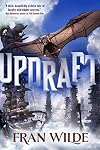
That said though, this book also has an unbelievable number of strengths that make it worth reading. I’ve said this already but I have no problems saying it again: Fran Wilde’s world of Updraft will make your jaw drop. One only has to look at the cover to see what kind of wonders you’ll be in for. A whole civilization that lives above the clouds on towers of living bone. Giant tentacled sky predators that travel in huge migrations, causing great danger to the towers and any citizens on the wing. Breathtaking scenes of airborne maneuvers and skirmishes are guaranteed to make you see the physics and aerodynamics of flying in a whole new light. The world building is fantastically done, and I can’t stress that enough.
Then there’s the emotional appeal. Readers will no doubt root for Kirit, the unlikely champion pitted against a stronger enemy who has the weight and power of establishment behind him. The idea might not be new, but it’s an undeniably compelling one and a favorite for the ages. Readers who enjoy themes of family might also appreciate Kirit’s complex relationship with her mother Ezarit – the woman she admires but feels she’ll never live up to. Kirit’s best friend Nat and his mother Elna play a huge role in her support system as well, and their characters shine an interesting light on the concept of familial ties.
Ultimately Updraft is a good book that will appeal to readers across a broad age range. The predictability of the plot and familiar themes notwithstanding, the story is sure to blow readers away with its fascinating world building, plus it also has the added benefit of being a self-contained stand alone. Fran Wilde has an impressive novel debut here that will ignite imaginations and enchant readers; whether she decides to write other books in this universe or start something new entirely, I look forward to reading more. show less
On the one hand, I adored the world of Updraft because it was beautiful, innovative, and mind-blowingly unique. But on the other, its story and plot elements feel like it has been done before. While nothing about the book’s show more cover, description, publisher, etc. ostensibly screams Young Adult, in many ways this does read and real a lot like a YA novel. We follow a teenage protagonist, a young woman named Kirit Densira who dreams of becoming a sky trader, but first she must pass a trial to earn her wings. However, this is all before the plot reveals there is something different and special about Kirit, a suggestion that she has a secret talent that destines her for much greater things.
Kirit and her family and friends also live in one of the many skyward bone towers that make up the city, with living conditions determined by which structural tier you occupy – in both the physical and social sense. No matter which tower you’re from though, every citizen is at the mercy of the Spire, the tallest, most powerful and forbidding tower deep in the heart of the city. The Spire has the final say in all matters and uses its secrets to change history and keep the other towers under their thumb. An individual tower’s prestige and benefits – like whether they should be allowed certain privileges or be given the permission to rise – are determined by a special class of law makers and enforcers called Singers, whom citizens both revere and mistrust. Citizens are allowed to challenge Singers, but the results are often rigged against them. The Spire will also make the other towers pay by making examples of their lawbreakers, sacrificing them in very public displays, claiming this is how the Spire protects all of them. Citizens are not only expected to accept this, they are also expected to be thankful. Not surprisingly, the main antagonist is also the most influential Singer, a dictator-like figure who has everyone in his pocket, and of course he’s out to use Kirit for his own means.
Perhaps you see what I’m getting at. For sure, I credit the sky setting for being amazingly creative. If I weren’t so hopelessly afraid of heights, I would love to live in a world like this, to soar into the wild blue yonder on silken wings while feeling the brisk wind on my face. My concern is though, for all of the wonderful new sights and sounds, readers of YA dystopian fiction will still probably find the underlying themes very familiar. I also found the plot terribly predictable. There weren’t many surprises story-wise; I knew what Kirit’s fate would be from the start, guessed who her allies and enemies were, what challenges she would face, and how those challenges would resolve. The predictability never quite went away, and I feel it was the novel’s one and only flaw. For me, that was enough to make the difference, keeping Updraft from being a book that swept me off my feet.
That said though, this book also has an unbelievable number of strengths that make it worth reading. I’ve said this already but I have no problems saying it again: Fran Wilde’s world of Updraft will make your jaw drop. One only has to look at the cover to see what kind of wonders you’ll be in for. A whole civilization that lives above the clouds on towers of living bone. Giant tentacled sky predators that travel in huge migrations, causing great danger to the towers and any citizens on the wing. Breathtaking scenes of airborne maneuvers and skirmishes are guaranteed to make you see the physics and aerodynamics of flying in a whole new light. The world building is fantastically done, and I can’t stress that enough.
Then there’s the emotional appeal. Readers will no doubt root for Kirit, the unlikely champion pitted against a stronger enemy who has the weight and power of establishment behind him. The idea might not be new, but it’s an undeniably compelling one and a favorite for the ages. Readers who enjoy themes of family might also appreciate Kirit’s complex relationship with her mother Ezarit – the woman she admires but feels she’ll never live up to. Kirit’s best friend Nat and his mother Elna play a huge role in her support system as well, and their characters shine an interesting light on the concept of familial ties.
Ultimately Updraft is a good book that will appeal to readers across a broad age range. The predictability of the plot and familiar themes notwithstanding, the story is sure to blow readers away with its fascinating world building, plus it also has the added benefit of being a self-contained stand alone. Fran Wilde has an impressive novel debut here that will ignite imaginations and enchant readers; whether she decides to write other books in this universe or start something new entirely, I look forward to reading more. show less
I love stories that involve flying, whether that be due to aeroplanes, dragons and other winged mythical creatures, broomsticks or shapeshifters capable of flight.. So I thought Updraft, about a society who live in tall towers above the clouds and fly around wearing silk wings, sounded fascinating.
The worldbuilding is very intriguing, and dystopian, and leaves a lot of questions unanswered. I like that - ambiguity is preferable to unsatisfactory answers.
However, I care more about characters than I do about cool worldbuilding and action sequences, and I really wanted more character and relationship development. There seemed to be a lot of undeveloped potential… and I'm not sure if this is a genuine weakness or just a case of a book not show more doing what I wanted it to. show less
The worldbuilding is very intriguing, and dystopian, and leaves a lot of questions unanswered. I like that - ambiguity is preferable to unsatisfactory answers.
However, I care more about characters than I do about cool worldbuilding and action sequences, and I really wanted more character and relationship development. There seemed to be a lot of undeveloped potential… and I'm not sure if this is a genuine weakness or just a case of a book not show more doing what I wanted it to. show less
Members
- Recently Added By
Published Reviews
ThingScore 100
Publisher's Weekly Fall 2015 SF, Fantasy & Horror Top 10
added by sussura
-- STARRED REVIEW --
Extraordinary worldbuilding and cascading levels of intrigue make Wilde’s debut fantasy novel soar.
...
The setting is marvelously unusual, a city grown from living bone and populated by everyday people who have left the ground far behind; though Wilde leaves many questions unanswered, this only adds to the mystery and delight, encouraging the reader to suspend disbelief show more and become immersed in Kirit’s story. This well-written and fascinating exploration of a strange land is an extremely promising start for an exciting new writer. show less
Extraordinary worldbuilding and cascading levels of intrigue make Wilde’s debut fantasy novel soar.
...
The setting is marvelously unusual, a city grown from living bone and populated by everyday people who have left the ground far behind; though Wilde leaves many questions unanswered, this only adds to the mystery and delight, encouraging the reader to suspend disbelief show more and become immersed in Kirit’s story. This well-written and fascinating exploration of a strange land is an extremely promising start for an exciting new writer. show less
added by sussura
“… The world itself is as much a character as any of the individuals within its pages, and in the grand tradition of science fiction and fantasy, the main character’s growth and struggles are bound up with learning more about the world. … I galloped through it to find out what came next…. With Updraft, Fran Wilde has written a compelling debut, and I for one look forward to seeing show more what she does next.” ~ Locus, May 2015 show less
added by sussura
Lists

Fantasy/Scifi Heroines Without Love Intrests
46 works; 10 members

Books Read in 2016
4,666 works; 199 members

Reading Glasses Podcast
410 works; 3 members
Author Information

36+ Works 1,409 Members
Fran Wilde was born in 1973 in Philadelphia, Pennsylvania. She is a graduate of the University of Virginia with a BA in English with Honors, Warren Wilson College with a MFA in poetry, and the University of Baltimore with a Masters in Information Architecture and Interior Design. Her previous jobs included a sailing instructor, Jewel's assistant, show more teacher, professor, and web and game developer. She writes for the blog GeekMom and runs the blog and podcast for Cooking the Books. She writes short stories and novels. Some of her short stories include Bent the Wing, Dark the Cloud, published in Beneath Ceaseless Skies, The Ghost Tide Chantey on Tor.com, You are Two Point Three Meters from Your Destination, published in Uncanny, and How to Walk through Historic Graveyards in the Digital Age, published in Asimov's Science Fiction. Her novel Updraft (2015) won the Andre Norton Award for Young Adult Science Fiction and Fantasy (2016). Her other novel is Cloudbound (2016). (Bowker Author Biography) show less

Fran Wilde is a LibraryThing Author, an author who lists their personal library on LibraryThing.
Some Editions
Awards and Honors
Awards
Series

Work Relationships
Has as a commentary on the text
Common Knowledge
- Original publication date
- 2015-09-01
- First words
- My mother selected her wings as early morning light reached through our balcony shutters.
- Blurbers
- Bear, Elizabeth; Feldman, Stephanie; Gladstone, Max; Gould, Steven; Lynch, Scott; Myers, E.C. (show all 7); Smith, Sherwood
- Original language
- English
Classifications
Statistics
- Members
- 506
- Popularity
- 59,082
- Reviews
- 22
- Rating
- (3.60)
- Languages
- English, German
- Media
- Paper, Audiobook, Ebook
- ISBNs
- 7
- ASINs
- 8