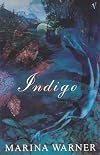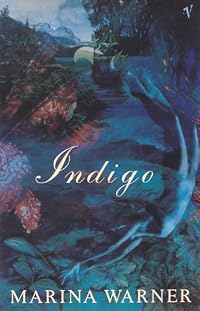
Indigo
by Marina Warner
On This Page
Description
Inspired by "The Tempest", the novelist rewrites the drama of Ariel, Caliban and Sycorax in a Caribbean setting, exploring the colonial conflicts of an imaginary island and one family.Tags
Recommendations






















Member Reviews
Indigo takes place in a subtly displaced and imaginary world, where the characters in the Tempest take life and form as players on a Caribbean colonial stage - and their descendants re-engage with its legacy four hundred years on. Warner shifts from fairy tale to poetry; politics to romance. Indigo mixes the dream world with the much less comfortable realities of slavery, genocide and modern day racism and commercial oppression in the newly independent Caribbean islands. Fantasy and narrative can shape and inform our understanding of our world, and Warner does that brilliantly here with her intricate plotting, sense of action, and her mix of poetry and humour with realism.
Reason read: July 2024 botm Reading 1001
This book was written by Marina Warner, an English historian, mythographer, art critic, novelist and short story writer. Warner's novel The Lost Father was on the Booker Prize shortlist in 1988. She has written many works of nonfictionin topics of myths and feminism. She has received many awards.
Indigo is a story set in London and the Caribbean. From Wiki; "Warner appropriates Shakespeare's original plot (of the Tempestand) and characters to fit a dual reality, spanning the 17th and 20th centuries, and the colonial sphere of the Caribbean alongside post-colonial London. She expands certain characters: for example, Sycorax, Shakespeare's dark witch, is given her own identity as indigo maker and show more village sage. The colonialist realities of 'discovery' and the conquering of 'new' lands are played out in the novel's first section. Finally, the characters of Miranda and Caliban (recreated as Dulé and George/Shaka) are unified in a shared acknowledgement of past colonial wrongs.
The novel explores the history of colonialism, family bloodlines, and power and transformation across three centuries. I found the writing hard. Her sentences required one to read slowly because you could easily get lost and not really understand what she was saying. She also used quite a few uncommon words that required one to look them up. She made up a game called Flinders which embodies the spirit of the empire. This made me think of Rowlings and her Quidditch. Symbols in the book could be the water (also found in the title) and drowning. Warner also develops the female characters of the tempest more than others who have retold the Tempest.
I am glad to finally have this book read but it wasn't easy and will not be high on a list of books that I would want to reread though I am sure a person would get more out of it with a second read. show less
This book was written by Marina Warner, an English historian, mythographer, art critic, novelist and short story writer. Warner's novel The Lost Father was on the Booker Prize shortlist in 1988. She has written many works of nonfictionin topics of myths and feminism. She has received many awards.
Indigo is a story set in London and the Caribbean. From Wiki; "Warner appropriates Shakespeare's original plot (of the Tempestand) and characters to fit a dual reality, spanning the 17th and 20th centuries, and the colonial sphere of the Caribbean alongside post-colonial London. She expands certain characters: for example, Sycorax, Shakespeare's dark witch, is given her own identity as indigo maker and show more village sage. The colonialist realities of 'discovery' and the conquering of 'new' lands are played out in the novel's first section. Finally, the characters of Miranda and Caliban (recreated as Dulé and George/Shaka) are unified in a shared acknowledgement of past colonial wrongs.
The novel explores the history of colonialism, family bloodlines, and power and transformation across three centuries. I found the writing hard. Her sentences required one to read slowly because you could easily get lost and not really understand what she was saying. She also used quite a few uncommon words that required one to look them up. She made up a game called Flinders which embodies the spirit of the empire. This made me think of Rowlings and her Quidditch. Symbols in the book could be the water (also found in the title) and drowning. Warner also develops the female characters of the tempest more than others who have retold the Tempest.
I am glad to finally have this book read but it wasn't easy and will not be high on a list of books that I would want to reread though I am sure a person would get more out of it with a second read. show less
Ratings
Members
- Recently Added By
Lists

1,001 BYMRBYD Concensus
723 works; 27 members

Retellings of Shakespeare Plays
42 works; 12 members

A Rainbow of Books: Colors in the Title
570 works; 24 members
Author Information

72+ Works 5,548 Members
Marina Warner is Professor of Literature, Film, and Theatre Studies at the University of Essex and a distinguished writer of fiction, criticism, and history.
Awards and Honors
Work Relationships
Is a reply to
Common Knowledge
Classifications
Statistics
- Members
- 247
- Popularity
- 130,938
- Reviews
- 3
- Rating
- (3.53)
- Languages
- Dutch, English, French
- Media
- Paper
- ISBNs
- 5
- ASINs
- 3