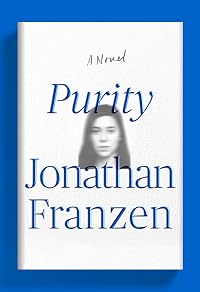
Purity
by Jonathan Franzen
On This Page
Description
NEW YORK TIMES BESTSELLERA NEW YORK TIMES BOOK REVIEW Notable Book
"So funny, so sage and above all so incandescently intelligent" (The Chicago Tribune), the New York Times bestseller Purity is a grand story of youthful idealism, extreme fidelity, and murder, a daring and penetrating book from "the most intelligent novelist of [his] generation" (The New Republic), Jonathan Franzen
Young Pip Tyler doesn't know who she is. She knows that her real name is Purity, that she's saddled with show more $130,000 in student debt, that she's squatting with anarchists in Oakland, and that her relationship with her mother—her only family—is hazardous. But she doesn't have a clue who her father is, why her mother chose to live as a recluse with an invented name, or how she'll ever have a normal life.
Enter the Germans. A glancing encounter with a German peace activist leads Pip to an internship in South America with The Sunlight Project, an organization that traffics in all the secrets of the world—including, Pip hopes, the secret of her origins. TSP is the brainchild of Andreas Wolf, a charismatic provocateur who rose to fame in the chaos following the fall of the Berlin Wall. Now on the lam in Bolivia, Andreas is drawn to Pip for reasons she doesn't understand, and the intensity of her response to him upends her conventional ideas of right and wrong.
Purity is a grand story of youthful idealism, extreme fidelity, and murder. The author of The Corrections and Freedom has imagined a world of vividly original characters—Californians and East Germans, good parents and bad parents, journalists and leakers—and he follows their intertwining paths through landscapes as contemporary as the omnipresent Internet and as ancient as the war between the sexes. Purity is the most daring and penetrating book yet by one of the major writers of our time.
. show less
Tags
Recommendations

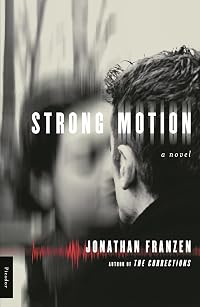
Member Recommendations
by shaunie
Member Reviews
Előrebocsátom: elfogult vagyok Franzennel. Az elfogult ember meg olyan, hogy még a trágyadomb mélyéről se rest kibányászni az igazgyöngyöket: mivel már amúgy is sok érzelmi energiát fektetett a szerzőbe, ott is jelentést keres, ahol talán nincs, vagy (mondhatta volna szebben, kis lovag) legalábbis rejtve van. Érzem, hogy nem a Tisztaság a legtisztább Franzen-opusz – no azér nem trágyadomb, de valamiképpen végig azon a határmezsgyén táncol, aminek a túlsó felén a monumentális szappanoperák heverésznek. Egyes szereplők karikatúrák, ez a szerkesztésmód pedig, ahol az egymásra reflektáló, egymásba fonódó, és mindig a legizgalmasabb résznél félbeszakadó kisregényekből alakul ki a szöveg show more egésze – bizony-bizony időnként hatásvadásszá válik.
De (és ez egy pozitív "de") mégis: nekem ünnep volt minden pillanat, amit ebben a könyvben töltöttem. A történetmesélésnek ez az öröme – ez mindig letaglóz. Szeretek az ilyen nagy cupákokon rágódni. Franzennél szerintem senki nem ért jobban ahhoz, hogy „beetesse” az olvasót: kényelmesen felépít egy hőst, aztán a következő etapban teljesen új nézőpontból mutatja be, arra kényszerítve minket, hogy átértékeljük addigi elképzeléseinket. Nem fél attól, hogy figurái ellentmondásba keverednek magukkal – hisz a jellem egyik kulcsa éppen az, hogy időnként ellentmond magának –, és ez az eljárás komplex alakokkal népesíti be történeteit. A komplex alakok pedig (megsokszorozva a regény lehetséges értelmezéseit) folyamatos interakciókban állnak egymással: beszélgetnek, szeretnek, összevesznek, gyűlölnek, ésatöbbi, ésatöbbi… e folyamatok ilyen szintű megjelenítése szintén olyan írói kvalitásokat feltételez, amikkel Franzenen kívül kevesen rendelkeznek. Az ebben rejlő lehetőségeket pedig azért tudja maximálisan kibontani, mert ad magának időt rá: nagy regényt ír, hosszú regényt, amelyben szereplői faltól falig játszhatnak – ami persze csak akkor erény, ha tudnak is játszani. Ezek a skillek pedig ebben a nagy dögben is ott vannak, bár tagadhatatlan: nem olyan koherens egésszé dolgozva, mint előző két nagyregényében*.
Azok a dialógusok pedig, amik időnként felületes csevegésnek tűnnek, valójában mindig egy tudatos koncepciót rejtenek. Ebben a könyvben ez a mag a titok eszméje: a Tisztaság szereplőinek jelentős része szakmája szerint abból él, hogy kormányok és multik titkait igyekszik kiszivárogtatni amolyan Wikileaks-esen, és legtöbbjük családi (leginkább anya-gyermek) viszonyát valami ki nem mondott, súlyos rejtély terheli. Még a regényben igen hangsúlyos feminizmus-vonal is ilyesféleképpen ábrázolandó: olyan kapcsolatként, amiben a nemek képviselői azért bizalmatlanok egymással, mert feltételezik, hogy a másik fél nem oszt meg valami igen-igen fontosat. Titkok tehát: elrejtett titkok, kényszeresen megosztott titkok, akaratunk ellenére napvilágra hozott titkok, Facebookra felposztolt titkok, vagy titkok, amikről csak hittük, hogy titkok… Mindezt az írótól megszokott stílusban: semmi állítás**, csak ábrázolás, majd az olvasó kiszemelgeti magának, ami az övé. Franzen újabb eposza is nagyszerű – mert Franzen akkor is nagyszerű, ha kevésbé nagyszerű –, fél csillag levonás viszont jár a többi könyv viszonylatában, illetve a vége miatt, ami mintha picit össze lenne csapva.
* Bizonyos értelemben talán megkockáztathatjuk, hogy a Tisztaság visszalépés a korai Franzenhez, az Erős rengés-hez, annak ifjonti bája nélkül.
** Következésképpen szerintem nem Obamázik, nem megújulóenergiázik, és nem internetfóbiázik – egyes szereplői viszont igen, ahogy más szereplői meg éppen ellenkezőleg. Igazából a kérdés az, hogy melyikükkel azonosítjuk Franzent – de ez csak a mi előfeltételezésünk lesz. Maga az író szerintem mindent (még önmagát is, sőt, legfőképpen önmagát) kellő iróniával kezeli. show less
De (és ez egy pozitív "de") mégis: nekem ünnep volt minden pillanat, amit ebben a könyvben töltöttem. A történetmesélésnek ez az öröme – ez mindig letaglóz. Szeretek az ilyen nagy cupákokon rágódni. Franzennél szerintem senki nem ért jobban ahhoz, hogy „beetesse” az olvasót: kényelmesen felépít egy hőst, aztán a következő etapban teljesen új nézőpontból mutatja be, arra kényszerítve minket, hogy átértékeljük addigi elképzeléseinket. Nem fél attól, hogy figurái ellentmondásba keverednek magukkal – hisz a jellem egyik kulcsa éppen az, hogy időnként ellentmond magának –, és ez az eljárás komplex alakokkal népesíti be történeteit. A komplex alakok pedig (megsokszorozva a regény lehetséges értelmezéseit) folyamatos interakciókban állnak egymással: beszélgetnek, szeretnek, összevesznek, gyűlölnek, ésatöbbi, ésatöbbi… e folyamatok ilyen szintű megjelenítése szintén olyan írói kvalitásokat feltételez, amikkel Franzenen kívül kevesen rendelkeznek. Az ebben rejlő lehetőségeket pedig azért tudja maximálisan kibontani, mert ad magának időt rá: nagy regényt ír, hosszú regényt, amelyben szereplői faltól falig játszhatnak – ami persze csak akkor erény, ha tudnak is játszani. Ezek a skillek pedig ebben a nagy dögben is ott vannak, bár tagadhatatlan: nem olyan koherens egésszé dolgozva, mint előző két nagyregényében*.
Azok a dialógusok pedig, amik időnként felületes csevegésnek tűnnek, valójában mindig egy tudatos koncepciót rejtenek. Ebben a könyvben ez a mag a titok eszméje: a Tisztaság szereplőinek jelentős része szakmája szerint abból él, hogy kormányok és multik titkait igyekszik kiszivárogtatni amolyan Wikileaks-esen, és legtöbbjük családi (leginkább anya-gyermek) viszonyát valami ki nem mondott, súlyos rejtély terheli. Még a regényben igen hangsúlyos feminizmus-vonal is ilyesféleképpen ábrázolandó: olyan kapcsolatként, amiben a nemek képviselői azért bizalmatlanok egymással, mert feltételezik, hogy a másik fél nem oszt meg valami igen-igen fontosat. Titkok tehát: elrejtett titkok, kényszeresen megosztott titkok, akaratunk ellenére napvilágra hozott titkok, Facebookra felposztolt titkok, vagy titkok, amikről csak hittük, hogy titkok… Mindezt az írótól megszokott stílusban: semmi állítás**, csak ábrázolás, majd az olvasó kiszemelgeti magának, ami az övé. Franzen újabb eposza is nagyszerű – mert Franzen akkor is nagyszerű, ha kevésbé nagyszerű –, fél csillag levonás viszont jár a többi könyv viszonylatában, illetve a vége miatt, ami mintha picit össze lenne csapva.
* Bizonyos értelemben talán megkockáztathatjuk, hogy a Tisztaság visszalépés a korai Franzenhez, az Erős rengés-hez, annak ifjonti bája nélkül.
** Következésképpen szerintem nem Obamázik, nem megújulóenergiázik, és nem internetfóbiázik – egyes szereplői viszont igen, ahogy más szereplői meg éppen ellenkezőleg. Igazából a kérdés az, hogy melyikükkel azonosítjuk Franzent – de ez csak a mi előfeltételezésünk lesz. Maga az író szerintem mindent (még önmagát is, sőt, legfőképpen önmagát) kellő iróniával kezeli. show less
The young people hate him. I rated his other books 5 and 4 stars and defended him from the young haters, but now, with Purity, I'm down to 3 stars. Did I change, or did he?
It's about purity--moral purity--freedom from guilt. And none of the characters manages to achieve it, though they sure try, or at least think that's what they're trying. More often, they are trying to claim the moral high ground so as to gain some advantage over someone else. The cynics in the book are aware that's what they're doing while the idealists struggle with it, fearing any advantage they might get is evidence against them.
Perhaps Franzen chose this topic to get back at his young critics whose generation's purported propensity for political correctness looks show more like such a quest. His view of the world is a Freudian one in which innocence is always an illusion. He is waiting for the youth of today to grow up and realize this, but many of the young people I know are already aware of this and avoid their micro-hate-crimes not because they think they can escape guilt-free, but more as acts of self-improvement.
The other way to escape guilt is the insanity defense. In daily life, this is regular old mental illness. You are granted this pardon by a doctor in the form of a diagnosis. For Andreas Wolf, the diagnosis is given by the world at large and perhaps by the reader who is privy to his thoughts. For Anabel, it's given by her husband, father and daughter (and the reader as well) but maybe we're given to understand that being an artist is itself akin to being crazy.
Others can have "neuroticisms"--Pip wants to be ordered to do things, for example. Not mentally ill. Tom's mother is always self-deprecating. A character trait, not a symptom, which in the decadent West would be best handled by a life coach, not a doctor. Andreas's mother who sexually acts out and who lies on the floor in semi-catatonic fugue states--a borderline case. She counts as mentally ill but since her symptoms differ from her crimes, she remains guilty. (In the Communist East, being a dissident is a mental illness but that's because being put in a mental hospital is like being jailed without a trial.) Annegret feels bad for her crimes and tries to make amends so is not mentally ill.
If I belabor this, it's because it is part of what I didn't like about the book. These distinctions are not part of the story so much as devices used by Franzen to determine who counts as good or bad, pure or impure. For myself, I just didn't find some of the characters all that interesting. Parts of the book were difficult to get through because I couldn't care enough. Andreas's mental illness wasn't believable to me. It was the creation of a writer who doesn't fully appreciate psychological problems but has read books and watched movies about the abnormal psychologies created by other writers. I found his ultimate demise an easy cop out for a complicated plot.
My favorite parts were Tom and Anabel's relationship; more for when it was "good" than when it went bad. I believed Franzen has a good understanding of the attraction of loony intensity and that ultimately, to be guilt free is to satisfy its demands. In that sense, Anabel was like the old testament god, rendering judgment. But didn't she really understand that all money had blood on it--not just the cash that's easy to trace back to its violent roots? (See how pure I am in saying this? Purer than Anabel herself!)
I also liked much of Pip's journey, though I found her relationship with Steven and later with Jason tiresome.
Franzen may have misgivings about technology, but he seems to understand it enough to write about key loggers and guessing passwords. Or maybe someone helped him with that part. He didn't seem to know that there were password cracking programs to brute-force encrypted pdfs. The internet as having the same failings as socialism may be a clever answer to the tech evangelists, but there are good things about the internet he is ignoring. That the internet lacks purity should be a given for the author of a book showing the disaster that comes from trying too hard to achieve it.
I plan to read his next book despite his lack of purity. show less
It's about purity--moral purity--freedom from guilt. And none of the characters manages to achieve it, though they sure try, or at least think that's what they're trying. More often, they are trying to claim the moral high ground so as to gain some advantage over someone else. The cynics in the book are aware that's what they're doing while the idealists struggle with it, fearing any advantage they might get is evidence against them.
Perhaps Franzen chose this topic to get back at his young critics whose generation's purported propensity for political correctness looks show more like such a quest. His view of the world is a Freudian one in which innocence is always an illusion. He is waiting for the youth of today to grow up and realize this, but many of the young people I know are already aware of this and avoid their micro-hate-crimes not because they think they can escape guilt-free, but more as acts of self-improvement.
The other way to escape guilt is the insanity defense. In daily life, this is regular old mental illness. You are granted this pardon by a doctor in the form of a diagnosis. For Andreas Wolf, the diagnosis is given by the world at large and perhaps by the reader who is privy to his thoughts. For Anabel, it's given by her husband, father and daughter (and the reader as well) but maybe we're given to understand that being an artist is itself akin to being crazy.
Others can have "neuroticisms"--Pip wants to be ordered to do things, for example. Not mentally ill. Tom's mother is always self-deprecating. A character trait, not a symptom, which in the decadent West would be best handled by a life coach, not a doctor. Andreas's mother who sexually acts out and who lies on the floor in semi-catatonic fugue states--a borderline case. She counts as mentally ill but since her symptoms differ from her crimes, she remains guilty. (In the Communist East, being a dissident is a mental illness but that's because being put in a mental hospital is like being jailed without a trial.) Annegret feels bad for her crimes and tries to make amends so is not mentally ill.
If I belabor this, it's because it is part of what I didn't like about the book. These distinctions are not part of the story so much as devices used by Franzen to determine who counts as good or bad, pure or impure. For myself, I just didn't find some of the characters all that interesting. Parts of the book were difficult to get through because I couldn't care enough. Andreas's mental illness wasn't believable to me. It was the creation of a writer who doesn't fully appreciate psychological problems but has read books and watched movies about the abnormal psychologies created by other writers. I found his ultimate demise an easy cop out for a complicated plot.
My favorite parts were Tom and Anabel's relationship; more for when it was "good" than when it went bad. I believed Franzen has a good understanding of the attraction of loony intensity and that ultimately, to be guilt free is to satisfy its demands. In that sense, Anabel was like the old testament god, rendering judgment. But didn't she really understand that all money had blood on it--not just the cash that's easy to trace back to its violent roots? (See how pure I am in saying this? Purer than Anabel herself!)
I also liked much of Pip's journey, though I found her relationship with Steven and later with Jason tiresome.
Franzen may have misgivings about technology, but he seems to understand it enough to write about key loggers and guessing passwords. Or maybe someone helped him with that part. He didn't seem to know that there were password cracking programs to brute-force encrypted pdfs. The internet as having the same failings as socialism may be a clever answer to the tech evangelists, but there are good things about the internet he is ignoring. That the internet lacks purity should be a given for the author of a book showing the disaster that comes from trying too hard to achieve it.
I plan to read his next book despite his lack of purity. show less
Pip has been brought up by an eccentric, reclusive mother, who has lied about and concealed her past and the identity of Pip's father. Partly this book is about Pip finding out who she is, but there are other strands (which interconnect pleasingly) about a Wikileaks-like secret-uncoverer, Andreas Wolf, and his past in East Berlin before and just after the Wall came down, and Tom Aberant, a journalist for whom Pip goes to work.
Pip was a bit irritating to me to the beginning in a flip, self-destructive way, and she was petulant and dithery in the middle, but by the end she had developed into a calmer, more resolved character. The sections about Andreas and the socialist republic of East Germany were fascinating, although he was the least show more successful character for me. I appreciated greatly how uninvested he was in the aims of his Sunlight Project and how he fell into his role purely as a side effect of an act of selfish self-preservation. However, his personality never seemed very coherent and the section towards the end where he goes on and on about "the Killer" nearly made me downgrade to 4 stars (was this meant to be evidence of mental ill health? - maybe, but if so, it went on too long.) Otherwise I loved the prose all the way through.
I never understood what Tom found attractive about Anabel (at all - she was unpleasant and "nuts"right from the beginning without let-up) and the story of their marriage was extremely sad. None of the characters told the complete truth or seemed really to aspire to any of the usual virtues and at times it all felt a bit grubby, but I liked the ending and especially Jason and Choco. show less
Pip was a bit irritating to me to the beginning in a flip, self-destructive way, and she was petulant and dithery in the middle, but by the end she had developed into a calmer, more resolved character. The sections about Andreas and the socialist republic of East Germany were fascinating, although he was the least show more successful character for me. I appreciated greatly how uninvested he was in the aims of his Sunlight Project and how he fell into his role purely as a side effect of an act of selfish self-preservation. However, his personality never seemed very coherent and the section towards the end where he goes on and on about "the Killer" nearly made me downgrade to 4 stars (was this meant to be evidence of mental ill health? - maybe, but if so, it went on too long.) Otherwise I loved the prose all the way through.
I never understood what Tom found attractive about Anabel (at all - she was unpleasant and "nuts"right from the beginning without let-up) and the story of their marriage was extremely sad. None of the characters told the complete truth or seemed really to aspire to any of the usual virtues and at times it all felt a bit grubby, but I liked the ending and especially Jason and Choco. show less
The protagonist of the book, Pip, is a young woman who was raised solely by her mother and is stuck in a dead end job with a very unsatisfying love life. She is in debt from school loans and the stress of that makes her very anxious to find her father in hopes of extracting some cash to pay off her loans. During the course of the book, we meet different characters (her parents, a key employer, roommates) that are pivotal in Pip's life, and Franzen spends huge chunks of the book making sure we truly know many of them as deeply as we know Pip.
Franzen is not going to be everyone's cup of tea. And frankly, I can't imagine reading him for the plot. I didn't actually like the ending of this book and yet I'm STILL going to give it five show more stars.
Why?
Because like no other author, he reveals truth. Not the superficial actions and words of people we see all around us as we live our day to day lives, but the deeper, harder ones. The ones that are horribly ugly and the ones that are incredibly sympathetic and the ones that are the most beautiful parts of human nature. For example, Pip's mother is a narcissistic, opinionated, selfish person, but she loves Pip beyond all measure. And despite how horrible she is, Pip loves her back. Franzen evokes this relationship in terms that I think are so realistic - - the tedious phone calls, the manipulation by both mother and daughter, the attempts to resolve the issues because not resolving them just isn't an option. Or the love relationship between Pip's mother and father . . .the passion superseding all common sense until one day common sense prevails.
Franzen does really layer it on in the sense that all his characters have dysfunction at varying levels, but in my experience, he actually echoes real life and does it without the fear other authors have that you (the reader) won't like it. Franzen likes to shine bright lights on each and every characters' issues. Even his best ones are flawed. He doesn't care if you like them in the least, and as a reader, I like that he is willing to show you the inside of their minds, the rationales behind their behaviors.
This book engaged me for every moment while reading it. Usually, I give five stars to books that grab me when I read the final page. The ones that feel so satisfying at their conclusion. But this book was one I just didn't want to end because it felt so revealing. show less
Franzen is not going to be everyone's cup of tea. And frankly, I can't imagine reading him for the plot. I didn't actually like the ending of this book and yet I'm STILL going to give it five show more stars.
Why?
Because like no other author, he reveals truth. Not the superficial actions and words of people we see all around us as we live our day to day lives, but the deeper, harder ones. The ones that are horribly ugly and the ones that are incredibly sympathetic and the ones that are the most beautiful parts of human nature. For example, Pip's mother is a narcissistic, opinionated, selfish person, but she loves Pip beyond all measure. And despite how horrible she is, Pip loves her back. Franzen evokes this relationship in terms that I think are so realistic - - the tedious phone calls, the manipulation by both mother and daughter, the attempts to resolve the issues because not resolving them just isn't an option. Or the love relationship between Pip's mother and father . . .the passion superseding all common sense until one day common sense prevails.
Franzen does really layer it on in the sense that all his characters have dysfunction at varying levels, but in my experience, he actually echoes real life and does it without the fear other authors have that you (the reader) won't like it. Franzen likes to shine bright lights on each and every characters' issues. Even his best ones are flawed. He doesn't care if you like them in the least, and as a reader, I like that he is willing to show you the inside of their minds, the rationales behind their behaviors.
This book engaged me for every moment while reading it. Usually, I give five stars to books that grab me when I read the final page. The ones that feel so satisfying at their conclusion. But this book was one I just didn't want to end because it felt so revealing. show less
This is the latest from Franzen and, although I still haven’t read his breakout “The Corrections,” he is quickly becoming one of my favorites. This novel is densely woven with its central characters developed back and forth in time and cleverly brought together in the complex set of relationships that define and interconnect them. The title, “Purity,” refers to the central character (who goes by the nickname “Pip”—Great Expectations allusion intended), but also hints at the larger goal towards which most of the characters strive in very different fashions. One of the most interesting aspects of Franzen’s style is that it allows us to go through shifts in our reactions to and senses of the characters—moving from show more bemusement, to dislike, to appreciation, to disappointment, to acceptance—as we see them from different points of view and different times in their lives. It’s all done in omniscient third person, but at times feels like we’re hearing from different first person POVs. The narrative itself is captivating: struggling artists, journalists, hacktivists (think Snowden and Assange), an heiress to a major food corporation who refuses her inheritance for political (and personal—of course, the personal is political, just make sure you look at that through the right end of the telescope: thanks to Kristian Williams for that brilliant insight in the most recent volume of Perspectives on Anarchist Theory, p. 133) reasons, a child (Purity) who discovers her father’s identity at age 25, at the end of a hacktivist operation against the wishes of her mother (the rebel heiress). Oh, I could go on, but you’re already starting to roll your eyes. Unroll and have a read. It’s more than worth your time I reckon.
(Brian Lynch) show less
(Brian Lynch) show less
There aren't many authors whose books I automatically read without regard to buzz or reviews. Jonathan Franzen is one of the few. His ability to compose devastatingly intimate moments, using a prose so concise that I often forget I'm reading at all, is what draws me to his stories again and again.
I didn't warm up to Purity as easily as I did to Freedom or The Corrections (my hands-down Franzen favorite) but the book was still leagues ahead of nearly everything else I was reading at the time. The story centers on the young, twentysomething Purity "Pip" Tyler who is insufferably naive right from the go. But before you decide to give up on her entirely you meet her roommates, who are all semi-illegally squatting in the same house, and her show more mother, who's a damaged piece of work on her own, and suddenly Pip is the sanest, most levelheaded person in the room. Like most of us starting out in life, Pip wants to find a solid foothold in this complex, scary world. Her path though is about to get a whole lot murkier when she meets the seductive international visionary Andreas Wolf.
If you can't tolerate your characters being endlessly amoral long past the point where you'd feel sorry for them, then Purity probably isn't for you. Nor is anything Franzen-related for that matter. show less
I didn't warm up to Purity as easily as I did to Freedom or The Corrections (my hands-down Franzen favorite) but the book was still leagues ahead of nearly everything else I was reading at the time. The story centers on the young, twentysomething Purity "Pip" Tyler who is insufferably naive right from the go. But before you decide to give up on her entirely you meet her roommates, who are all semi-illegally squatting in the same house, and her show more mother, who's a damaged piece of work on her own, and suddenly Pip is the sanest, most levelheaded person in the room. Like most of us starting out in life, Pip wants to find a solid foothold in this complex, scary world. Her path though is about to get a whole lot murkier when she meets the seductive international visionary Andreas Wolf.
If you can't tolerate your characters being endlessly amoral long past the point where you'd feel sorry for them, then Purity probably isn't for you. Nor is anything Franzen-related for that matter. show less
This was a hard one for me to rate. I will start off with the fact that I love Franzen's writing. I know he is a lightning rod, and that he seems like an self-obsessed entitled elitist jackwad in most of his interviews. But...interviews are not a terribly accurate barometer of a person's worth, and jackwad or no, this guy writes like a dream. Mozart was no angel, Hemingway was pretty vile, and don't get me started on Michelangelo. Roman Polanski is a pedophile, Kanye West is ... Kanye West and Quentin Tarantino makes art by celebrating all the violence and misdirected twisted sexual longing within his puny soul. Still, these people were and are fantastically talented. I loved Hateful 8, I listen to My Beautiful Dark Twisted Fantasy more show more than most any other single album, and the ceiling of the Sistine Chapel remains one of the most thrilling vistas I have ever encountered. Crappy people but brilliant artists. I once met Jennifer Weiner at a bar function in Philly 15+ years back, and she was super nice, really engaging, and I wish her every success, but I still don't much like her books.
My point is that I try to judge the art without judging the artist. With Franzen though, I am not completely able to raise that partition. His work always seems so personal that I find it impossible to not plug the little I know of him into my reading experience. And that is my problem with this book. It could have been great. Not good, I really mean great, breathtaking, enduring. So it pissed me off when all the brilliance got piled under Franzen's obsession with narcissistic mothers, his penis and its level of turgidity at any given time, the evils of the information age, how we are all going to die soon because of our lousy stewardship of the planet, and more about his penis. (Mr. Franzen, if you ever read this, please stop using the word "stiffy.")
So Franzen could have written a great book which incorporated a less Chicken Little approach to the evils of the information age and the looming environmental apocalypse, and which featured a narcissistic parent or 2 (its a Jewish male literary must at this point), and even a passing reference to his penis. Instead he wrote a really good one that left me continually thinking "if only." Still, it was the best book I have read in a long time. In fact it was better than many I gave 5 star ratings. Those books though were the best books they could have been. This book is infested with blatantly unrealized potential. I can't go higher than a 4 and a recommendation that everyone read this and judge for themselves. show less
My point is that I try to judge the art without judging the artist. With Franzen though, I am not completely able to raise that partition. His work always seems so personal that I find it impossible to not plug the little I know of him into my reading experience. And that is my problem with this book. It could have been great. Not good, I really mean great, breathtaking, enduring. So it pissed me off when all the brilliance got piled under Franzen's obsession with narcissistic mothers, his penis and its level of turgidity at any given time, the evils of the information age, how we are all going to die soon because of our lousy stewardship of the planet, and more about his penis. (Mr. Franzen, if you ever read this, please stop using the word "stiffy.")
So Franzen could have written a great book which incorporated a less Chicken Little approach to the evils of the information age and the looming environmental apocalypse, and which featured a narcissistic parent or 2 (its a Jewish male literary must at this point), and even a passing reference to his penis. Instead he wrote a really good one that left me continually thinking "if only." Still, it was the best book I have read in a long time. In fact it was better than many I gave 5 star ratings. Those books though were the best books they could have been. This book is infested with blatantly unrealized potential. I can't go higher than a 4 and a recommendation that everyone read this and judge for themselves. show less
Members
- Recently Added By
Lists

Books recommended by Barack Obama
295 works; 28 members

Top Five Books of 2015
811 works; 241 members

Top Five Books of 2016
795 works; 229 members

Kirkus Starred Fiction Reviews of Books Published in 2015
310 works; 6 members
Books Read in 2015
3,299 works; 126 members
International Dublin Literary Award Longlist 2017
147 works; 3 members

NYT: Notable Books of 2015 (Fiction & Poetry)
20 works; 1 member

Dublin Literary Award Longlist 2017
147 works; 2 members

Llibres que he llegit el 2016
36 works; 1 member

Secrets Books
94 works; 3 members

Obama Reads
181 works; 3 members

Kirkus Reviews Best Fiction of 2015
98 works; 6 members

The Worst Bestsellers Podcast
295 works; 5 members

Our digital age
79 works; 5 members

Books Read in 2021
5,361 works; 114 members
Author Information

34+ Works 41,240 Members
Jonathan Franzen was born in Western Springs, Illinois on August 17, 1959. He graduated from Swarthmore College in 1981, and went on to study at the Freie University in Berlin as a Fulbright scholar. He worked in a seismology lab at Harvard University's Department of Earth and Planetary Sciences after graduation. His works include The show more Twenty-Seventh City (1988), Strong Motion (1992), How to Be Alone (2002), and The Discomfort Zone (2006). The Corrections (2001) won a National Book Award and the 2002 James Tait Black Memorial Prize for fiction. Freedom (2010) is an Oprah Book Club selection. He also won a Whiting Writers' Award in 1988 and the American Academy's Berlin Prize in 2000. He is also a frequent contributor to Harper's and The New Yorker. In 2015 his title Purity made The New Yort Times and New Zealand Best Seller List. (Bowker Author Biography) show less
Some Editions
Awards and Honors
Awards
Distinctions
The Guardian Book of the Day (2015-09-06)
Common Knowledge
- Canonical title
- Purity
- Original title
- Purity
- Original publication date
- 2015-09-01
- People/Characters
- Purity "Pip" Tyler; Andreas Wolf; Leila Helou; Tom Aberant; Anabel Laird
- Important places
- Oakland, California, USA; Berlin, Germany; Bolivia; Denver, Colorado, USA
- First words
- "Oh pussycat, I'm so glad to hear your voice," the girl's mother said on the telephone.
- Quotations*
- E forse la pazzia era proprio questo: una valvola di emergenza per alleviare la pressione di un'ansia intollerabile.
Non vedeva alcun rischio razionale nell'accendere la luce sopra il fornello, ma avere una mente complicata significava anche comprenderne i limiti, comprendere che non poteva pensare a tutto. La stupidità scambiava se stessa... (show all) per intelligenza, mentre l'intelligenza riconosceva la propria stupidità. Un paradosso interessante. Ma non rispondeva alla domanda se accendere la luce o no.
Il mondo era sovrappopolato di parlatori e sottopopolato di ascoltatori, e molte delle su fonti le davano l'impressione di essere la prima persona che le avesse mai davvero ascoltate.
– Ecco due verità sulla fama … Una è che ti rende solo. L'altra è che tutti quelli che ti circondano proiettano i loro sentimenti su di te. Anche per questo ti rende solo. È come se tu, come persona, non esistessi nem... (show all)meno. Sei solo un oggetto sul quale gli altri proiettano l'idealismo, la rabbia e così via.
Lo scopo di internet e delle tecnologie connesse era «liberare» l'umanità dai compiti – fabbricare cose, imparare cose, ricordare cose – che prima davano significato alla vita e perciò ne costituivano l'essenza. Ora s... (show all)embrava che l'unico compito significativo fosse l'ottimizzazione per i motori di ricerca.
La nebbia … era la lenta canzone in tonalità minore che veniva scacciata dal rock and roll del sole.
Avevano la bellezza della seconda occhiata, la bellezza che si rivelava solo con l'intimità. - Last words
- (Click to show. Warning: May contain spoilers.)Only when the skies opened again, the rain from the immense dark western ocean pounding on the car roof, the sound of love drowning out the other sound, did she believe that she might.
- Original language*
- Englisch
*Some information comes from Common Knowledge in other languages. Click "Edit" for more information.
Classifications
Statistics
- Members
- 2,627
- Popularity
- 7,168
- Reviews
- 87
- Rating
- (3.56)
- Languages
- 20 — Bosnian, Catalan, Czech, Danish, Dutch, English, Estonian, Finnish, French, German, Hebrew, Hungarian, Italian, Norwegian (Bokmål), Polish, Romanian, Russian, Spanish, Swedish, Portuguese (Portugal)
- Media
- Paper, Audiobook, Ebook
- ISBNs
- 78
- ASINs
- 25