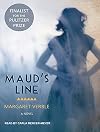
Maud's Line
by Margaret Verble
On This Page
Description
A finalist for the Pulitzer Prize, this debut novel chronicles the life and loves of a headstrong, earthy, and magnetic heroine.Eastern Oklahoma, 1928.
Eighteen-year-old Maud Nail lives with her rogue father and sensitive brother on one of the allotments parceled out by the US Government to the Cherokees when their land was confiscated for Oklahoma's statehood. Maud's days are filled with hard work and simple pleasures, but often marked by violence and tragedy, a fact that she accepts with show more determined practicality. Her prospects for a better life are slim, but when a newcomer with good looks and books rides down her section line, she takes notice. Soon she finds herself facing a series of high-stakes decisions that will determine her future and those of her loved ones.
Maud's Line is accessible, sensuous, and vivid. It will sit on the bookshelf alongside novels by Jim Harrison, Louise Erdrich, Sherman Alexie, and other beloved chroniclers of the American West and its people. show less
Tags
Recommendations



Member Reviews
I don't normally read historical fiction, but I was excited to read a Pulitzer-nominated novel by a fellow Lexingtonian. I really enjoyed this book, maybe because the history was not overbearing--it was mostly a book about a character and her story. I really liked Maud, so I found the book to be a page-turner because I was so interested in what happened to her. The book provides insight to the hardships Native Americans faced after being driven to Oklahoma, but that's not the novel's focus per say. Maud doesn't lament being Native as much as she wishes instead for a less isolated home, indoor plumbing and electricity. Maud's grit, despair, and ambition all made her a sympathetic and fascinating character.
It is a dismal existence. Her mother has died, her father has hit the skids and her brother is slowly losing his grip on reality. Such is life on Oklahoma's Cherokee land in 1928. Yet hope does spring eternal and Maud Nail dreams of bigger and better things. Hers is an iron will and she manages through the support of extended family and no small amount of cunning. That is until a stranger comes to town - an educated peddler in a blue canvased wagon who shares Maud's love of books. Her heart finds love and her escape seems certain until a family entanglement grows into a crime and finally a betrayal. Maud stands to lose everything. It appears that even she cannot withstand this conspiring of circumstances and less-than-wise choices but show more with a remarkable lack of self-pity Maud does what she has to in order to make it through.
It is a story that sticks with you. Very raw and uncompromising, you cannot help but admire Maud's strength and fortitude. Although she will then turn around and do something completely boneheaded and self-sabotaging (at age eighteen I suppose that's a thing). Interesting glimpse into this time period and situation especially as far as culture and race are concerned. I would not have thought that someone could write about this amount of tragedy and have it be believeable but Margaret Verble did a terrific job. If you are at all into grit lit this is definitely on you want to pick up. show less
It is a story that sticks with you. Very raw and uncompromising, you cannot help but admire Maud's strength and fortitude. Although she will then turn around and do something completely boneheaded and self-sabotaging (at age eighteen I suppose that's a thing). Interesting glimpse into this time period and situation especially as far as culture and race are concerned. I would not have thought that someone could write about this amount of tragedy and have it be believeable but Margaret Verble did a terrific job. If you are at all into grit lit this is definitely on you want to pick up. show less
 This review was written for LibraryThing Early Reviewers.
I normally don’t read literary fiction (I’m a genre reader through and through), but this story immediately caught my attention for its setting and the characters.
This is the story of a young Cherockee woman trying to find her path in life in the years immediately before the Great Depression.
Maud immediately hooked me as a character, although she gets two different incarnation in the course of the story.
In the first half, she’s a strong-willed young woman with very clear ideas about what she wants and the way to get it. What I really liked about her is that she always tries to get her way, so she’s willing to lie and to deceive in order to get her goals, but she’s always careful of the pain she may cause. This is show more particularly true for her romance with Booker who’s not an Indian. I particularly enjoyed the very subtle cultural differences between them and the way Maud handles it, with care and awareness. I liked the fact that while she is a manipulative woman, she always does that in a good way, and by this I mean trying to do the right thing.
This is true with her brother Lovely too (his arc is my favourite part in the novel, with him probably going mad and trying to handle it) and with the murder that happened in the very first part of story, which kept me reading.
The first part of story was full of mystery and secrets and I loved it. It was character- and plot driven. I read it without pauses.
The second part of the story is very different. A couple of character disappear. A couple of mysteries are swiftly ‘solved’ and that took away a big chunk of appeal for me. But above all, Maud changes enormously as a character as she progressively falls into depression and becomes more selfish and self-absorbed.
I won’t say this isn’t realistic, because it is. It just detached me from her, because she shifts from a relatable character (for me at least) to a less relatable one. In the second part of the novel, Maud becomes interested only in herself and I had a hard time watching her caring about no one but herself.
As I said, this is realistic, particularly in the place and time period of the story, but for me as a reader it was kind of a shame.
I still liked the book a lot. It’s very well crafted, and so vivid. The author set it in a place she knows very well (in fact that’s where her family has always lived) and based part of the story on real people and real events (thought most of the story is fictional). And you can feel this. Descriptions are so real, so vivid and so personal that you have no problem believing you’re there in Oklahoma with Maud, and I particularly enjoyed the family portrait, the different people, the way they relate to each other.
It’s a deeply involving story, whether you connect with Maud or not.
Recommended. show less
This is the story of a young Cherockee woman trying to find her path in life in the years immediately before the Great Depression.
Maud immediately hooked me as a character, although she gets two different incarnation in the course of the story.
In the first half, she’s a strong-willed young woman with very clear ideas about what she wants and the way to get it. What I really liked about her is that she always tries to get her way, so she’s willing to lie and to deceive in order to get her goals, but she’s always careful of the pain she may cause. This is show more particularly true for her romance with Booker who’s not an Indian. I particularly enjoyed the very subtle cultural differences between them and the way Maud handles it, with care and awareness. I liked the fact that while she is a manipulative woman, she always does that in a good way, and by this I mean trying to do the right thing.
This is true with her brother Lovely too (his arc is my favourite part in the novel, with him probably going mad and trying to handle it) and with the murder that happened in the very first part of story, which kept me reading.
The first part of story was full of mystery and secrets and I loved it. It was character- and plot driven. I read it without pauses.
The second part of the story is very different. A couple of character disappear. A couple of mysteries are swiftly ‘solved’ and that took away a big chunk of appeal for me. But above all, Maud changes enormously as a character as she progressively falls into depression and becomes more selfish and self-absorbed.
I won’t say this isn’t realistic, because it is. It just detached me from her, because she shifts from a relatable character (for me at least) to a less relatable one. In the second part of the novel, Maud becomes interested only in herself and I had a hard time watching her caring about no one but herself.
As I said, this is realistic, particularly in the place and time period of the story, but for me as a reader it was kind of a shame.
I still liked the book a lot. It’s very well crafted, and so vivid. The author set it in a place she knows very well (in fact that’s where her family has always lived) and based part of the story on real people and real events (thought most of the story is fictional). And you can feel this. Descriptions are so real, so vivid and so personal that you have no problem believing you’re there in Oklahoma with Maud, and I particularly enjoyed the family portrait, the different people, the way they relate to each other.
It’s a deeply involving story, whether you connect with Maud or not.
Recommended. show less
This is a remarkable debut novel and worthy of being a finalist for the Pulitzer. It takes place in 1928 in eastern Oklahoma where Maud Nail lives with her father, Mustard and brother, Lovely on an allotment given to the Cherokees. They are surrounded by a large extended family, and all live a hardscrabble existence with few conveniences. Maud falls for a white man peddling his wares in a wagon when she learns he also loves books. Their relationship grows and they set a wedding date when he abruptly leaves town after an argument. Mustard is then involved in a murder and also leaves without a word. Lovely's mental state becomes increasingly worrisome, and Maud is left to seek solace with a fellow Cherokee named Billy. Maud endures a show more pregnancy she doesn't want with the support of her aunts, cousins and grandfather.
This is a wonderful insight into the world of the Cherokee nation on a land given to them following the infamous trail of tears. The landscape is as harsh as their lives, and is a reminder of all that the indigenous people endured. show less
This is a wonderful insight into the world of the Cherokee nation on a land given to them following the infamous trail of tears. The landscape is as harsh as their lives, and is a reminder of all that the indigenous people endured. show less
This is an engaging book, with a protagonist reminding us of our own hormonally driven teenage years and aspirations. Maud keeps house for her father & brother in 1920's Oklahoma--a 2 room shack with cardboard covered walls, wood cookstove & no plumbing. But life leaves her with enough time for dreaming of escaping. A half-blood Cherokee, Maud has been raised to value learning and emulating the white society. When a handsome and engaging peddler stops by she gets support for her love of reading. This could be the story line for a Harlequin, but this novel has more depth. Maud's extended family is close, helping each other thru hard times or, sometimes, getting into trouble together. When their neighbors ramp up a feud, killing Maud's show more milk cow, her father & uncle take revenge. With the law after him, her father disappears. Maud struggles to right things, but life keeps getting messier. She turns to her great-aunts for help at first, then retreats into depression. No, the novel doesn't drag us into her daily depressed state, but collapses the months' dull retreat and then brings in her grandma with a solution.
When her grandfather passed on the title to Maud's mother's allotment and with Maud's use of it, and again when her aunt spoke of all the ways white people have killed Indians, I felt the pull of all the elders who try to pass on what they have learned is of value, and all the young adults who make their own choices.
While the cover description compares Verble to Louise Erdrich, I think a closer comparison could be made to another of my favorite authors, Linda Hogan. Her [Mean Spirit], also about Oklahoma just a decade earlier but focused on the Osage tribe. show less
When her grandfather passed on the title to Maud's mother's allotment and with Maud's use of it, and again when her aunt spoke of all the ways white people have killed Indians, I felt the pull of all the elders who try to pass on what they have learned is of value, and all the young adults who make their own choices.
While the cover description compares Verble to Louise Erdrich, I think a closer comparison could be made to another of my favorite authors, Linda Hogan. Her [Mean Spirit], also about Oklahoma just a decade earlier but focused on the Osage tribe. show less
This review was written for LibraryThing Early Reviewers.This book was nominated for a Pulitzer, yet I had never heard of it, nor is it available in my local library. A friend recommended it, and I am so glad I tracked it down and read it. It is extremely well written, with characters and the setting presented colorfully and realistically. Maud - see plot description in review below - is self sufficient in so many ways. Yet, she longs for a life somewhere else, but where and how will she get there? Too bad, but not surprising, that she relies on a lover from somewhere else to take her away.
Maud's Line by Margaret Verble]takes place in 1928 in the former Cherokee Territory (North Eastern Oklahoma). When the book opens Maud, her brother Lovely, and their father Mustard, all live in a ramshackle house a few miles from Fort Gibson. Of Cherokee heritage, Maud's mother had received the land allotment when Cherokee Territory was eliminated prior to Oklahoma statehood. Maud's relatives live on the neighboring "poor farms" through allotment as well.
Maud is an intelligent and attractive young woman living in a house with no running water or electricity, dreaming over the Sears catalog of a finer way of life away from the hardscrabble farm. Mr. Singer, a wealthy older man living within walking distance, fuels Maud's dreams by show more loaning her books from his extensive library.
One morning after Lovely and Mustard have gone to work Maud sees a wagon with a blue canvas coming down the road. (It was a pretty blue, deeper than the color of the sky and brighter than a heron, a better blue, something new). It was not only the blue that was new, so was the driver, Wakefield Booker, summertime peddler and wintertime teacher in Fayetteville, Arkansas. It is from this meeting Venable launches the plot that will cover the next year of Maud's life. Over the year she will experience profound sorrow, the continued daily hardship of a poor existence, loving support from relatives in the same circumstances and the chance for a better future.
I know the history of the people and of the place where Maud lived. I am not of Indian heritage, my ancestors were those that migrated into Western Arkansas (a river's width from Cherokee and Choctaw Territories) enticed by cheap/free land in the 1850s. Venable doesn't live in this area but her ancestors do, and she has written a believable account of a young woman's life during that period and place in our country's history. I don't know if the author plans a sequel but I'd like to have one to know what happens to Maud as her life, and I hope her fortunes, go forward. show less
Maud is an intelligent and attractive young woman living in a house with no running water or electricity, dreaming over the Sears catalog of a finer way of life away from the hardscrabble farm. Mr. Singer, a wealthy older man living within walking distance, fuels Maud's dreams by show more loaning her books from his extensive library.
One morning after Lovely and Mustard have gone to work Maud sees a wagon with a blue canvas coming down the road. (It was a pretty blue, deeper than the color of the sky and brighter than a heron, a better blue, something new). It was not only the blue that was new, so was the driver, Wakefield Booker, summertime peddler and wintertime teacher in Fayetteville, Arkansas. It is from this meeting Venable launches the plot that will cover the next year of Maud's life. Over the year she will experience profound sorrow, the continued daily hardship of a poor existence, loving support from relatives in the same circumstances and the chance for a better future.
I know the history of the people and of the place where Maud lived. I am not of Indian heritage, my ancestors were those that migrated into Western Arkansas (a river's width from Cherokee and Choctaw Territories) enticed by cheap/free land in the 1850s. Venable doesn't live in this area but her ancestors do, and she has written a believable account of a young woman's life during that period and place in our country's history. I don't know if the author plans a sequel but I'd like to have one to know what happens to Maud as her life, and I hope her fortunes, go forward. show less
This review was written for LibraryThing Early Reviewers.Members
- Recently Added By
Lists

In and About the 1920s
181 works; 31 members

Pulitzer Prize for Fiction - Finalists
88 works; 9 members

A Smorgasbord of Culinary Fiction
221 works; 94 members
Author Information
6 Works 746 Members
Awards and Honors
Awards
Distinctions
Common Knowledge
- Original publication date
- 2015
- People/Characters
- Maud Nail; Lovely Nail; Billy Walkingstick; Booker Wakefield; Mr. Singer
- Important places
- Oklahoma, USA
- Dedication
- For my mother, her brothers, and first cousins
- First words
- Maud was bent over one row, suckering tomato plants, and Lovely was bent over the next one.
- Last words
- (Click to show. Warning: May contain spoilers.)She pinned the paper to the table with the jelly jar.
Classifications
Statistics
- Members
- 222
- Popularity
- 145,493
- Reviews
- 27
- Rating
- (3.60)
- Languages
- English
- Media
- Paper, Audiobook, Ebook
- ISBNs
- 8
- ASINs
- 1