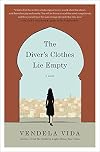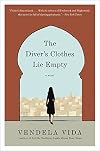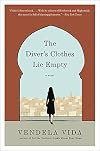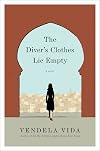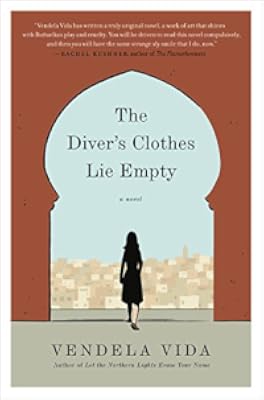
The Diver's Clothes Lie Empty
by Vendela Vida
On This Page
Description
After being robbed of her wallet and passport while on a mysterious trip to Morocco, a woman feels a strange freedom of being stripped of her identity and soon begins pretending to be a well-known film star.Tags
Recommendations

























Member Recommendations

Member Reviews
A divorced woman traveling alone in Morocco has her wallet and passport stolen in the lobby of a hotel, the nightmare of any person abroad. She tries to work with hotel security and the local police, but finds it difficult, and when one officer suggests he has found her possessions but gives her someone else’s, on a whim she assumes the other person’s identity, leading to a series of misadventures. It was a little hard for me to swallow the premise initially, but as the book wore on, playing with identity, a critique of the filmmaking industry, and its revelations of both past and present betrayal, I was mesmerized. Vida uses a second person narrative style that fits this story perfectly. I also loved the tie to the Rumi poem which show more was drawn upon for the title. show less
I chose this book for one reason. I wanted to understand how it might be possible to write a whole book in the second person. It is possible. In the case of this story, it distances us from a protagonist who wants to stay distant. She's a young unnamed woman who's come - fled perhaps - from Florida to Casablanca. Checking into her hotel, her backpack with all her important documents is stolen. The police 'find' it, but it's not hers, the woman whose documents it contains is not her. But she accepts it. In many ways, losing her given identity suits her. She soon changes her identity again... and again. Her need for anonymity runs deep, perhaps partly from her wish to escape her own face, disfigured by teenage acne. Perhaps because of show more what we come to know of her story - no spoiler alerts here though. Through what little agency she has, she time and again shifts the ground beneath her feet. This is a novel of profound unease and bewilderment, and distancing our heroine from us by simply calling her 'you' is a part of that bewilderment. An unsettling reading experience - recommended. show less
This is a stunner of a novel. It starts on a plane headed to Casablanca (a guidebook says "the first thing to do upon arrival in Casablanca is to leave Casablanca"); the narrator is a stressed traveler who seems to be fleeing Florida to leave ghosts behind. A series of remarkable events starts with the theft of her backpack, containing wallet, camera, passport, credit cards, at her hotel. Remarkably, the thief can be seen on the security camera, and she travels to the police station to find a stolen backpack, but not her own. She takes it and becomes Sabine. Back at the hotel, Sabine is noticed by a film crew and is hired to be the stand-in for an internationally famous actress.
The narrator is both empty and amazed by all that happens show more in Casablanca. She has basically been sleepwalking since she boarded the plane, and it takes many pages of adventures and coincidences before the reader learns the reason for her flight. Her resourcefulness is admirable and even comical at times, and this tale unfolds like one from the 1001 Arabian Nights. The suspense and tension never subside, making this a thriller that seems to go off in many directions until it hones in sharply on its denouement. Un-put-downable. show less
The narrator is both empty and amazed by all that happens show more in Casablanca. She has basically been sleepwalking since she boarded the plane, and it takes many pages of adventures and coincidences before the reader learns the reason for her flight. Her resourcefulness is admirable and even comical at times, and this tale unfolds like one from the 1001 Arabian Nights. The suspense and tension never subside, making this a thriller that seems to go off in many directions until it hones in sharply on its denouement. Un-put-downable. show less
“You’re the person you’ve been looking for!” sort of sums up the convoluted series of events Vendela Vida’s unnamed narrator faces with her identity in this novel. She presents as a woman with low self-esteem who is escaping a painful divorce by traveling to Casablanca. She has been told that visiting the Moroccan desert will offer opportunities for self discovery, but one wonders if she is really just seeking to escape an unremarkable identity. Her guidebook advises the first thing any tourist should do in Casablanca is to get out of Casablanca. However a series of identity-shaking events preclude her following that advice. Instead fate offers her multiple opportunities to adopt new and more interesting identities.
Vida’s show more choice of a second person narrative is remarkably effective because it puts the reader in the middle of the messes her protagonist finds herself in and forces one to consider whether they would make the same choices given these circumstances. Revealing the details of these messes would spoil the fun. Suffice it to say, she makes some unusual choices. Vida handles these bizarre events with aplomb making them seem almost believable and reading about them is totally engaging. The plot has a “perils of Pauline” flavor—how is she going to get out of this one? This makes for a light, but taut, suspenseful and rapid read. Meanwhile, Vida slowly develops her protagonist’s backstory. This story is equally outlandish but does indeed succeed in eliciting empathy. In the end, we begin to root for her to succeed in finding her true self and, although Vida does not resolve this issue, she gives us a few rays of hope. show less
Vida’s show more choice of a second person narrative is remarkably effective because it puts the reader in the middle of the messes her protagonist finds herself in and forces one to consider whether they would make the same choices given these circumstances. Revealing the details of these messes would spoil the fun. Suffice it to say, she makes some unusual choices. Vida handles these bizarre events with aplomb making them seem almost believable and reading about them is totally engaging. The plot has a “perils of Pauline” flavor—how is she going to get out of this one? This makes for a light, but taut, suspenseful and rapid read. Meanwhile, Vida slowly develops her protagonist’s backstory. This story is equally outlandish but does indeed succeed in eliciting empathy. In the end, we begin to root for her to succeed in finding her true self and, although Vida does not resolve this issue, she gives us a few rays of hope. show less
The title comes from a line in a Rumi poem. The theme of identity is central to this novel, and the author chooses some rather unorthodox ways of addressing it. First, the point of view is second person present tense. Vida handles it deftly, and it adds to the mystery of the unnamed protagonist. The "you" reveals the young woman's divided self, and the reader is drawn into the story more completely. This nameless heroine is a solitary American woman who has just flown to Casablanca from Miami. She's escaping trauma suffered back home. While checking in at a hotel, her backpack is stolen. Lost are her wallet and her passport. And so begins her tale with its many twists and turns. The author maintains a level of tension that is believable show more as Nameless continues to adopt different identities when the need arises. And the reader learns why it's so important for her to keep running. Entertaining and thought-provoking. show less
It's every travelers nightmare ~~ jet lagged, tired, disorientated, and at your most vulnerable ~~ you're robbed. This is exactly what happens to a nameless American woman in the unconventional novel, The Diver's Clothes Lie Empty.
While checking into her disappointing hotel in Casablanca, her backpack, holding her wallet, passport, computer, and all her money, is stolen while her back is turned.
(Let me stop here to say I heard Vendela Vida --don't you love her name?--interviewed on Fresh Air -- the author got the idea for this novel after her own experience of being robbed in a foreign country.)
The police investigating the theft are blatantly incompetent, perhaps in on the theft, and in the end return a backpack, but it's not hers. It show more contains another woman's wallet, money, passport, and (still working) credit cards.
While she is understandably panicked by the crime, she realizes she is also strangely free to become anyone she wants to be. Our nameless narrator takes the backpack and assumes the new identity.
Little by little, during this slim little novel, we are given her backstory An ugly divorce and a betrayal by her twin, allows us to understand why she escaped to Morocco and her need to create new personas.
The novel is written in second person singular (i.e.: you)
"You know who you are; other people do not need to."
This voice is actually more intimate than the first person singular, as if we are co-inhabiting each new identity. She is recruited to play a famous actress's stand-in for a film being filmed in Casablanca, she substitutes for the actress on a dreaded date with an older gentlemen, and even meets Patti Smith.
Ms. Vida describes the details of our narrator's experiences through all the senses -- we feel the heat, smell the traffic exhaust, but most impressive were the scene descriptions -- almost as if they were stage sets:
"...(you) enter an enormous lobby. Its sofas are mocha colored and deep and plush. The kind of sofas that are easy to relax into, and difficult to rise from. White orchids are staged artfully throughout the lobby and Lauryn Hill must pulses softly through the speakers. Everyone is dressed as though going to a business meeting in London or an upscale lunch in New York. No one is dressed as though they are in Morocco..."
Smart and witty, The Diver's Clothes Lie Empty, explores the possibility of freeing ourselves from the shackles of our identity. How easily appearances, and identities, can be changed. What happens when we choose to become a creation of our own making? When we are able to fully escape our past history?
This is not a travel novel, but rather a reflection on reinvention, lying, and an endless world of possibilities. Shedding her painful past, our narrator restyles herself through several new personas, and finds a surrealistic new freedom on her journey
The title, by the way, is from a Rumi poem, of the same name which ends,
“Your hidden self is blood in those, those veins that are lute strings that make ocean music, not the sad edge of surf, but the sound of no shore.”
Similarly, Ms. Vida leaves the ending open to the endless possibilities of having "no shore" ~~ as our character assumes yet another identity, but this time, with a hint of future happiness.
An appropriate ending for such a wonderfully unconventional and affecting story.
Vendela Vida, a San Francisco resident, is the co-founder of the literary magazine The Believer. Her husband, Dave Eggers, founded the literary journal McSweeney’s and the wonderful San Francisco literacy project 826 Valencia.
An advanced readers copy was provided by Harper Collins Publishers back in 2015.
See all my book reviews at http://www.bookbarmy.com show less
While checking into her disappointing hotel in Casablanca, her backpack, holding her wallet, passport, computer, and all her money, is stolen while her back is turned.
(Let me stop here to say I heard Vendela Vida --don't you love her name?--interviewed on Fresh Air -- the author got the idea for this novel after her own experience of being robbed in a foreign country.)
The police investigating the theft are blatantly incompetent, perhaps in on the theft, and in the end return a backpack, but it's not hers. It show more contains another woman's wallet, money, passport, and (still working) credit cards.
While she is understandably panicked by the crime, she realizes she is also strangely free to become anyone she wants to be. Our nameless narrator takes the backpack and assumes the new identity.
Little by little, during this slim little novel, we are given her backstory An ugly divorce and a betrayal by her twin, allows us to understand why she escaped to Morocco and her need to create new personas.
The novel is written in second person singular (i.e.: you)
"You know who you are; other people do not need to."
This voice is actually more intimate than the first person singular, as if we are co-inhabiting each new identity. She is recruited to play a famous actress's stand-in for a film being filmed in Casablanca, she substitutes for the actress on a dreaded date with an older gentlemen, and even meets Patti Smith.
Ms. Vida describes the details of our narrator's experiences through all the senses -- we feel the heat, smell the traffic exhaust, but most impressive were the scene descriptions -- almost as if they were stage sets:
"...(you) enter an enormous lobby. Its sofas are mocha colored and deep and plush. The kind of sofas that are easy to relax into, and difficult to rise from. White orchids are staged artfully throughout the lobby and Lauryn Hill must pulses softly through the speakers. Everyone is dressed as though going to a business meeting in London or an upscale lunch in New York. No one is dressed as though they are in Morocco..."
Smart and witty, The Diver's Clothes Lie Empty, explores the possibility of freeing ourselves from the shackles of our identity. How easily appearances, and identities, can be changed. What happens when we choose to become a creation of our own making? When we are able to fully escape our past history?
This is not a travel novel, but rather a reflection on reinvention, lying, and an endless world of possibilities. Shedding her painful past, our narrator restyles herself through several new personas, and finds a surrealistic new freedom on her journey
The title, by the way, is from a Rumi poem, of the same name which ends,
“Your hidden self is blood in those, those veins that are lute strings that make ocean music, not the sad edge of surf, but the sound of no shore.”
Similarly, Ms. Vida leaves the ending open to the endless possibilities of having "no shore" ~~ as our character assumes yet another identity, but this time, with a hint of future happiness.
An appropriate ending for such a wonderfully unconventional and affecting story.
Vendela Vida, a San Francisco resident, is the co-founder of the literary magazine The Believer. Her husband, Dave Eggers, founded the literary journal McSweeney’s and the wonderful San Francisco literacy project 826 Valencia.
An advanced readers copy was provided by Harper Collins Publishers back in 2015.
See all my book reviews at http://www.bookbarmy.com show less
This bizarre little novel is the official selection of the Powell's Indiespensable box for July 2015. The main character escapes to Morocco, after she experiences a painful event in her private life. While she is checking into a Moroccan hotel, her backpack, which contains all of her identifying information, is stolen. There is some sort of mix-up at the police station and she ends up in possession of another woman's passport and credit cards. The entire episode upsets her, but she also finds it liberating to be someone else for a little bit. She does not correct the mistake immediately and her guilt and worry about being caught causes her to assume even more identities. What is this woman running from? How long can she keep up the show more charade and elude her true self?
"There are these periods in evolution when species are in stasis because there's no need for change. But then, usually because of a change in their environment they have to adapt rapidly. That's how new species come about." (Bodyguard with red hair)
There were two unique characteristics I noticed right away. Firstly, it is written in second person narration, meaning you assume the place of the main character. A random paragraph:
Inside the business center, you place the document the police chief gave you in the Xerox machine and make one copy to test it before making more. The paper that comes out is blank; you didn't place the original facedown. You take the blank piece of paper that the copier slides out of the machine (not unlike the way money slides out of an ATM, you can't help noticing) and fold it and place it in the pocket of your pleated skirt. You want to hide your mistake from…whom? You start over. You place the police document facedown on the machine, which emits a strange, stovelike smell.
I picked one of the least riveting passages on purpose, because not all of your actions are what typically would be considered entertaining! For me, it invoked a sense of dread about what "my" next action would be. When I started reading and saw "you" peppered throughout every single page, I thought there was no way I was going to be able to finish this book! It was really uncomfortable at first, but the story was compelling enough that I quickly assumed the identity of the main character. You can really feel her exhaustion and desperation, especially in the beginning.
Secondly, there are just section breaks rather than chapters. It reads like a really long short story. It actually might have worked even better as a short story. The lack of chapters really lent itself to compulsive reading.
Instead: There's a reason that for most of your life you've run and swam. There's a reason why you finally arrived at diving as your competitive sport. With diving your face was virtually unseen. It was all about the shape your body made in the distance as you dropped from a high board and diapered deep into the water. By the time you came up for air, the judges had determined their score. It had nothing to do with your face. (You)
The entire book has a dreamlike or movie-like quality. The main character, who is never officially named, comes across as mentally unstable and paranoid. She makes really rash and irrational decisions and she is constantly trying to convince herself that the right choice is not possible. Of course, that is assuming she is a rational person who wants to set things straight. All of her prevarications and actions point to her subconsciously wanting to separate herself completely from her real identity.When a new identity becomes problematic and her lies become too difficult to conceal, she sheds that identity too. The twin sister added a really interesting element to the novel. The twin sister loves attention and drama, while our main character is content to fade into the background. It was really interesting how the twin sister seemed to be crowding the main character out of her own life. The story does feel like it is building up to an explosive ending, but it goes out quietly with a somewhat open ending.
This book is more of a thought experiment, than a piece focused on plot and character development. If you had the opportunity to assume a new identity, would you do it? How far would you take it? If you can get past the writing style, don't mind open endings, and you like books that explore specific concept (identity in this case), this book is for you. If you like this one, The Beautiful Bureaucrat has a similar vibe.
As the van begins its drive out of Meknes, you see an intricate keyhole-shaped arch that leads into the ruins of what was once the royal palace. The arch is decorated with glazed blue, green, and red earthenware mosaics in the form of stars and rosettes. You watch as one woman enters through the arch, and another exits. You snap a photo, the first one of many you will take with this new camera, someone else's camera. show less
"There are these periods in evolution when species are in stasis because there's no need for change. But then, usually because of a change in their environment they have to adapt rapidly. That's how new species come about." (Bodyguard with red hair)
There were two unique characteristics I noticed right away. Firstly, it is written in second person narration, meaning you assume the place of the main character. A random paragraph:
Inside the business center, you place the document the police chief gave you in the Xerox machine and make one copy to test it before making more. The paper that comes out is blank; you didn't place the original facedown. You take the blank piece of paper that the copier slides out of the machine (not unlike the way money slides out of an ATM, you can't help noticing) and fold it and place it in the pocket of your pleated skirt. You want to hide your mistake from…whom? You start over. You place the police document facedown on the machine, which emits a strange, stovelike smell.
I picked one of the least riveting passages on purpose, because not all of your actions are what typically would be considered entertaining! For me, it invoked a sense of dread about what "my" next action would be. When I started reading and saw "you" peppered throughout every single page, I thought there was no way I was going to be able to finish this book! It was really uncomfortable at first, but the story was compelling enough that I quickly assumed the identity of the main character. You can really feel her exhaustion and desperation, especially in the beginning.
Secondly, there are just section breaks rather than chapters. It reads like a really long short story. It actually might have worked even better as a short story. The lack of chapters really lent itself to compulsive reading.
Instead: There's a reason that for most of your life you've run and swam. There's a reason why you finally arrived at diving as your competitive sport. With diving your face was virtually unseen. It was all about the shape your body made in the distance as you dropped from a high board and diapered deep into the water. By the time you came up for air, the judges had determined their score. It had nothing to do with your face. (You)
The entire book has a dreamlike or movie-like quality. The main character, who is never officially named, comes across as mentally unstable and paranoid. She makes really rash and irrational decisions and she is constantly trying to convince herself that the right choice is not possible. Of course, that is assuming she is a rational person who wants to set things straight. All of her prevarications and actions point to her subconsciously wanting to separate herself completely from her real identity.
This book is more of a thought experiment, than a piece focused on plot and character development. If you had the opportunity to assume a new identity, would you do it? How far would you take it? If you can get past the writing style, don't mind open endings, and you like books that explore specific concept (identity in this case), this book is for you. If you like this one, The Beautiful Bureaucrat has a similar vibe.
As the van begins its drive out of Meknes, you see an intricate keyhole-shaped arch that leads into the ruins of what was once the royal palace. The arch is decorated with glazed blue, green, and red earthenware mosaics in the form of stars and rosettes. You watch as one woman enters through the arch, and another exits. You snap a photo, the first one of many you will take with this new camera, someone else's camera. show less
Members
- Recently Added By
Published Reviews
ThingScore 75
We may brayingly announce ourselves to the world and crave its notice, but we desire freedom from the self too, the freedom to be someone else or perhaps to be no one at all.
added by ozzer
Lists

Powell's Indiespensable
79 works; 6 members

Second-person fiction
63 works; 3 members
Author Information

46+ Works 3,020 Members
Awards and Honors
Awards
Distinctions
Common Knowledge
- Canonical title
- The Diver's Clothes Lie Empty
- Important places
- Casablanca, Morocco
- Epigraph
- The only ones who could depart this civilization were those whose special role is to depart it: a scientist is given leave, a priest is given permission. But not a woman who doesn't even have the guarantees of a title. And I ... (show all)was fleeing, uneasily I was fleeing. --Clarice Lispector, The Passion According to G.H.
- First words
- When you find your seat you glance at the businessman sitting next to you and decide he's almost handsome.
- Last words
- (Click to show. Warning: May contain spoilers.)"My name is actually Aretha."
- Blurbers
- Dunham, Lena; Walter, Jess; Heti, Sheila; Saunders, George
Classifications
Statistics
- Members
- 444
- Popularity
- 68,943
- Reviews
- 31
- Rating
- (3.52)
- Languages
- English, French, German, Swedish
- Media
- Paper, Audiobook, Ebook
- ISBNs
- 16
- ASINs
- 5