The Trumpets of Jericho
by Unica Zürn
On This Page
Description
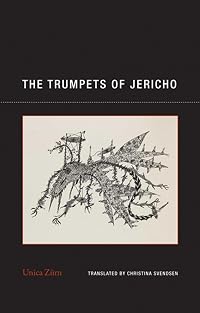
This fierce fable of childbirth by German Surrealist Unica Z rn was written after she had already given birth to two children and undergone the self-induced abortion of another in Berlin in the 1950s. Beginning in the relatively straightforward, if disturbing, narrative of a young woman in a tower (with a bat in her hair and ravens for company) engaged in a psychic war with the parasitic son in her belly, The Trumpets of Jericho dissolves into a beautiful nightmare of hypnotic obsession and show more mythical language, stitched together with anagrams and private ruminations. Arguably Z rn's most extreme experiment in prose, and never before translated into English, this novella dramatizes the frontiers of the body--its defensive walls as well as its cavities and thresholds--animating a harrowing and painfully, twistedly honest depiction of motherhood as a breakdown in the distinction between self and other, transposed into the language of darkest fairy tales.Unica Z rn (1916-70) was born in Gr newald, Germany. Toward the end of World War II, she discovered the realities of the Nazi concentration camps--a revelation which was to haunt and unsettle her for the rest of her life. After meeting Hans Bellmer in 1953, she followed him to Paris, where she became acquainted with the Surrealists and developed the body of drawings and writings for which she is best remembered: a series of anagram poems, hallucinatory accounts and literary enactments of the mental breakdowns from which she would suffer until her suicide in 1970. show lessTags
Recommendations




Member Reviews
probably the most I have ever felt recognized by a book, have felt that the author thinks and writes like I do. To apprehend this as a book about pregnancy that drifts into abstraction is wrong, in the same way as saying Taubes' To America and Back in a Coffin is about divorce. Pregnancy is the trumpet of Jericho, the walls fall and everything comes pouring out and it's no longer about that exactly. Now it's about, ultimately, whether it's worth trying to live in a world that despises you for your strangeness, or if it's worth dying.
The wind reconfigures and merges with you. Let it.
The wind reconfigures and merges with you. Let it.
Full review here.
An excerpt:
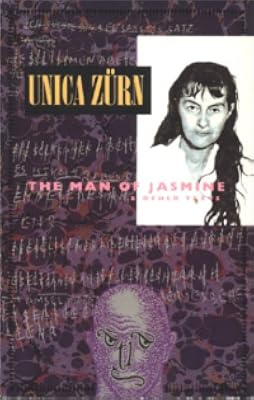
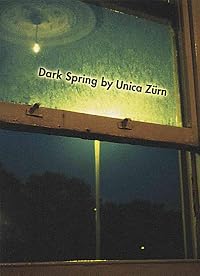
The Trumpets of Jericho, when read alongside her other writings, demonstrates in fascinating detail how Zurn harnessed the principles of surrealism and the facts of her experience as a woman to produce what Svendsen refers to as “outsider art”. Zurn was treated throughout the 1960s for depressive and schizhophrenic episodes, before leaping out of a window to her death in 1970. Her novel Dark Spring is a foreshadowing of what was to come—the young girl narrator commits suicide in the same way at the book’s end. Dark Spring is unremittingly bleak, demonstrating just how much a young girl knows, and how much she absorbs from her immediate surroundings. It details the girl’s rape by her older brother (a show more fact which, too, appears to be autobiographical), but also the girl’s identification and infatuation with a distant and absent father. There are signs that the girl is repulsed by much of what she sees as the feminine body as symbolised by the figure of the mother; the maternal and the feminine combine to create an image that is at once suffocating and alienating. In Jericho, Zurn creates singular images of animals breaching the physical fortress of a castle, or tower, that the female character is in. As the ravens swarm in, the narrator says of the baby she is birthing, “Out of pride and a sense of justice, I cannot allow this hateful creature to smother me. I’d rather smother it first.” show less
An excerpt:
The Trumpets of Jericho, when read alongside her other writings, demonstrates in fascinating detail how Zurn harnessed the principles of surrealism and the facts of her experience as a woman to produce what Svendsen refers to as “outsider art”. Zurn was treated throughout the 1960s for depressive and schizhophrenic episodes, before leaping out of a window to her death in 1970. Her novel Dark Spring is a foreshadowing of what was to come—the young girl narrator commits suicide in the same way at the book’s end. Dark Spring is unremittingly bleak, demonstrating just how much a young girl knows, and how much she absorbs from her immediate surroundings. It details the girl’s rape by her older brother (a show more fact which, too, appears to be autobiographical), but also the girl’s identification and infatuation with a distant and absent father. There are signs that the girl is repulsed by much of what she sees as the feminine body as symbolised by the figure of the mother; the maternal and the feminine combine to create an image that is at once suffocating and alienating. In Jericho, Zurn creates singular images of animals breaching the physical fortress of a castle, or tower, that the female character is in. As the ravens swarm in, the narrator says of the baby she is birthing, “Out of pride and a sense of justice, I cannot allow this hateful creature to smother me. I’d rather smother it first.” show less
Ratings
Members
- Recently Added By
Lists

Wakefield Press Ranked
20 works; 1 member
Author Information

28+ Works 657 Members
Series
Belongs to Publisher Series
Classifications
Statistics
- Members
- 95
- Popularity
- 339,962
- Reviews
- 2
- Rating
- (3.81)
- Languages
- English, Polish
- Media
- Paper
- ISBNs
- 2