On This Page
Description
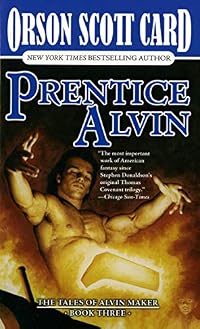
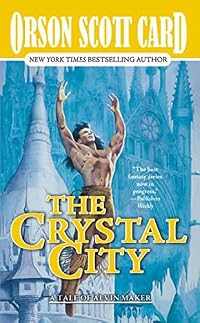
Orson Scott Card's Tales of Alvin Maker have created a moving fantasy world from the dream of America and the simple magics of the people who settled her. Here is a world where folk magic is as much a part of life as hard work and religion, and where the red man and the white still have hope for living in peace with the land and each other. It is a fantasy unique to literature, yet as inevitable as breathing. It is a work that will live forever in your heart.Alvin's mortal enemy, the show more Unmaker, has found hearts and hands willing to do its bidding, while Alvin and the Prophet's people were making their last stand. Now young Alvin returns to the town of his birth and begins his apprenticeship with Makepeace Smith, committing seven years of his life in exchange for the skills and knowledge of a blacksmith. But Alvin must also learn to control and use his own talent, that of a Maker, or else his destiny will be unfulfilled.
. show less
Tags
Recommendations






Member Reviews
On one hand, Prentice Alvin feels quite a lot like the previous two Alvin Maker stories. We have a continuation of the alternate timeline, this time dealing with how apprenticeships and slavery work in this world. We learn more about the town where Alvin was born, which we haven't seen in a while, including Peggy--the torch who has been keeping an eye on him this entire time.
On the other hand, it doesn't feel like the story went anywhere. Alvin learns a bit more about his powers, but it's mostly shades on what he's known before. He's still weirdly good at everything. On top of that, he spends seven years apprenticing as a blacksmith--even though he's better than his master by the time he's ~13 years old. Peggy runs off, comes back show more disguised as an old woman, and still doesn't interact terribly much with Alvin. In end end, we come back to the town where Alvin grew up. Almost a decade has passed, but what really has changed?
One of the new aspects this time around was a storyline centering around a slave owner who, inspired by the Unmaker, has decided that he must save all of the black people by turning them white--by way of impregnating the women and selling off the resulting 'part white' offspring. It's disturbing and I'm not really sure the plot gains enough from it. Having the Unmaker convince a preacher to try to murder Alvin? Sure. This? Eesh.
Random nit: Apparently Alvin can cross a river and essentially baptise someone in the water now? I thought the entire point was that water was the element of the Unmaker and would try to kill him at any opportunity?
Related to that: Sudden modern theories of atoms and DNA are sudden. Anatomy (in the form of Alvin's healing) made sense. Cut someone open and you can see everything that Alvin can see with his powers. This feels like Card went from just letting the magic be fuzzy and unspecified to wanting a basis for how the magic actually worked. It made some sense in the more philosophical parts of the Ender sequels (since those were set thousands of years in the future). Here, in alternate history hundreds of years ago, it just doesn't feel like it fits.
Side note: A living golden plow? That's... weird.
I think I'll go ahead and continue with Alvin Journeyman, although at this point I'm no longer entirely sure why... show less
On the other hand, it doesn't feel like the story went anywhere. Alvin learns a bit more about his powers, but it's mostly shades on what he's known before. He's still weirdly good at everything. On top of that, he spends seven years apprenticing as a blacksmith--even though he's better than his master by the time he's ~13 years old. Peggy runs off, comes back show more disguised as an old woman, and still doesn't interact terribly much with Alvin. In end end, we come back to the town where Alvin grew up. Almost a decade has passed, but what really has changed?
One of the new aspects this time around was a storyline centering around a slave owner who, inspired by the Unmaker, has decided that he must save all of the black people by turning them white--by way of impregnating the women and selling off the resulting 'part white' offspring. It's disturbing and I'm not really sure the plot gains enough from it. Having the Unmaker convince a preacher to try to murder Alvin? Sure. This? Eesh.
Random nit: Apparently Alvin can cross a river and essentially baptise someone in the water now? I thought the entire point was that water was the element of the Unmaker and would try to kill him at any opportunity?
Related to that: Sudden modern theories of atoms and DNA are sudden. Anatomy (in the form of Alvin's healing) made sense. Cut someone open and you can see everything that Alvin can see with his powers. This feels like Card went from just letting the magic be fuzzy and unspecified to wanting a basis for how the magic actually worked. It made some sense in the more philosophical parts of the Ender sequels (since those were set thousands of years in the future). Here, in alternate history hundreds of years ago, it just doesn't feel like it fits.
Side note: A living golden plow? That's... weird.
I think I'll go ahead and continue with Alvin Journeyman, although at this point I'm no longer entirely sure why... show less
I really liked the first two Alvin Maker books, even though from the beginning there were some niggling things that were bothering me. It's a fantasy set in an alternate history America--which is a lot of what had made it so fun. Things seem to have split off from our Timeline at least by the time of the English Civil War. There's a Lord Protector in 1800--but also a (much truncated) United States, without slavery and with Native Americans who are full citizens. (There is still slavery in a rival nation, Apalachee, and in the still existing "Crown Colonies.") Benjamin Franklin was reputed a wizard, George Washington was beheaded for treason and Thomas Jefferson was a guerrilla fighter. The poet William Blake and the legendary Native show more American leader Tecumseh (Ta-Kumsaw) are prominently featured as characters in the first two books. Oh, and there's magic. One with a definite American folk magic feel. It's a world oh so different than the usual faux Medieval European fantasies that you so commonly find. And this read I noted how natural Card's dialogue is--it doesn't use elisions or strange spellings, but syntax and word choice to give a flavor of how people spoke. He's a wonderful storyteller.
Still, despite the sympathy for the Native American plight in Red Prophet there was much in Card's vision of America that rubbed me wrong. It became obvious that Card didn't see the integration of the Iroquois and Cherokee into America in his Alternate History as this good thing. I felt instead he saw them as having become "White" through technology and literacy and he saw instead as ideal this separation of the races with the Whites East of the Mississippi and the Reds West of that river embodied in Red Prophet. And in Prentice Alvin, it finally dawned on me that his hero Alvin Maker was a stand in for Joseph Smith; this is the Mormon Narnia. I had thought in the first book, Seventh Son, I could see the Mormon influence in making a villain of a Methodist preacher who wouldn't believe there could be prophets in the present day. But in this novel this whole thing about Alvin being a "Maker" took on more of a messianic tinge that grated on me. Especially with Peggy devoting herself to him as the fulfillment of her destiny. So this is where I got off the ride--mid-book. That's why the rating is so low. show less
Still, despite the sympathy for the Native American plight in Red Prophet there was much in Card's vision of America that rubbed me wrong. It became obvious that Card didn't see the integration of the Iroquois and Cherokee into America in his Alternate History as this good thing. I felt instead he saw them as having become "White" through technology and literacy and he saw instead as ideal this separation of the races with the Whites East of the Mississippi and the Reds West of that river embodied in Red Prophet. And in Prentice Alvin, it finally dawned on me that his hero Alvin Maker was a stand in for Joseph Smith; this is the Mormon Narnia. I had thought in the first book, Seventh Son, I could see the Mormon influence in making a villain of a Methodist preacher who wouldn't believe there could be prophets in the present day. But in this novel this whole thing about Alvin being a "Maker" took on more of a messianic tinge that grated on me. Especially with Peggy devoting herself to him as the fulfillment of her destiny. So this is where I got off the ride--mid-book. That's why the rating is so low. show less
Card is an extremely good writer, and his books are always a pleasure to read, but at times I did feel that the stories here occasionally suffered for being too allegorical, and too much about Card's ideas of morality.
With the 3rd book in this series, 'Prentice Alvin' the focus shifts to an anti-slavery topic. (The second dealt more with the treatment of Native Americans by colonists). Here, we meet Arthur Stuart, an orphaned black slave whose mother dies magically getting him to freedom. Slave hunters come seeking the boy, and Alvin must use his 'knack' to help him escape. Also, a new school teacher arrives in town, disguised, because she is the future-seeing 'torch' who saved Alvin's life when he was born, and is afraid of the show more destinies she sees for herself with him. show less
With the 3rd book in this series, 'Prentice Alvin' the focus shifts to an anti-slavery topic. (The second dealt more with the treatment of Native Americans by colonists). Here, we meet Arthur Stuart, an orphaned black slave whose mother dies magically getting him to freedom. Slave hunters come seeking the boy, and Alvin must use his 'knack' to help him escape. Also, a new school teacher arrives in town, disguised, because she is the future-seeing 'torch' who saved Alvin's life when he was born, and is afraid of the show more destinies she sees for herself with him. show less
This was better than the previous book, but still fell short of where I thought it needed to be. This series is still amazingly racist, and does more to justify racism than to go against it. There are genuinely good parts to this book, and a lot of it was enjoyable, but there were parts that just made me wonder what Card was thinking leaving these parts and elements in a finished book. They really detracted from the whole.
Posted at FanLit. http://www.fantasyliterature.com/reviews/prentice-alvin/
Prentice Alvin is the third book in Orson Scott Cardƒ??s TALES OF ALVIN MAKER. After the excitement in the last book, Red Prophet, when Alvin and his family experienced the Battle of Tippecanoe, Alvin is finally off to Hatrack River, where he was born, to begin his apprenticeship to Makepeace Smith, the blacksmith. HeÂ??s also hoping that Peggy, the Torch who watches over him, can help him figure out what it means to be a Maker because heÂ??s had a vision of the Crystal City he must build.
Peggy, who can see Alvin coming and knows heÂ??s destined for greatness, realizes sheÂ??s in love with him and worries because she has no skills or education that show more will help him learn to be a Maker, or that will even cause him to admire her for more than her good looks. (Thank you, Mr. Card, for always giving your leading women a desire to be admired for more than their beauty!) So Peggy runs away to get educated and to acquire some social graces. (But not enough social graces to inspire her to write to her worried parents or to reveal herself to them when she comes back to Hatrack River disguised as a teacher.)
Just before Peggy leaves Hatrack River, she helps a black slave girl who has used some evil magic to escape from the master who was raping her. The magic kills the girl, so Peggy�?s parents decide to raise the girl�?s �?mixed up boy� as their own. Now they must deal with all the problems that occur in a society where Blacks are considered inferior to Whites. Meanwhile, the slave owner, who has been convinced that God wants him to dilute the entire black race with his own white genes, is hunting for his escaped property.
There are some emotional moments, a few scary events, some nice lessons, and even some dark humor in Prentice Alvin, but after two books about how Whites are mistreating others in early America (the previous book, Red Prophet, was about how the Â??WhitesÂ? treated the Â??RedsÂ?Â), itÂ??s hard to avoid the suspicion that the TALES OF ALVIN MAKER is becoming a platform for lessons on social justice. (One begins to wonder which minority group will be championed in the next book. Â??GaysÂ?Â?Â??. uh, probably not.)
The beginning of Prentice Alvin moves slowly, especially the parts where Peggy gets nervous about AlvinÂ??s arrival. ThereÂ??s a lot of angsty dialogue here that becomes tiresome (I felt the same way about some of the dialogue in CardÂ??s ENDER WIGGIN novels). AlvinÂ??s life in Hatrack River isnÂ??t nearly as exciting as his adventures in Red Prophet. His apprenticeship lasts seven years. During that time we see him turn into a strong man, acquire a trade, discover more about his own sinfulness and pride and, when Peggy returns from school and begins to teach him, learn enough about quantum mechanics that he begins to understand his power as a maker. This part of the story is fairly interesting, though it kind of goes off the deep end when, at the climax of the story, Alvin creates a living golden plow for his Journeyman project. Huh?
Overall, this third book in the series is well-written (as always) but doesnÂ??t do much to advance AlvinÂ??s story and felt more like a lesson to me. Nevertheless, it won the Locus Award for Best Fantasy Novel in 1990 and was nominated for a Nebula and Hugo award, probably for its social justice themes. Personally, I feel like the saga is slowing down, just like I felt with the third book in the ENDER WIGGIN series. Readers who just enjoy spending time with Alvin and Peggy will probably be more patient than I was. IÂ??m hoping the next book, Alvin Journeyman, will be more exciting.
IÂ??m reading Blackstone AudioÂ??s production which is narrated by Orson Scott Card, Stefan Rudnicki, and Gabrielle de Cuir. They are doing a great job, but I had to speed them up. show less
Prentice Alvin is the third book in Orson Scott Cardƒ??s TALES OF ALVIN MAKER. After the excitement in the last book, Red Prophet, when Alvin and his family experienced the Battle of Tippecanoe, Alvin is finally off to Hatrack River, where he was born, to begin his apprenticeship to Makepeace Smith, the blacksmith. HeÂ??s also hoping that Peggy, the Torch who watches over him, can help him figure out what it means to be a Maker because heÂ??s had a vision of the Crystal City he must build.
Peggy, who can see Alvin coming and knows heÂ??s destined for greatness, realizes sheÂ??s in love with him and worries because she has no skills or education that show more will help him learn to be a Maker, or that will even cause him to admire her for more than her good looks. (Thank you, Mr. Card, for always giving your leading women a desire to be admired for more than their beauty!) So Peggy runs away to get educated and to acquire some social graces. (But not enough social graces to inspire her to write to her worried parents or to reveal herself to them when she comes back to Hatrack River disguised as a teacher.)
Just before Peggy leaves Hatrack River, she helps a black slave girl who has used some evil magic to escape from the master who was raping her. The magic kills the girl, so Peggy�?s parents decide to raise the girl�?s �?mixed up boy� as their own. Now they must deal with all the problems that occur in a society where Blacks are considered inferior to Whites. Meanwhile, the slave owner, who has been convinced that God wants him to dilute the entire black race with his own white genes, is hunting for his escaped property.
There are some emotional moments, a few scary events, some nice lessons, and even some dark humor in Prentice Alvin, but after two books about how Whites are mistreating others in early America (the previous book, Red Prophet, was about how the Â??WhitesÂ? treated the Â??RedsÂ?Â), itÂ??s hard to avoid the suspicion that the TALES OF ALVIN MAKER is becoming a platform for lessons on social justice. (One begins to wonder which minority group will be championed in the next book. Â??GaysÂ?Â?Â??. uh, probably not.)
The beginning of Prentice Alvin moves slowly, especially the parts where Peggy gets nervous about AlvinÂ??s arrival. ThereÂ??s a lot of angsty dialogue here that becomes tiresome (I felt the same way about some of the dialogue in CardÂ??s ENDER WIGGIN novels). AlvinÂ??s life in Hatrack River isnÂ??t nearly as exciting as his adventures in Red Prophet. His apprenticeship lasts seven years. During that time we see him turn into a strong man, acquire a trade, discover more about his own sinfulness and pride and, when Peggy returns from school and begins to teach him, learn enough about quantum mechanics that he begins to understand his power as a maker. This part of the story is fairly interesting, though it kind of goes off the deep end when, at the climax of the story, Alvin creates a living golden plow for his Journeyman project. Huh?
Overall, this third book in the series is well-written (as always) but doesnÂ??t do much to advance AlvinÂ??s story and felt more like a lesson to me. Nevertheless, it won the Locus Award for Best Fantasy Novel in 1990 and was nominated for a Nebula and Hugo award, probably for its social justice themes. Personally, I feel like the saga is slowing down, just like I felt with the third book in the ENDER WIGGIN series. Readers who just enjoy spending time with Alvin and Peggy will probably be more patient than I was. IÂ??m hoping the next book, Alvin Journeyman, will be more exciting.
IÂ??m reading Blackstone AudioÂ??s production which is narrated by Orson Scott Card, Stefan Rudnicki, and Gabrielle de Cuir. They are doing a great job, but I had to speed them up. show less
This was a difficult read. The part of the story that covers Arthur's personal history is horrifying and makes for some very uncomfortable passages. But it's worth bracing yourself to read. The book is thought-provoking and powerful.
http://archthinking.blogspot.com/2010/02/review-hatrack-river-tales-of-alvin.htm...
http://archthinking.blogspot.com/2010/02/review-hatrack-river-tales-of-alvin.htm...
Alvin finally arrives in the town of Hatrack River to start his apprenticeship as a blacksmith. Before he arrives, Peggy, the torch who saw at his birth that Alvin was destined to be a Maker, flees the town so that she can avoid the fate of ending up in a loveless marriage to Alvin. Over the next several years, Alvin becomes a skilled blacksmith and faces several tests that teach him how and when he should use his powers, and what it means to be a Maker.
The book is fairly slow-paced, and is really a series of moral lessons that Alvin and Peggy learn which enable them to better move Alvin's destiny in the correct direction. Some parts, such as Peggy's education in the way that a woman should be a proper subservient wife to a man got a show more little tedious and felt preachy. I still found a lot of the world and the story interesting though. show less
The book is fairly slow-paced, and is really a series of moral lessons that Alvin and Peggy learn which enable them to better move Alvin's destiny in the correct direction. Some parts, such as Peggy's education in the way that a woman should be a proper subservient wife to a man got a show more little tedious and felt preachy. I still found a lot of the world and the story interesting though. show less
Members
- Recently Added By
Lists

Best-selling Books by Latter-day Saints
58 works; 2 members

Books Read in 2020
4,379 works; 124 members

Books Read in 2021
5,361 works; 113 members
Author Information

575+ Works 213,356 Members
Orson Scott Byron Walley Card, was born in 1951 and studied theater at Brigham Young University. He received his B.A. in 1975 and his M.A. in English in 1981. He wrote plays during that time, including Stone Tables (1973) and the musical, Father, Mother, Mother and Mom (1974). A Mormon, Scott served a two-year mission in Brazil before starting show more work as a journalist in Utah. He also designed games at Lucas Film Games, 1989-92. He is best known for his science fiction novels, including the popular Ender series. Well known titles include A Planet Called Treason (1979), Treasure Box (1996), and Heartfire (1998). He has also written the guide called How to Write Science Fiction and Fantasy (1990). His novel Ender's Game and its sequel Speaker for the Dead, both won Hugo and Nebula awards, making Card the only author to win both prizes in consecutive years. His titles Shadows in Flight, Ruins and Ender's Game made The New York Times Best Seller List. He is also the author of The First Formic War Series, which includes the titles Earth Unaware, Earth Afire, and Earth Awakens. (Bowker Author Biography) show less
Some Editions
Awards and Honors
Awards
Series

Belongs to Publisher Series
Work Relationships
Common Knowledge
- Canonical title
- Prentice Alvin
- Original title
- Prentice Alvin
- Original publication date
- 1989
- People/Characters
- Alvin Miller, Jr.; Makepeace Smith; Ta-Kumsaw (Tecumseh); Tecumseh (in fiction); Arthur Stuart; Margaret Larner (show all 7); Alvin Miller
- Important places
- Hatrack River
- Dedication
- For all my good teachers, especially:
Fran Schroeder,
fourth grade, Millikin Elementary, Santa Clara, California,
for whom I wrote my first poems.
Ida Huber,
tenth-grade English, Mesa High School, Arizo... (show all)na,
who believed in my future more than I did.
Charles Whitman,
playwriting, Brigham Young University,
who made my scripts look better than they deserved.
Norman Council,
literature, University of Utah,
for Spenser and Milton, alive.
Edward Vasta,
literature, University of Notre Dame,
for Chaucer and for friendship.
and always Francois. - First words
- Let me start my history of Alvin's prenticeship where things first began to go wrong.
- Last words
- (Click to show. Warning: May contain spoilers.)On the other hand, with some of those folks such a thought never crossed their minds.
- Original language
- English
Classifications
Statistics
- Members
- 3,143
- Popularity
- 5,511
- Reviews
- 26
- Rating
- (3.63)
- Languages
- 12 — Czech, Dutch, English, Finnish, French, German, Hungarian, Italian, Polish, Spanish, Swedish, Turkish
- Media
- Paper, Audiobook, Ebook
- ISBNs
- 47
- ASINs
- 14