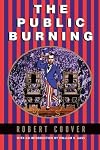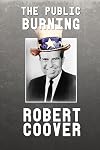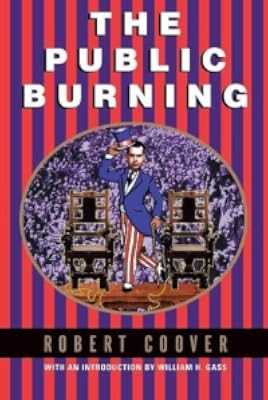
The Public Burning
by Robert Coover
On This Page
Description
A controversial best-seller in 1977, The Public Burning has since emerged as one of the most influential novels of our time. The first major work of contemporary fiction ever to use living historical figures as characters, the novel reimagines the three fateful days in 1953 that culminated with the execution of alleged atomic spies Julius and Ethel Rosenberg. Vice-President Richard Nixon - the voraciously ambitious bad boy of the Eisenhower regime - is the dominant narrator in an enormous show more cast that includes Betty Crocker, Joe McCarthy, the Marx Brothers, Walter Winchell, Uncle Sam, his adversary The Phantom, and Time magazine incarnated as the National Poet Laureate. All of these and thousands more converge in Times Square for the carnivalesque auto-da-fe at which the Rosenbergs are put to death. And not a person present escapes implication in Cold War America's ruthless "public burning.". show lessTags
Recommendations





Member Recommendations


Member Reviews
Insane, in the best way possible.
It's particularly amazing to think that this came from the mind of one person, long before it was possible to look things up on the internet. It's hard to explain what I mean by that, but parts of the book almost had the tone of a malfunctioning ChatGPT run amok, grabbing phrases, ideas, and images willy-nilly and combining them into a poisonous soup of political satire that is both spot-on and persistently nonsensical. I'm not sure I've ever read a book loaded with so many off-putting and surreally-deployed references to history and popular culture, engineered to make you feel uncomfortable, aroused, nauseous, and amused all at the same time. A document created by a blazing, rage-filled, and insanely show more intelligent magpie with the darkest imagination you can conjure.
RIP Mr Coover. You almost made me feel sorry for Richard Nixon. show less
It's particularly amazing to think that this came from the mind of one person, long before it was possible to look things up on the internet. It's hard to explain what I mean by that, but parts of the book almost had the tone of a malfunctioning ChatGPT run amok, grabbing phrases, ideas, and images willy-nilly and combining them into a poisonous soup of political satire that is both spot-on and persistently nonsensical. I'm not sure I've ever read a book loaded with so many off-putting and surreally-deployed references to history and popular culture, engineered to make you feel uncomfortable, aroused, nauseous, and amused all at the same time. A document created by a blazing, rage-filled, and insanely show more intelligent magpie with the darkest imagination you can conjure.
RIP Mr Coover. You almost made me feel sorry for Richard Nixon. show less
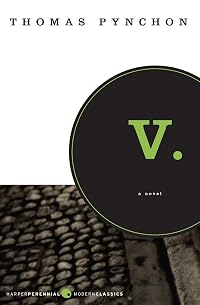
The horny sensualist trio of Roth, Updike, & Bellow dominated American letters for several decades. Coover belongs to a second later threesome of widely read fantastical writers in the 60s and 70s. The others being John Barth and Thomas Pynchon. My sense is that Barth and Coover are rarely read these days despite the acclaim and prizes they reaped in their heyday. Pynchon gets more lip service and surely more readers these days, but I haven't run to many people lately plunging into V or Gravity's Rainbow, his major opus of the period.
The Public Burning is a surrealistic reimagining of the executions of Julius and Ethel Rosenberg. Staged as a public spectacle in Times Square hosted by Uncle Sam and recounted by Richard Nixon. The show more narrative is very dense and sensational, and stultifying; studded with references to the culture, politics, and history of mid 20th century America. Many of these references will be mysteries to anyone born after the end of the 1950s. In many places the writing is sparkling and insightful but as a whole it tends to be a quagmire. The murder of the Rosenbergs, particularly Ethel, is one of crimes of America that should not be forgotten even if the body count does not approach that of other notable misdeeds. It's hard not to read this hysterical account of a public patriotic celebration without pondering the upcoming 250th July 4th celebration or the recent UFA bout at the White House.
William Gass recounts the brave efforts of a variety of Coover's literary agents to have TPB published in the face legal threats from the Nixon White House and libel threats from other figures appearing in the book. Unfortunately, these efforts seem to have detracted from their other duties of an editor. TPB would have been significantly better if it was significantly shorter. show less
The Public Burning is a surrealistic reimagining of the executions of Julius and Ethel Rosenberg. Staged as a public spectacle in Times Square hosted by Uncle Sam and recounted by Richard Nixon. The show more narrative is very dense and sensational, and stultifying; studded with references to the culture, politics, and history of mid 20th century America. Many of these references will be mysteries to anyone born after the end of the 1950s. In many places the writing is sparkling and insightful but as a whole it tends to be a quagmire. The murder of the Rosenbergs, particularly Ethel, is one of crimes of America that should not be forgotten even if the body count does not approach that of other notable misdeeds. It's hard not to read this hysterical account of a public patriotic celebration without pondering the upcoming 250th July 4th celebration or the recent UFA bout at the White House.
William Gass recounts the brave efforts of a variety of Coover's literary agents to have TPB published in the face legal threats from the Nixon White House and libel threats from other figures appearing in the book. Unfortunately, these efforts seem to have detracted from their other duties of an editor. TPB would have been significantly better if it was significantly shorter. show less
"I am asking everyone tonight to step forward - right now! - and drop his pants for America!"
Some music writer (Lester Bangs? Byron Coley?) said the VU had a lot to answer for, having spawned generation after generation of poor imitations. The Public Burning is a book that never could have been written if Joyce had not first produced Ulysses. Three days instead of one. Nixon as Bloom. It could be execrable. However, Coover pulls it off quite nicely.
The overheated Prologue is the weakest section of the book. If you make it past that bit, you will find yourself engaged with a suprisingly immersive and creative tome. Lots of vernacular and pomo done very well. And, notwithstanding that, a lot of forward momentum in the story line.
Readers show more tend to focus on the politics, but this is first and foremost a Coover take on Ulysses and Finnegans Wake that happens to use as its subject matter Nixon/Rosenberg, not a polemic dynamiting fish in a barrel. Coover does an incredible job conjuring up a radically subjective sense of the reality of the Cold War era as experienced by the Nixon crowd at the same time he parodies it and lays it low. Without that, I don't think the book would be half as interesting, the parody would not work for long, and the constant verbal pyrotechnics and storytelling tricks would lose their lustre. show less
Some music writer (Lester Bangs? Byron Coley?) said the VU had a lot to answer for, having spawned generation after generation of poor imitations. The Public Burning is a book that never could have been written if Joyce had not first produced Ulysses. Three days instead of one. Nixon as Bloom. It could be execrable. However, Coover pulls it off quite nicely.
The overheated Prologue is the weakest section of the book. If you make it past that bit, you will find yourself engaged with a suprisingly immersive and creative tome. Lots of vernacular and pomo done very well. And, notwithstanding that, a lot of forward momentum in the story line.
Readers show more tend to focus on the politics, but this is first and foremost a Coover take on Ulysses and Finnegans Wake that happens to use as its subject matter Nixon/Rosenberg, not a polemic dynamiting fish in a barrel. Coover does an incredible job conjuring up a radically subjective sense of the reality of the Cold War era as experienced by the Nixon crowd at the same time he parodies it and lays it low. Without that, I don't think the book would be half as interesting, the parody would not work for long, and the constant verbal pyrotechnics and storytelling tricks would lose their lustre. show less
There's a bit of a comfort curve with this one, as outlined aptly in the otherwise gassy introduction by William H. Gass: we're used to seeing Nixon the caricature, Nixon the cackling supervillain, whereas here we get Nixon certainly the venial, the self-justifying, the puffed up, but also the self-loathing, the sensitive, even the smart and ruefully cynical. Nixon the hero of The Public Burning, is a more fully realized character than Nixon, the actual dude, and if that's an accomplishment it also makes you realize how hard it is to abandon the Nixon in your mind and embrace this confused-but-not-yet-quite-monstrous young striver. One thing this book does is posit the Rosenberg trial as Nixon's supervillain-origin story, and with the show more grotesque (and slightly homophobic) fate that he meets at the end, and the fact that you know he's gonna go from that into loss to Kennedy and eight years of exile, all of a sudden the Futurama-Nixon who has a robot body and destroys the galaxy seems a lot more possible.
So you can see that this is not a measured recreation of the fears and hates of McCarthy-era America, not a sober repudiation of the great evil done to the Rosenbergs (Coover flirts with representing it as singular or a loss of innocence, which I find just too simplistic and banal for words); no, it's a sneer, a sharp cutter wielded with eyes lit up by malice. (It's also, as others have noted, a weird interpolation of Ulysses.) In that sense it's powerful, and while I don't get too much on board with the Uncle Sam character (spending too much time with caricature can't help but betray a delight in said caricature on the part of the author), I think that he amply demonstrates his purpose in the final symphony of contempt, which starts with a sexy, repulsive, heartbreaking encounter between Nixon and Ethel Rosenberg in the death chamber--weirdly, the most real part of the whole book: if it was all over for you in a world gone topsy-turvy horrid, you'd cling to anyone you could, even your jowly executioner, just to keep on feeling--but then explodes into what's not only an auto-da-fe, the execution of Ethel and her husband live in Times Square, but also a national pageant of shame and celebration building to a nibelungian climax that has to be read to be believed. There's a little too much self-satisfaction visible when the spectacle recedes below the high-water mark to its stupider lows, but hey, that's Uncle Sam's America. show less
So you can see that this is not a measured recreation of the fears and hates of McCarthy-era America, not a sober repudiation of the great evil done to the Rosenbergs (Coover flirts with representing it as singular or a loss of innocence, which I find just too simplistic and banal for words); no, it's a sneer, a sharp cutter wielded with eyes lit up by malice. (It's also, as others have noted, a weird interpolation of Ulysses.) In that sense it's powerful, and while I don't get too much on board with the Uncle Sam character (spending too much time with caricature can't help but betray a delight in said caricature on the part of the author), I think that he amply demonstrates his purpose in the final symphony of contempt, which starts with a sexy, repulsive, heartbreaking encounter between Nixon and Ethel Rosenberg in the death chamber--weirdly, the most real part of the whole book: if it was all over for you in a world gone topsy-turvy horrid, you'd cling to anyone you could, even your jowly executioner, just to keep on feeling--but then explodes into what's not only an auto-da-fe, the execution of Ethel and her husband live in Times Square, but also a national pageant of shame and celebration building to a nibelungian climax that has to be read to be believed. There's a little too much self-satisfaction visible when the spectacle recedes below the high-water mark to its stupider lows, but hey, that's Uncle Sam's America. show less
Well holy shit! The last 100 pages of this book REALLY take off! I sort of felt, for the first few hundred pages, that this was more of a 3/5 kind of book. The premise and idea behind it are all 5/5... but the writing and the actual content just wasn't grabbing me. Then... then Nixon visits Ethel in prison, and things really take off. Or maybe it was a little bit before that... regardless, the last 100 pages are 100% phenomenal writing and content. WOW.
Also, it's pretty pathetic how much of this resonates with today. 60 years later, and a lot of the issues that this book tries to address we are still fucking around with. Trump could easily replace Uncle Sam; ISIS/Al-Qaeda could replace Communism... I don't know who would replace Ethel show more and Julius. America tends to kill its U.S. citizens overseas with drone bombs now.
This would all be hilarious if it wasn't so god damn sad and pathetic.
Read this book. show less
Also, it's pretty pathetic how much of this resonates with today. 60 years later, and a lot of the issues that this book tries to address we are still fucking around with. Trump could easily replace Uncle Sam; ISIS/Al-Qaeda could replace Communism... I don't know who would replace Ethel show more and Julius. America tends to kill its U.S. citizens overseas with drone bombs now.
This would all be hilarious if it wasn't so god damn sad and pathetic.
Read this book. show less
Most vicious satire Ive ever read although I had to skip one whole voice or every other chapter (I cannot remember how the book was structured
I read this as part of a Thomas Pynchon group on yahoo in the late 90s. Apparently I was the onlyone who braved this wicked ride. I recall calling my grandmother and verifying historical details.
Members
- Recently Added By
Lists

Larry McCaffery's 20th Century Greatest Hits: 100 English-Language Books
103 works; 12 members

Overdue Podcast
808 works; 9 members
National Book Award Finalists - Fiction
377 works; 12 members
Author Information

72+ Works 5,773 Members
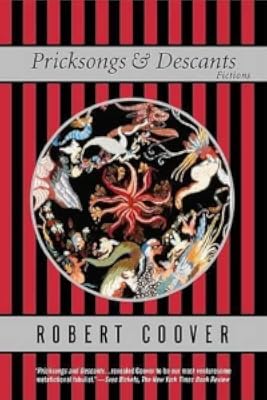
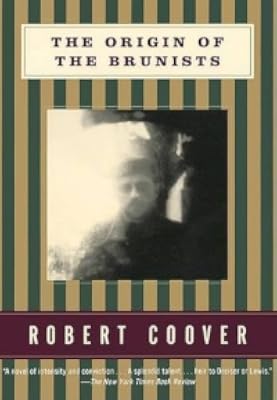
Robert Coover is a midwesterner who has earned a reputation as one of the most innovative of contemporary writers of fiction. Coover likes to experiment with an abundance of differing styles. The Origin of the Brunists (1966), his first novel, is a religious parable heavily loaded with symbolism and mythical parallels. It deals with the rise show more following an Appalachian coal-mine disaster of a sect of worshipers made up of fundamentalists and theosophists whose leader, Giovanni Bruno, is less a preacher than a silent enigma. The principal analogue is apparently meant to be the founding of the Christian religion, but Coover's extensive irony requires that he reverse many of the traditional features of the Christian legend. The Universal Baseball Association (1968), Coover's most accessible novel to date, is also dominated by religious symbolism. Over the years, J. Henry Waugh, a middle-aged bachelor and accountant, has developed an elaborately structured game, which he plays with dice. His game is based on the mathematical probabilities of baseball. Every evening Henry plays his game and maintains his extensive record books. J. Henry Waugh is a surrogate for God, and the participants in his imaginary baseball league seem almost to come to life, raising as they do age-old questions about fate and free will, success and failure, games and religions. Coover's Pricksongs and Descants (1969) is a collection of 20 short pieces and a theoretical "Prologo" in which the author states his belief that contemporary fiction should be based on familiar historical or mythical forms. Most of the stories in this volume, which was well received by critics, are based on biblical episodes or classical fairy tales retold in startling new ways. The Public Burning (1977) is based on the controversial trial of the Rosenbergs. With the exception of a novel, A Night at the Movies (1992), Coover's publications in recent years have consisted mainly of shorter works, written at various stages of his career, published in limited editions to appeal to collectors. Coover is one of the founders of the Electronic Literature Organization. In 1987 he was chosen as the winner of the Rea Award for the Short Story. Coover is indeed one of the foremost short story writers of the postmodern period, as exemplified by the "Seven Exemplary Fictions" contained in his 1969 book Pricksongs and Descants. (Bowker Author Biography) show less
Awards and Honors
Awards
Distinctions
Common Knowledge
- Canonical title
- The Public Burning
- Original publication date
- 1977
- People/Characters
- Richard M. Nixon; Ethel Rosenberg; Julius Rosenberg; Uncle Sam; The Phantom
- Important places
- Washington, D.C., USA; Sing Sing Correctional Facility, Ossining, New York, USA; Times Square, New York, New York, USA; Whittier, California, USA
- Important events
- Execution of the Rosenbergs
- Dedication
- For Justice William O. Douglas, who exchanged a greeting with me while out walking on the old canal towpath one day not long after these events...
- First words
- On June 24, 1950, less than five years after the end of World War II, the Korean War begins, American boys are again sent off in uniforms to die for Liberty, and a few weeks later, two New York City Jews, Julius and Ethel Ros... (show all)enberg, are arrested by the FBI and charged with having conspired to steal atomic secrets and pass them to the Russians.
- Quotations
- Uncle Sam turns and gazes compassionately down upon all these common people whom the Lord and careless fucking have made so many of...
I am asking everyone tonight to step forward - right now! - and drop his pants for America!
traffic is rerouted so as to cause the maximum congestion and rage, a solid belt of fury at the periphery being an essential liturgical complement to the melting calm at the center
He used to think that if he could just find his way onto these tablets everything would be all right, but now he knows this is impossible: nothing living ever appears here at all, only presumptions, newly fleshed out from day... (show all) to day, keeping intact that vast, intricate, yet static tableau-The New York Times's greatest creation-within which a reasonable and orderly picture of life can unfold. No matter how crazy it is.
Intimations reach you like a subtle change of temperature; real awareness hits you like a bolt of lightning. - Last words
- (Click to show. Warning: May contain spoilers.)Vaya con Dios, my darklin’, and remember: vote early and vote often, don’t take any wooden nickels, and”—by now I was rolling about helplessly on the spare-room floor, scrunched up around my throbbing pain and bawling like a baby—“always leave ’em laughin’ as you say good-bye!”
Classifications
Statistics
- Members
- 793
- Popularity
- 35,247
- Reviews
- 10
- Rating
- (3.85)
- Languages
- English, French, German, Spanish
- Media
- Paper, Ebook
- ISBNs
- 11
- ASINs
- 7