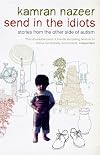
Send in the Idiots: Stories from the Other Side of Autism
by Kamran Nazeer
On This Page
Description
In 1982, at age four, Kamran Nazeer was enrolled in a small school in New York City alongside a dozen other children diagnosed with autism. Calling themselves the Idiots, these kids received care that was at the cutting edge of developmental psychology. Kamran visits four of his old classmates to find out the kind of lives that they are living now, how much they've been able to overcome--and what remains missing. They reveal a thought-provoking spectrum of behavior: a speechwriter unable to show more make eye contact; a messenger who gets upset if anyone touches his bicycle; a depressive suicide victim; and a computer engineer who communicates emotions through hand puppets. Using his own experiences to examine such topics as the difficulties of language, conversation as performance, and the politics of civility, this is also a rare and provocative exploration of the way that people learn to think and feel.--From publisher description. show lessTags
Recommendations













































Member Reviews
For about 18 months in the 1980s, a New York City school ran a special education class for autistic students. Some didn’t speak; another periodically interrupted every lesson or conversation to say “Send in the Idiots”. Another would only sit on a particular white stripe in the classroom carpet. That one, Kamran Nazeer, is the author of Send in the Idiots. Around twenty-five years later, Nazeer attempted to contact his former classmates and teachers; two teachers, three classmates, and the parents of a third (who had committed suicide) agreed to talk with him, with this book as a result.
All (well, not the suicidal one) were reasonably successful. André is a computer programmer who communicates with the aid of carefully crafted show more puppets (technically marionettes, since they are worked by strings). He can hold a normal conversation for a while, but the puppets come out periodically when things get difficult. (This is actually a major improvement on André’s previous coping mechanism, which was unfolding a paperclip and driving the wire under a fingernail until he completed a sentence). Although multiple puppets, each named, are involved, Nazeer doesn’t say if particular puppets are associated with particular situations. He does note that while interrupting André is perfectly acceptable, interrupting a puppet invokes an outburst – André threw a glass at him in one case and locked him in the bathroom in another. André had bad luck on the dating scene; he was thrown out of a singles group after bringing a puppet, but Nazeer also comments, on meeting some of André’s programmer coworkers, that André seemed the most normal one there.
Craig (the “Send in the Idiots” repeater) is a successful Democratic speechwriter (No jokes, please). Other than being a little nervous in social situations, he doesn’t display any particular autistic “quirks”. Nazeer spends rather more time with Craig than his other interviewees, and they both display considerable disappointment at the 2004 election results – which he and Nazeer (who is now a UK government employee) attribute to the “politics of affinity” rather than the “politics of argument”. Samples from Craig’s speeches show he really is excellent a presenting an argument: combing the literature for references; emphasizing points with just the right amount of repetition; and breaking the speeches into perfectly timed introduction, body, and conclusion. Unfortunately political speechwriting isn’t really about cogent arguments, and Craig is having trouble getting a job when Nazeer leaves him.
Randall is a bicycle messenger. He leaves the house when second hand of the clock is on the 3, 6, 9 or 12, rides the first couple of blocks with his eyes closed, and won’t ride at all unless his bike feels “just right”. He sometimes has trouble with delivery deadlines because he won’t go up to a reception desk if there is anybody else waiting. A good part of Nazeer’s interview with Randall is based on Randall’s relationship with his boyfriend, and on Randall’s delivery of a handgun. Both are a little strange; Randall’s boyfriend is cheating on him, but apparently doesn’t realize that somebody who is obsessive about details will not notice stray hairs of the wrong color on a pillow or the fact that shoes are in the exact same position they were in the morning belies the claim that he was out of the house when Randall called to check on him. The handgun thing is also strange; Randall made a delivery to a gun store, then the owner asked him to take a package to another store, after showing Randall the package contained a gun. Randall follows procedures exactly; it’s OK as long as it’s called in to the dispatcher. The delivery gets made, then strange things start to happen – apparently people leave unusual phone messages and guys come to the door and make cryptic comments. Mike (the boyfriend), Randall and Nazeer can’t figure out what’s going on – neither can I, and it doesn’t get resolved.
Elizabeth is the suicide, so the interview is with her parents. Elizabeth seems to be the most severely affected of Nazeer’s classmates; although she is a talented pianist she can’t manage riding the bus; she can’t ride for a certain number of stops because she can’t distinguish between stops to pick up passengers and stops because of traffic. She can’t count streets because she can’t distinguish between a street and a driveway. She eventually ODs on drugs and drowns herself in the backyard pool.
Interspersed through this is Nazeer’s own story; he works for the UK government in some sort of an advisory postion. Since he’s lived in Islamabad, Jeddah, New York, Glasgow, and London he presumably has considerable practical international experience and language ability. Nazeer’s coping mechanism was – and still is at the time of writing – carrying an alligator clip and squeezing various body parts with it during conversation. Nazeer calls his alligator clip (he actually calls it a “crocodile clip”, presumably because there are no alligators in Pakistan) and André’s puppets “achieving local coherence”. Unfortunately, he never really explains what he means by that but two examples may illustrate it: one is on noticing a sign in a bar that says “No Dogs Allowed”, Nazeer speculates that this is to avoid animals that might create a nuisance for bar patrons – although he allows himself to wonder what would happen if a patron brought in a pet bear, he agrees that the bar has achieved local coherence through a rule. He then discusses another classmate – not interviewed for this book – who negotiated the complicated problem of swapping items from her lunch box by only trading for items that began with a particular letter of the alphabet – for example, the letter “B”. Thus she was able to trade an apple for a banana while Nazeer ended up hopelessly flustered. The classmate also achieved local coherence by rule. A similar – although fictional – example occurs in Mark Haddon’s The Curious Incident of the Dog in the Night-Time, in which the autistic hero plans his day based on the color of the first car he sees. He explains that he knows perfectly well that the car color doesn’t affect anything, but it gives him rules that avoid the need to puzzle over the world’s behavior. A further coping mechanism for Nazeer is always washing his body in the same order when he takes a shower; after his comment, I realized that I always wash my body in the same order in the shower. With some trepidation and unease, I changed my washing order today, with no apparent ill effects. It did feel strange and unsettling, though.
Nazeer is also unsettled by the fact that everybody seems to expect autistics to be latent geniuses, possibly influenced by Born on a Blue Day and Rain Man. Nazeer notes that he and André and Craig didn’t achieve success through genius – although they are obviously smart, they studied their chosen fields extensively – almost obsessively, suggesting that much of the “genius” of autistic savants is just the ability to focus really hard.
Interesting; I wish Nazeer would have asked more from his subjects and compatriots – discussion “local coherence” with André, for example, to see if the puppets really served the same purpose as the alligator clip. There are lots of insights on philosophy and autism interspersed with the interviews; well worth my time. show less
All (well, not the suicidal one) were reasonably successful. André is a computer programmer who communicates with the aid of carefully crafted show more puppets (technically marionettes, since they are worked by strings). He can hold a normal conversation for a while, but the puppets come out periodically when things get difficult. (This is actually a major improvement on André’s previous coping mechanism, which was unfolding a paperclip and driving the wire under a fingernail until he completed a sentence). Although multiple puppets, each named, are involved, Nazeer doesn’t say if particular puppets are associated with particular situations. He does note that while interrupting André is perfectly acceptable, interrupting a puppet invokes an outburst – André threw a glass at him in one case and locked him in the bathroom in another. André had bad luck on the dating scene; he was thrown out of a singles group after bringing a puppet, but Nazeer also comments, on meeting some of André’s programmer coworkers, that André seemed the most normal one there.
Craig (the “Send in the Idiots” repeater) is a successful Democratic speechwriter (No jokes, please). Other than being a little nervous in social situations, he doesn’t display any particular autistic “quirks”. Nazeer spends rather more time with Craig than his other interviewees, and they both display considerable disappointment at the 2004 election results – which he and Nazeer (who is now a UK government employee) attribute to the “politics of affinity” rather than the “politics of argument”. Samples from Craig’s speeches show he really is excellent a presenting an argument: combing the literature for references; emphasizing points with just the right amount of repetition; and breaking the speeches into perfectly timed introduction, body, and conclusion. Unfortunately political speechwriting isn’t really about cogent arguments, and Craig is having trouble getting a job when Nazeer leaves him.
Randall is a bicycle messenger. He leaves the house when second hand of the clock is on the 3, 6, 9 or 12, rides the first couple of blocks with his eyes closed, and won’t ride at all unless his bike feels “just right”. He sometimes has trouble with delivery deadlines because he won’t go up to a reception desk if there is anybody else waiting. A good part of Nazeer’s interview with Randall is based on Randall’s relationship with his boyfriend, and on Randall’s delivery of a handgun. Both are a little strange; Randall’s boyfriend is cheating on him, but apparently doesn’t realize that somebody who is obsessive about details will not notice stray hairs of the wrong color on a pillow or the fact that shoes are in the exact same position they were in the morning belies the claim that he was out of the house when Randall called to check on him. The handgun thing is also strange; Randall made a delivery to a gun store, then the owner asked him to take a package to another store, after showing Randall the package contained a gun. Randall follows procedures exactly; it’s OK as long as it’s called in to the dispatcher. The delivery gets made, then strange things start to happen – apparently people leave unusual phone messages and guys come to the door and make cryptic comments. Mike (the boyfriend), Randall and Nazeer can’t figure out what’s going on – neither can I, and it doesn’t get resolved.
Elizabeth is the suicide, so the interview is with her parents. Elizabeth seems to be the most severely affected of Nazeer’s classmates; although she is a talented pianist she can’t manage riding the bus; she can’t ride for a certain number of stops because she can’t distinguish between stops to pick up passengers and stops because of traffic. She can’t count streets because she can’t distinguish between a street and a driveway. She eventually ODs on drugs and drowns herself in the backyard pool.
Interspersed through this is Nazeer’s own story; he works for the UK government in some sort of an advisory postion. Since he’s lived in Islamabad, Jeddah, New York, Glasgow, and London he presumably has considerable practical international experience and language ability. Nazeer’s coping mechanism was – and still is at the time of writing – carrying an alligator clip and squeezing various body parts with it during conversation. Nazeer calls his alligator clip (he actually calls it a “crocodile clip”, presumably because there are no alligators in Pakistan) and André’s puppets “achieving local coherence”. Unfortunately, he never really explains what he means by that but two examples may illustrate it: one is on noticing a sign in a bar that says “No Dogs Allowed”, Nazeer speculates that this is to avoid animals that might create a nuisance for bar patrons – although he allows himself to wonder what would happen if a patron brought in a pet bear, he agrees that the bar has achieved local coherence through a rule. He then discusses another classmate – not interviewed for this book – who negotiated the complicated problem of swapping items from her lunch box by only trading for items that began with a particular letter of the alphabet – for example, the letter “B”. Thus she was able to trade an apple for a banana while Nazeer ended up hopelessly flustered. The classmate also achieved local coherence by rule. A similar – although fictional – example occurs in Mark Haddon’s The Curious Incident of the Dog in the Night-Time, in which the autistic hero plans his day based on the color of the first car he sees. He explains that he knows perfectly well that the car color doesn’t affect anything, but it gives him rules that avoid the need to puzzle over the world’s behavior. A further coping mechanism for Nazeer is always washing his body in the same order when he takes a shower; after his comment, I realized that I always wash my body in the same order in the shower. With some trepidation and unease, I changed my washing order today, with no apparent ill effects. It did feel strange and unsettling, though.
Nazeer is also unsettled by the fact that everybody seems to expect autistics to be latent geniuses, possibly influenced by Born on a Blue Day and Rain Man. Nazeer notes that he and André and Craig didn’t achieve success through genius – although they are obviously smart, they studied their chosen fields extensively – almost obsessively, suggesting that much of the “genius” of autistic savants is just the ability to focus really hard.
Interesting; I wish Nazeer would have asked more from his subjects and compatriots – discussion “local coherence” with André, for example, to see if the puppets really served the same purpose as the alligator clip. There are lots of insights on philosophy and autism interspersed with the interviews; well worth my time. show less
Marvelous. My complaint? Too short. But that really couldn't be helped, given the premise. In any case, if, like me, you've read lots of books about people challenged by autism, you have noted the relative shortage of ones that help readers understand what happens to the kids after they outgrow the special pre- and primary schools. And this book offers some examples, as reported by one young man for whom that early intervention was wonderfully effective.
I appreciate that Nazeer respectfully and carefully disagrees with [a:Temple Grandin|1567|Temple Grandin|https://d.gr-assets.com/authors/1241222068p2/1567.jpg]'s hug machine, and with, to a certain degree, the ending of [b:The Speed of Dark|96063|The Speed of Dark|Elizabeth show more Moon|https://d.gr-assets.com/books/1320497793s/96063.jpg|1128271],in which the challenged man decides he doesn't want to get cured of autism because it's a difference, not a disease .
I appreciate all the care that's gone into this book. Nazeer covers a lot of ground concisely. There are detailed analyses of different perspectives on many of the issues facing people with special needs. He explores such issues as 'deaf culture' vs cochlear implants, whether it's possible for people who are autistic to have a successful adult relationship, whether the techniques that help children who are autistic would also help those who are shy, abused, or are facing other challenges, etc....
He also manages to insert analyses of topics that are almost tangential to the main theme of the book. For example, he points out that often, when autistic people apply to colleges, staff is thrilled, because they expect to get a token genius, like 'Rain Man' or John Nash (of 'A Beautiful Mind'). Nazeer shows how ridiculous this is, giving examples of the trivial 'talents' that he and his classmates have, confiding that the only 'genius' most autistic people have is a capacity for obsession - almost anyone who is willing to work hard can obtain most of the same results as most savants.
Nazeer also talks a bit about that troublesome word/ concept 'genius:'
The term 'genius' when applied to works - as part of a lexicon of superlatives including 'masterpiece' and 'one of the finest novels in recent memory' - obscures.... It reveals nothing, it gives no insight into the creative process; by using it, we get no further."
Nazeer also uses fascinatingly precise vocabulary. I admire and envy him - maybe I should work harder to master every new word I see. The one word I will definitely remember from this book is 'resile.' I recommend you look it up and consider adding it to your vocabulary, too.
Highly recommended, of course, to anyone, challenged or 'normal,' who wants to understand more about people with autism. Also recommend to people interested in fresh perspectives on human nature and the human condition!" show less
I appreciate that Nazeer respectfully and carefully disagrees with [a:Temple Grandin|1567|Temple Grandin|https://d.gr-assets.com/authors/1241222068p2/1567.jpg]'s hug machine, and with, to a certain degree, the ending of [b:The Speed of Dark|96063|The Speed of Dark|Elizabeth show more Moon|https://d.gr-assets.com/books/1320497793s/96063.jpg|1128271],
I appreciate all the care that's gone into this book. Nazeer covers a lot of ground concisely. There are detailed analyses of different perspectives on many of the issues facing people with special needs. He explores such issues as 'deaf culture' vs cochlear implants, whether it's possible for people who are autistic to have a successful adult relationship, whether the techniques that help children who are autistic would also help those who are shy, abused, or are facing other challenges, etc....
He also manages to insert analyses of topics that are almost tangential to the main theme of the book. For example, he points out that often, when autistic people apply to colleges, staff is thrilled, because they expect to get a token genius, like 'Rain Man' or John Nash (of 'A Beautiful Mind'). Nazeer shows how ridiculous this is, giving examples of the trivial 'talents' that he and his classmates have, confiding that the only 'genius' most autistic people have is a capacity for obsession - almost anyone who is willing to work hard can obtain most of the same results as most savants.
Nazeer also talks a bit about that troublesome word/ concept 'genius:'
The term 'genius' when applied to works - as part of a lexicon of superlatives including 'masterpiece' and 'one of the finest novels in recent memory' - obscures.... It reveals nothing, it gives no insight into the creative process; by using it, we get no further."
Nazeer also uses fascinatingly precise vocabulary. I admire and envy him - maybe I should work harder to master every new word I see. The one word I will definitely remember from this book is 'resile.' I recommend you look it up and consider adding it to your vocabulary, too.
Highly recommended, of course, to anyone, challenged or 'normal,' who wants to understand more about people with autism. Also recommend to people interested in fresh perspectives on human nature and the human condition!" show less
Kamran Nazeer attended a Primary school for autistic children in New York back in the early eighties. This, in itself, is quite unusual:
'It was the only class in one of the only schools in New York that had designed a special program for autistic children. Even that school had been founded recently and with private benefactions.'
His experience at such a school is not the topic of this book, though. What he does here is going on a journey to try and find out what became of some of his past classmates. It makes from touching portraits of various individuals on the spectrum. It allows him, beyond that, to touch upon broader subjects yet related to autism and its challenges. Meeting a computer scientist communicating complex feelings show more through the use of puppets is an opportunity to expand on the dynamic of language, and conversations as social performances. A bicycle courier illustrates how literally such people can take rules, besides blowing apart prejudice when it comes to romantic relationships (autistic people are not happy loners clueless about others!). A speech writer's experience turns out to be a great window into their dispassionate way of reasoning and arguing. Encounters with past teachers offers a glimpse into the perception of Special Educational Needs pupils, and autism in general, over the past decades.
It can insightful. It can be funny. It can also be sad, as when he meets with the parents of one of his previous classmate who ultimately committed suicide.
All in all, then, this is a deeply human book, snapshots from the lives of individuals on the spectrum and the people surrounding them. It's not very deep beyond that -discussions are very casual, and mostly the informal opinions from the author. He and his classmates were outsiders, at times taunted, often misunderstood, even used, but, nevertheless, most managed to strive and leads perfectly decent lives. Here's a lesson in acceptance, understanding, and humanity. show less
'It was the only class in one of the only schools in New York that had designed a special program for autistic children. Even that school had been founded recently and with private benefactions.'
His experience at such a school is not the topic of this book, though. What he does here is going on a journey to try and find out what became of some of his past classmates. It makes from touching portraits of various individuals on the spectrum. It allows him, beyond that, to touch upon broader subjects yet related to autism and its challenges. Meeting a computer scientist communicating complex feelings show more through the use of puppets is an opportunity to expand on the dynamic of language, and conversations as social performances. A bicycle courier illustrates how literally such people can take rules, besides blowing apart prejudice when it comes to romantic relationships (autistic people are not happy loners clueless about others!). A speech writer's experience turns out to be a great window into their dispassionate way of reasoning and arguing. Encounters with past teachers offers a glimpse into the perception of Special Educational Needs pupils, and autism in general, over the past decades.
It can insightful. It can be funny. It can also be sad, as when he meets with the parents of one of his previous classmate who ultimately committed suicide.
All in all, then, this is a deeply human book, snapshots from the lives of individuals on the spectrum and the people surrounding them. It's not very deep beyond that -discussions are very casual, and mostly the informal opinions from the author. He and his classmates were outsiders, at times taunted, often misunderstood, even used, but, nevertheless, most managed to strive and leads perfectly decent lives. Here's a lesson in acceptance, understanding, and humanity. show less
By the time he reached kindergarten age, Kamran Nazeer hadn't ever spoken. When he was diagnosed with autism, his parents sent him to a new school in which small classes entirely made up of autistic students received specialized care and tutelage from skilled teachers. Years later, Nazeer (the penname of Emran Mian) is a British civil servant with a law degree and a philosophy doctorate. Intrigued by the relationships of his early years (in which it was assumed that relationships were too ambitious a goal for autistic children) and perturbed by his inability to remember details about his pre-linguistic life, Nazeer set out in search of his former classmates. Many declined to be a part of his project, and Nazeer was denied contact with show more others by understandably protective family members. There is certainly sufficient room in a project like this for exploitation, for turning human beings into emblems of their diagnosis. To Nazeer's immense credit, the book is uncomfortable with this urge, and hyper-aware of its own limits [...]
[Full review at http://sycoraxpine.blogspot.com/2007/09/send-in-idiots-2006.html ] show less
[Full review at http://sycoraxpine.blogspot.com/2007/09/send-in-idiots-2006.html ] show less
Great conversational writing mixed with science and research references. The author catches up with some of his classmates from his younger years. Each at a different level on the autism spectrum. A good read...flowed nicely.
3 and a half stars. Kamran Nazeer with high functioning autism, writes about his journey to seek out people that he went to a "special school for children with autism" with during his childhood. He seeks to find out what happened to them and how they have fared since and to compare his own progress. He only manages to track down a mere handful before his trip and so the book is divided into sections of their respective histories and current lifestyles. One of his childhood friends didn't make it - Elizabeth committed suicide. One did a prison stint for extreme violence and now talks with puppets when he cannot communicate. The others Nazeer tracked down led relatively normal lives with some success & happiness often breaking new ground show more living lives not thought possible since "Rain Man". Nazeer has some interesting thoughts about conversation and language and theory of mind that are worth reading and discussing further. He also believes that many people with Autism can "get better" and improve dramatically with the right intervention and help. This is his first book and he intends to get an Autism Bus together with another friend and travel around the country and find the other people from his "special school".
If you are new to autism either having a child recently diagnosed or yourself, this book isn't a good introduction to the subject. It will make you confused because Nazeer is so high functioning, writes well and has great insight. It does offer however, hope to parents and those diagnosed that the word "autism" is not a sentence but a beginning.
Here and there Nazeem seemed to lose the narrative a bit in his explanations of what a certain situation reminded him of. Or at least I felt in some places editing could have been tighter or made clearer with chapter sub-headings. That's my only gripe.
Library borrow show less
If you are new to autism either having a child recently diagnosed or yourself, this book isn't a good introduction to the subject. It will make you confused because Nazeer is so high functioning, writes well and has great insight. It does offer however, hope to parents and those diagnosed that the word "autism" is not a sentence but a beginning.
Here and there Nazeem seemed to lose the narrative a bit in his explanations of what a certain situation reminded him of. Or at least I felt in some places editing could have been tighter or made clearer with chapter sub-headings. That's my only gripe.
Library borrow show less
An interesting and enjoyable memoir from an author with high functioning autism (he does not call it Asperger's, and since he had language delays Kanner's autism seems more accurate). Nazeer interviewed two of his former classmates from a school for autistic children, the parents of another, and two of their teachers. In addition to the poignancy of the narrative, Nazeer's speculative digressions are an interesting demonstration of the organization of autistic thought.
Members
- Recently Added By
Author Information
2+ Works 294 Members
Common Knowledge
- Original publication date
- 2006
- First words
- Introduction
Ms. Russell stopped reading newspapers in 1982. - Last words
- (Click to show. Warning: May contain spoilers.)We're in the right place.
Classifications
- Genres
- Nonfiction, Biography & Memoir, General Nonfiction
- DDC/MDS
- 616.85882 — Applied Science & Technology Medicine & health Diseases, Allergies, Skin Conditions Nervous Disorders: Autism, Anorexia, OCD Miscellaneous Personality, sexual, gender-identity, impulse-control, factitious, developmental, learning disorders; violent behavior; mental retardation Mental retardation; developmental and learning disorders Autism
- LCC
- RC553 .A88 .N39 — Medicine Internal medicine Internal medicine Neurosciences. Biological psychiatry. Neuropsychiatry Psychiatry Psychopathology
- BISAC
Statistics
- Members
- 293
- Popularity
- 109,325
- Reviews
- 12
- Rating
- (3.69)
- Languages
- Dutch, English, Norwegian (Bokmål)
- Media
- Paper, Ebook
- ISBNs
- 10
- ASINs
- 5