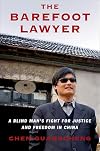
The Barefoot Lawyer: A Blind Man's Fight for Justice and Freedom in China
by Chen Guangcheng
On This Page
Description
"An electrifying memoir by the blind Chinese activist who inspired millions with the story of his fight for justice and his belief in the cause of freedom. It was like a scene out of a thriller: one morning in April 2012, China's most famous political activist--a blind, self-taught lawyer--climbed over the wall of his heavily guarded home and escaped. Days later, he turned up at the American embassy in Beijing, and only a furious round of high-level negotiations made it possible for him to show more leave China and begin a new life in the United States. Chen Guangcheng is a unique figure on the world stage, but his story is even more remarkable than anyone knew. The son of a poor farmer in rural China, blinded by illness when he was an infant, Chen was fortunate to survive a difficult childhood. But despite his disability, he was determined to educate himself and fight for the rights of his country's poor, especially a legion of women who had endured forced sterilizations and abortions under the hated 'one child' policy. Repeatedly harassed, beaten, and imprisoned by Chinese authorities, Chen was ultimately placed under house arrest. After nearly two years of increasing danger, he evaded his captors and fled to freedom. Both a riveting memoir and a revealing portrait of modern China, The Barefoot Lawyer tells the story of a man who has never accepted limits and always believed in the power of the human spirit to overcome any obstacle"-- show lessTags
Recommendations







Member Recommendations

Member Reviews
This is a truly remarkable story of how Chen Guangcheng, a self-taught "barefoot lawyer", blind from infancy and living in a poor town in rural China fought for the rights of the disabled and for women's rights in self-determination of birth control. I was totally amazed at how gentle and steadfast Chen was in his total commitment to helping people using China's own laws and saddened to learn how his efforts were stymied almost every step of the way. During the years he tried to help others, Chinese authorities watched him more closely until his eventual seven-year imprisonment. Following his release from prison, he was no longer a free man as Chinese party officials made sure that he was always kept under increasingly tight show more surveillance. He finally decided that his only hope to become free was to enlist help from the American embassy.
More frightening than fiction, this memoir had me totally in its grip, page after chilling page. I was disgusted with how much money and effort went into brutalizing a man whose sole desire was to ensure human rights of others. The outcome of his story was not entirely pain free as he had to leave his extended family in China for his own safety. In this memoir, he shared with the world his pain in an effort to show that China may have changed outwardly since the Cultural Revolution, but inwardly not very much has changed at all. show less
More frightening than fiction, this memoir had me totally in its grip, page after chilling page. I was disgusted with how much money and effort went into brutalizing a man whose sole desire was to ensure human rights of others. The outcome of his story was not entirely pain free as he had to leave his extended family in China for his own safety. In this memoir, he shared with the world his pain in an effort to show that China may have changed outwardly since the Cultural Revolution, but inwardly not very much has changed at all. show less
 This review was written for LibraryThing Early Reviewers.
This book is like a major splash of cold water in the face of one who takes for granted the freedom we enjoy here in the U.S. Guangcheng was born in a poor rural village and suffered a disease when very young that left him blind to all but the vaguest splashes of color. He was the fifth son of his family and grew up chasing his brothers and friends around the village learning to rely on his other senses of touch and hearing to get around. Even though his family was desperately poor, they managed to get enough money together to send him to a school for the blind where he learned to read and became aware of the neglect and mistreatment suffered by handicapped people. He went on to higher education and began standing up for his rights and show more the rights of other blind people. He soon attracted the attention of the Communist Party who leaned on local agencies to harass and otherwise make his life difficult. His main accomplishment was forcing the Beijing MTA accept the state issued handicap cards that allowed people to ride mass transit for free.
His next crusade was against the amazingly violent and cruel steps taken against people who violated the one child program China was trying to set up to control the population. He collected stories from people and made contacts with other activists, and international media. As a result he was thrown into prison on trumped up charges and sentenced to four years. He suffered many beatings and severe malnutrition before being released. However, he returned home and placed under house arrest. This meant constant guards outside his house, frequent home invasions where they searched for radios and cell phones, electronic surveillance, and pressure on his friends and family.
Guancheng finally was able to leave China with his wife and two children but he left behind other family members, friends, and other activists who continue to suffer physical and mental abuse at the hands of the state.
When I read this book, I thought of all the travel programs I have seen where people travel through the country enjoying the scenery and the food and are totally blind to this hidden aspect of life in China. Though many laws exist supposedly to protect the citizens, most are abused and the old ways of bribery and theft are carried out without consequences.
This was a stunning and brutal story of one man's attempts to improve life in China and the consequences. While the style of writing was plain and factual the story carries the reader along with Guangcheng and his battles to live and protect people. show less
His next crusade was against the amazingly violent and cruel steps taken against people who violated the one child program China was trying to set up to control the population. He collected stories from people and made contacts with other activists, and international media. As a result he was thrown into prison on trumped up charges and sentenced to four years. He suffered many beatings and severe malnutrition before being released. However, he returned home and placed under house arrest. This meant constant guards outside his house, frequent home invasions where they searched for radios and cell phones, electronic surveillance, and pressure on his friends and family.
Guancheng finally was able to leave China with his wife and two children but he left behind other family members, friends, and other activists who continue to suffer physical and mental abuse at the hands of the state.
When I read this book, I thought of all the travel programs I have seen where people travel through the country enjoying the scenery and the food and are totally blind to this hidden aspect of life in China. Though many laws exist supposedly to protect the citizens, most are abused and the old ways of bribery and theft are carried out without consequences.
This was a stunning and brutal story of one man's attempts to improve life in China and the consequences. While the style of writing was plain and factual the story carries the reader along with Guangcheng and his battles to live and protect people. show less
This review was written for LibraryThing Early Reviewers.Oh my. What an incredible read "The Barefoot Lawyer" is. An autobiography that at times will read like a mystery. Blind from infancy, Chen Guancheng grew up in rural China not a decade from the birth of the Cultural Revolution. He enjoyed the usual childhood experiences yet they were often singed his community's (and society's) prejudices against the disabled, the petty cruelness, the gross displays of ignorance, the physical bullying. (Some well-meaning neighbors and family members encourage Chen to train to become an itinerant fortune-teller, a standard career path for blind men in rural China.) Chen's determination to continue his education beyond his village's school and his country's socio-cultural expectations blends with his show more conscience and with his heart. In school, at home in his village, Guanchen inexorably pushes at barriers and walls in struggling for his country's disabled and poor. Winning results of course brings reprisals -- harassment, arrests, physical beatings. Guangchen's daring solo escape in April 2012 from a brutal house arrest to the US Embassy in Beijing made international headlines (he and his family now reside in the U.S.). :The Barefoot Lawyer" is a fascinating memoir as well as a riveting rare inside look at China. show less
This review was written for LibraryThing Early Reviewers."The Barefoot Lawyer" is a powerful memoir of Chen Guangcheng's experience as a blind man from the peasant class fighting for human rights in China. The strength of this book lies in Chen's idealism and tenacity which come through as he recounts his early life as a son blinded by a virus to a young man who went to a school for the blind and then onto University, despite his humble beginnings and the tremendous amount of money such schooling cost. Even before he received formal schooling, Chen was a youngster who thirsted and sought out knowledge at every turn; this curiosity served him well as he finished his formal schooling and began to see the discrepancies between what China's laws said and how those same laws played out.
As the show more reader travels with Chen on his journey, he is drawn in not only by the injustices meted out by the Communist government, but the absolute resolve and courage with which Chen, and many other human rights workers who worked with and around him, responded. Despite threats to his health and freedom, and imprisonment on false charges, Chen and his family and friends continued to fight, not letting the odds break their spirit. And, as the book progresses and Chen's work gets more and more support and attention form the wider world, the Chinese government also ramps up its efforts to silence his voice. As the reader journeys with Chen through the atrocities he suffered, s/he becomes more invested in the outcome and is drawn into the story to the point that the last half is very difficult to put down.
I found the ending to be a bit unsatisfying after the tension preceding it had been built so well and would have liked to have known more about what Chen's work looked like once he reached the U.S. Did he ever get to go to NYU? Was he currently working in human rights? Did he ever obtain his law degree? What, if anything, happened to his family members who remained in China? Nonetheless, I was thoroughly drawn in by his story and, even more so by his unshakable spirit and resolve to fight at all costs and against insurmountable odds for positive change and an end to injustice in his homeland.
This is a remarkable story about a remarkable man, who, despite his humble beginnings, made more of an impact on society in his first 40 years than most of us will in a lifetime. show less
As the show more reader travels with Chen on his journey, he is drawn in not only by the injustices meted out by the Communist government, but the absolute resolve and courage with which Chen, and many other human rights workers who worked with and around him, responded. Despite threats to his health and freedom, and imprisonment on false charges, Chen and his family and friends continued to fight, not letting the odds break their spirit. And, as the book progresses and Chen's work gets more and more support and attention form the wider world, the Chinese government also ramps up its efforts to silence his voice. As the reader journeys with Chen through the atrocities he suffered, s/he becomes more invested in the outcome and is drawn into the story to the point that the last half is very difficult to put down.
I found the ending to be a bit unsatisfying after the tension preceding it had been built so well and would have liked to have known more about what Chen's work looked like once he reached the U.S. Did he ever get to go to NYU? Was he currently working in human rights? Did he ever obtain his law degree? What, if anything, happened to his family members who remained in China? Nonetheless, I was thoroughly drawn in by his story and, even more so by his unshakable spirit and resolve to fight at all costs and against insurmountable odds for positive change and an end to injustice in his homeland.
This is a remarkable story about a remarkable man, who, despite his humble beginnings, made more of an impact on society in his first 40 years than most of us will in a lifetime. show less
This review was written for LibraryThing Early Reviewers.Heartbreaking, compelling autobiography of Chen Guangcheng's decades-long battle to hold China's government accountable to its own laws. His is not the only memoir to expose state-sanctioned sadism in China, although it feels unique in the degree and length of its brutality against Chen and his family. Hard to read, and worth it.
Merged review:
Heartbreaking, compelling autobiography of Chen Guangcheng's decades-long battle to hold China's government accountable to its own laws. His is not the only memoir to expose state-sanctioned sadism in China, although it feels unique in the degree and length of its brutality against Chen and his family. Hard to read, and worth it.
Merged review:
Heartbreaking, compelling autobiography of Chen Guangcheng's decades-long battle to hold China's government accountable to its own laws. His is not the only memoir to expose state-sanctioned sadism in China, although it feels unique in the degree and length of its brutality against Chen and his family. Hard to read, and worth it.
I remember hearing about Guangcheng in on the news a few years ago and then largely forgetting about the story. His autobiography was a great chance to revisit that story and find out why his story was such big news. His life story is interesting and he tells it in a very straightforward manner. This is slightly tedious at times but does help when he gets to the more difficult sections on human rights violations and police brutality. As a whole the book does an excellent job of describing the current state of human rights in China and offers some interesting views on high level diplomatic negotiations. One element I would have appreciated in the book is more information about what he has done since moving to the United States.
This review was written for LibraryThing Early Reviewers.Wow. What a powerful book and so painful. Sometimes I wanted to quit reading because of the tortures and beatings Chen Guangcheng and his family and friends received standing up for their basic human rights. He started standing up for disabled people and the few rights they were accorded by Chinese law. When his area of the country was targeted as an area to stop "overbirthing" he stepped up to the plate to help neighbors and nearby villagers and tried to get the powers to stop the kidnapping of women to force abortions (at what ever the age of the fetus) and illegal sterilizations. Sounds like the Cultural Revolution all over again. After 4 years in prison and 3 years under severe house arrest he escaped to Bejing and to our embassey. show more Initially convinced to believe the Chinese government he went to a local hospital. When it became obvious the government would be continuing their old ways against him he asked to go to America with his wife and kids. Thanks to many people and some of our elected officials he now lives in America. He makes a call to all of us to stand together for justice and equality for all peoples.."together, may we move mountains." show less
This review was written for LibraryThing Early Reviewers.Members
- Recently Added By
Lists

Chronological 2015
39 works; 1 member
Author Information
Common Knowledge
- Canonical title*
- Barfotaadvokaten : en blind mans kamp för rättvisa och frihet i Kina
- Original publication date
- 2015-03-10
- People/Characters
- Chen Guancheng; Yuan Weijing
- Important places
- Beijing, China; Dongshigu, China
- Epigraph
- In the world as we know it, are there things that are difficult, as well as things that are easy? Through action, those things that seem difficult become easy; with inaction, things that are easy become difficult.
P... (show all)eng Duanshu (1699-1799), from On Studying
Bring forth all that is good in the world, and expunge all that is bad.
Mencius (372-289 BCE), from Universal Love III
One who is shut indoors may come to know the world; one who does not look out the window may understand the principles of heaven.
Laozi (Fifth century BCE), from the Dao De Jing - Dedication
- For my mother, Wang jinxiang;
and my wife, Yuan Weijing - First words
- We watched them as they watched us.
- Quotations
- But this moment seemed particularly quiet, and I thought of how a person’s life proceeds in stages, one after another, and how no stage can be repeated. Once a stage is over, there is no going back.
Their stories confirmed my belief that the Cultural Revolution has never ended--it has simply metastasized.
Consider the absurdity of this sprawling operation: the government had created an entire anti-Guuancheng industry, all with the aim of controlling one blind, nonviolent man.
But what troubled me most that the time was this: when negotiating with a government run by hooligans, the country that most consistently advocated for democracy, freedom, and universal human rights had simply given in.
*Some information comes from Common Knowledge in other languages. Click "Edit" for more information.
Classifications
Statistics
- Members
- 58
- Popularity
- 528,016
- Reviews
- 15
- Rating
- (4.00)
- Languages
- English, Swedish
- Media
- Paper, Audiobook, Ebook
- ISBNs
- 12
- ASINs
- 1