
James Risen
Author of State of War : The Secret History of the CIA and the Bush Administration
About the Author
James Risen is an investigative journalist with the New York Times and the author of the New York Times bestseller State of War, among other books. In 2006 he won a Pulitzer Prize for his stories about warrantless wiretapping by the NSA. In 2007 he was elected into the American Academy of Arts and show more Sciences. show less
Works by James Risen
State of War : The Secret History of the CIA and the Bush Administration (2006) 542 copies, 7 reviews
The Main Enemy: The Inside Story of the CIA's Final Showdown with the KGB (2003) 335 copies, 3 reviews
The Last Honest Man: The CIA, the FBI, the Mafia, and the Kennedys―and One Senator's Fight to Save Democracy (2023) 124 copies, 5 reviews
Associated Works
The Red Atlas: How the Soviet Union Secretly Mapped the World (2017) — Foreword — 199 copies, 3 reviews
Tagged
Common Knowledge
- Birthdate
- 1955-04-27
- Gender
- male
- Occupations
- journalist
- Organizations
- Los Angeles Times
The New York Times - Awards and honors
- Pulitzer Prize (National Reporting, 2006)
- Nationality
- USA
- Associated Place (for map)
- USA
Members
Reviews
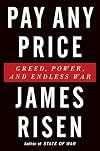
There’s a line in R. A. Lafferty’s “The Primary Education of the Camiroi” about personality and politics: “Can you imagine a person so sick that he would actually desire to hold high office for any great period of time?” A familiar observation, I think, and one that came to mind as I was reading James Risen’s Pay Any Price. The Camiroi of Lafferty’s story have a comically rigorous educational system and govern themselves by lottery (for short intervals). There are nine show more chapters in Risen’s book, with each one describing a disastrous consequence of the post-2001 expansion of the state security apparatus. The last third of the book discusses the NSA domestic surveillance program, and it made me wonder what type of people would seek high office in a state of universal surveillance and thus blackmailability. The best? The worst? The most oblivious? I have an opinion, but let us speak of higher things.
[. . .]
http://jgoodwin.net/blog/james-risen-pay-any-price/ show less
[. . .]
http://jgoodwin.net/blog/james-risen-pay-any-price/ show less
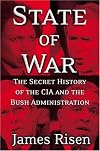
Written by the NY Times journalist who broke the the Bush administration's illegal domestic surveillance program, this book documents the transformation of the CIA from the independent and usually reliable foreign intelligence masters, into the political puppets of its neo-conservative foreign policy masters. Enabled by Clinton holdover George Tenet, who was more interested in providing his superiors with the intelligence they wanted than the intelligence they needed to further his own show more career, the CIA has become essentially a bureaucratic sidebar to Rumsfeld's Defense department, used when they give up the information the Defense Department wants, and sidelined when they offer up anything that challenges the conservative's agenda.
James Risen outlines the hows and whys of the domestic spying scandal, the deliberate ignoring of intelligence leading up to the war in Iraq, the administration's blind eye in foreseeing the violent aftermath of the Iraq invasion, and a continuing string of failures that may ultimately take us into Iran. The book ends with a stunning account of the CIA handing over the technology for nuclear weapon triggers to the Iranians!
Curiously absent from any significant discussion in this book, is W himself. It appears that he is either genuinely out of the loop and letting Rumsfeld and Cheney run the show, or these guys have done a masterful job of providing this president plausible deniability of any of the major decisions and actions of his administration. It will be fascinating, and undoubtedly sad and disturbing, to read the histories to be written about the Bush administration 20 years from now.
Read this book! It reads, logically, more as a piece of investigative journalism than as history. The sourcing is obscure, but it probably has to be considering the sensitive and classified nature of the CIA and the intelligence community. But, there's no doubting that Risen's account rings true to everything we've hear, read and see from the cabal of criminals running this administration. show less
James Risen outlines the hows and whys of the domestic spying scandal, the deliberate ignoring of intelligence leading up to the war in Iraq, the administration's blind eye in foreseeing the violent aftermath of the Iraq invasion, and a continuing string of failures that may ultimately take us into Iran. The book ends with a stunning account of the CIA handing over the technology for nuclear weapon triggers to the Iranians!
Curiously absent from any significant discussion in this book, is W himself. It appears that he is either genuinely out of the loop and letting Rumsfeld and Cheney run the show, or these guys have done a masterful job of providing this president plausible deniability of any of the major decisions and actions of his administration. It will be fascinating, and undoubtedly sad and disturbing, to read the histories to be written about the Bush administration 20 years from now.
Read this book! It reads, logically, more as a piece of investigative journalism than as history. The sourcing is obscure, but it probably has to be considering the sensitive and classified nature of the CIA and the intelligence community. But, there's no doubting that Risen's account rings true to everything we've hear, read and see from the cabal of criminals running this administration. show less
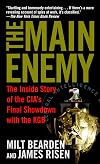
It's a bit daunting at first trying to remember all the Russian names, never mind all the American names and secret spy code names, and to keep track of all the connections. But once you get used to the rhythm of the book it is a thrilling series of episodes in the recent history of KGB and CIA espionage. I keep thinking about where I was and what I was doing, while all these secret events were taking place far away, since the exact dates and times are provided. An inside look at the last show more days of the Soviet Union and beyond. show less
The Last Honest Man: The CIA, the FBI, the Mafia, and the Kennedys―and One Senator's Fight to Save Democracy by James Risen
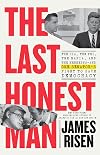
In the fall of 1975, The Church Committee began an investigation into why the Central Intelligence Agency (CIA) held a lethal toxin. Since its inception, there had been no oversight of the CIA, the Federal Bureau of Investigation (FBI), or the National Security Agency (NSA). Senator Frank Church was leading a righteous crusade to unearth abuses by intelligence agencies.
Church had been in intelligence during WWII, a part of the Office of Strategic Services (OSS), the first spy agency. That show more group evolved into the CIA. Had Church not decided to go into politics, he would have been on a career path in the CIA. Instead, decades later he was holding the CIA accountable for covert actions involving assassinations and spying on Americans.
The Watergate scandal was an alert to investigate other government misdeeds. The Church Committee’s research took them into all the intelligence agencies. Presidents Eisenhower, Kennedy, Johnson, Nixon, and Ford all found these agencies to be useful. Eisenhower fought the Cold War through the CIA. The CIA’s knowing Kennedy’s secrets muzzled any complaints.
Frank Church was a complex man. He was considered a radical, driven by high ideals. He ran clean campaigns, unwilling to sling dirt. He loved media attention and enjoyed cocktail parties with Hollywood celebrities and counted John F. Kennedy as a friend. He never paled around with the other senators. He was against gun control, a nod to his Idaho constituents, and against the Viet Nam War. He supported the protection of wilderness lands.
The Church Committee findings were acted upon by President Carter in 1978 with the first oversight reforms, including banning the assassination of foreign leaders. The intelligence community were spitting mad, and so were conservatives like future president Ronald Reagan. George H. Bush had lead the CIA before becoming president, and his son George W. Bush supported Dick Cheney’s working to weaken the reforms.
Walter Mondale told the author that what he was most proud of in his career was his work with the Church Committee. If oversight had not been enacted, who knows what America could have evolved into.
Most of the abuses described I had heard about as breaking news stories, but seeing them all together in one narrative was sobering, and frankly, terrifying.
Thank you to the publisher for a free book through NetGalley. show less
Church had been in intelligence during WWII, a part of the Office of Strategic Services (OSS), the first spy agency. That show more group evolved into the CIA. Had Church not decided to go into politics, he would have been on a career path in the CIA. Instead, decades later he was holding the CIA accountable for covert actions involving assassinations and spying on Americans.
The Watergate scandal was an alert to investigate other government misdeeds. The Church Committee’s research took them into all the intelligence agencies. Presidents Eisenhower, Kennedy, Johnson, Nixon, and Ford all found these agencies to be useful. Eisenhower fought the Cold War through the CIA. The CIA’s knowing Kennedy’s secrets muzzled any complaints.
Frank Church was a complex man. He was considered a radical, driven by high ideals. He ran clean campaigns, unwilling to sling dirt. He loved media attention and enjoyed cocktail parties with Hollywood celebrities and counted John F. Kennedy as a friend. He never paled around with the other senators. He was against gun control, a nod to his Idaho constituents, and against the Viet Nam War. He supported the protection of wilderness lands.
The Church Committee findings were acted upon by President Carter in 1978 with the first oversight reforms, including banning the assassination of foreign leaders. The intelligence community were spitting mad, and so were conservatives like future president Ronald Reagan. George H. Bush had lead the CIA before becoming president, and his son George W. Bush supported Dick Cheney’s working to weaken the reforms.
Walter Mondale told the author that what he was most proud of in his career was his work with the Church Committee. If oversight had not been enacted, who knows what America could have evolved into.
Most of the abuses described I had heard about as breaking news stories, but seeing them all together in one narrative was sobering, and frankly, terrifying.
Thank you to the publisher for a free book through NetGalley. show less
Lists
Awards


You May Also Like


Associated Authors
Statistics
- Works
- 5
- Also by
- 1
- Members
- 1,309
- Popularity
- #19,618
- Rating
- 3.9
- Reviews
- 23
- ISBNs
- 49
- Languages
- 10