
Glenn Greenwald
Author of No Place to Hide: Edward Snowden, the NSA, and the U.S. Surveillance State
About the Author
Glenn Greenwald is a former constitutional law and civil rights litigator. He was a columnist for The Guardian until October 2013 and is now a founding editor of The Intercept. He has won numerous awards for his NSA reporting including the 2013 Polk Award, the Esso Award for Excellence in show more Reporting, and the 2013 Pioneer Award. He also received the first annual I. F. Stone Award for Independent Journalism in 2009 and a 2010 Online Journalism Award for his investigative work on the arrest and detention of Chelsea Manning. In 2013, he led the Guardian reporting that was awarded the Pulitzer Prize for public service. He has written several books including How Would a Patriot Act: Defending American Values from a President Run Amok, With Liberty and Justice for Some: How the Law Is Used to Destroy Equality and Protect the Powerful, and No Place to Hide: Edward Snowden, the NSA, and the U. S. Surveillance State. (Bowker Author Biography) show less
Image credit: David dos Santos
Works by Glenn Greenwald
No Place to Hide: Edward Snowden, the NSA, and the U.S. Surveillance State (2014) — Author — 1,316 copies, 43 reviews
With Liberty and Justice for Some: How the Law Is Used to Destroy Equality and Protect the Powerful (2011) 286 copies, 14 reviews
How Would a Patriot Act? Defending American Values from a President Run Amok (2006) 245 copies, 4 reviews
A Tragic Legacy: How a Good vs. Evil Mentality Destroyed the Bush Presidency (2007) 223 copies, 3 reviews
Great American Hypocrites: Toppling the Big Myths of Republican Politics (2008) 155 copies, 1 review
Securing Democracy: My Fight for Press Freedom and Justice in Bolsonaro’s Brazil (2021) 19 copies, 1 review
Martha Raddatz and the Faux Objectivity of Journalists {The Guardian, October 12, 2012} (2012) 1 copy
Why Privacy Matters 1 copy
Associated Works
Tagged
Common Knowledge
- Birthdate
- 1967-03-06
- Gender
- male
- Education
- George Washington University (BA|1990)
New York University School of Law (JD|1994)
New York University - Occupations
- lawyer (constitutional)
journalist - Organizations
- Salon
The Intercept - Awards and honors
- Koufax Award (2006)
- Agent
- Amanda Urban (ICM)
- Nationality
- USA
- Birthplace
- New York, New York, USA
- Places of residence
- New York, New York, USA
Rio de Janiero, Brazil - Associated Place (for map)
- USA
Members
Discussions
How the Democrats Lost Their Way on Immigration in Pro and Con (August 2017)
Reviews
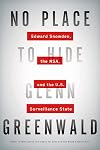
This is a MUST read for every voting age, and soon to be voting US citizen along with all those globally that are able to get their hands on this book. Dissent is not a crime. The ability to have this country function as a democratic republic requires an educated populous with individuals who will stand up to the bullying of those who grasp at anything to remain in power.
The price of freedom is not safety and security, it is the physical and emotional damage to stand up for own's beliefs. show more More so, when those beliefs run counter to the majority.
G. Greenwald's book shows exactly what the price of Freedom is. show less
The price of freedom is not safety and security, it is the physical and emotional damage to stand up for own's beliefs. show more More so, when those beliefs run counter to the majority.
G. Greenwald's book shows exactly what the price of Freedom is. show less
With Liberty and Justice for Some: How the Law Is Used to Destroy Equality and Protect the Powerful by Glenn Greenwald
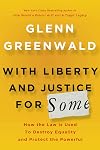
What a profoundly relevant and necessary book about the two tiered justice system in American politics.Greenwald's take is that todays gross misconduct to protect the politically powerful started when President Ford pardoned President Nixon. He used the same line about looking forward not backwards that President Obama used to not only condone but retroactively immunize President Bush wiretapping , banking crisis, mortgage crisis and torture crimes and the Obama administrations own crimes. show more For make no mistake the waterboarding continues.This chain of events eventually led to how the private banking sector as well as the telecoms received immunity.The way the auto companies were given strict regulations for bailout money but the banking sector couldn't be stopped giving large bonuses. Why were the auto employees benefits taken then?Greenwald makes a very strong case in his explanation with direct quotes from Eric Holder, the press and politicians WHY the political and financial elite escape with no attempt of justice. Apparently in the spirit of bipartisanship you don't want the next political office to investigate your own administration.The hypocrisy doesn't end there as the not looking back but forward doesn't hold true for other nations who give their powerful immunity.Then you can't move forward without charging criminals.Greenwald also covers America's vast prison state and increasingly harsher sentencing that is "bipartisan" and the financial sector who runs the prisons which has a hand in shaping our drug laws.Last but not least the vast disparity in the Obama administration to go after whistleblowers but never the criminals themselves.If you follow his blog at all you'll be familar with this topic but despite some criticisms that he repeats himself people need to read this. Too many people actually aren't aware of torture convention and really do think torture of non prisoners of war is legal because of the Geneva convention.I recommend this book to everyone. I'm a regular follower of Greenwald's column at salon.com. He's fair, well researched and never gives over to hyperbole. America never had a problem with a rich class but when the laws don't apply to them and they write the laws with an agenda to lengthen prison sentences then we are no longer a country of laws but rule of man. show less
With Liberty and Justice for Some: How the Law Is Used to Destroy Equality and Protect the Powerful by Glenn Greenwald
What a depressing book. Greenwald's primary, well-argued and substantiated point, is that ever after Ford's pardon of Nixon, the politically power and wealthy elite have enjoyed a growing exemption from the ordinary rules of law that apply to the "little people." Making his argument especially convincing is the manner in which he shows how, from that initial act of betrayal to the rule of law, the exceptionalism has incrementally radiated outward: first to politicians who should not be show more prosecuted because it would "traumatize" the nation; then to their subordinates who acted in "good faith" and out of a sense of patriotic duty; then to corporations who commit illegal acts at the behest of governmental officials, until, finally, it is just anyone with enough wealth and influence. All while never breaking for a moment the cant of devoted commitment to the rule of law. The hypocrisy is staggering.
I knew the book had something relevant to say to these times because, without intention, it offers a true insight into the provocations that created the Occupy Wall Street movement. Our system, Greenwald explains, allows and even encourages inequality in almost every way. "The one exception was the rule of law. When it came to the law, no inequality was tolerable." With that lever, the other vicissitudes of fortune could be borne with dignity. But that social contract has been broken, and now the wealthy claim immunity from even the law, while striving at every turn to use it increasingly as a weapon to control the lower classes. Under that condition, the duty to tolerate stark and irrational economic inequality no longer applies. Thus emerges OWS. The participants may not be fully aware of the genesis of their discontent, or why it emerges now rather than earlier, but Greenwald has here framed a viable explanation. When a book does more than the author intended, you know you have a book worth reading. show less
I knew the book had something relevant to say to these times because, without intention, it offers a true insight into the provocations that created the Occupy Wall Street movement. Our system, Greenwald explains, allows and even encourages inequality in almost every way. "The one exception was the rule of law. When it came to the law, no inequality was tolerable." With that lever, the other vicissitudes of fortune could be borne with dignity. But that social contract has been broken, and now the wealthy claim immunity from even the law, while striving at every turn to use it increasingly as a weapon to control the lower classes. Under that condition, the duty to tolerate stark and irrational economic inequality no longer applies. Thus emerges OWS. The participants may not be fully aware of the genesis of their discontent, or why it emerges now rather than earlier, but Greenwald has here framed a viable explanation. When a book does more than the author intended, you know you have a book worth reading. show less
 This review was written for LibraryThing Early Reviewers.
Such an important book! It gets 5 stars because every thinking person on earth should read it and consider deeply its message.
I read the "Edward Snowden Files" in March, the story of the NSA whistle-blower told from the perspective of the Guardian journalists. Now here is the point of view of Glenn Greenwald, the journalist who conveyed Snowden's story to the world. The two books are complementary and consistent in their stories, but Greenwald's message is much more clearly articulated. His show more Chapter 5 analysis of the role of the modern media in maintaining the powers that be, rather than as a force for change, is trenchant (in every connotation of that word).
Of course, the surprise is that this is a surprise. Decades ago analysis such as that done by the Glasgow University School of Communications showed how late 20th century journalism had become a conservative force for maintaining the status quo. Greenwald's analysis only shows how more profoundly true that is today.
The book is easy to read. Nicely balanced between the adventure of the chase for the story, and his analysis of what it all means. I would say he is hopeful and a bit scared by the implications. Me too. show less
I read the "Edward Snowden Files" in March, the story of the NSA whistle-blower told from the perspective of the Guardian journalists. Now here is the point of view of Glenn Greenwald, the journalist who conveyed Snowden's story to the world. The two books are complementary and consistent in their stories, but Greenwald's message is much more clearly articulated. His show more Chapter 5 analysis of the role of the modern media in maintaining the powers that be, rather than as a force for change, is trenchant (in every connotation of that word).
Of course, the surprise is that this is a surprise. Decades ago analysis such as that done by the Glasgow University School of Communications showed how late 20th century journalism had become a conservative force for maintaining the status quo. Greenwald's analysis only shows how more profoundly true that is today.
The book is easy to read. Nicely balanced between the adventure of the chase for the story, and his analysis of what it all means. I would say he is hopeful and a bit scared by the implications. Me too. show less
Lists
Awards


You May Also Like


Associated Authors
Statistics
- Works
- 10
- Also by
- 1
- Members
- 2,253
- Popularity
- #11,385
- Rating
- 4.1
- Reviews
- 66
- ISBNs
- 51
- Languages
- 10
- Favorited
- 5
