
Eric Alterman
Author of What Liberal Media? The Truth About Bias and the News
About the Author
Eric Alterman is a political & cultural columnist for "The Nation", MSNBC.com, & Intellectual Capital.com & is a senior fellow of the World Policy Institute. He has contributed to "Rolling Stone", "Mother Jones", "Elle", "The New Yorker", "Vanity Fair", "Harper's", "The New Republic", "The New York show more Times" & "The Washington Post". He is the author also of two works of political commentary & analysis "Sound & Fury" & "Who Speaks for America". He lives in Manhattan. (Bowker Author Biography) show less
Works by Eric Alterman
When Presidents Lie: A History of Official Deception and Its Consequences (2004) 250 copies, 4 reviews
It Ain't No Sin To Be Glad You're Alive: The Promise of Bruce Springsteen (1999) 174 copies, 4 reviews
Sound and Fury: The Washington Punditocracy and the Collapse of American Politics (1992) 107 copies, 1 review
The Cause: The Fight for American Liberalism from Franklin Roosevelt to Barack Obama (2012) 74 copies, 1 review
Associated Works
Will the Last Reporter Please Turn Out the Lights: The Collapse of Journalism and What Can Be Done to Fix It (2010) — Contributor — 62 copies
Tagged
Common Knowledge
- Birthdate
- 1960-01-14
- Gender
- male
- Education
- Cornell University (BA | History and Government)
Yale University (MA | International Relations)
Stanford University (PhD | U.S. History) - Occupations
- journalist
professor - Organizations
- World Policy Institute
Mother Jones
Rolling Stone
The Nation
MSNBC
Media Matters for America (show all 7)
City University of New York - Nationality
- USA
- Associated Place (for map)
- USA
Members
Reviews
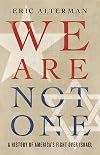
The thing about the Israel-Palestine debate in contemporary American Judaism is that there is no such thing. The matter is settled. American Jews are supposed to shut up, get in line, and support Israel no matter what. And despite large divergences in culture and politics, aside from some quiet grumbling, that's how it's worked. And if anything, American Jews are actually less supportive of Israel than the average American, and certainly less supportive than the average politician or media show more figure, who'd rather slit their own throat than cross the Israel lobby. In We Are Not One, Alterman masterfully traces the origins and consequences of this unswerving support.
The book opens with a 2019 quote from then Speaker of the House Nancy Pelosi, "If the capitol crumbles to the ground, the one thing that'll remain is our commitment to Israel", a statement less metaphorical after Trump's January 6th coup attempt. Republicans are even more ardently pro-Israel than Democrats in a rare bipartisan consensus.
At Israel's founding, American support for the new state was far from given. While FDR was cosmopolitan and had many Jewish friends and staffers, Harry Truman had the typical provincial antisemitism of the time, yet came around as a strong supporter. The Jewish community was internally divided on the Zionist question, with the leading American Jewish Committee unable to reach a position and various rabbis dueling for priority. The romance of the Israeli War of Independence, and a cannily organized PR campaign around the novel and movie Exodus by Leon Uris helped link American sentiments to Israel.
While the sentimental attachment to Israel was amplified by victories in the Six Day War, and disaster into victory of the Yom Kippur War, American Jewish support for Israel was financial and political, but rarely personal. The number of American Jews who made aliyah was always vanishingly small. Israel was an idea, a Zionist imaginary of "next year in Jerusalem", rather than an actual move to Tel Aviv.
But the action practice of Zionism, an ethnic nationalist movement which requires perforce the salami-slicing occupation of land inhabited by Palestinians, was anathema to mainstream American Jewish liberal sensibilities. For much of the 20th century, this cognitive dissonance was carefully managed. Jewish liberalism ended at Israeli borders. Three interlocking political factors ensured this cognitive dissonance didn't boil over.
The first was a minority neoconservative movement, a hard anti-communist rejection of both traditional American conservative isolationism and Nixon's détente. In this new political movement, with many ideological Jewish Americans, Israel was a bastion of American values against the Soviet-backed Arab states, against the conventional wisdom that oil and population meant the United States should buddy up to Arabs who could support American economic interests. The second was the rise of political Evangelical Christianity. The return of Jews to the Holy Land is a key part of Evangelical eschatology, a necessary prelude before Revelations. And third was the capture of American institutional Judaism by billionaire donors with hard Zionist views, primarily the late Sheldon Adelson (and may his memory be a bight). AIPAC became not merely a Jewish or even pro-Israel lobbying group, but specifically a pro-Likud organization with the barest pretense of larger Jewish values, much more comfortable with billionaires and evangelicals than actual Jews.
This state of affairs has had several effects, both in America and Israel. The first is the enervated state of contemporary Reform Judaism. Pragmatically, culturally there's not much to distinguish Reform Judaism from a mainstream Protestant denomination, when Judaism has often been defined by deliberate difference from surrounding gentiles, and mainstream Protestantism has had a rough 20th century as well. But as Jewish leaders urgently see younger Jews (myself included) drifting away from the faith and marrying outside the religion, which is reasonably caused by the fact that aside from Zionism and Holocaust remembrance, there's barely any there there in Reform Judaism, their reaction has been to triple down on the Zionist card.
The second is the AIPAC noise machine, which is centered on AIPAC but supported by a wide range of longstanding Jewish organizations and hastily spun-off PR fronts. Jews certainly don't control the media, or the banks, or government, but crossing AIPAC is a bad idea. If you're a politician, you'll be primaried with your opponent raking in hefty support. If you're a professor, a journalist, or other public intellectual, even the mildest criticism of Israeli policies, such as referring to the state of affairs as an occupation, apartheid, saying "Palestinian homeland", or remarking that maybe Israel should consider American wishes given the hundreds of billions of dollars of aid they have received, will invite a swarm of criticism from ardent Zionist culture warriors. And third, while at the same time arguing that accusations of "dual-loyalty" are an anti-Semitic attack, AIPAC will label any Jew who speaks against them as self-hating, and demand an unflinching primary loyalty to Israel.
The last consequence is an active disdain for American Jews on the part of the Israelis, and for American political priorities. Israelis don't much like American Jews. They don't regard Reform Judaism as a valid religion. And while they'll happily agree to anything at various peace conferences, not a single Israeli prime minister has ever done more than briefly halted settlements in the occupied territories or given the most perfunctory rebuke to extrajudicial Israeli security service actions. The Israeli future has no peace plan, simply a large question mark and then "and no more Arabs", and we should be honest about that.
Alterman's book is comprehensive, deeply sourced, and utterly damning in its conclusions. It's provoked a serious rethinking of my own relationship to institutional Judaism. Something is going to break, but I can't yet tell you what it is. show less
The book opens with a 2019 quote from then Speaker of the House Nancy Pelosi, "If the capitol crumbles to the ground, the one thing that'll remain is our commitment to Israel", a statement less metaphorical after Trump's January 6th coup attempt. Republicans are even more ardently pro-Israel than Democrats in a rare bipartisan consensus.
At Israel's founding, American support for the new state was far from given. While FDR was cosmopolitan and had many Jewish friends and staffers, Harry Truman had the typical provincial antisemitism of the time, yet came around as a strong supporter. The Jewish community was internally divided on the Zionist question, with the leading American Jewish Committee unable to reach a position and various rabbis dueling for priority. The romance of the Israeli War of Independence, and a cannily organized PR campaign around the novel and movie Exodus by Leon Uris helped link American sentiments to Israel.
While the sentimental attachment to Israel was amplified by victories in the Six Day War, and disaster into victory of the Yom Kippur War, American Jewish support for Israel was financial and political, but rarely personal. The number of American Jews who made aliyah was always vanishingly small. Israel was an idea, a Zionist imaginary of "next year in Jerusalem", rather than an actual move to Tel Aviv.
But the action practice of Zionism, an ethnic nationalist movement which requires perforce the salami-slicing occupation of land inhabited by Palestinians, was anathema to mainstream American Jewish liberal sensibilities. For much of the 20th century, this cognitive dissonance was carefully managed. Jewish liberalism ended at Israeli borders. Three interlocking political factors ensured this cognitive dissonance didn't boil over.
The first was a minority neoconservative movement, a hard anti-communist rejection of both traditional American conservative isolationism and Nixon's détente. In this new political movement, with many ideological Jewish Americans, Israel was a bastion of American values against the Soviet-backed Arab states, against the conventional wisdom that oil and population meant the United States should buddy up to Arabs who could support American economic interests. The second was the rise of political Evangelical Christianity. The return of Jews to the Holy Land is a key part of Evangelical eschatology, a necessary prelude before Revelations. And third was the capture of American institutional Judaism by billionaire donors with hard Zionist views, primarily the late Sheldon Adelson (and may his memory be a bight). AIPAC became not merely a Jewish or even pro-Israel lobbying group, but specifically a pro-Likud organization with the barest pretense of larger Jewish values, much more comfortable with billionaires and evangelicals than actual Jews.
This state of affairs has had several effects, both in America and Israel. The first is the enervated state of contemporary Reform Judaism. Pragmatically, culturally there's not much to distinguish Reform Judaism from a mainstream Protestant denomination, when Judaism has often been defined by deliberate difference from surrounding gentiles, and mainstream Protestantism has had a rough 20th century as well. But as Jewish leaders urgently see younger Jews (myself included) drifting away from the faith and marrying outside the religion, which is reasonably caused by the fact that aside from Zionism and Holocaust remembrance, there's barely any there there in Reform Judaism, their reaction has been to triple down on the Zionist card.
The second is the AIPAC noise machine, which is centered on AIPAC but supported by a wide range of longstanding Jewish organizations and hastily spun-off PR fronts. Jews certainly don't control the media, or the banks, or government, but crossing AIPAC is a bad idea. If you're a politician, you'll be primaried with your opponent raking in hefty support. If you're a professor, a journalist, or other public intellectual, even the mildest criticism of Israeli policies, such as referring to the state of affairs as an occupation, apartheid, saying "Palestinian homeland", or remarking that maybe Israel should consider American wishes given the hundreds of billions of dollars of aid they have received, will invite a swarm of criticism from ardent Zionist culture warriors. And third, while at the same time arguing that accusations of "dual-loyalty" are an anti-Semitic attack, AIPAC will label any Jew who speaks against them as self-hating, and demand an unflinching primary loyalty to Israel.
The last consequence is an active disdain for American Jews on the part of the Israelis, and for American political priorities. Israelis don't much like American Jews. They don't regard Reform Judaism as a valid religion. And while they'll happily agree to anything at various peace conferences, not a single Israeli prime minister has ever done more than briefly halted settlements in the occupied territories or given the most perfunctory rebuke to extrajudicial Israeli security service actions. The Israeli future has no peace plan, simply a large question mark and then "and no more Arabs", and we should be honest about that.
Alterman's book is comprehensive, deeply sourced, and utterly damning in its conclusions. It's provoked a serious rethinking of my own relationship to institutional Judaism. Something is going to break, but I can't yet tell you what it is. show less
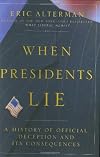
The author says “This book is a detailed examination of four key presidential lies: Franklin Roosevelt and the Yalta accords, John Kennedy and the Cuban Missile Crisis, Lyndon Johnson and the second Gulf of Tonkin incident, and Ronald Reagan and Central America in the 1980s.” He’s right, it is detailed. No, it does not address the undisputed king (45) of lying while president, that’s in another book, nor general lies (again, another book). He does cover some of Bush 43 and the show more problems around Iraq in his conclusion, and skips Nixon. This is an assessment of four hugely impactful events and the deceptions surrounding them. Well, Teflon Ronnie’s should have been a lot more impactful. I have been alive for three of the four related here. Too young for the Cuban crisis, I nevertheless was in a Navy family and we talked about the events more than once. Johnson’s Viet Nam weighed heavy, though as a pre-teen, my awareness was tertiary. Reagan’s treachery is one that angers me still. But not as much as his canonization, nor as much as his creating the beginning of the political divide we endure today.
Well composed, researched, and cited, the only people who would have a problem with Alterman’s observations will probably be adherents of the subject presidents. Well done. I need to finish a few before I get to that other book, but I will soon.
Some selected sound bites. These are all quoted, and I’m not formatting them as such, so my comments, if any, are in [brackets]
Roosevelt
In a few of these instances, Roosevelt had perfectly defensible reasons to say less than he knew to be true. Lying about peaceful negotiations during wartime is a categorically different act than lying about warlike acts in peace-time, and far less trouble. [I agree, and Roosevelt’s lies about Yalta only became trouble as the concessions of Eastern Europe with Stalin became known.]
The intellectually acrobatic Averell Harriman later criticized Truman for overreacting to the very advice that he himself had proffered, identifying this meeting [Yalta] as the precise moment the Cold War began.
The terminal illness of Arthur Vandenberg and the surprising defeat of John Foster Dulles in a special New York Senate election helped to push the party even further into the arms of the militants. [As far back as 1948!]
Kennedy
Interestingly, much of official Washington was outraged when Costner and Oliver Stone offered up their spurious version of the Kennedy assassination in Stone’s 1991 film, JFK. No one wanted to see Stone’s conspiratorial take on the assassination and the Vietnam War replace the official version. Yet when a film funded by O’Donnell’s own family sought to rewrite the historical record in such a way as to flatter the original mythmakers, it was met with approval and appreciation. Thirteen Days was screened at the White House and largely praised by pundits and historians alike, albeit with reservations.
Johnson
The Johnson presidency, as [Robert] Caro, one of his most severe critics, admits, marked the “high-water mark of the tides of social justice” in the twentieth century.
Unfortunately for his ability to choose between competing alternatives, Johnson interpreted almost all dissent as disloyalty, and he was famously a politician to whom personal loyalty was all. [Enter 45...]
Reagan
Ronald Reagan’s relationship to the truth has always been a problematic issue for historians, just as it had been for journalists; this is particularly true for people who wish to maintain a dutiful respect for the office he occupied for eight years, and for the voters who put him there. His own official biographer Edmund Morris called him “an apparent airhead.” [And yet, a genius compared to the jeenyus 45]
The documentary history of the Reagan presidency remains under lock and key at the Ronald Reagan Presidential Library in Simi Valley, California, due, in large measure, to a presidential order signed by President George H. W. Bush overturning previous law, by executive fiat. But thanks to the careful re-construction of these events of the period by historians including Walter LaFeber, Cynthia Arnson, and William LeoGrande, coupled with the tireless declassification efforts by the invaluable National Security Archive in Washington, we now have a portrait of how the media eagerly helped the Reagan administration create its fictional Central America.
With an acquiescent news media and a paralyzed Democratic Party, the Reagan administration was given a virtual free hand to construct its Central American policies on the basis of a wholly self-constructed version of reality— one that adhered to the ideological and political contours of debate inside Washington, but otherwise floated untethered to reality.
Under the dictatorship of General Efrain Rios Montt, a born-again evangelical Christian, the [Guatemalan] army massacred as many as fifteen thousand Indians on the suspicion that they had cooperated with, or might offer aid to, antigovernment guerrillas. Entire villages were leveled and countless peasants were forcibly relocated to aid the counterin- surgency. At one point, when as many as forty thousand survivors tried to find refuge in Mexico, army helicopters strafed the camps.24 It was at this pro- pitious moment that President Reagan took the opportunity to congratulate Rios Montt for his dedication to democracy, adding that he had been get- ting “a bum rap” from U.S. liberals in Congress and the media. [Ah, Saint Ronnie]
Of the 143 human remains discovered in the sacristy of the Mozote church, 136 were judged to be children or adolescents, of whom the average age was six. Of the remaining seven adults, six were women, one in the third trimester of pregnancy.86 When all the forensics had been uncovered, the commission revealed at least twenty-four people had participated in the shooting and that every cartridge but one had come from a U.S.-manufactured and -supplied M-16 rifle. Of these, “184 had discernible head-stamps, identifying the ammunition as having been manufactured for the United States Government at Lake City, Missouri.” No one has ever been officially charged or tried for any crimes associated with the actions taken in El Mozote, which were deemed by Danner to be “the largest massacre in modern Latin American history.” For this bit of good fortune, the murderers may be grateful for the lies of the Reagan administra- tion and the men and women who willingly told them.
Lying about Nicaragua became such a prominent part of the Reagan administration Central American policy that a special office almost exclusively for this purpose, called the Office of Public Diplomacy (OPD), was set up by a presidential directive. Its separation from the CIA itself was necessary because the 1947 National Security Act specifically enjoins the spy agency from engaging in domestic activities, as did President Reagan’s Executive Order 12333, which prohibits the agency from participating in any actions “intended to in- fluence United States political processes, public opinion . . . or media.” […] It booked advocates for 1,570 lecture and talk-show engagements; in a single week during March 1985, the OPD officers bragged in a memo of having fooled the editors of The Wall Street Journal into publishing an op-ed allegedly penned by an unknown professor, guided an NBC news story on the Con- tras, written and edited op-ed articles to be signed by Contra spokesmen, and planted lies in the home media about the experiences of a congressman who visited Nicaragua. Otto Reich boasted of his ability to convince editors and executives to replace reporters he did not like with those he did and warned those reporters who did not cooperate that he would be watching them in the future, a threat that proved effective against National Public Radio, which Reich termed “Moscow on the Potomac.”
Those who had done the lying were not personally discredited, merely temporarily inconvenienced. [Still angering. But look at 45’s cabal and what they get. It’s worse.]
From the Conclusion, Bush II
As president, George W. Bush has appeared remarkably unconcerned with the question of whether he even appeared to be speaking truthfully. As the liberal commentator Michael Kinsley would observe early in the administration’s tenure, “Bush II administration lies are often so laughably obvious that you wonder why they bother. Until you realize: They haven’t bothered. If telling the truth was less bother, they’d try that, too. The characteristic Bush II form of dishonesty is to construct an alternative reality on some topic and to regard anyone who objects to it as a sniveling dweeb obsessed with ‘nuance,’ which the president of this class, I mean of the United States, has more important things to do than worry about.”
Why do American presidents feel compelled to deceive Congress, the media, and their country about their most significant decisions? [and then there is the pathological case of 45 in which it was everything, though oddly enough the “significant” events that should have been kept quiet for a while for security, he blurted]
Whether this situation is remediable depends on one of two possibilities: either future presidents become convinced that the long-term cost of decep- tion outweighs its short-term benefits, or the public matures to the point of seeking to educate itself about the need for complicated arrangements in in- ternational politics that do not comport with the nation’s caricatured notion of itself as a force for innocence and benevolence the world over. The obvious solution would be to convince U.S. presidents of the value of substituting a long-term strategic vision in place of their present-minded, short-term tactical views. But “Nothing in politics is more difficult than taking the long view,” notes the reporter Ronald Brownstein. “For politicians, distant gain is rarely a persuasive reason to endure immediate pain. Political scientists would say the system has a bias toward the present over the future. Parents might say politicians behave like perpetual teenagers. The problem, for politicians as much as teenagers, is that the future has a pesky habit of arriving.” show less
Well composed, researched, and cited, the only people who would have a problem with Alterman’s observations will probably be adherents of the subject presidents. Well done. I need to finish a few before I get to that other book, but I will soon.
Some selected sound bites. These are all quoted, and I’m not formatting them as such, so my comments, if any, are in [brackets]
Roosevelt
In a few of these instances, Roosevelt had perfectly defensible reasons to say less than he knew to be true. Lying about peaceful negotiations during wartime is a categorically different act than lying about warlike acts in peace-time, and far less trouble. [I agree, and Roosevelt’s lies about Yalta only became trouble as the concessions of Eastern Europe with Stalin became known.]
The intellectually acrobatic Averell Harriman later criticized Truman for overreacting to the very advice that he himself had proffered, identifying this meeting [Yalta] as the precise moment the Cold War began.
The terminal illness of Arthur Vandenberg and the surprising defeat of John Foster Dulles in a special New York Senate election helped to push the party even further into the arms of the militants. [As far back as 1948!]
Kennedy
Interestingly, much of official Washington was outraged when Costner and Oliver Stone offered up their spurious version of the Kennedy assassination in Stone’s 1991 film, JFK. No one wanted to see Stone’s conspiratorial take on the assassination and the Vietnam War replace the official version. Yet when a film funded by O’Donnell’s own family sought to rewrite the historical record in such a way as to flatter the original mythmakers, it was met with approval and appreciation. Thirteen Days was screened at the White House and largely praised by pundits and historians alike, albeit with reservations.
Johnson
The Johnson presidency, as [Robert] Caro, one of his most severe critics, admits, marked the “high-water mark of the tides of social justice” in the twentieth century.
Unfortunately for his ability to choose between competing alternatives, Johnson interpreted almost all dissent as disloyalty, and he was famously a politician to whom personal loyalty was all. [Enter 45...]
Reagan
Ronald Reagan’s relationship to the truth has always been a problematic issue for historians, just as it had been for journalists; this is particularly true for people who wish to maintain a dutiful respect for the office he occupied for eight years, and for the voters who put him there. His own official biographer Edmund Morris called him “an apparent airhead.” [And yet, a genius compared to the jeenyus 45]
The documentary history of the Reagan presidency remains under lock and key at the Ronald Reagan Presidential Library in Simi Valley, California, due, in large measure, to a presidential order signed by President George H. W. Bush overturning previous law, by executive fiat. But thanks to the careful re-construction of these events of the period by historians including Walter LaFeber, Cynthia Arnson, and William LeoGrande, coupled with the tireless declassification efforts by the invaluable National Security Archive in Washington, we now have a portrait of how the media eagerly helped the Reagan administration create its fictional Central America.
With an acquiescent news media and a paralyzed Democratic Party, the Reagan administration was given a virtual free hand to construct its Central American policies on the basis of a wholly self-constructed version of reality— one that adhered to the ideological and political contours of debate inside Washington, but otherwise floated untethered to reality.
Under the dictatorship of General Efrain Rios Montt, a born-again evangelical Christian, the [Guatemalan] army massacred as many as fifteen thousand Indians on the suspicion that they had cooperated with, or might offer aid to, antigovernment guerrillas. Entire villages were leveled and countless peasants were forcibly relocated to aid the counterin- surgency. At one point, when as many as forty thousand survivors tried to find refuge in Mexico, army helicopters strafed the camps.24 It was at this pro- pitious moment that President Reagan took the opportunity to congratulate Rios Montt for his dedication to democracy, adding that he had been get- ting “a bum rap” from U.S. liberals in Congress and the media. [Ah, Saint Ronnie]
Of the 143 human remains discovered in the sacristy of the Mozote church, 136 were judged to be children or adolescents, of whom the average age was six. Of the remaining seven adults, six were women, one in the third trimester of pregnancy.86 When all the forensics had been uncovered, the commission revealed at least twenty-four people had participated in the shooting and that every cartridge but one had come from a U.S.-manufactured and -supplied M-16 rifle. Of these, “184 had discernible head-stamps, identifying the ammunition as having been manufactured for the United States Government at Lake City, Missouri.” No one has ever been officially charged or tried for any crimes associated with the actions taken in El Mozote, which were deemed by Danner to be “the largest massacre in modern Latin American history.” For this bit of good fortune, the murderers may be grateful for the lies of the Reagan administra- tion and the men and women who willingly told them.
Lying about Nicaragua became such a prominent part of the Reagan administration Central American policy that a special office almost exclusively for this purpose, called the Office of Public Diplomacy (OPD), was set up by a presidential directive. Its separation from the CIA itself was necessary because the 1947 National Security Act specifically enjoins the spy agency from engaging in domestic activities, as did President Reagan’s Executive Order 12333, which prohibits the agency from participating in any actions “intended to in- fluence United States political processes, public opinion . . . or media.” […] It booked advocates for 1,570 lecture and talk-show engagements; in a single week during March 1985, the OPD officers bragged in a memo of having fooled the editors of The Wall Street Journal into publishing an op-ed allegedly penned by an unknown professor, guided an NBC news story on the Con- tras, written and edited op-ed articles to be signed by Contra spokesmen, and planted lies in the home media about the experiences of a congressman who visited Nicaragua. Otto Reich boasted of his ability to convince editors and executives to replace reporters he did not like with those he did and warned those reporters who did not cooperate that he would be watching them in the future, a threat that proved effective against National Public Radio, which Reich termed “Moscow on the Potomac.”
Those who had done the lying were not personally discredited, merely temporarily inconvenienced. [Still angering. But look at 45’s cabal and what they get. It’s worse.]
From the Conclusion, Bush II
As president, George W. Bush has appeared remarkably unconcerned with the question of whether he even appeared to be speaking truthfully. As the liberal commentator Michael Kinsley would observe early in the administration’s tenure, “Bush II administration lies are often so laughably obvious that you wonder why they bother. Until you realize: They haven’t bothered. If telling the truth was less bother, they’d try that, too. The characteristic Bush II form of dishonesty is to construct an alternative reality on some topic and to regard anyone who objects to it as a sniveling dweeb obsessed with ‘nuance,’ which the president of this class, I mean of the United States, has more important things to do than worry about.”
Why do American presidents feel compelled to deceive Congress, the media, and their country about their most significant decisions? [and then there is the pathological case of 45 in which it was everything, though oddly enough the “significant” events that should have been kept quiet for a while for security, he blurted]
Whether this situation is remediable depends on one of two possibilities: either future presidents become convinced that the long-term cost of decep- tion outweighs its short-term benefits, or the public matures to the point of seeking to educate itself about the need for complicated arrangements in in- ternational politics that do not comport with the nation’s caricatured notion of itself as a force for innocence and benevolence the world over. The obvious solution would be to convince U.S. presidents of the value of substituting a long-term strategic vision in place of their present-minded, short-term tactical views. But “Nothing in politics is more difficult than taking the long view,” notes the reporter Ronald Brownstein. “For politicians, distant gain is rarely a persuasive reason to endure immediate pain. Political scientists would say the system has a bias toward the present over the future. Parents might say politicians behave like perpetual teenagers. The problem, for politicians as much as teenagers, is that the future has a pesky habit of arriving.” show less
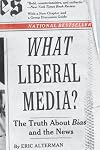
***UPDATE 3/3/13: This book loses more of my esteem after reading Noam Chomsky's [b:Necessary Illusions|848628|Necessary Illusions Thought Control in Democratic Societies|Noam Chomsky|http://d.gr-assets.com/books/1348036055s/848628.jpg|865795], which makes Alterman's whole Liberal/Conservative dichotomy seem downright trivial, criticizing the constraints by which the entire liberal-conservative paradigm (and thus Alterman's book) exists. It's really a rather glorious proposition, and much show more more professionally and convincingly argued, albeit quite a bit drier. It honestly makes me wonder how Alterman could have written this book without even addressing the game-changing argument that Chomsky made almost 15 years prior. Basically, Chomsky makes Alterman's entire book seem facile. Please go there for a real book on media criticism.***
The valuable content saves the irritating writing from two-star status. Alterman makes a convincing argument, a necessary one as well (perhaps not as timely 10 years after the fact, but the general premise holds and is absolutely relevant today since the same "liberal media" charges continue to be constantly tossed around). The chapters on Gore were particularly illuminating for me since I was just coming into my political awareness at the time and was still not paying very close attention to the facts of the 2000 election. Additionally, his general theme of "working the refs," how the conservative establishment has shifted the center of American politics drastically to the right, is extremely important and well-taken. Reminds me of Coach K at Duke (there I go revealing my alma mater).
That said, there are some problems with the writing, most of them minor issues that just added up to sort of a sour taste over the course of the book, the chief offense being that it was occasionally clunky. I hesitate to call it "bad" just because that implies a level of expertise that I certainly don't have. However the word "bad" did keep occurring to me, so I'll just use "clunky" as a surrogate. A good example from the end of the book:
The book was strangely in need of some editing as well, which may have just been an issue in the 1st edition hardback that I had. Here's a prime example of the combination of these two problems of bad editing and too much info in one sentence:
Perhaps, as with my first quote above, I'm just being dense. However I can't help but opine that with a title like What Liberal Media?, this is not meant to be a strictly academic work, requiring seven citations when two or three will do. Indeed, his informal tone through most of the book gives the same impression (speaking of which, I'm still trying to come up with any conceivable need for his mentioning on p.244 that Charles Krauthammer is partially paralyzed).
The last issue is more major, unfortunately: the book is overwhelmingly anecdotal. For an author who spends pages in an early chapter blasting [a:Charles Murray|44279|Charles Murray|http://d.gr-assets.com/authors/1314507470p2/44279.jpg] for his misuse (and lack) of statistics in [b:Losing Ground|170512|Losing Ground American Social Policy, 1950-1980|Charles Murray|http://d.gr-assets.com/books/1347712025s/170512.jpg|164652] and [b:The Bell Curve|223556|The Bell Curve Intelligence and Class Structure in American Life |Richard J. Herrnstein|http://d.gr-assets.com/books/1348155395s/223556.jpg|216508], it seems hypocritical for Alterman himself to largely eschew the use of statistics throughout the book.
This became more apparent as the book went on and I started thinking, Well, I can see all these examples of conservatives in the media but surely there must have been liberal viewpoints as well. Why isn't he telling me about those at all, or even mentioning them? The lack of mention made me suspicious, like he was trying to hide them to bolster his point. Of course all my suspicions would have been moot if he had just backed up his claims with a NEXIS search or some other statistical analysis (which, coincidentally, could have helped him trim his citations as well).
The cherry on top of this sundae of unprofessionalism occurs in the Clinton chapter when he armchair psychologizes journalists to explain how they incessantly attacked Clinton out of envy, "with the vengeance of a lover scorned." This could, of course, very well be the case, but Alterman makes a laughably weak case in the one jarring paragraph he dedicates to the outlandish claim.
All in all, I'm glad I read the book. I am now better equipped to counter the false claims of liberal media bias. I'm not sure I can really recommend it to others due to the writing problems outlined above. What I would recommend, however, is to find a liberal who has read it and can tell you about the main arguments, so that you'll be equipped as well, and without having wasted many hours on what would be a very slow and somewhat tedious read. show less
The valuable content saves the irritating writing from two-star status. Alterman makes a convincing argument, a necessary one as well (perhaps not as timely 10 years after the fact, but the general premise holds and is absolutely relevant today since the same "liberal media" charges continue to be constantly tossed around). The chapters on Gore were particularly illuminating for me since I was just coming into my political awareness at the time and was still not paying very close attention to the facts of the 2000 election. Additionally, his general theme of "working the refs," how the conservative establishment has shifted the center of American politics drastically to the right, is extremely important and well-taken. Reminds me of Coach K at Duke (there I go revealing my alma mater).
That said, there are some problems with the writing, most of them minor issues that just added up to sort of a sour taste over the course of the book, the chief offense being that it was occasionally clunky. I hesitate to call it "bad" just because that implies a level of expertise that I certainly don't have. However the word "bad" did keep occurring to me, so I'll just use "clunky" as a surrogate. A good example from the end of the book:
With an advisory board featuring Jeanne Kirkpatrick, Irving Kristol, and Chester Finn, the organization presents itself as a champion of "intellectual renewal" and "academic standards" in the face of their perceived decline at the hands of leftist academics and fashionable post-modern theories that blur the verities of our time behind a facade of impenetrable professional vernacular. 251Um, excuse me? I'm sure that sentence means something, but I'm equally sure that I'm not going to spend the time to figure out what. And it's not just me being dumb, I swear. [a:Hannah Arendt|12806|Hannah Arendt|http://d.gr-assets.com/authors/1222711954p2/12806.jpg] is one of my favorite writers ever. Go and check out [b:The Human Condition|127227|The Human Condition|Hannah Arendt|http://d.gr-assets.com/books/1328874274s/127227.jpg|462889]. Long sentences, really confusing. And totally awesome. This guy, not so much.
The book was strangely in need of some editing as well, which may have just been an issue in the 1st edition hardback that I had. Here's a prime example of the combination of these two problems of bad editing and too much info in one sentence:
For instance, his assertion that that [sic] the hope for welfare payments was the main source of illegitimacy among black teenagers posited no evidence for this claim and failed to explain why the rate of illegitimacy rose for everyone -- and not just welfare recipients -- after 1972, while the constant-dollar value of those welfare benefits declined by 20 percent. 90So there was this tendency to try and cram too much information into a sentence, which is sort of a microcosm of Alterman's tendency to try and cram too much information into the book. The depth and breadth of his research definitely came across, but it seemed like overkill at times. He made very salient points and then kept making them over and over again, with many more examples than I needed or wanted. I think "pedantic" is the word for this particular offense. The most glaring example is how he spends 4 pages on Rush Limbaugh, whose douchebaggery should already have been exceedingly familiar to any reader.
Perhaps, as with my first quote above, I'm just being dense. However I can't help but opine that with a title like What Liberal Media?, this is not meant to be a strictly academic work, requiring seven citations when two or three will do. Indeed, his informal tone through most of the book gives the same impression (speaking of which, I'm still trying to come up with any conceivable need for his mentioning on p.244 that Charles Krauthammer is partially paralyzed).
The last issue is more major, unfortunately: the book is overwhelmingly anecdotal. For an author who spends pages in an early chapter blasting [a:Charles Murray|44279|Charles Murray|http://d.gr-assets.com/authors/1314507470p2/44279.jpg] for his misuse (and lack) of statistics in [b:Losing Ground|170512|Losing Ground American Social Policy, 1950-1980|Charles Murray|http://d.gr-assets.com/books/1347712025s/170512.jpg|164652] and [b:The Bell Curve|223556|The Bell Curve Intelligence and Class Structure in American Life |Richard J. Herrnstein|http://d.gr-assets.com/books/1348155395s/223556.jpg|216508], it seems hypocritical for Alterman himself to largely eschew the use of statistics throughout the book.
This became more apparent as the book went on and I started thinking, Well, I can see all these examples of conservatives in the media but surely there must have been liberal viewpoints as well. Why isn't he telling me about those at all, or even mentioning them? The lack of mention made me suspicious, like he was trying to hide them to bolster his point. Of course all my suspicions would have been moot if he had just backed up his claims with a NEXIS search or some other statistical analysis (which, coincidentally, could have helped him trim his citations as well).
The cherry on top of this sundae of unprofessionalism occurs in the Clinton chapter when he armchair psychologizes journalists to explain how they incessantly attacked Clinton out of envy, "with the vengeance of a lover scorned." This could, of course, very well be the case, but Alterman makes a laughably weak case in the one jarring paragraph he dedicates to the outlandish claim.
All in all, I'm glad I read the book. I am now better equipped to counter the false claims of liberal media bias. I'm not sure I can really recommend it to others due to the writing problems outlined above. What I would recommend, however, is to find a liberal who has read it and can tell you about the main arguments, so that you'll be equipped as well, and without having wasted many hours on what would be a very slow and somewhat tedious read. show less

Alterman, a media critic more recently known for "What Liberal Media?," here dissects what he calls the "punditocracy:" The high-profile columnists and commentators who, he argues, wield far too much opinion-making power in Washington and other centers of power. The problem with pundits, Alterman argues, is that they peddle a kind of pseudo-journalism: Opinion, ideological cant, and outright speculation clothed in rhetorical garments that imply a solid factual basis and an unassailable level show more of certainty. Their pronouncements may be entertaining, he admits, but we mistake them for reality at our peril. Alterman traces the rise of the punditocracy from Walter Lippman in the 1930s to the likes of George Will, Charles Krauthammer, William Safire, and others in the early 1990s. His principal concern, however, is to show that the emperor has no clothes. He does this by dissecting the prejudices, ideological hobby-horses, journalistic skills, and track record of a dozen or so key members of the punditocracy--skewering them with scrupulously cited quotations from their own work. This approach reaches its zenith in the final chapters, where he analyzes conservative pundits' steadfast refusal to come to grips with the fall of the USSR, and lambastes pundits of all political persuasions for mindlessly beating the drums of war after the Iraqi occupation of Kuwait.
The fact that the first edition of the book (the one I read) ends on those notes reflects the extent to which the now-available revised edition had become necessary. When Alternan first wrote, conservative talk radio had just begun its ascendancy, Bill Clinton was unimpeached, George W. Bush was a marginally well-known governor, and the Twin Towers still stood. We've come a long way since 1993, yet (to judge by the undiminished power of the punditocracy) we've come no way at all. show less
The fact that the first edition of the book (the one I read) ends on those notes reflects the extent to which the now-available revised edition had become necessary. When Alternan first wrote, conservative talk radio had just begun its ascendancy, Bill Clinton was unimpeached, George W. Bush was a marginally well-known governor, and the Twin Towers still stood. We've come a long way since 1993, yet (to judge by the undiminished power of the punditocracy) we've come no way at all. show less
Lists
Awards

You May Also Like


Associated Authors
Statistics
- Works
- 13
- Also by
- 2
- Members
- 1,625
- Popularity
- #15,832
- Rating
- 3.6
- Reviews
- 21
- ISBNs
- 62
- Languages
- 1
- Favorited
- 2
