
William Greider (1936–2019)
Author of Secrets of the Temple: How the Federal Reserve Runs the Country
About the Author
Journalist William Harold Greider caught public attention in 1981 with an article he wrote for the Atlantic Monthly entitled The Education of David Stockman, about the initiation of then President Reagan's new director of the Office of Management and Budget. Greider documented Stockman's decline show more from optimism as he struggled to balance the federal budget while accommodating the president's fiscal plan to reduce income taxes and increase defense spending, which became known as "Reaganomics." Its depth of political analysis won Greider several awards. In 1982 the article was included in a book, The Education of David Stockman and Other Americans. William Harold Greider was born in 1936 and graduated from Princeton University in 1958. He is a columnist and the national affairs editor for Rolling Stone magazine. He has also written the books Secrets of the Temple: How the Federal Reserve Runs the Country (1988), The Trouble with Money: A Prescription for America's Financial Fever (1989), and Who Will Tell the People: The Betrayal of American Democracy (1992). (Bowker Author Biography) show less
Image credit: via Alchetron
Works by William Greider
Come Home, America: The Rise and Fall (and Redeeming Promise) of Our Country (2009) 45 copies, 1 review
Associated Works
And the Band Played On: Politics, People, and the AIDS Epidemic (1987) — Introduction, some editions — 3,271 copies, 63 reviews
Reporting Vietnam: American Journalism 1969-1975, Volume 2 (1998) — Contributor — 301 copies, 2 reviews
An Inconvenient Truth [2006 documentary film] (2006) — Contributor, some editions — 278 copies, 8 reviews
These United States: Original Essays by Leading American Writers on Their State within the Union by John Leonard (1995) — Contributor — 102 copies, 1 review
The Case Against Free Trade: GATT, NAFTA, and the Globalization of Corporate Power (1993) — Contributor — 58 copies, 1 review
The Company We Keep: Reinventing Small Business for People, Community, And Place (2005) — Foreword — 56 copies
Shaking the Foundations: 200 Years of Investigative Journalism in America (Nation Books) (2003) — Contributor — 45 copies
Tagged
Common Knowledge
- Canonical name
- Greider, William
- Legal name
- Greider, William Harold
- Other names
- GREIDER, William Harold
GREIDER, William - Birthdate
- 1936-08-06
- Date of death
- 2019-12-25
- Gender
- male
- Education
- Princeton University (BA|1958)
- Occupations
- journalist
- Organizations
- The Washington Post
Rolling Stone
The Nation
Louisville Times
Daily Journal - Awards and honors
- George Polk Award (1982)
Emmy Award (1985)
Los Angeles Times Book Prize (1988)
Harry Chapin Media Award (2001)
James Aronson Award for Social Justice Journalism (2002) - Agent
- Lynn Nesbit
- Cause of death
- congestive heart failure
- Nationality
- USA
- Birthplace
- Cincinnati, Ohio, USA
- Places of residence
- Wyoming, Ohio, USA
- Place of death
- Washington, D.C., USA
- Associated Place (for map)
- Ohio, USA
Members
Reviews
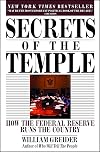
Reading 'Secrets of the Temple' is a commitment; its like deciding to run a marathon. 800 pages dedicated to the intricacies of of 100 years of American financial history is not exactly light reading material.
Yet, miraculously, Greider somehow managed to craft a brilliantly readable book that leads you (safely!) through the mindboggeling minefield known as modern finance and central banking.
Some sections merit skim reading (specifically, the accounts of various Fed meetings, which were much show more too detailed for my liking), but Greider always leads the reader, without fail, to a wider, fascinating, well articulated explanation or argument.
If you want to understand how 'money' works in the modern America, 'Secrets' is a magnus opus that doesn't require an economic degree to decipher. show less
Yet, miraculously, Greider somehow managed to craft a brilliantly readable book that leads you (safely!) through the mindboggeling minefield known as modern finance and central banking.
Some sections merit skim reading (specifically, the accounts of various Fed meetings, which were much show more too detailed for my liking), but Greider always leads the reader, without fail, to a wider, fascinating, well articulated explanation or argument.
If you want to understand how 'money' works in the modern America, 'Secrets' is a magnus opus that doesn't require an economic degree to decipher. show less
It's always fun to observe values changing over time, depending on the needs of society. William Greider, in Secrets of the Temple, a history of the Federal Reserve System, relates how usury was once considered a heinous offense against the church. There are perhaps a dozen clear prohibitions against charging interest in the Bible. It was considered an immoral way to make money, as it resulted from no work. The wealthy had an obligation to help those less fortunate, without profiting from show more their generosity. In fact, until the late Middle Ages, anyone charging interest would be immediately excommunicated.
Capitalism, which required capital to create wealth, changed the church's values. The rise of Protestantism further weakened the traditional stance of the church against usury. But it wasn't until the 1970s, with the inflationary pressures on interest rates that states were forced to repeal usury laws, laws which had been enacted to actually legitimize charging interest and to control "excessive interest." Interestingly, Islamic countries have had to deal with this issue in a different way. The Koran is equally strict in its prohibition against charging interest, and this was considered a serious impediment to the rise of capitalism in the Middle East. They get around the uncompromising religious prohibition by creating a risk-sharing environment. Both "partners" in a venture share in profit or loss, just not equally. Bankers routinely consult religious advisors to make sure no profits could be considered "interest" earned on the money used in the venture. show less
Capitalism, which required capital to create wealth, changed the church's values. The rise of Protestantism further weakened the traditional stance of the church against usury. But it wasn't until the 1970s, with the inflationary pressures on interest rates that states were forced to repeal usury laws, laws which had been enacted to actually legitimize charging interest and to control "excessive interest." Interestingly, Islamic countries have had to deal with this issue in a different way. The Koran is equally strict in its prohibition against charging interest, and this was considered a serious impediment to the rise of capitalism in the Middle East. They get around the uncompromising religious prohibition by creating a risk-sharing environment. Both "partners" in a venture share in profit or loss, just not equally. Bankers routinely consult religious advisors to make sure no profits could be considered "interest" earned on the money used in the venture. show less
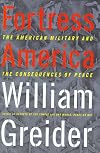
Greider is interesting in small doses, but rather much in large doses. Fortunately this book is short, just the right length for him.
His central point is that, with the Soviet Union gone (this was written in 1998) it makes little sense for America to continue spending vast sums of money on arms. Even more so, it makes no sense to spend the money as inefficiently as is done.
Specifically his central theme is that the bulk of where the money goes is to maintain in a state of dormancy a show more variety of factories and military bases across the country; that this infrastructure costs much the same amount whether it is used or kept idle; and that politics of various sorts refuses to allow it to be shut down or rationalized, so it continues to devour vast sums of money while actually delivering very little.
Along the way we are shown various other idiocies, for example the extent of US arms sales around the world.
GWB likes to tell us that 9/11 changed everything but of course I don't buy that. The collision with reality that Greider envisaged has not happened yet, but I see that not as a consequence of 9/11 but as a consequence of the GOP's willingness to raise debts to never-before-seen levels.
At some point that game is going to end, at which point everything Greider says remains just as true, only more so. show less
His central point is that, with the Soviet Union gone (this was written in 1998) it makes little sense for America to continue spending vast sums of money on arms. Even more so, it makes no sense to spend the money as inefficiently as is done.
Specifically his central theme is that the bulk of where the money goes is to maintain in a state of dormancy a show more variety of factories and military bases across the country; that this infrastructure costs much the same amount whether it is used or kept idle; and that politics of various sorts refuses to allow it to be shut down or rationalized, so it continues to devour vast sums of money while actually delivering very little.
Along the way we are shown various other idiocies, for example the extent of US arms sales around the world.
GWB likes to tell us that 9/11 changed everything but of course I don't buy that. The collision with reality that Greider envisaged has not happened yet, but I see that not as a consequence of 9/11 but as a consequence of the GOP's willingness to raise debts to never-before-seen levels.
At some point that game is going to end, at which point everything Greider says remains just as true, only more so. show less
Summary
An amazing yet lengthy history of banking and money in the United States up to 1987. Especially the Federal Reserve, the Reagan/Volker era, and the political climate during this time.
Background
The Federal Reserve has a few primary ways of influence currency:
1) Open Market Operations: purchase and sale of securities from the open market
2) The Discount Rate: as modern banks primarily use a “managed liabilities” approach, where they make loans then find the deposits, rather than show more than the other way around, on a nightly basis, they sometimes need to borrow massive sums of short-term money to meet their reserve requirements. This lending comes from their regional Federal Reserve bank.
3) The Federal Funds Rate [indicator]: the interbank lending rate, serving a similar purpose to the discount rate, but funds held by the Fed traded between individual commercial banks. The Fed doesn’t set this rate, but instead sets a target, which it manages with it’s two aforementioned tools.
4) Policy and direct intervention: the Fed practically doesn’t use these controls. This includes reserve requirements, which the Fed does regulate. But it also includes the right to directly intervene in the operations of any major bank. For example, they can refuse to lend to a bank that’s been behaving irresponsibly, highly increasing their chance of default, to teach other bank a lesson about risky lending. The can also directly impose maximum interest spread, limiting bank profits. They can pretty much do anything they want, but almost never do. Think of their legal relationship with commercial banks as comparably to the role the judicial branch serves for the legislature; checks and balances.
The Federal Reserve operates as public-private hybrid. The President [the executive branch] appoints the Chairman of the Fed and the Federal Reserve Governors. Then there’s an advisory counsel to the Fed, the Open Market Committee [with public and private representation], which influences Open Market Operations. And then there are the twelve Federal Reserve Banks, which are private, and serve as a conduit between the Fed and commercial banks. A key point to remember is that the Fed is not a democratic institution, as it’s officials are appointed rather than elected. Technically congress could redefine their role, but historically, has overall declined to exercise this right.
If all of this sounds very confusing, it is. Even more confusing than the structure of the Fed is the question of what is money and what is it for. A lot of the power of the Fed and the financial markets is that they’ve given some serious thought to these questions [although their answers are very homogenous], when the vast majority elected officials and citizens have not.
Key Points
There has never been a long [decade-plus] period of “stable” money in the history of the United States. And yet, for some reason, this seems to be an American ideal. The Federal Reserve was created in 1913, partially inspired by the panic of 1907. And yet the Great Depression of the 1930s, one of the most severe financial disasters in our history, happened under the direct oversight of the Fed. But if you think the 20th century had it rough, look back to the greenback era and the Great Deflation following the Civil War, where currency in circulation was cut in half over the course of a couple decades.
Ironically, the populist era of the 1890s and their call for a move away from the gold standard [a non-dynamic money supply] helped to sew the seeds for the creation of the Fed, an anti-populist institution. One of the reasons for this perversion was that the rural farmers [populists] called for the creation of a land-backed currency [linking value directly to our food supply and natural resources], yet the Fed dropped this aspect of their proposal.
The New Deal created the era of centralization and consumerism. Following the Crash of 1929, we had a decision - small economy and decentralization, or big economy and centralization. Obviously, we chose the latter. If we had gone the other way, the world would be a very different place. Rural communities in the US would be thriving. We’d have robust local food systems and local economies. Our technology would likely be less developed, and our GDP would be much smaller. Global population would be smaller. Most of the world would be less “developed.” We wouldn’t have the World Bank or the International Monetary Fund. And we wouldn’t have massive multinationals, or banks that are “too big to fail.” Both Democrats and Republicans nowadays seem to praise the New Deal, but ultimately, the adoption of this mentality has put us into a global sustainability bottleneck, and we might not be coming out the other side.
The top global economists have absolutely no idea what’s going on.
Fed Governor J. Charles Partee, commenting about the early 1980s:
"Interest rates are the device by which you ration the demand for credit so it won’t be excessive. Yet if you look at the demand for credit now, it’s extraordinarily large - it’s huge. Government debt is going up, household debt, corporate debt. How can you look at that and conclude that interest rates are too high. I’d say interest rates aren’t high enough. Yet I have to admit the economy isn’t doing very well. It’s a conundrum - extraordinary."
Chairman of the Fed, Paul Volker, commenting about the early 1980s:
"This tremendous debt creation worries me. Why are people making all these bad loans? People can say interest rates are too high and I might agree with that, certainly by historic standards and by the conditions in the economy. But if interest rates are too high, why is debt expanding so fast? Why is debt growing at a record rate relative to GNP? Apparently somebody out there doesn’t think interest rates are too high."
This general confusion about the fundamentals of economic forces isn’t an exception, but the norm. For example, two of the iconic economic theories of the twentieth century, Keynes and Friedman, were both wrong. The issue isn’t in the details, it’s in the concept of economics itself. The concept that the sum of human relations in the social agreements we call the economy could be behave in any predictable manner isn’t just absurd; it’s dangerous:
"The war against inflation is paid for in the lives of the less well off; 45,900 died prematurely in the recession of ’74-‘75."
And that was just a small recession.
To make matters worse, the controls we’re set up for our global economy are extremely imprecise. For example, if the Fed wants to slow inflation, it raises interest rates with the objective of “liquidating” labor [increasing unemployment]. And yet this process of raising rates and increasing unemployment directly increases wealth inequality. And yet wealth inequality has been proven to decrease economic productivity. The whole system is a mess. We don’t understand what we’re doing, and even if we did, our controls don’t allow us to isolate any one variable in the economy. All of our controls have cascading impacts.
Another example: another impact of slowing inflation in the early ’80s [“shoring-up” the economy] was that US bank loans to third world countries started coming concerningly close to default, as we’d raised their rates. Luckily the shoring-up process and the higher rates increased the international investment in the US, strengthening the dollar. This moved productivity from the US to the developing countries, giving them more revenue and increasing their ability to repay. Yet all of the economic benefits in these third world countries was poured into the repayment of interest, as they’d had to go through refinancing. And because of the strong dollar, the US economy lost headway in the global economy. At the end of the day, was the US, or any other nation for that matter, better off because we’d slowed inflation? Not really.
A systems thinking perspective is fundamental to beginning to understand the way that the global economy functions. But don’t ever think you’ve figured it out; that’s when you’ll go wrong.
Greider set an interesting undertone of faith and religion throughout the book. Money, unlike the laws of physics, is a social agreement, or a social technology. This agreement is much more flexible than we might think, and built on trust. Greider points out that anyone who becomes intimately familiar with and buys into the way our money systems work is a religious person. In other words, they put their trust in systems beyond their comprehension or control.
The book is an invaluable history, but Greider’s tone is a little disjointed and rambling. He seemed to be trying to prove a point, and there’s definitely some opinions I’ve formed from becoming more familiar with the history of our financial system, but I don’t think he drove home one unified thesis. This means that the book isn’t much of a page turner, but again, certainly worth reading.
Questions
As a tribute to it’s value, the book has left me with more questions than answers:
* What is money?
* What is money for?
* What’s the difference between interest and inflation?
* Is inflation really bad?
* Is positive interest ethical?
Further Reading
"Debt: The First 5,000 Years" by David Graeber
"Sacred Economics" by Charles Eisenstein
"Thinking in Systems" by Donella Meadows
"Barbarians at the Gate" by Bryan Burrough, John Helyar
Read my blog post on this book here show less
An amazing yet lengthy history of banking and money in the United States up to 1987. Especially the Federal Reserve, the Reagan/Volker era, and the political climate during this time.
Background
The Federal Reserve has a few primary ways of influence currency:
1) Open Market Operations: purchase and sale of securities from the open market
2) The Discount Rate: as modern banks primarily use a “managed liabilities” approach, where they make loans then find the deposits, rather than show more than the other way around, on a nightly basis, they sometimes need to borrow massive sums of short-term money to meet their reserve requirements. This lending comes from their regional Federal Reserve bank.
3) The Federal Funds Rate [indicator]: the interbank lending rate, serving a similar purpose to the discount rate, but funds held by the Fed traded between individual commercial banks. The Fed doesn’t set this rate, but instead sets a target, which it manages with it’s two aforementioned tools.
4) Policy and direct intervention: the Fed practically doesn’t use these controls. This includes reserve requirements, which the Fed does regulate. But it also includes the right to directly intervene in the operations of any major bank. For example, they can refuse to lend to a bank that’s been behaving irresponsibly, highly increasing their chance of default, to teach other bank a lesson about risky lending. The can also directly impose maximum interest spread, limiting bank profits. They can pretty much do anything they want, but almost never do. Think of their legal relationship with commercial banks as comparably to the role the judicial branch serves for the legislature; checks and balances.
The Federal Reserve operates as public-private hybrid. The President [the executive branch] appoints the Chairman of the Fed and the Federal Reserve Governors. Then there’s an advisory counsel to the Fed, the Open Market Committee [with public and private representation], which influences Open Market Operations. And then there are the twelve Federal Reserve Banks, which are private, and serve as a conduit between the Fed and commercial banks. A key point to remember is that the Fed is not a democratic institution, as it’s officials are appointed rather than elected. Technically congress could redefine their role, but historically, has overall declined to exercise this right.
If all of this sounds very confusing, it is. Even more confusing than the structure of the Fed is the question of what is money and what is it for. A lot of the power of the Fed and the financial markets is that they’ve given some serious thought to these questions [although their answers are very homogenous], when the vast majority elected officials and citizens have not.
Key Points
There has never been a long [decade-plus] period of “stable” money in the history of the United States. And yet, for some reason, this seems to be an American ideal. The Federal Reserve was created in 1913, partially inspired by the panic of 1907. And yet the Great Depression of the 1930s, one of the most severe financial disasters in our history, happened under the direct oversight of the Fed. But if you think the 20th century had it rough, look back to the greenback era and the Great Deflation following the Civil War, where currency in circulation was cut in half over the course of a couple decades.
Ironically, the populist era of the 1890s and their call for a move away from the gold standard [a non-dynamic money supply] helped to sew the seeds for the creation of the Fed, an anti-populist institution. One of the reasons for this perversion was that the rural farmers [populists] called for the creation of a land-backed currency [linking value directly to our food supply and natural resources], yet the Fed dropped this aspect of their proposal.
The New Deal created the era of centralization and consumerism. Following the Crash of 1929, we had a decision - small economy and decentralization, or big economy and centralization. Obviously, we chose the latter. If we had gone the other way, the world would be a very different place. Rural communities in the US would be thriving. We’d have robust local food systems and local economies. Our technology would likely be less developed, and our GDP would be much smaller. Global population would be smaller. Most of the world would be less “developed.” We wouldn’t have the World Bank or the International Monetary Fund. And we wouldn’t have massive multinationals, or banks that are “too big to fail.” Both Democrats and Republicans nowadays seem to praise the New Deal, but ultimately, the adoption of this mentality has put us into a global sustainability bottleneck, and we might not be coming out the other side.
The top global economists have absolutely no idea what’s going on.
Fed Governor J. Charles Partee, commenting about the early 1980s:
"Interest rates are the device by which you ration the demand for credit so it won’t be excessive. Yet if you look at the demand for credit now, it’s extraordinarily large - it’s huge. Government debt is going up, household debt, corporate debt. How can you look at that and conclude that interest rates are too high. I’d say interest rates aren’t high enough. Yet I have to admit the economy isn’t doing very well. It’s a conundrum - extraordinary."
Chairman of the Fed, Paul Volker, commenting about the early 1980s:
"This tremendous debt creation worries me. Why are people making all these bad loans? People can say interest rates are too high and I might agree with that, certainly by historic standards and by the conditions in the economy. But if interest rates are too high, why is debt expanding so fast? Why is debt growing at a record rate relative to GNP? Apparently somebody out there doesn’t think interest rates are too high."
This general confusion about the fundamentals of economic forces isn’t an exception, but the norm. For example, two of the iconic economic theories of the twentieth century, Keynes and Friedman, were both wrong. The issue isn’t in the details, it’s in the concept of economics itself. The concept that the sum of human relations in the social agreements we call the economy could be behave in any predictable manner isn’t just absurd; it’s dangerous:
"The war against inflation is paid for in the lives of the less well off; 45,900 died prematurely in the recession of ’74-‘75."
And that was just a small recession.
To make matters worse, the controls we’re set up for our global economy are extremely imprecise. For example, if the Fed wants to slow inflation, it raises interest rates with the objective of “liquidating” labor [increasing unemployment]. And yet this process of raising rates and increasing unemployment directly increases wealth inequality. And yet wealth inequality has been proven to decrease economic productivity. The whole system is a mess. We don’t understand what we’re doing, and even if we did, our controls don’t allow us to isolate any one variable in the economy. All of our controls have cascading impacts.
Another example: another impact of slowing inflation in the early ’80s [“shoring-up” the economy] was that US bank loans to third world countries started coming concerningly close to default, as we’d raised their rates. Luckily the shoring-up process and the higher rates increased the international investment in the US, strengthening the dollar. This moved productivity from the US to the developing countries, giving them more revenue and increasing their ability to repay. Yet all of the economic benefits in these third world countries was poured into the repayment of interest, as they’d had to go through refinancing. And because of the strong dollar, the US economy lost headway in the global economy. At the end of the day, was the US, or any other nation for that matter, better off because we’d slowed inflation? Not really.
A systems thinking perspective is fundamental to beginning to understand the way that the global economy functions. But don’t ever think you’ve figured it out; that’s when you’ll go wrong.
Greider set an interesting undertone of faith and religion throughout the book. Money, unlike the laws of physics, is a social agreement, or a social technology. This agreement is much more flexible than we might think, and built on trust. Greider points out that anyone who becomes intimately familiar with and buys into the way our money systems work is a religious person. In other words, they put their trust in systems beyond their comprehension or control.
The book is an invaluable history, but Greider’s tone is a little disjointed and rambling. He seemed to be trying to prove a point, and there’s definitely some opinions I’ve formed from becoming more familiar with the history of our financial system, but I don’t think he drove home one unified thesis. This means that the book isn’t much of a page turner, but again, certainly worth reading.
Questions
As a tribute to it’s value, the book has left me with more questions than answers:
* What is money?
* What is money for?
* What’s the difference between interest and inflation?
* Is inflation really bad?
* Is positive interest ethical?
Further Reading
"Debt: The First 5,000 Years" by David Graeber
"Sacred Economics" by Charles Eisenstein
"Thinking in Systems" by Donella Meadows
"Barbarians at the Gate" by Bryan Burrough, John Helyar
Read my blog post on this book here show less
Lists
Awards


You May Also Like


Associated Authors
Statistics
- Works
- 12
- Also by
- 9
- Members
- 1,719
- Popularity
- #14,941
- Rating
- 4.3
- Reviews
- 11
- ISBNs
- 33
- Languages
- 4
- Favorited
- 5