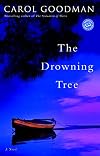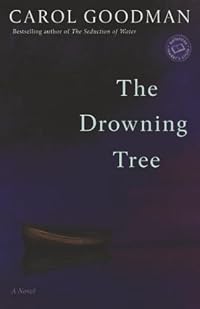
The Drowning Tree
by Carol Goodman
On This Page
Description
"Juno McKay intended to avoid the nearby campus of her alma mater during her fifteenth reunion weekend, but she just can't turn down the chance to see her longtime friend Christine Webb speak at the Penrose College library. Though Juno cringes at the inevitable talk of the pregnancy that kept her from graduating, and of her husband, Neil Buchwald, who ended up in a mental hospital only two years after their wedding, Juno endures the gossip for her friend's sake. Christine's lecture sends show more shockwaves through the rapt crowd when she reveals little-known details about the lives of two sisters, Eugenie and Clare - members of the powerful and influential family whose name the college bears. Christine's revelation throws shadows of betrayal, lust, and insanity onto the family's distinguished facade." "But after the lecture, Christine seems distant, uneasy, and sad. The next day, she disappears. Juno immediately suspects a connection to her friend's shocking speech. Although painfully reminded of her own experience with Neil's mental illness, Juno nevertheless peels away the layers of secrets and madness that surround the Penrose dynasty. She fears that Christine discovered something damning about them, perhaps even something worth killing for. And Juno is determined to find it - for herself, for her friend, and for her long-lost husband." "The Drowning Tree is a look at the way our own lives are reflected in the faces of others...and how shattered pieces of the past never truly remain buried."--BOOK JACKET. show lessTags
Recommendations




Member Reviews
“You have to stick with what you see and follow where your eye leads you.” Christine taught her best friend Juno how to view and interpret art with these simple words. The two met in college, both reaching beyond their humble and poor rural beginnings to attend an exclusive all girls college, Penrose. The friendship the two formed at the school, helping each other through the darkest events of their young lives, was a lasting one. Now, at their fifteenth year reunion, Christine is presenting her research on a famous stained glass window which depicts the wife of the college’s founding father. Christine’s findings, though, cast a pall over the event, as she unearths dark secrets about the Penrose family. When Christine disappears show more shortly after the speech, Juno must fall back on Christine’s advice about art to decipher the quickening mystery and to gain some perspective on her own murky past.
With The Drowning Tree, Carol Goodman painted a mystery so ethereal and elusive that it requires the same kind of interpretive abandon which her character Christine suggests for understanding a work of art. There are good, logical arguments for any one of several characters being a murderer and, until the final pages, the book exhibits varying shapes and colors depending on the perspective of the reader. Indeed, the mysteries of Christine’s disappearance and the Penrose family’s secrets are secondary concerns in the book. Goodman is more interested in drawing our eyes to Juno as she strives to make some sense of the events of her young life. And rather than forcing a result, Juno must listen to her old friend’s advice to stick with what she sees and follow where her eye leads her.
Art and classic literature references infuse Goodman’s writing, composing a dark backdrop to the story. And Goodman assumes a more passive style in telling the tale. All of this together creates a vaporous, otherworldly reading experience. Every page seems to exist just slightly beyond comprehension, understanding slipping away with each grasping attempt. In the end, Christine’s advice to Juno describes the posture a reader must take with the story, never forcing a conclusion but following the eye where it leads.
4 ½ bones!!!! show less
With The Drowning Tree, Carol Goodman painted a mystery so ethereal and elusive that it requires the same kind of interpretive abandon which her character Christine suggests for understanding a work of art. There are good, logical arguments for any one of several characters being a murderer and, until the final pages, the book exhibits varying shapes and colors depending on the perspective of the reader. Indeed, the mysteries of Christine’s disappearance and the Penrose family’s secrets are secondary concerns in the book. Goodman is more interested in drawing our eyes to Juno as she strives to make some sense of the events of her young life. And rather than forcing a result, Juno must listen to her old friend’s advice to stick with what she sees and follow where her eye leads her.
Art and classic literature references infuse Goodman’s writing, composing a dark backdrop to the story. And Goodman assumes a more passive style in telling the tale. All of this together creates a vaporous, otherworldly reading experience. Every page seems to exist just slightly beyond comprehension, understanding slipping away with each grasping attempt. In the end, Christine’s advice to Juno describes the posture a reader must take with the story, never forcing a conclusion but following the eye where it leads.
4 ½ bones!!!! show less
I’m not joking when I say Carol Goodman could be my idol. Granted, I’ve only read two of her books, but she’s exactly the kind of writer I hope to be some day. Her novels are full of artistic and literary themes, with beautifully dynamic settings. Who wouldn’t want to write such intriguingly mysterious books?
The Drowning Tree centers around Juno McKay as she’s forced to confront her past during a reunion at Penrose College. When her best friend, Christine Webb, is chosen to give a speech on a famous stained glass window about to be restored by Juno’s family, Juno knows she has to attend. But it turns out that Christine has done some behind-the-scenes research, and seems to have discovered a bit of history about the founders show more of Penrose College that the current President, Gavin Penrose, may not be so excited about. When Christine dies unexpectedly, Juno is left with nothing but Christine’s research and a handful of suspects. When links to Juno’s mentally disturbed ex-husband start to surface, she no longer knows who she can trust.
Goodman’s writing is smooth and Juno’s voice is incredibly informative and consistant. But more than the characters themselves, I love the environments Goodman creates. The Drowning Tree has a burned out skeleton of a mansion called Astolat, a prestigious all-girls college with a shadowy history, and a haunting statue garden drowned under a river. I can’t imagine where she comes up with them, but her scenes are intensely dark and beautiful. Throughout the novel are themes of art and lust, as well as greco-roman mythology. The founders of the college were artists and their paintings of nymphs and mythological scenes are described so vividly and hauntingly, I can picture them if I shut my eyes.
As with Arcadia Falls (her most recent book), Goodman leaves you guessing until the end. You think you’ve solved the mystery and know who the killer is, but you’re wrong. Could it be Juno’s possible new love interest, the kayak instructor Kyle? Could it be the founding family’s grandson, current Penrose President, Gavin Penrose? Could her very own ex-husband Neil have done it? Fresh from his years in the local mental institution? Or did Christine succumb to her fear of depression and kill herself? The end happens quick, so fast you might miss it if you aren’t looking.
Goodman is two-for-two in my book. I strongly recommend her novels. 5 stars
(I purchased this book) show less
The Drowning Tree centers around Juno McKay as she’s forced to confront her past during a reunion at Penrose College. When her best friend, Christine Webb, is chosen to give a speech on a famous stained glass window about to be restored by Juno’s family, Juno knows she has to attend. But it turns out that Christine has done some behind-the-scenes research, and seems to have discovered a bit of history about the founders show more of Penrose College that the current President, Gavin Penrose, may not be so excited about. When Christine dies unexpectedly, Juno is left with nothing but Christine’s research and a handful of suspects. When links to Juno’s mentally disturbed ex-husband start to surface, she no longer knows who she can trust.
Goodman’s writing is smooth and Juno’s voice is incredibly informative and consistant. But more than the characters themselves, I love the environments Goodman creates. The Drowning Tree has a burned out skeleton of a mansion called Astolat, a prestigious all-girls college with a shadowy history, and a haunting statue garden drowned under a river. I can’t imagine where she comes up with them, but her scenes are intensely dark and beautiful. Throughout the novel are themes of art and lust, as well as greco-roman mythology. The founders of the college were artists and their paintings of nymphs and mythological scenes are described so vividly and hauntingly, I can picture them if I shut my eyes.
As with Arcadia Falls (her most recent book), Goodman leaves you guessing until the end. You think you’ve solved the mystery and know who the killer is, but you’re wrong. Could it be Juno’s possible new love interest, the kayak instructor Kyle? Could it be the founding family’s grandson, current Penrose President, Gavin Penrose? Could her very own ex-husband Neil have done it? Fresh from his years in the local mental institution? Or did Christine succumb to her fear of depression and kill herself? The end happens quick, so fast you might miss it if you aren’t looking.
Goodman is two-for-two in my book. I strongly recommend her novels. 5 stars
(I purchased this book) show less
Juno McKay is a single mother, divorced after her mentally ill husband tried to drown himself, along with her and their child fourteen years earlier. Now she has a small company that restores stained glass windows in the Hudson River Valley. Penrose College, where she went to school, has commissioned her to restore the revered stained glass window, The Lady in the Window, based on Tennyson's poem, The Lady of Shalott. Christine Webb is Juno's best friend and has been selected to give a lecture on the window before it is removed for restoration. After the lecture, Juno sees Christine off at the train station but a few days later her body is found in the Hudson River, near the college and estate of it's deceased founder, Augustus Penrose. show more Juno discovers that while researching The Lady window, Christine uncovered some secrets about the founder, his wife, and her sister. And Juno discovers that Christine was also in contact with Juno's ex-husband Neil who has spent the last several years at Briarwood, the mental institution upriver. Juno still dreams about Neil and has never loved anyone since him. But he is a suspect in Christine's death as is Augustus' grandson and current Penrose College President, Gavin Penrose.
My review:
This is the fifth book by Carol Goodman that I have read but I think it is my favorite. It was her third one written after The Lake of Dead Languages and The Seduction of Water. Like those, The Drowning Tree is set in a small town in upstate New York along the Hudson River, which is a locale that I just love.
The author describes fictional art work based on Ovid mythology and Pre-Ralphaelite paintings. The Drowning Tree is the name of one such work of art. Plus, the Tiffany references with regards to the stained glass made this a very artistic mystery. I also love the water references. Goodman is so descriptive and poetic but not overly so. Plus she can write a good mystery. Her characters are well-rounded and interesting. Juno is raising an amazing daughter Bea, has two adopted greyhounds, named Paulo and Francesca, taken from Dante. She is a townie in a college town who is a strong, though low-key character.
I think Goodman's work is under-rated. Her first three books are really very good. I also read The Night Villa which I didn't care for that much though it was set in the beautiful Mediterranean. The Ghost Orchid was just okay and I haven't read The Sonnet Lover yet. I know authors like to branch out, but I really prefer her early works and hope she returns to those types of settings. But I strongly recommend this novel!
my review 5/5 show less
My review:
This is the fifth book by Carol Goodman that I have read but I think it is my favorite. It was her third one written after The Lake of Dead Languages and The Seduction of Water. Like those, The Drowning Tree is set in a small town in upstate New York along the Hudson River, which is a locale that I just love.
The author describes fictional art work based on Ovid mythology and Pre-Ralphaelite paintings. The Drowning Tree is the name of one such work of art. Plus, the Tiffany references with regards to the stained glass made this a very artistic mystery. I also love the water references. Goodman is so descriptive and poetic but not overly so. Plus she can write a good mystery. Her characters are well-rounded and interesting. Juno is raising an amazing daughter Bea, has two adopted greyhounds, named Paulo and Francesca, taken from Dante. She is a townie in a college town who is a strong, though low-key character.
I think Goodman's work is under-rated. Her first three books are really very good. I also read The Night Villa which I didn't care for that much though it was set in the beautiful Mediterranean. The Ghost Orchid was just okay and I haven't read The Sonnet Lover yet. I know authors like to branch out, but I really prefer her early works and hope she returns to those types of settings. But I strongly recommend this novel!
my review 5/5 show less
Juno returns to her small private college years later to support her bestie, who is giving a lecture on a stained-glass window in the school library that was created by one of the founders of the school. Juno herself is preparing to restore the window to its original glory, along with her father and the glass company they run together. And then her bestie turns up death, drowned in the same river in which Juno’s husband (now institutionalized) tried to kill her and their then-infant daughter. So she works to solve the murder while putting the window back together, revisiting her relationship with her returning-to-normal-life-with-the-help-of-therapy-and-drugs husband, all while diving into the mysterious history of the man and wife show more team who originally created the window and founded the college.
Goodman tries to do *a lot* here, and it gets ponderous fairly quickly. The allusions to classical myth and its representations in art are way too heavy handed; she needs to leave some things up to the imagination of the reader and stop hitting us over the head with all her cleverness. The story’s not bad, but the writing is too self-consciously artsy, I think. Just a bit too fussy overall. show less
Goodman tries to do *a lot* here, and it gets ponderous fairly quickly. The allusions to classical myth and its representations in art are way too heavy handed; she needs to leave some things up to the imagination of the reader and stop hitting us over the head with all her cleverness. The story’s not bad, but the writing is too self-consciously artsy, I think. Just a bit too fussy overall. show less
When Juno reluctantly attends her college reunion, only there to support her best friend Christine as she gives an art history lecture, she doesn't expect to have Christine's speech spiral out in dangerous repercussions that will reverberate throughout her past and present, and challenge everything she thinks she knows.
I love Goodman's writing style. It feels so immediate and puts you right in her characters' heads.
Goodman does an excellent job of exploring so many different types of relationships, from female friendships, to mother and daughter, to sisters, to lovers.
And of course the mystery-there are so many layers to it, and I was constantly being surprised by new revelations.
There was so much going on, that occasionally it got a show more little confusing. I really appreciated how many storylines Goodman was able to weave together, but I did sometimes struggle to keep everyone and everything straight.
This is a beautiful, introspective, and twisty mystery full of powerful characters and lots of surprises. I definitely recommend this book. show less
I love Goodman's writing style. It feels so immediate and puts you right in her characters' heads.
Goodman does an excellent job of exploring so many different types of relationships, from female friendships, to mother and daughter, to sisters, to lovers.
And of course the mystery-there are so many layers to it, and I was constantly being surprised by new revelations.
There was so much going on, that occasionally it got a show more little confusing. I really appreciated how many storylines Goodman was able to weave together, but I did sometimes struggle to keep everyone and everything straight.
This is a beautiful, introspective, and twisty mystery full of powerful characters and lots of surprises. I definitely recommend this book. show less
The Drowning Tree is a powerful literary thriller and I loved it. The story takes place in upstate New York near the Hudson river. A fictional prestigious private university for women provides the setting for this haunting exploration of the lives of four women, two from the past and two from the present.
Carol Goodman's novels are seductive, thought-provoking, and difficult to put down; 'The Drowning Tree' is no exception.
Single mother Juno McKay is a glass artisan whose life is intertwined with the small northeast college town of her birth. A scholarship student at the local elite girls' college, she 'almost' graduated, missing finals to give birth to a daughter. Nevertheless, her college years were formative: she was one of a close trio with her future husband, Neil, and the brilliant yet erratic Christine. The novel opens with Neil in a mental institution, Christine trying to resurrect her academic career by researching the history of a stained glass window in the college, and Juno making a life for herself as an stained glass show more artisan/restorer. The stained glass window was made by the college's founder, Augustus Penrose, and his relationship with his wife and her sister has eerie parallels to that of Juno, Neil, and Christine. Now add to this Goodman's fascination with mythology, here presented in the college's glassworks and paintings, and her strong affinity for the symbolism of water, and we have a far from ordinary plot. Christine's research leads her into the past and secrets are revealed that result in the death of one of three.
Goodman's novels are a joy to read: her prose style is melodic, her characters well-developed, and her use of myth and symbolism adds depth without burdening the reader. Yet judging by other reviews, she is not for all readers. So let's say that she's certainly a worthwhile read for those who enjoy a more literate mystery. show less
Single mother Juno McKay is a glass artisan whose life is intertwined with the small northeast college town of her birth. A scholarship student at the local elite girls' college, she 'almost' graduated, missing finals to give birth to a daughter. Nevertheless, her college years were formative: she was one of a close trio with her future husband, Neil, and the brilliant yet erratic Christine. The novel opens with Neil in a mental institution, Christine trying to resurrect her academic career by researching the history of a stained glass window in the college, and Juno making a life for herself as an stained glass show more artisan/restorer. The stained glass window was made by the college's founder, Augustus Penrose, and his relationship with his wife and her sister has eerie parallels to that of Juno, Neil, and Christine. Now add to this Goodman's fascination with mythology, here presented in the college's glassworks and paintings, and her strong affinity for the symbolism of water, and we have a far from ordinary plot. Christine's research leads her into the past and secrets are revealed that result in the death of one of three.
Goodman's novels are a joy to read: her prose style is melodic, her characters well-developed, and her use of myth and symbolism adds depth without burdening the reader. Yet judging by other reviews, she is not for all readers. So let's say that she's certainly a worthwhile read for those who enjoy a more literate mystery. show less
Members
- Recently Added By
Lists

Books Read in 2005
173 works; 7 members
Author Information

26 Works 8,869 Members
Awards and Honors
Common Knowledge
- Canonical title
- The Drowning Tree
- Original title
- The drowning tree
- Original publication date
- 2004-07-01
- People/Characters
- Juno McKay
- Important places
- USA; New York, USA
- First words
- I was late for Christine's lecture.
Classifications
Statistics
- Members
- 715
- Popularity
- 39,480
- Reviews
- 33
- Rating
- (3.60)
- Languages
- Dutch, English, German
- Media
- Paper, Audiobook, Ebook
- ISBNs
- 15
- ASINs
- 3