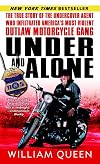
Under and Alone: The True Story of the Undercover Agent Who Infiltrated America's Most Violent Outlaw Motorcycle Gang
by William Queen
On This Page
Description
Biography & Autobiography. True Crime. Nonfiction. HTML:In 1998, William Queen was a veteran law enforcement agent with a lifelong love of motorcycles and a lack of patience with paperwork. When a “confidential informant” made contact with his boss at the Bureau of Alcohol, Tobacco and Firearms, offering to take an agent inside the San Fernando chapter of the Mongols (the scourge of Southern California, and one of the most dangerous gangs in America), Queen jumped at the chance, not show more realizing that he was kicking-starting the most extensive undercover operation inside an outlaw motorcycle gang in the history of American law enforcement.Nor did Queen suspect that he would penetrate the gang so successfully that he would become a fully “patched-in” member, eventually rising through their ranks to the office of treasurer, where he had unprecedented access to evidence of their criminal activity. After Queen spent twenty-eight months as “Billy St. John,” the bearded, beer-swilling, Harley-riding gang-banger, the truth of his identity became blurry, even to himself.
During his initial “prospecting” phase, Queen was at the mercy of crank-fueled criminal psychopaths who sought to have him test his mettle and prove his fealty by any means necessary, from selling (and doing) drugs, to arms trafficking, stealing motorcycles, driving getaway cars, and, in one shocking instance, stitching up the face of a Mongol “ol’ lady” after a particularly brutal beating at the hands of her boyfriend.
Yet despite the constant criminality of the gang, for whom planning cop killings and gang rapes were business as usual, Queen also came to see the genuine camaraderie they shared. When his lengthy undercover work totally isolated Queen from family, his friends, and ATF colleagues, the Mongols felt like the only family he had left. “I had no doubt these guys genuinely loved Billy St. John and would have laid down their lives for him. But they wouldn’t hesitate to murder Billy Queen.”
From Queen’s first sleight of hand with a line of methamphetamine in front of him and a knife at his throat, to the fearsome face-off with their decades-old enemy, the Hell’s Angels (a brawl that left three bikers dead), to the heartbreaking scene of a father ostracized at Parents’ Night because his deranged-outlaw appearance precluded any interaction with regular citizens, Under and Alone is a breathless, adrenaline-charged read that puts you on the street with some of the most dangerous men in America and with the law enforcement agents who risk everything to bring them in. show less
Tags
Recommendations

Member Reviews
Before I read this, I admit I never really thought about motorcycle gangs. Had I considered them, I think I would have associated them more with empty boasts and petty crime rather than "domestic terror" and serious felonies. I found this on audio at my library, and, as an inveterate hardboiled and police procedural reader, thought it would be interesting to hear the perspectives of an ATF undercover agent who had spent time living as one of these apparently fearsome outlaws. According to Wikipedia, Queen's multiyear stint undercover in the Mongol motorcycle gang was one of most successful ATF gang penetrations to date.
I have to admit that after reading it, my opinion on biker gangs has basically gone back to my pre-book views. On show more closer examination, this "most successful," multi-year undercover operation led to 54 convictions, most of which had sentences of less than three years. Despite Queen's tendency to refer to the gang as "monsters," they seem rather more like a fraternity gone out of control rather than an insidious force with steel talons gripping society's heart. Queen tells us that the Mongols had incredible influence over their communities, but if that were the case, wouldn't they have been a little more successful? Instead, these bikers seem to live hand-to-mouth, riding about on broken-down bikes and returning at night to cheap hotels or shanties. Queen talks about drug operations, but from his story, it seems like local nickel-and-diming and self-supplying rather than one of the massive drug trafficking webs. No matter how sensationally he paints it, I felt a little underwhelmed. For example, he describes one of the raids, when the police uncover guns (guns!! In America?!? Who'd a'thunk?), drugs (well, marijuana. But drugs!!!), and cash (well, $1400. But cash!!) I lived in Colorado briefly, and I suspect a few random raids in hunting/medical-marijuana country could uncover the same amount of wild lawlessness. In the end, one has to wonder what the two-year undercover sting operation actually achieved. All of the men Queen put away are out by now, probably with a few more prison tats and experiences behind bars to boast about over beers. The U.S. prison system isn't precisely known for its ability to reform, and it isn't as though a huge number of secret operatives were uncovered--just a single lowish-level state official who took bribes. In the end, it seems that all the Mongols really received was fifty-four wrist-slaps and quite a lot of free publicity of their general "badassery." One has to wonder how much their organisation has grown after the furore.
Queen's portrayal made it quite difficult for me to view the bikers as formidable foes. He takes as given that everyone has some sort of horrific fear for bikers (which... I just don't think is a norm), then portrays the gang members themselves more like a fraternity gone wild rather than a horrific mafia-style gang with tendrils everywhere. For example, Queen recounts one instance in which one of his close relatives died, and each of the bikers in turn gives him a big hug and tells him, in these very words, "I love you, Billy. I just... can't be particularly terrified by men who are so ready to go into full-out bromance mode. To be fair, much of the book deals with Queen's own inability to reconcile the various facets of his biker bros. He calls them "monsters," but is, on the whole, sympathetic. For example, he speaks with disgust of how bikers treat their women, but quickly adds that all the women he saw wanted to be there and wanted to be treated like that--they wanted to be raped, beaten, abused, and misused by these men. According to Queen, the woman so trapped by circumstance that she appeared to enjoy playing strip pool with the guys "wanted" everything that happened to her, so what's a man to do but step back and enjoy the view?
Queen himself appears uncomfortably well suited to his life amongst the bikers; he can't help but refer to the men as his friends, seems impressed by their various escapades, and seems to revel in the outlaw life. Part of my issues with the book was a certain distaste for Queen himself. To me, he came off as a swaggering, coarse, anti-authoritarian, profanity-obsessed, and self-satisfied egotist. Nothing he ever does is in the wrong; despite politeness or righteousness or law-abidingness, the rest of the world is always misjudging him. Despite cleverness and badassery, the bikers are always undervaluing him. Despite extreme heroics and courageousness, his bosses are always misusing him. I do think Queen's actions took an incredible amount of courage, and I also think that perhaps his daredevil, self-assured personality was a necessity for the undercover roles he took. His evident fascination with the lifestyle, however, made me uncomfortable, because it brought into sharp relief the parallels between the freedom of those who ignore the law and those who deal it out.
In the end, I found Queen's viewpoint interesting, but was rather depressed by the futility of the whole venture. Queen paints a portrait of a bunch of wayward sons who seem feckless rather than fearsome. An interesting read, but if you take this one up, be prepared for some serious biker attitude from the narrator. show less
I have to admit that after reading it, my opinion on biker gangs has basically gone back to my pre-book views. On show more closer examination, this "most successful," multi-year undercover operation led to 54 convictions, most of which had sentences of less than three years. Despite Queen's tendency to refer to the gang as "monsters," they seem rather more like a fraternity gone out of control rather than an insidious force with steel talons gripping society's heart. Queen tells us that the Mongols had incredible influence over their communities, but if that were the case, wouldn't they have been a little more successful? Instead, these bikers seem to live hand-to-mouth, riding about on broken-down bikes and returning at night to cheap hotels or shanties. Queen talks about drug operations, but from his story, it seems like local nickel-and-diming and self-supplying rather than one of the massive drug trafficking webs. No matter how sensationally he paints it, I felt a little underwhelmed. For example, he describes one of the raids, when the police uncover guns (guns!! In America?!? Who'd a'thunk?), drugs (well, marijuana. But drugs!!!), and cash (well, $1400. But cash!!) I lived in Colorado briefly, and I suspect a few random raids in hunting/medical-marijuana country could uncover the same amount of wild lawlessness. In the end, one has to wonder what the two-year undercover sting operation actually achieved. All of the men Queen put away are out by now, probably with a few more prison tats and experiences behind bars to boast about over beers. The U.S. prison system isn't precisely known for its ability to reform, and it isn't as though a huge number of secret operatives were uncovered--just a single lowish-level state official who took bribes. In the end, it seems that all the Mongols really received was fifty-four wrist-slaps and quite a lot of free publicity of their general "badassery." One has to wonder how much their organisation has grown after the furore.
Queen's portrayal made it quite difficult for me to view the bikers as formidable foes. He takes as given that everyone has some sort of horrific fear for bikers (which... I just don't think is a norm), then portrays the gang members themselves more like a fraternity gone wild rather than a horrific mafia-style gang with tendrils everywhere. For example, Queen recounts one instance in which one of his close relatives died, and each of the bikers in turn gives him a big hug and tells him, in these very words, "I love you, Billy. I just... can't be particularly terrified by men who are so ready to go into full-out bromance mode. To be fair, much of the book deals with Queen's own inability to reconcile the various facets of his biker bros. He calls them "monsters," but is, on the whole, sympathetic. For example, he speaks with disgust of how bikers treat their women, but quickly adds that all the women he saw wanted to be there and wanted to be treated like that--they wanted to be raped, beaten, abused, and misused by these men. According to Queen, the woman so trapped by circumstance that she appeared to enjoy playing strip pool with the guys "wanted" everything that happened to her, so what's a man to do but step back and enjoy the view?
Queen himself appears uncomfortably well suited to his life amongst the bikers; he can't help but refer to the men as his friends, seems impressed by their various escapades, and seems to revel in the outlaw life. Part of my issues with the book was a certain distaste for Queen himself. To me, he came off as a swaggering, coarse, anti-authoritarian, profanity-obsessed, and self-satisfied egotist. Nothing he ever does is in the wrong; despite politeness or righteousness or law-abidingness, the rest of the world is always misjudging him. Despite cleverness and badassery, the bikers are always undervaluing him. Despite extreme heroics and courageousness, his bosses are always misusing him. I do think Queen's actions took an incredible amount of courage, and I also think that perhaps his daredevil, self-assured personality was a necessity for the undercover roles he took. His evident fascination with the lifestyle, however, made me uncomfortable, because it brought into sharp relief the parallels between the freedom of those who ignore the law and those who deal it out.
In the end, I found Queen's viewpoint interesting, but was rather depressed by the futility of the whole venture. Queen paints a portrait of a bunch of wayward sons who seem feckless rather than fearsome. An interesting read, but if you take this one up, be prepared for some serious biker attitude from the narrator. show less
Going undercover requires an incredible amount of sacrifice. To do that by immersing yourself in a culture of brutality requires fearlessness and total dedication.
I found this book fascinating. Queen holds nothing back as he recounts the two years he spent with the Mongols, who are one of the most violent biker gangs in the U.S. We see his struggle to maintain his sense of self, while living as someone else. I was particularly struck by his inner battle with turning on these people who had become friends. Few people are inherently bad or good. Despite the violent and often horrible acts these bikers committed, they shared a stronger bond than many families and spouses ever experience. They truly loved one another.
Queen's dedication to show more this case is astounding. By telling his story, he exposes the truth behind the overly glamorized biker world. show less
I found this book fascinating. Queen holds nothing back as he recounts the two years he spent with the Mongols, who are one of the most violent biker gangs in the U.S. We see his struggle to maintain his sense of self, while living as someone else. I was particularly struck by his inner battle with turning on these people who had become friends. Few people are inherently bad or good. Despite the violent and often horrible acts these bikers committed, they shared a stronger bond than many families and spouses ever experience. They truly loved one another.
Queen's dedication to show more this case is astounding. By telling his story, he exposes the truth behind the overly glamorized biker world. show less
So this dude basically goes undercover to bust some bad bad folks in a motorcycle club. But then he ends up getting a little deeper in than he really planned.
It's a quick read, and if you know nothing about motorcycle clubs, it's not a bad place to start. You'll end up learning a lot about this subculture that is still running strong today, and in Colorado no less. That's the good stuff.
The bad stuff is that the book tends towards the real-crime genre in that it tries to horrify you with the different shit that goes down in the MC. And here's the other thing: The guy goes undercover, and as happens in classic undercover stories, finds himself somewhat hesitant to actually bust some of these dudes. I understand what he's saying at times, show more but mostly he tells about one guy or another busting open a woman's face stabbing an innocent dude, beating the living hell out of somebody, or completely not giving a damn that it's his son's birthday. So I guess the part where I'm supposed to feel bad falls a little flat. show less
It's a quick read, and if you know nothing about motorcycle clubs, it's not a bad place to start. You'll end up learning a lot about this subculture that is still running strong today, and in Colorado no less. That's the good stuff.
The bad stuff is that the book tends towards the real-crime genre in that it tries to horrify you with the different shit that goes down in the MC. And here's the other thing: The guy goes undercover, and as happens in classic undercover stories, finds himself somewhat hesitant to actually bust some of these dudes. I understand what he's saying at times, show more but mostly he tells about one guy or another busting open a woman's face stabbing an innocent dude, beating the living hell out of somebody, or completely not giving a damn that it's his son's birthday. So I guess the part where I'm supposed to feel bad falls a little flat. show less
I have seen cable show overviews of this amazing feat of undercover policework done by Queen of the ATF, right up there with Joe Pistone's Donnie Brasco stunt (1976–1981) against the Mafia. Ably narrated by Don Leslie with all the F-bombs of frustration delivered forcibly and the pangs of regret against bringing down some of the "brothers" made comes across well. It is amazing to hear the details on how even two decades ago the Mongols were a tribe so well-populated with psychopaths and configured as a successful criminal enterprise of drug and gun running, extortion, and witness intimidation.
The compelling message of this memoir is the bravery, quick wits, and self-sacrifice required of those that go this far to infiltrate criminal show more organizations to this extent. show less
The compelling message of this memoir is the bravery, quick wits, and self-sacrifice required of those that go this far to infiltrate criminal show more organizations to this extent. show less
It takes a special kind of courage for an ATF agent to try to infiltrate a motorcycle gang, a gang of murderers and rapists and thugs, William Queen, aka Billy St. John, tried just that, knowing full well that he would be killed if his undercover status were discovered.
This story is really interesting. It was written well but it's not especially compelling prose. There is a story to tell, and it is told, straightforward and without a lot of flourish.
The look at this gang, a look I would never have without this book, is harrowing. The details needed to be covered to keep Billy's identity safe were mind-boggling. And not guaranteed to be successful.
Mr. Queen gave up much of his own life to gather information on these gang members, walking show more a fine line between committing felonies himself and giving himself away by not committing them.
I found it interesting how much he grew to like some of these gang members, how his loyalty was divided. This is especially true after someone close to him died, and the reactions of his fellow gang members and his professional colleagues were so different.
There were a couple of references to his fear of a pit bull playing with children in the front yard of a home, children who were neglected at the very best. Yes, pit bulls can be made mean, and I'm sure these thugs would be the ones to do that, but that dog was probably the best protection those children had, certainly more protective than their useless, abusive parents. So sad for the children!
While this book is not the best example of a memoir I've ever read. It was fascinating and gave me a look into a world I hope I never have the bad luck of seeing any of it first hand.
I listened to an unabridged audio edition of this book, borrowed from the local library. show less
This story is really interesting. It was written well but it's not especially compelling prose. There is a story to tell, and it is told, straightforward and without a lot of flourish.
The look at this gang, a look I would never have without this book, is harrowing. The details needed to be covered to keep Billy's identity safe were mind-boggling. And not guaranteed to be successful.
Mr. Queen gave up much of his own life to gather information on these gang members, walking show more a fine line between committing felonies himself and giving himself away by not committing them.
I found it interesting how much he grew to like some of these gang members, how his loyalty was divided. This is especially true after someone close to him died, and the reactions of his fellow gang members and his professional colleagues were so different.
There were a couple of references to his fear of a pit bull playing with children in the front yard of a home, children who were neglected at the very best. Yes, pit bulls can be made mean, and I'm sure these thugs would be the ones to do that, but that dog was probably the best protection those children had, certainly more protective than their useless, abusive parents. So sad for the children!
While this book is not the best example of a memoir I've ever read. It was fascinating and gave me a look into a world I hope I never have the bad luck of seeing any of it first hand.
I listened to an unabridged audio edition of this book, borrowed from the local library. show less
It's a fine book showing again that reality can take you to places that fiction can't. The problem is that it would be difficult to write a better recruiting text for this particular motorcycle gang (California Mongols).
Undercover agent William Queen (Billy St John) contrasts the warmth of feeling the San Fernando Valley chapter had for him, with the couldn't care less, and don't waste our time, attitude of the Los Angeles Police Department.
Unfortunately, he's telling lazy violent outsiders who lack status and comradeship where they should go - Mongols Motorcycle Club - and conversely - telling the good guys to avoid employment with the LAPD.
Undercover agent William Queen (Billy St John) contrasts the warmth of feeling the San Fernando Valley chapter had for him, with the couldn't care less, and don't waste our time, attitude of the Los Angeles Police Department.
Unfortunately, he's telling lazy violent outsiders who lack status and comradeship where they should go - Mongols Motorcycle Club - and conversely - telling the good guys to avoid employment with the LAPD.
This is a fascinating book that gives you a good look into outlaw motorcycle games. The story is intriguing and egaging all the way through. And you even start to feel sorry for the outlaw's that he had to prosecute at the end of the book. The last page of the book really conveys the angst, and melanchology that Billy Queen felt when turning them all in.
Members
- Recently Added By
Author Information

3 Works 473 Members
Awards and Honors
Distinctions
Common Knowledge
- Original publication date
- 2005
- People/Characters
- William Queen; Timothy "Domingo" Alvarez; Rudy "Rocky" Martinez; Richard "Rancid" Clayton; Phillip "Evel" Alarcon; Douglas "Bucket Head" Cramer (show all 10); Ernest "AK" Jimenez; Donald "Red Dog" Jarvis; John Ciccone; Adrian "Panhead" Gutierrez
- Important places
- San Fernando Valley, California, USA; Las Vegas, Nevada, USA
- Dedication
- To the men and women who make up The Thin Blue Line
- First words
- September 1998 Somewhere near Visalia, California "All right, Billy, how long was your f***ing academy?"
- Last words
- (Click to show. Warning: May contain spoilers.)(From the epilogue) Prison, drug addiction, or violent death is the expected end for any man willing to wear that black-and-white patch.
Classifications
- Genres
- Nonfiction, General Nonfiction, Biography & Memoir, Politics and Government
- DDC/MDS
- 364.1066092 — Society, government, & culture Social problems and social services Crime Criminal offenses Organized Crime Gangsterism Standard subdivisions History, geographic treatment, biography
- LCC
- HV6489 .C2 .Q44 — Social sciences Social pathology. Social and public welfare. Criminology Social pathology. Social and public welfare. Criminology Crimes and offenses
- BISAC
Statistics
- Members
- 438
- Popularity
- 70,527
- Reviews
- 21
- Rating
- (3.79)
- Languages
- Dutch, English
- Media
- Paper, Audiobook, Ebook
- ISBNs
- 12
- ASINs
- 7