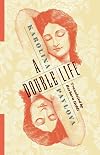
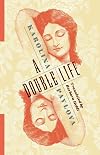
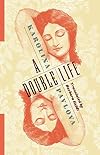
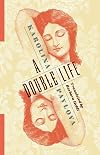
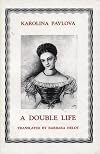
A Double Life
by Karolina Pavlova
On This Page
Description
An unsung classic of nineteenth-century Russian literature, Karolina Pavlova's A Double Life alternates prose and poetry to offer a wry picture of Russian aristocratic society and vivid dreams of escaping its strictures. Pavlova combines rich narrative prose that details balls, tea parties, and horseback rides with poetic interludes that depict her protagonist's inner world-and biting irony that pervades a seemingly romantic description of a young woman who has everything.A Double Life tells show more the story of Cecily, who is being trapped into marriage by her well-meaning mother; her best friend, Olga; and Olga's mother, who means to clear the way for a wealthier suitor for her own daughter by marrying off Cecily first. Cecily's privileged upbringing makes her oblivious to the havoc that is being wreaked around her. Only in the seclusion of her bedroom is her imagination freed: each day of deception is followed by a night of dreams described in soaring verse. Pavlova subtly speaks against the limitations placed on women and especially women writers, which translator Barbara Heldt highlights in a critical introduction. Among the greatest works of literature by a Russian woman writer, A Double Life is worthy of a central place in the Russian canon. show lessTags
Recommendations












Member Reviews
I’m surprised Pavlova didn’t write more in prose, because the prose sections of “A Double Life” are sparkling-bright, consistently spicy in their denunciation of the “mental corset” Cecily and her ilk are forced to wear. There’s neither the time in ten short chapters, nor the inclination here for subtlety. The scheming of the women, naivety of the girls, and oafish coarseness of the men are undisguised. There are lots of mordant cracks like this:
“This state of lively tension, the jolly noise that surrounds brides, calls to mind that accidentally deafening music and beating of drums by which soldiers are led into mortal combat.”
I disliked the verse sections less than I expected to, as well. The device of the alternating show more prose/verse, day/night double existence works really well. Unfortunately it’s another case of Russian poetry in translation being stripped of all rhyme and meter, so it reads as chopped up highfalutin’ prose. I get that it’s anything but easy to translate Russian poetry so I’m not gonna fault the translator too much, especially as her work on the prose sections is excellent. But for me it’s the only real tarnish on this (still, strangely) underread gem of a book. show less
“This state of lively tension, the jolly noise that surrounds brides, calls to mind that accidentally deafening music and beating of drums by which soldiers are led into mortal combat.”
I disliked the verse sections less than I expected to, as well. The device of the alternating show more prose/verse, day/night double existence works really well. Unfortunately it’s another case of Russian poetry in translation being stripped of all rhyme and meter, so it reads as chopped up highfalutin’ prose. I get that it’s anything but easy to translate Russian poetry so I’m not gonna fault the translator too much, especially as her work on the prose sections is excellent. But for me it’s the only real tarnish on this (still, strangely) underread gem of a book. show less
A hidden gem of 19th century Russian literature, which appears to have been buried by history because its author was a woman. Karolina Pavlova tells us of a young woman struggling with the societal pressures that she undoubtedly felt herself (and more so), which made the story poignant to me. It’s told in ten chapters with the events of the day told in prose, followed by the dreams at night told in poetry. Pavlova is effective in both styles, and this framing is not only interesting, but goes along well the double life of keeping up with the expectations of society, and yet yearning to have more freedom and control in life.
The young woman is expected to get a certain amount of education, but to not spend too much time on poetry, or show more “any development of imagination and inspiration, those eternal enemies of propriety.” It’s a powerful analogy when Pavlova compares it to putting her mind in a corset for so long that she no longer even feels it, and the constraints on women are peppered throughout the book. A young woman was expected to marry, and marry well, and we see maneuvering between her mother and her friend’s mother for possible suitors (I won’t spoil the details). Even in what should be happiness, finding someone, Pavlova is brilliant when she juxtaposes a crass bachelor party for the young man alongside the young lady telling her friends how virtuous he is. There is a sense of doom in that the man will change and exert power over her the moment they are married, further shackling her to her fate because she is a woman.
Karolina Pavlova seems like an interesting person in her own right, and her lonely exile in Dresden over her last decades is a little sad. It was interesting to find out that her first romantic love was Adam Mickiewicz, who tutored her in Polish to go along with the seven other languages she knew.
Just this quote, her dedication to women of the future:
“To you the offering of this thought,
The greeting of my poetry,
To you this work of solitude,
O slaves of din and vanity.
In silence did my sad sigh name
You Cecilys unmet by me,
All of you Psyches without wings,
Mute sisters of my soul!
God grant you, unknown family,
One sacred dream mid sinful lies,
In the prison of this narrow life
Just one brief burst of that other life.” (September 1846) show less
The young woman is expected to get a certain amount of education, but to not spend too much time on poetry, or show more “any development of imagination and inspiration, those eternal enemies of propriety.” It’s a powerful analogy when Pavlova compares it to putting her mind in a corset for so long that she no longer even feels it, and the constraints on women are peppered throughout the book. A young woman was expected to marry, and marry well, and we see maneuvering between her mother and her friend’s mother for possible suitors (I won’t spoil the details). Even in what should be happiness, finding someone, Pavlova is brilliant when she juxtaposes a crass bachelor party for the young man alongside the young lady telling her friends how virtuous he is. There is a sense of doom in that the man will change and exert power over her the moment they are married, further shackling her to her fate because she is a woman.
Karolina Pavlova seems like an interesting person in her own right, and her lonely exile in Dresden over her last decades is a little sad. It was interesting to find out that her first romantic love was Adam Mickiewicz, who tutored her in Polish to go along with the seven other languages she knew.
Just this quote, her dedication to women of the future:
“To you the offering of this thought,
The greeting of my poetry,
To you this work of solitude,
O slaves of din and vanity.
In silence did my sad sigh name
You Cecilys unmet by me,
All of you Psyches without wings,
Mute sisters of my soul!
God grant you, unknown family,
One sacred dream mid sinful lies,
In the prison of this narrow life
Just one brief burst of that other life.” (September 1846) show less
This is marvellous – oh, I’m so glad it came into my life.
This book is an even more cutting Jane Austen set in 1800s Russia.
If I’m being honest, the least compelling part for me is the poetry, but poetry is just not my thing. That being said, it is lovely poetry and the combination of prose and verse in each chapter is really effective. Each chapter follows Cecily, our ingénue protagonist, during a day of her youth and courtship and engagement [as well as the days of those surrounding her (with all their deviant machinations regarding the young lady)]… and then concludes in poetry which comes to Cecily in her dreams. The poetry is dreamy and melancholy and lovely while the prose is pure sass, seriously Pavlova knew how to show more write a barb. It is needle sharp. The contrast between the two is dissonant, but compelling. I think it speaks to the tension between Cecily's experience and worldview and her (to use an expression the author would be more comfortable with than I am) 'artistic soul'.
The Introduction and Afterword add some much needed scholarly context for the story and the author. I don’t think Pavlova is as well known as she should be with works like this.
My thanks to the publisher, author and netgalley for the eBook ARC for review. show less
This book is an even more cutting Jane Austen set in 1800s Russia.
If I’m being honest, the least compelling part for me is the poetry, but poetry is just not my thing. That being said, it is lovely poetry and the combination of prose and verse in each chapter is really effective. Each chapter follows Cecily, our ingénue protagonist, during a day of her youth and courtship and engagement [as well as the days of those surrounding her (with all their deviant machinations regarding the young lady)]… and then concludes in poetry which comes to Cecily in her dreams. The poetry is dreamy and melancholy and lovely while the prose is pure sass, seriously Pavlova knew how to show more write a barb. It is needle sharp. The contrast between the two is dissonant, but compelling. I think it speaks to the tension between Cecily's experience and worldview and her (to use an expression the author would be more comfortable with than I am) 'artistic soul'.
The Introduction and Afterword add some much needed scholarly context for the story and the author. I don’t think Pavlova is as well known as she should be with works like this.
My thanks to the publisher, author and netgalley for the eBook ARC for review. show less
A Double Life tells a story of Cecily, a young woman of Russian high society who is of marriagable age.
Despite it’s somewhat simplistic storyline, A Double Life is a facinating read on several levels.Written in 1848, the short novel tells the story of the naive Cecily, eighteen and marriagable in Russian high society. Cecily is lovely and appropriately talented; chaste and proper (did I say she had money?) —she has been brought up for this very moment. The story captures this high point in her life, the season she falls in love, her engagement and eventual marriage.
However, besides a picture of Cecily and her best friend, Olga; it is also a tale of their mothers, whose sole occupation it seems is to see their daughters married show more well. Olga’s mother is conniving and manipulative in a way that puts Mrs. Bennett in Pride & Prejudice in the amateur leagues. Enter on the scene various men, the choicest being Prince Victor. Olga’s mother wants the prince for Olga and fears he is attracted to Cecily.
Meanwhile, each night when she sleeps, Cecily, constructed creature that she is, expresses all that has been surpressed in her, through her dreams. The dream sequences are written in poetry. This is the double life indicated by the title.
Vera Vladimirovna was, as we have seen, very proud of her daughter’s successful upbringing, especially perhaps because it had been accomplished not without diffculty, since it took time and skill to destroy in her soul its innate thirst for delight and enthusiasm. Be that as it may, Cecily, prepared for high society, having memorized all its requirements and statutes, could never commit the slightest pecadillo, the most barely noticeable fault against them, could never forget herself for a moment, raise her voice a half tone, jump from a chair, enjoy a conversation with a man to the point where she might talk to him ten minutes longer than was proper or look to the right when she was supposed to look to the left. Now, at eighteen, she was so used to wearing her mind in a corset that she felt it no more than a silk undergarment that she took off only at night
The novel is more or less a protest to the limitations of a woman’s life at the time, of marriage being the unavoidable destiny. As a reader, one cannot help but hope that this passionate, subconscious part of Cecily finds some outer expression in her life, but the dangers of that can be seen in the author’s life.
Karolina Pavlova’s story, told in the introduction (I always read introductions after reading the book) is both heart-breaking and fascinating. Born into high society, she devoted herself to her art at a time when:
Poetry, as we have said earlier, was known to her (Cecily) mostly by heresay as something wild and incompatible with a respectable life. She knew that there were even women poets, but this was always presented to her as the most pitiable, abnormal things, as a disastrous and dangerous illness.
Pavlova suffered mightily for her art, and tragically died in the Netherlands, penniless and friendless. Pavlova was primarily a poet but also translated a large amount of Russian literature in other languages (she spoke nine), so it could be read and enjoyed by other Europeans.
There is much more that could be said about this short novel, the poetry in it, the author’s life, but I’ll leave it for your discovery. show less
Despite it’s somewhat simplistic storyline, A Double Life is a facinating read on several levels.Written in 1848, the short novel tells the story of the naive Cecily, eighteen and marriagable in Russian high society. Cecily is lovely and appropriately talented; chaste and proper (did I say she had money?) —she has been brought up for this very moment. The story captures this high point in her life, the season she falls in love, her engagement and eventual marriage.
However, besides a picture of Cecily and her best friend, Olga; it is also a tale of their mothers, whose sole occupation it seems is to see their daughters married show more well. Olga’s mother is conniving and manipulative in a way that puts Mrs. Bennett in Pride & Prejudice in the amateur leagues. Enter on the scene various men, the choicest being Prince Victor. Olga’s mother wants the prince for Olga and fears he is attracted to Cecily.
Meanwhile, each night when she sleeps, Cecily, constructed creature that she is, expresses all that has been surpressed in her, through her dreams. The dream sequences are written in poetry. This is the double life indicated by the title.
Vera Vladimirovna was, as we have seen, very proud of her daughter’s successful upbringing, especially perhaps because it had been accomplished not without diffculty, since it took time and skill to destroy in her soul its innate thirst for delight and enthusiasm. Be that as it may, Cecily, prepared for high society, having memorized all its requirements and statutes, could never commit the slightest pecadillo, the most barely noticeable fault against them, could never forget herself for a moment, raise her voice a half tone, jump from a chair, enjoy a conversation with a man to the point where she might talk to him ten minutes longer than was proper or look to the right when she was supposed to look to the left. Now, at eighteen, she was so used to wearing her mind in a corset that she felt it no more than a silk undergarment that she took off only at night
The novel is more or less a protest to the limitations of a woman’s life at the time, of marriage being the unavoidable destiny. As a reader, one cannot help but hope that this passionate, subconscious part of Cecily finds some outer expression in her life, but the dangers of that can be seen in the author’s life.
Karolina Pavlova’s story, told in the introduction (I always read introductions after reading the book) is both heart-breaking and fascinating. Born into high society, she devoted herself to her art at a time when:
Poetry, as we have said earlier, was known to her (Cecily) mostly by heresay as something wild and incompatible with a respectable life. She knew that there were even women poets, but this was always presented to her as the most pitiable, abnormal things, as a disastrous and dangerous illness.
Pavlova suffered mightily for her art, and tragically died in the Netherlands, penniless and friendless. Pavlova was primarily a poet but also translated a large amount of Russian literature in other languages (she spoke nine), so it could be read and enjoyed by other Europeans.
There is much more that could be said about this short novel, the poetry in it, the author’s life, but I’ll leave it for your discovery. show less
This is an overlooked great work from an overlooked great author of the 19th century Russian tradition. Part poetry, part prose, insightful gender commentary especially. Read Chapter 6 as part of Books Behind Bars.
Another contribution to #WITmonth.
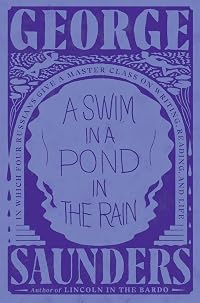
Karolina Karlovna Pavlova (1807–1893) was a Russian poet, translator and novelist. I discovered A Double Life (1848) because I was peeved that George Saunders in his book derived from a short story course that he teaches, features Russian short stories as exemplars but does not include even one story written by a woman. I felt sure that the Russian Library imprint of Columbia University Press would offer fiction by a Russian woman writer, and I was right. I ordered A Double Life there and then. At only just over 100 pages, it turns out to be more of a short story than a novella, and would IMHO be an ideal inclusion in the Saunders' course.
Wikipedia tells me that there is also a short story called At show more the Tea-Table (1859), in An Anthology of Russian Women's Writing, 177-1992, Oxford, 1994, should Saunders care to rise to the challenge.)
This edition includes a lengthy Introduction by Barbara Heldt, and an Afterword by Daniel Green. Much is made of the gender barriers that Pavlova faced, and indeed she seems to have had a difficult time and in the end did the smart thing and abandoned her critics in Russia to go and live in Germany in 1858. A Double Life, however, was written when she was still in Imperial Russia, and is a witty critique of aristocratic life.
The story features Cécile, her BFF Olga, the machinations of their mothers to have them marry well, and the actions of men which doom them to a dreary fate.
Written in 10 chapters which follow the narrow confines of Cécile's life, each concludes with verses of poetry which represent her dreams of freedom and fulfilment. In other words, it is the structure of the novel itself that portrays the double life of a woman who wants more from life than the one imposed on her and all women in aristocratic Russia.
To read the rest of my review please visit https://anzlitlovers.com/2021/08/27/a-double-life-by-karolina-pavlova-translated... show less
Karolina Karlovna Pavlova (1807–1893) was a Russian poet, translator and novelist. I discovered A Double Life (1848) because I was peeved that George Saunders in his book derived from a short story course that he teaches, features Russian short stories as exemplars but does not include even one story written by a woman. I felt sure that the Russian Library imprint of Columbia University Press would offer fiction by a Russian woman writer, and I was right. I ordered A Double Life there and then. At only just over 100 pages, it turns out to be more of a short story than a novella, and would IMHO be an ideal inclusion in the Saunders' course.
Wikipedia tells me that there is also a short story called At show more the Tea-Table (1859), in An Anthology of Russian Women's Writing, 177-1992, Oxford, 1994, should Saunders care to rise to the challenge.)
This edition includes a lengthy Introduction by Barbara Heldt, and an Afterword by Daniel Green. Much is made of the gender barriers that Pavlova faced, and indeed she seems to have had a difficult time and in the end did the smart thing and abandoned her critics in Russia to go and live in Germany in 1858. A Double Life, however, was written when she was still in Imperial Russia, and is a witty critique of aristocratic life.
The story features Cécile, her BFF Olga, the machinations of their mothers to have them marry well, and the actions of men which doom them to a dreary fate.
Written in 10 chapters which follow the narrow confines of Cécile's life, each concludes with verses of poetry which represent her dreams of freedom and fulfilment. In other words, it is the structure of the novel itself that portrays the double life of a woman who wants more from life than the one imposed on her and all women in aristocratic Russia.
Vera Vladimirovna was, as we have seen, very proud of her daughter's successful upbringing, especially perhaps because it had been accomplished not with difficulty, but because it took time and skill to destroy in her soul its innate thirst for delight and enthusiasm. Be that as it may, Cecily, prepared for high society, having memorised all its requirements and statues, could never commit the slightest peccadillo, the most barely noticeable fault against them, could never forget herself for a moment, raise her voice half a tone, jump from a chair, enjoy a conversation with a man to the point where she might talk with him ten minutes longer than was proper or look to the right when she was supposed to look to the left. Now, at eighteen, she was so used to wearing her mind in a corset that she felt it no more than she did the silk undergarment that she took off only at night. She had talents, of course, but measured ones, decorous ones, les talents de société, as the language of society so aptly calls them. She sang very nicely and sketched very nicely as well. Poetry, as we have said earlier, was known to her mostly by hearsay, as something wild and incompatible with a respectable life. She knew that there were even women poets, but this was always presented to her as the most pitiable, abnormal condition, as a disastrous and dangerous illness. (p.29)
To read the rest of my review please visit https://anzlitlovers.com/2021/08/27/a-double-life-by-karolina-pavlova-translated... show less
This is an overlooked great work from an overlooked great author of the 19th century Russian tradition. Part poetry, part prose, insightful gender commentary especially. Read Chapter 6 as part of Books Behind Bars.
Members
- Recently Added By
Lists

Kirkus Starred Fiction Reviews of Books Published in 2019
411 works; 12 members
Author Information

5+ Works 126 Members
Some Editions
Series
Belongs to Publisher Series
Common Knowledge
- Original title
- Двойная жизнь
- Original publication date
- 1848
Classifications
- Genres
- Fiction and Literature, General Fiction
- DDC/MDS
- 891.73 — Literature & rhetoric Literatures of other languages East Indo-European and Celtic literatures Russian and East Slavic languages Russian fiction
- LCC
- PG3337 .P35 .D8613 — Language and Literature Slavic languages and literatures. Baltic languages. Albanian language Slavic. Baltic. Albanian Russian literature Individual authors and works 1800-1870
- BISAC
Statistics
- Members
- 122
- Popularity
- 267,401
- Reviews
- 11
- Rating
- (3.47)
- Languages
- Dutch, English, Russian
- Media
- Paper, Ebook
- ISBNs
- 7
- ASINs
- 2