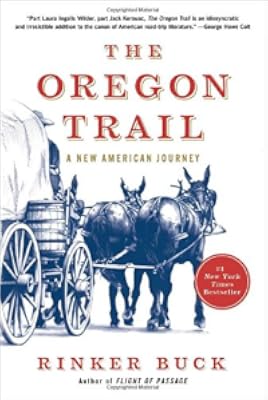
The Oregon Trail: A New American Journey
by Rinker Buck
On This Page
Description
#1 NEW YORK TIMES BESTSELLER • #1 Indie Next Pick • Winner of the PEN New England Award"Enchanting...A book filled with so much love...Long before Oregon, Rinker Buck has convinced us that the best way to see America is from the seat of a covered wagon." —The Wall Street Journal
"Amazing...A real nonfiction thriller." —Ian Frazier, The New York Review of Books
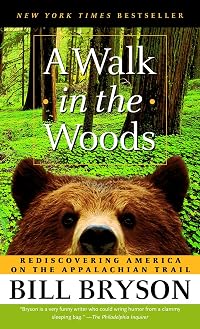
"Absorbing...Winning...The many layers in The Oregon Trail are linked by Mr. Buck's voice, which is alert and show more unpretentious in a manner that put me in mind of Bill Bryson's comic tone in A Walk in the Woods." —Dwight Garner, The New York Times
A major bestseller that has been hailed as a "quintessential American story" (Christian Science Monitor), Rinker Buck's The Oregon Trail is an epic account of traveling the 2,000-mile length of the Oregon Trail the old-fashioned way—in a covered wagon with a team of mules—that has captivated readers, critics, and booksellers from coast to coast. Simultaneously a majestic journey across the West, a significant work of history, and a moving personal saga, Buck's chronicle is a "laugh-out-loud masterpiece" (Willamette Week) that "so ensnares the emotions it becomes a tear-jerker at its close" (Star Tribune, Minneapolis) and "will leave you daydreaming and hungry to see this land" (The Boston Globe). show less
Tags
Recommendations







Member Reviews
A quick scan of my reading list reveals my affinity for nonfiction by authors who are quirky, erudite, and steeped in the natural world, whether through agriculture, adventure, or another lifestyle; books like Gaining Ground: A Story of Farmers' Markets, Local Food, and Saving the Family Farm, The Shepherd's Life: A People's History of the Lake District, and Folks, This Ain't Normal: A Farmer's Advice for Happier Hens, Healthier People, and a Better World are par for the course. It should come as no surprise, therefore, that Rinker Buck's account of his covered-wagon journey along the Oregon Trail hit all the right buttons for me.
This fellow is crazy. Let's get that straight right away. His answer to a mid-life slump is to buy a genuine show more covered wagon and a mule team and try to drive the Oregon Trail just like the pioneers did. His brother, who is even more eccentric and far less civilized, comes along for the trip, which adds a bit of family drama and a whole lot of profanity to the story. Intermixed with his account of their (mis)adventures, Buck provides all sorts of wonderful historical information about the trail and some of the people who traveled it. Although these segments are not always integrated as smoothly as they might be, the overall effect works well and the history and travelogue illuminate and enhance each other.
This book is funny, informative, and deeply absorbing. If you can listen to the audio, do so. Buck narrates his own story and, while I generally hate it when authors read their own work, it is perfect in this case. He's a great reader and the genuine feeling that comes through makes for a superb audio experience. If you choose to stick to the text version, don't worry. Buck writes so well and has such a great authorial presence, you'll feel like he's right there next to you telling you his story.
There's no way I'd take on a project like Buck's, but thanks to his storytelling skill and exhaustive research, I'm seriously considering taking my children on a car-bound version of this expedition. Anyone who can tempt me to spend more than a week in a car with three children has major inspirational power! show less
This fellow is crazy. Let's get that straight right away. His answer to a mid-life slump is to buy a genuine show more covered wagon and a mule team and try to drive the Oregon Trail just like the pioneers did. His brother, who is even more eccentric and far less civilized, comes along for the trip, which adds a bit of family drama and a whole lot of profanity to the story. Intermixed with his account of their (mis)adventures, Buck provides all sorts of wonderful historical information about the trail and some of the people who traveled it. Although these segments are not always integrated as smoothly as they might be, the overall effect works well and the history and travelogue illuminate and enhance each other.
This book is funny, informative, and deeply absorbing. If you can listen to the audio, do so. Buck narrates his own story and, while I generally hate it when authors read their own work, it is perfect in this case. He's a great reader and the genuine feeling that comes through makes for a superb audio experience. If you choose to stick to the text version, don't worry. Buck writes so well and has such a great authorial presence, you'll feel like he's right there next to you telling you his story.
There's no way I'd take on a project like Buck's, but thanks to his storytelling skill and exhaustive research, I'm seriously considering taking my children on a car-bound version of this expedition. Anyone who can tempt me to spend more than a week in a car with three children has major inspirational power! show less
The Oregon Trail by Rinker Buck is a very highly recommended account of two brothers traveling along the Oregon Trail today.
Author Rinker Buck, his brother Nick and Nick's “incurably filthy” Jack Russell terrier named Olive Oyl traveled over 2000 miles for four months along a route that was the Oregon Trail. They went from St. Joseph, Missouri, to Baker City, Oregon, through six present-day states, Missouri, Kansas, Nebraska, Wyoming, Idaho, and Oregon, in a covered wagon pulled by three mules named Jake, Beck, and Bute. In the fifteen years before the Civil War 400,000 pioneers used the trail to emigrate west. The last documented crossing was in 1909, so this trip was a historical reenactment or at least a taste of what happened show more during the great exodus west.
All it took to spark Rinker Buck's decision to travel the trail was learning from Duane Durst, an administrator from the Kansas Historical Society, that the 2100 mile length of the trail has been "meticulously charted and marked, with long, undeveloped spaces now preserved as a National Historic Trail. Except for two bad stretches of suburban sprawl around Scottsbluff, Nebraska, and Boise, Idaho, most of the rest of the trail is still accessible along remote farm and ranch roads in the West." Rink decided he had to travel the trail, and do it in as authentic a manner as possible.
If a travelogue of his adventures on the Oregon Trail today wasn't enough, Buck also includes a plethora of additional information on a wide variety of topics related to the trip. We learn a great deal about mules, wagons, the pioneers, cholera, marking the trail, plants along the way, burials along the trail, and the Mormon experience, to name a handful of topics. Buck also talks about a trip his family made in 1958. At that time his father decided to take his family on a month long "See America Slowly" vacation. They traveled in a covered wagon from central New Jersey across the Delaware River to south central Pennsylvania on a month long trip.
On the back of the wagon for this childhood trip his father had a sign made that said: "We’re Sorry For The Delay—But We Want The Children To SEE AMERICA SLOWLY New Vernon, New Jersey to Valley Forge, Lancaster, Gettysburg, Penna." For their new trip Nick had taken the board to a sign painter in Maine for the similar messaging he considered appropriate for our trip. Painted on the back of the original sign was the new one: "We Are Sorry For The Delay, But We Want To SEE AMERICA SLOWLY St. Joseph, Ft. Kearny, Scott’s Bluff, South Pass, Farewell Bend."
Buck is a perfect writer for this harrowing adventure. As he writes, "Only a delusional jackass, or someone seriously off his medications, would pull off the road at the Hollenberg Ranch one fine summer afternoon and concoct such a preposterous scheme. But you can’t save an addictive dreamer from himself, and that jackass happens to be me." He's a great story teller and includes a lot of self-deprecating humor along with all the additional support information. Even while letting us in on the mishaps and failures of the present trip, he includes references to past experiences and stories from his childhood, and manages to tie the two experiences together.
After spending my early years in Nebraska, I learned about the history of the Oregon Trail every year of elementary school. It was fascinating to read this account of the trail today and the hazards crossing it. The year Rinker and Nick undertook this adventure was also a very wet year, with lots of rain, thunderstorms, and flooding, so it was not an easy year to travel the trail. I had to laugh at the fact that: "The brisk and incessant prairie winds of Kansas and Nebraska were one of the most persistent obstacles to travel that the pioneers complained about in their journals." I thoroughly enjoyed this book!
Disclosure: My Kindle edition was courtesy of Simon & Schuster for review purposes. show less
Author Rinker Buck, his brother Nick and Nick's “incurably filthy” Jack Russell terrier named Olive Oyl traveled over 2000 miles for four months along a route that was the Oregon Trail. They went from St. Joseph, Missouri, to Baker City, Oregon, through six present-day states, Missouri, Kansas, Nebraska, Wyoming, Idaho, and Oregon, in a covered wagon pulled by three mules named Jake, Beck, and Bute. In the fifteen years before the Civil War 400,000 pioneers used the trail to emigrate west. The last documented crossing was in 1909, so this trip was a historical reenactment or at least a taste of what happened show more during the great exodus west.
All it took to spark Rinker Buck's decision to travel the trail was learning from Duane Durst, an administrator from the Kansas Historical Society, that the 2100 mile length of the trail has been "meticulously charted and marked, with long, undeveloped spaces now preserved as a National Historic Trail. Except for two bad stretches of suburban sprawl around Scottsbluff, Nebraska, and Boise, Idaho, most of the rest of the trail is still accessible along remote farm and ranch roads in the West." Rink decided he had to travel the trail, and do it in as authentic a manner as possible.
If a travelogue of his adventures on the Oregon Trail today wasn't enough, Buck also includes a plethora of additional information on a wide variety of topics related to the trip. We learn a great deal about mules, wagons, the pioneers, cholera, marking the trail, plants along the way, burials along the trail, and the Mormon experience, to name a handful of topics. Buck also talks about a trip his family made in 1958. At that time his father decided to take his family on a month long "See America Slowly" vacation. They traveled in a covered wagon from central New Jersey across the Delaware River to south central Pennsylvania on a month long trip.
On the back of the wagon for this childhood trip his father had a sign made that said: "We’re Sorry For The Delay—But We Want The Children To SEE AMERICA SLOWLY New Vernon, New Jersey to Valley Forge, Lancaster, Gettysburg, Penna." For their new trip Nick had taken the board to a sign painter in Maine for the similar messaging he considered appropriate for our trip. Painted on the back of the original sign was the new one: "We Are Sorry For The Delay, But We Want To SEE AMERICA SLOWLY St. Joseph, Ft. Kearny, Scott’s Bluff, South Pass, Farewell Bend."
Buck is a perfect writer for this harrowing adventure. As he writes, "Only a delusional jackass, or someone seriously off his medications, would pull off the road at the Hollenberg Ranch one fine summer afternoon and concoct such a preposterous scheme. But you can’t save an addictive dreamer from himself, and that jackass happens to be me." He's a great story teller and includes a lot of self-deprecating humor along with all the additional support information. Even while letting us in on the mishaps and failures of the present trip, he includes references to past experiences and stories from his childhood, and manages to tie the two experiences together.
After spending my early years in Nebraska, I learned about the history of the Oregon Trail every year of elementary school. It was fascinating to read this account of the trail today and the hazards crossing it. The year Rinker and Nick undertook this adventure was also a very wet year, with lots of rain, thunderstorms, and flooding, so it was not an easy year to travel the trail. I had to laugh at the fact that: "The brisk and incessant prairie winds of Kansas and Nebraska were one of the most persistent obstacles to travel that the pioneers complained about in their journals." I thoroughly enjoyed this book!
Disclosure: My Kindle edition was courtesy of Simon & Schuster for review purposes. show less
This entertaining, often enthralling, mix of history, humor, travelogue, family memoir, and no holds barred social commentary reminds me of my favorite Bill Bryson books--especially A Walk in the Woods about Bryson’s (mis)adventures hiking the Appalachian Trail. When Rinker Buck discovered that large stretches of the Oregon Trail still exist, he had romantic visions of a back to basics journey across the western half of the continent and began obsessively and meticulously preparing for a mule-drawn covered wagon trip along the old pioneer route. Since he was divorced and his daughters were grown, why not? Rinker planned to go solo, but even replica wagons have breakdowns, so fortunately for both him and his readers Rinker’s handy, show more force of nature brother insisted on coming along too--a brusque, big-hearted, syntax challenged, mechanically gifted giant of a man who has some resemblance to Harry Potter’s Hagrid.
Rinker blends the fascinating if fraught history of the mass migration westward into the story of his own journey. Pioneer journals were his guides, and the sections devoted to their lively accounts of trail travel were some of my favorite parts of the book. Rinker also writes movingly about his father, an adventurous, family-centered man who inspired his trip. I found the chapter about the surprising (to me) importance role of mules in 18th and 19th century America--starting with George Washington as a savvy land speculating donkey importer and mule broker--utterly captivating, and it’s a good example of the atypical historical perspectives and insights that make this book so riveting.
But The Oregon Trail: A New American Journey is as much about the modern day West and its people as it is about the past, and as an Easterner I learned a lot--Rinker, his brother, and their mule team often spent their nights in open publicly maintained corrals where teenagers gather to hang out and practice rodeo skills, not something we encounter here in the Boston to Washington megalopolis. The writing about the actual trip is detailed but evocative, so I felt like I was watching the scenery and riding along in the covered wagon myself. I wasn’t quite so interested in the wagon maintenance aspects of their journey, but I’m sure those sections will delight some readers. show less
Rinker blends the fascinating if fraught history of the mass migration westward into the story of his own journey. Pioneer journals were his guides, and the sections devoted to their lively accounts of trail travel were some of my favorite parts of the book. Rinker also writes movingly about his father, an adventurous, family-centered man who inspired his trip. I found the chapter about the surprising (to me) importance role of mules in 18th and 19th century America--starting with George Washington as a savvy land speculating donkey importer and mule broker--utterly captivating, and it’s a good example of the atypical historical perspectives and insights that make this book so riveting.
But The Oregon Trail: A New American Journey is as much about the modern day West and its people as it is about the past, and as an Easterner I learned a lot--Rinker, his brother, and their mule team often spent their nights in open publicly maintained corrals where teenagers gather to hang out and practice rodeo skills, not something we encounter here in the Boston to Washington megalopolis. The writing about the actual trip is detailed but evocative, so I felt like I was watching the scenery and riding along in the covered wagon myself. I wasn’t quite so interested in the wagon maintenance aspects of their journey, but I’m sure those sections will delight some readers. show less
Although the guts of this book is the history & nature of the Oregon Trail, and what it took to make the crossing in the modern day by animal team, the heart of the book is probably the author using this trip as a spiritual retreat to purge himself of the dark emotional baggage left by a divorce, the collapse of his profession (newspaper reporter) and, above all, getting to final grips with his relationship with his deceased father. If this sometimes seems like too much information, and a little overly confessional, it turns out that this was not self-indulgence but that Buck was put up to it by his publisher!
What does seem a bit self-indulgent is when Buck has one of his "get off of my lawn moments" and engages in some mini-rants about show more how the intelligence of the American public seems to be dwindling, the bloody costs of modern American empire, his lack of use for religion and the thuggish behavior of a lot of current police. However, there might be some irony in there as Buck also relates the stories about where he and his brother are in some tight spots (one could go on and on about this "Odd Couple") and salvation comes in the form of either members of the Church of Later Day Saints or a Wyoming State trooper; these four or five outbursts do seem a bit graceless though. It's the main reason I don't rate this book a little higher. show less
What does seem a bit self-indulgent is when Buck has one of his "get off of my lawn moments" and engages in some mini-rants about show more how the intelligence of the American public seems to be dwindling, the bloody costs of modern American empire, his lack of use for religion and the thuggish behavior of a lot of current police. However, there might be some irony in there as Buck also relates the stories about where he and his brother are in some tight spots (one could go on and on about this "Odd Couple") and salvation comes in the form of either members of the Church of Later Day Saints or a Wyoming State trooper; these four or five outbursts do seem a bit graceless though. It's the main reason I don't rate this book a little higher. show less
I ordered this non-fiction book somewhat by mistake, thinking it was a more historical account of the Oregon trail, as opposed to a modern day trip along the Oregon trail in a period covered wagon, something of a reenactment.
Nevertheless, the book does frequently refer to the historical period that the trail was in widest use in the mid-19th century. The author and his brother face a number of obstacles in their attempt to traverse the historical route and their experiences are mildly entertaining. In addition to the historical references and the current day travails, there are also vignettes from the author’s childhood that I could have done without.
Most perturbing, however, are the not infrequent political and social rants engaged show more in by the author, some of which are merely annoying, while others are borderline offensive. Among these are his opinion that religion is bunk and anyone engaging in its practices is a mindless sheep. He never misses a chance to tout the benefits of big government and relentlessly insults conservative thinkers. Perhaps most bothersome are the over-the-top statements he makes concerning law enforcement:
“The rancher (upon whose land he had trespassed) reminded me of those Emperor Nero state troopers who cannot hand out a routine speeding ticket without pestering a driver with a string of useless and humiliating questions. The cops of America are poster boys of low self-esteem. Their uniforms, silly hats and sparkling patent leather girdles freighted down with shiny handcuffs, walkie-talkies, and spray canisters of Mace apparently do ot make them feel secure enough, so they always add the hostile interrogation to make sure that the accosted citizen knows who is in charge”.
This, a mere 2-3 pages before detailing all of the help provided by a Wyoming State Trooper.
Anyone that inconveniences his little project comes in for a heap of his scorn, including all of the stupid old people driving recreational vehicles across the country to see the historical sites that he is so proud of pointing out were provided by the government. Why can’t they just get their own covered wagon and go about it the right way!
He trespasses on private land with impunity (the circumstances suggest that the property was well posted) and then roundly condemns the rancher that ordered him off the property, suggesting that his opinion of private property rights lines up well with his other political beliefs.
Bottom line, the author is something of a horse’s ass. Anyone that helps him is a great guy, anyone that inconveniences him in any way is a miserable human being. The information and experiences described in the book failed to rise to the level of a net positive when weighed against the annoyance generated by the author’s frequent venting of spleen. show less
Nevertheless, the book does frequently refer to the historical period that the trail was in widest use in the mid-19th century. The author and his brother face a number of obstacles in their attempt to traverse the historical route and their experiences are mildly entertaining. In addition to the historical references and the current day travails, there are also vignettes from the author’s childhood that I could have done without.
Most perturbing, however, are the not infrequent political and social rants engaged show more in by the author, some of which are merely annoying, while others are borderline offensive. Among these are his opinion that religion is bunk and anyone engaging in its practices is a mindless sheep. He never misses a chance to tout the benefits of big government and relentlessly insults conservative thinkers. Perhaps most bothersome are the over-the-top statements he makes concerning law enforcement:
“The rancher (upon whose land he had trespassed) reminded me of those Emperor Nero state troopers who cannot hand out a routine speeding ticket without pestering a driver with a string of useless and humiliating questions. The cops of America are poster boys of low self-esteem. Their uniforms, silly hats and sparkling patent leather girdles freighted down with shiny handcuffs, walkie-talkies, and spray canisters of Mace apparently do ot make them feel secure enough, so they always add the hostile interrogation to make sure that the accosted citizen knows who is in charge”.
This, a mere 2-3 pages before detailing all of the help provided by a Wyoming State Trooper.
Anyone that inconveniences his little project comes in for a heap of his scorn, including all of the stupid old people driving recreational vehicles across the country to see the historical sites that he is so proud of pointing out were provided by the government. Why can’t they just get their own covered wagon and go about it the right way!
He trespasses on private land with impunity (the circumstances suggest that the property was well posted) and then roundly condemns the rancher that ordered him off the property, suggesting that his opinion of private property rights lines up well with his other political beliefs.
Bottom line, the author is something of a horse’s ass. Anyone that helps him is a great guy, anyone that inconveniences him in any way is a miserable human being. The information and experiences described in the book failed to rise to the level of a net positive when weighed against the annoyance generated by the author’s frequent venting of spleen. show less
“Crazyass passion is the staple of life and persistence its nourishing force. Without them, you cannot cross the trail.”
“Seeing America slowly was, in a way, like eating slow food-I wasn't covering much ground in a single day, but I was digesting a lot more.”
Looking for the perfect end of the summer reading adventure? Boy, do I have a pick for you. Rinker Buck decides to ride the entire 2,000 mile Oregon Trail, in a covered wagon, pulled by mules. Something that has not been attempted in over a century. He takes along his shabby, profane but mechanically inclined brother, Nick and his Jack Russell terrier, Olive Oyl. (Nick reminded me of Bryson's friend Stephen Katz, from A Walk in the Woods. Just not as broad).
You would think show more traversing the trail in modern times, would be a tad easier but the Buck brothers encounter, the same problems that the original pioneers did: wicked storms, runaway mules, lack of water, various break-downs and intense desert heat.
Rinker also adds many historical elements to the narrative, that identifies with the Oregon Trail, making this an ambitious and informative read.
It is all told in robust prose, filled with humor and insightful observations about America now and then. The added bonus was how good the people were, across the country, supporting the brothers, on their journey, reminding us how caring and decent, Americans can be.
Come on! Take this ride. (In the comfort of your own home, of course). show less
“Seeing America slowly was, in a way, like eating slow food-I wasn't covering much ground in a single day, but I was digesting a lot more.”
Looking for the perfect end of the summer reading adventure? Boy, do I have a pick for you. Rinker Buck decides to ride the entire 2,000 mile Oregon Trail, in a covered wagon, pulled by mules. Something that has not been attempted in over a century. He takes along his shabby, profane but mechanically inclined brother, Nick and his Jack Russell terrier, Olive Oyl. (Nick reminded me of Bryson's friend Stephen Katz, from A Walk in the Woods. Just not as broad).
You would think show more traversing the trail in modern times, would be a tad easier but the Buck brothers encounter, the same problems that the original pioneers did: wicked storms, runaway mules, lack of water, various break-downs and intense desert heat.
Rinker also adds many historical elements to the narrative, that identifies with the Oregon Trail, making this an ambitious and informative read.
It is all told in robust prose, filled with humor and insightful observations about America now and then. The added bonus was how good the people were, across the country, supporting the brothers, on their journey, reminding us how caring and decent, Americans can be.
Come on! Take this ride. (In the comfort of your own home, of course). show less
Rinker Buck, on a whim, decided to travel the entire length of the Oregon trail in a covered wagon more than 100 years after the last pioneers to do so. Which may be slightly less crazy than it sounds: Buck's father was an antique wagon enthusiast who once took him and his siblings on a covered wagon trip through Pennsylvania, so it wasn't like the experience was entirely new to him. And his brother, who accompanied him, is an expert mechanic and horseman who inherited their dad's wagon obsession. So if anybody was going to make that trip in the modern era, they would seem to be the right guys for it. It's still at least a little crazy, though, which is something the author readily admits.
The book is part adventurous travelog, part show more memoir (complete with lots of personal musings about Buck's ambiguous feelings towards his father), and part history lesson. It also takes a variety of tones: snarky, self-deprecating, appreciative, informative, introspective, even inspiring (although not in a mushy sort of way). Somewhat surprisingly, it works on all these levels. Occasionally, Buck's airing of his emotional issues borders on over-sharing, but he never quite goes too far with it, and it does serve to bring a human element to the story. And I found the history surprisingly interesting, and the many new things I have learned about mules even more surprisingly interesting. show less
The book is part adventurous travelog, part show more memoir (complete with lots of personal musings about Buck's ambiguous feelings towards his father), and part history lesson. It also takes a variety of tones: snarky, self-deprecating, appreciative, informative, introspective, even inspiring (although not in a mushy sort of way). Somewhat surprisingly, it works on all these levels. Occasionally, Buck's airing of his emotional issues borders on over-sharing, but he never quite goes too far with it, and it does serve to bring a human element to the story. And I found the history surprisingly interesting, and the many new things I have learned about mules even more surprisingly interesting. show less
Members
- Recently Added By
Lists

Recommend the 20 best books you've read in the last five years
2,168 works; 606 members

Top Five Books of 2017
757 works; 231 members

Top Five Books of 2015
811 works; 241 members

Books Read in 2016
4,666 works; 199 members

To Read
617 works; 7 members

Indie Next Picks
196 works; 4 members
Author Information

6+ Works 2,011 Members
Rinker Buck (b. 1950) is an award-winning American journalist and author. He was born and raised in Morristown, NJ. He graduated from Bowdoin College in Brunswick Maine, and began his journalism career as a reporter for the Berkshire Eagle, in 1973. He has since written for several national publications, including: New York, Life, Adweek and the show more Hartford Courant. Buck has written numerous non-fiction books, including: The Oregon Trail: A New American Journey, Shane Comes Home, First Job: A Memoir of Growing up at Work, If We Had Wings: The Enduring Dream of Flight, and Flights of Passage. (Bowker Author Biography) show less
Awards and Honors
Awards
Distinctions
Notable Lists
Common Knowledge
- Canonical title
- The Oregon Trail: A New American Journey
- Original publication date
- 2015-06-30
- Important places
- Oregon Trail, USA
- Important events
- Oregon Trail
- Epigraph
- When I strike the open plains, something happens. I'm home. I breathe differently. That love of great spaces, or rolling open country like the sea, it's the grand passion of my life.
--Willa Cather - Dedication
- This book is for my brother, Nicholas McMahon Buck, who got us there with rare gumption and skill. Among New England horsemen, he has long been known as one of the great team drivers of his generation and he affirmed this - a... (show all)nd more - crossing the Oregon Trail.
- First words
- I had known long before I rode a covered wagon to Oregon that naivete was the mother of adventure.
- Last words
- (Click to show. Warning: May contain spoilers.)Crazyass passion is the staple of life and persistence its nourishing force. Without them, you cannot cross the trail.
- Publisher's editor
- Ferrari-Adler, Jofie
- Blurbers
- Colt, George Howe; Drury, Bob; Dolin, Eric Jay
- Original language
- English
Classifications
Statistics
- Members
- 1,309
- Popularity
- 18,477
- Reviews
- 61
- Rating
- (3.85)
- Languages
- English
- Media
- Paper, Audiobook, Ebook
- ISBNs
- 12
- ASINs
- 7