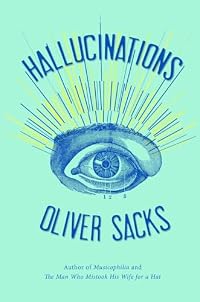
Hallucinations
by Oliver Sacks
On This Page
Description
This book is an investigation into the types, physiological sources, and cultural resonances of hallucinations traces everything from the disorientations of sleep and intoxication to the manifestations of injury and illness. Have you ever seen something that was not really there? Heard someone call your name in an empty house? Sensed someone following you and turned around to find nothing? Hallucinations don't belong wholly to the insane. Much more commonly, they are linked to sensory show more deprivation, intoxication, illness, or injury. People with migraines may see shimmering arcs of light or tiny, Lilliputian figures of animals and people. People with failing eyesight, paradoxically, may become immersed in a hallucinatory visual world. Hallucinations can be brought on by a simple fever or even the act of waking or falling asleep, when people have visions ranging from luminous blobs of color to beautifully detailed faces or terrifying ogres. Those who are bereaved may receive comforting "visits" from the departed. In some conditions, hallucinations can lead to religious epiphanies or even the feeling of leaving one's own body. Humans have always sought such life-changing visions, and for thousands of years have used hallucinogenic compounds to achieve them. As a young doctor in California in the 1960s, the author had both a personal and a professional interest in psychedelics. These, along with his early migraine experiences, launched a lifelong investigation into the varieties of hallucinatory experience. Here, he weaves together stories of his patients and of his own mind-altering experiences to illuminate what hallucinations tell us about the organization and structure of our brains, how they have influenced every culture's folklore and art, and why the potential for hallucination is present in us all, a vital part of the human condition. show lessTags
Recommendations
















Member Reviews
As usual, Sacks does a stunning job of describing disturbing neurological states in such a way that you realize they are normal. He doesn't exempt himself from his kind, respectful, yet dispassionate examining eye, describing his own experiences of alternate realities. When you finish, you understand that our perceptions of reality are seriously skewed, and that the probing alien of today may just be the night-mare or the succubus of yesteryear.
Fascinating but overlong investigation of the variety of hallucinations human beings experience. I never knew, for instance, how prevalent hallucinations were in sufferers of migraines or epilepsy. We also learn about out of body experiences, drug-induced hallucinations, phantom limb syndrome, near death experiences, and a lot more. Surprisingly, Sacks himself experienced a few of these, most notably in his earlier years when he experimented with any number of drugs, stories he relates very frankly here. Reading this shortly after watching Bart Ehrman's "How Jesus Became God" lectures from the Great Courses, I can't help but make connections. Perhaps the stories of Jesus' followers who "saw" him after his death were not made up by later show more biblical authors, but were simply the type of hallucination many bereaved people have when they lose a loved one (or a loved pet, for that matter.) Everything is connected, and the human mind has corners most of us will never visit. But hearing about some of the fantastic and elaborate visions some of the subjects of this book experienced does make me a bit jealous. It is small compensation that I did have a dream one time--and a dream is very distinct from a hallucination as this book makes clear--where bags of potato chips were falling from the sky and attaching themselves to low branches on trees, so I could take all I wanted. This still doesn't quite compare to watching the Battle of Culloden take place on your dressing gown. show less
fascinating stuff. this book is a kind of memoir slash clinical study slash history slash overview of the neurological process behind hallucinations.
there is no complicated scientific jargon, formulae, or indecipherable charts to wade through. in plain language, Sacks gives dozens of brief anecdotes from his decades of practice that give examples of the hallucinations people experience. the sheer number and variety of them experienced by people from all walks of life moved me into a slightly different paradigm of human perception and daily life. not only do we constantly gloss over sensory and semantic illusions (ie they aren’t limited to the optical realm) because our neurosystems are built to eek out patterns that are meaningful to show more the human mind from the ambient noise of our everyday surroundings, our brains, it seems, can create them whole-cloth, in detail, as if our eyes or ears or skin were truly experiencing them.
it’s hard to refrain from commenting on the ramifications of this information because it could mean so much to changing the world if we could all realize just how mutable our realities are. many of the hallucinations reported by people were not recognized as such at first. this then begs the question of how many times do we have hallucinations and never realize it? profound, i think.
but let me be clear: Sacks does not have an agenda in this book other than to educate people on the fact that hallucinations are a normal part of being a human being with a nervous system. the ethical and existential machinations above are mine alone.
back to the book: Sacks is a clear writer and not afraid to speak informally and even self-disclose. the memoir aspect of the book doesn’t stop and start with him recalling clinical cases, it also involves his own experiences with drug use, trauma, and the hallucinations that stemmed from them.
this is a really good read if you are at all interested in human perception and neuroscience. show less
there is no complicated scientific jargon, formulae, or indecipherable charts to wade through. in plain language, Sacks gives dozens of brief anecdotes from his decades of practice that give examples of the hallucinations people experience. the sheer number and variety of them experienced by people from all walks of life moved me into a slightly different paradigm of human perception and daily life. not only do we constantly gloss over sensory and semantic illusions (ie they aren’t limited to the optical realm) because our neurosystems are built to eek out patterns that are meaningful to show more the human mind from the ambient noise of our everyday surroundings, our brains, it seems, can create them whole-cloth, in detail, as if our eyes or ears or skin were truly experiencing them.
it’s hard to refrain from commenting on the ramifications of this information because it could mean so much to changing the world if we could all realize just how mutable our realities are. many of the hallucinations reported by people were not recognized as such at first. this then begs the question of how many times do we have hallucinations and never realize it? profound, i think.
but let me be clear: Sacks does not have an agenda in this book other than to educate people on the fact that hallucinations are a normal part of being a human being with a nervous system. the ethical and existential machinations above are mine alone.
back to the book: Sacks is a clear writer and not afraid to speak informally and even self-disclose. the memoir aspect of the book doesn’t stop and start with him recalling clinical cases, it also involves his own experiences with drug use, trauma, and the hallucinations that stemmed from them.
this is a really good read if you are at all interested in human perception and neuroscience. show less
Neurologist Oliver Sacks turns his attention to the topic of people who see (or hear, or, occasionally, smell or feel) things that aren't actually there. There's a little bit of overlap here with some of his earlier books, but I'd say there's more than enough that's new to make it worthwhile even if you've read everything else he's written. It's not an exhaustive look at the topic of hallucinations, because he doesn't really get into hallucinations that come with psychosis, such as schizophrenia -- a topic that seems like it could well fill another whole book by itself. He talks about a huge variety of other things that can cause hallucinations, though. Indeed, I had no idea there were so many things that could cause hallucinations! show more There's blindness (total or partial) or sensory deprivation, which can lead to the brain inventing images to fill the nothingness. There's drugs such as LSD, of course. And a number of diseases, including some I never would have associated with hallucinations. Migraines, which often come with visual auras, but can sometimes get even weirder. Fever delirium. Brain damage. Perfectly ordinary brains getting confused on waking up or falling asleep. And lets not forget phantom limbs...
As usual with Sack's books, there are a lot of fascinating descriptions of things his patients and others have experienced, intermixed with some layman's-level explanations about what's going on in the brain when this stuff happens, at least as far as it's actually understood. There are also some relevant accounts of the author's own personal experience; among other things, Sacks took a surprising amount of drugs back in the 60s. In the end, also as usual, I'm left with a bemused appreciation of how incredibly complex our brains are and just how deeply weird things can get when they go a bit wrong. I also keep expecting to start hallucinating myself any moment, but hopefully that will pass. show less
As usual with Sack's books, there are a lot of fascinating descriptions of things his patients and others have experienced, intermixed with some layman's-level explanations about what's going on in the brain when this stuff happens, at least as far as it's actually understood. There are also some relevant accounts of the author's own personal experience; among other things, Sacks took a surprising amount of drugs back in the 60s. In the end, also as usual, I'm left with a bemused appreciation of how incredibly complex our brains are and just how deeply weird things can get when they go a bit wrong. I also keep expecting to start hallucinating myself any moment, but hopefully that will pass. show less
Fascinating and strange, what the mind can create seemingly right in front of your eyes. This book is all about different types of hallucinations that people experience- from many different causes. Oliver Sacks describes case studies of patients, as well as his own visual distubrances caused by migranes and intentional drug use (back in the 60’s and 70’s). Each chapter has a focus on the type of hallucination- caused by illness, brain damage, sensory deprivation or chemical influences. I was surprised at how specific the different types of hallucinations are. For example, before the onset of a migrane many people smell certain things very distinctly. Other people see geometric patterns behind their eyes or superimposed on everything show more they look at. Sacks relates how the brain often imagines things just on the verge of sleep... Odd distortions of perception are also explored in the chapter about phantom limbs, and another about out-of-body experiences- both of which have biological explanations, what is going on in the brain that cases these perceptions. Including explanations of hallucinations of figures coinciding with an overwhelming sense of benevolence or euphoria, that many could interpret as a religious experience. I think what fascinates me most, is how hard the brain works to make sense out of things when there is no sensory input for it to use- so that people in solitary confinement for example, or deprived of their sight, will start seeing faces or brilliant colors. There’s also details in here that make me marvel, at how complex the mechanism of vision is, and how delicately the brain interprets it for us- and so easily it can go awry, making us see things that aren’t there (likewise smell or hear, he deals briefly with olfactory and auditory hallucinations too).
So much in this book I can’t even touch on or explain, as admittedly I struggled to understand some of it myself. Not that the author makes it hard to comprehend, but sometimes it goes so quickly through the material that I feel I missed some parts and had to backtrack. I definitely want to read this again and more thoroughly. show less
So much in this book I can’t even touch on or explain, as admittedly I struggled to understand some of it myself. Not that the author makes it hard to comprehend, but sometimes it goes so quickly through the material that I feel I missed some parts and had to backtrack. I definitely want to read this again and more thoroughly. show less
I'll confess that this is the first Oliver Sacks book I have read, although I have seen his work mentioned all over and have always been intrigued. I was not disappointed with Hallucinations, an engaging book that covers hallucinations not caused by psychosis, such as seen in schizophrenia.
The hallucinations Sacks covers are diverse and cover an array of causes: from Charles Bonnet syndrome to sensory deprivation, from sleep paralysis to phantom limb syndrome. Together with a variety of historical sources and patient accounts, he has pulled together a book that covers everything but psychosis. Some hallucinations have roots inside the brain, such as the prelude to an epileptic seizure, while others come from more nebulous sources, like show more grief or trauma. He even delves into intentional hallucinations, the kind caused by taking psychadelic drugs, which he apparently has ample experience with.
Sacks writes fluidly and has a wry sense of humor that crops up every now and again; though he occasionally delves into decidedly more than "pop" neuropsychology, I never felt bored reading it.
Definitely interesting to those who are curious about the brain and its often strange workings. show less
The hallucinations Sacks covers are diverse and cover an array of causes: from Charles Bonnet syndrome to sensory deprivation, from sleep paralysis to phantom limb syndrome. Together with a variety of historical sources and patient accounts, he has pulled together a book that covers everything but psychosis. Some hallucinations have roots inside the brain, such as the prelude to an epileptic seizure, while others come from more nebulous sources, like show more grief or trauma. He even delves into intentional hallucinations, the kind caused by taking psychadelic drugs, which he apparently has ample experience with.
Sacks writes fluidly and has a wry sense of humor that crops up every now and again; though he occasionally delves into decidedly more than "pop" neuropsychology, I never felt bored reading it.
Definitely interesting to those who are curious about the brain and its often strange workings. show less
Listened to this as an audiobook to fill a recent long car drive; it turned out to be much more fascinating and entertaining than I could have hoped. I read Sacks' The Man Who Mistook His Wife for a Hat for a college psychology class and it was full of interesting neuro-psychological anecdotes, but the tone could occasionally be a little dry and rambling.
Not Hallucinations though. First of all, the narrator does a wonderful job; his voice isn't particularly unique or memorable, but it's crisp, clear, and lively, and he does smooth, not overdone voice shifts and accents whenever Sacks quotes patient reports and historical figures. Second, the material this book covers was just so interesting to me. I came into it expecting to hear show more mostly about things like LSD trips and schizophrenia, which honestly are probably most people's touchstones for the concept of hallucinations. And while there is a single chapter devoted to drug-induced hallucination (with compelling and pretty eerie first hand accounts from the author himself), Sacks barely touches on schizophrenia, setting it aside right away in his introduction in order to focus on other altered brain states I'd barely heard of but found deeply engrossing. Vivid, complex visual and auditory hallucinations by the deaf and blind, near-death and out-of-body experiences, phantom limbs, unseen 'presences', supernatural-esque encounters, sleep paralysis, hallucinations induced by surgery, sensory deprivation, sleep disorders, seizures, migraines, and brain lesions. Sacks takes all these odd and occasionally terrifying case studies and conditions and approaches them with a sense of fascination, curiosity, and clinical appreciation.
One of the things I found most personally fun about this book was that you get tons of potential neuro/psycho/biological explanations for a lot of strange phenomena that have puzzled and frightened humans for centuries. Why might so many cultures have folklore about demons and monsters that assault or suffocate people in their beds at night? You find out in the chapter about hypnogogic hallucinations and sleep paralysis. What about things like guardian spirits, evil presences, the 'light at the end of the tunnel', or voices from God(s)? There are case studies about them not just in history and theology, but medical science too. Instances of people seeing ghosts, faeries, moving shadows in the edges of their vision, or even doppelgangers of themselves? All touched on in this book as part of various differences, injuries, and misfires in people's brains, brain chemistry, and neural makeup. It's really, really cool stuff.
There are places I think the book might have been a bit slow and dry if I were reading, but the narrator moved everything right along and I ended up enjoying every chapter. Sacks has a pretty readable style and for the most part doesn't get bogged down in science or medical jargon, and he sprinkles in tons of personal and professional stories to illustrate all his examples, which also help break things up.
Definitely one of my favorite non-fiction reads of the year! show less
Not Hallucinations though. First of all, the narrator does a wonderful job; his voice isn't particularly unique or memorable, but it's crisp, clear, and lively, and he does smooth, not overdone voice shifts and accents whenever Sacks quotes patient reports and historical figures. Second, the material this book covers was just so interesting to me. I came into it expecting to hear show more mostly about things like LSD trips and schizophrenia, which honestly are probably most people's touchstones for the concept of hallucinations. And while there is a single chapter devoted to drug-induced hallucination (with compelling and pretty eerie first hand accounts from the author himself), Sacks barely touches on schizophrenia, setting it aside right away in his introduction in order to focus on other altered brain states I'd barely heard of but found deeply engrossing. Vivid, complex visual and auditory hallucinations by the deaf and blind, near-death and out-of-body experiences, phantom limbs, unseen 'presences', supernatural-esque encounters, sleep paralysis, hallucinations induced by surgery, sensory deprivation, sleep disorders, seizures, migraines, and brain lesions. Sacks takes all these odd and occasionally terrifying case studies and conditions and approaches them with a sense of fascination, curiosity, and clinical appreciation.
One of the things I found most personally fun about this book was that you get tons of potential neuro/psycho/biological explanations for a lot of strange phenomena that have puzzled and frightened humans for centuries. Why might so many cultures have folklore about demons and monsters that assault or suffocate people in their beds at night? You find out in the chapter about hypnogogic hallucinations and sleep paralysis. What about things like guardian spirits, evil presences, the 'light at the end of the tunnel', or voices from God(s)? There are case studies about them not just in history and theology, but medical science too. Instances of people seeing ghosts, faeries, moving shadows in the edges of their vision, or even doppelgangers of themselves? All touched on in this book as part of various differences, injuries, and misfires in people's brains, brain chemistry, and neural makeup. It's really, really cool stuff.
There are places I think the book might have been a bit slow and dry if I were reading, but the narrator moved everything right along and I ended up enjoying every chapter. Sacks has a pretty readable style and for the most part doesn't get bogged down in science or medical jargon, and he sprinkles in tons of personal and professional stories to illustrate all his examples, which also help break things up.
Definitely one of my favorite non-fiction reads of the year! show less
Members
- Recently Added By
Published Reviews
"Why Kermit?" This was the question asked by a woman who started to have hallucinations of the "Sesame Street" frog many times a day, several weeks after brain surgery. Kermit meant nothing to her, she said, and his shifting moods -- sometimes he looked sad, sometimes happy, occasionally angry -- had nothing to do with her own feelings.
added by lorax
Lists

Books Read in 2015
3,299 works; 129 members

Tom's Bookstore
346 works; 2 members

psychology
12 works; 1 member

substances
14 works; 1 member
Author Information

66+ Works 43,542 Members
Oliver Sacks was born in London, England on July 9, 1933. He received a medical degree from Queen's College, Oxford University and performed his internship at Middlesex Hospital in London and Mount Zion Hospital in San Francisco. He completed his residency at UCLA. In 1965, he became a clinical neurologist to the Little Sisters of the Poor and show more Beth Abraham Hospital. His work in a Bronx charity hospital led him to write the book Awakenings in 1973. The book inspired a play by Harold Pinter and became a film starring Robert De Niro and Robin Williams. His other works included An Anthropologist on Mars, The Mind's Eye, The Man Who Mistook His Wife for a Hat, Uncle Tungsten, Musicophilia, A Leg to Stand On, On the Move: A Life, and Gratitude. In 2007, he ended his 42-year relationship with the Albert Einstein College of Medicine to accept an interdisciplinary teaching position at Columbia. In 2012, he returned to the New York University School of Medicine as a professor of neurology. He died of cancer on August 30, 2015 at the age of 82. (Bowker Author Biography) show less
Some Editions
Awards and Honors
Awards
Series
Belongs to Publisher Series
Common Knowledge
- Canonical title*
- Hallucinaties
- Original title
- Hallucinations
- Original publication date
- 2012
- People/Characters
- William James; Charles Lullin
- Dedication
- For Kate
- First words
- Introduction
When the word "hallucination" first came into use, in the early sixteenth century, it denoted only "a wandering mind." - Original language
- English
*Some information comes from Common Knowledge in other languages. Click "Edit" for more information.
Classifications
- Genres
- General Nonfiction, Science & Nature, Nonfiction
- DDC/MDS
- 616.89 — Applied science & technology Medicine & health Diseases, Allergies, Skin Conditions Nervous Disorders: Autism, Anorexia, OCD Mental disorders: bi-polar/schizophrenia
- LCC
- RC553 .H3 .S23 — Medicine Internal medicine Internal medicine Neurosciences. Biological psychiatry. Neuropsychiatry Psychiatry Psychopathology
- BISAC
Statistics
- Members
- 1,960
- Popularity
- 10,756
- Reviews
- 76
- Rating
- (3.69)
- Languages
- 15 — Dutch, English, Estonian, French, German, Hebrew, Hungarian, Italian, Polish, Romanian, Russian, Spanish, Swedish, Turkish, Portuguese (Portugal)
- Media
- Paper, Audiobook, Ebook
- ISBNs
- 43
- ASINs
- 9