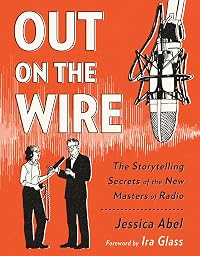
Out on the Wire: The Storytelling Secrets of the New Masters of Radio
by Jessica Abel
On This Page
Description
"Go behind the scenes of seven of today's most popular narrative radio shows and podcasts, including This American Life and RadioLab, in graphic narrative. Every week, millions of devoted fans tune in to or download This American Life, The Moth, Radiolab, Planet Money, Snap Judgment, Serial, Invisibilia and other narrative radio shows. Using personal stories to breathe life into complex ideas and issues, these beloved programs help us to understand ourselves and our world a little bit show more better. Each has a distinct style, but every one delivers stories that are brilliantly told and produced. Out on the Wire offers an unexpected window into this new kind of storytelling--one that literally illustrates the making of a purely auditory medium. With the help of This American Life's Ira Glass, Jessica Abel, a cartoonist and devotee of narrative radio, uncovers just how radio producers construct narrative, spilling some juicy insider details. Jad Abumrad of RadioLab talks about chasing moments of awe with scientists, while Planet Money's Robert Smith lets us in on his slightly goofy strategy for putting interviewees at ease. And Abel reveals how mad--really mad--Ira Glass becomes when he receives edits from his colleagues. Informative and engaging, Out on the Wire demonstrates that narrative radio and podcasts are creating some of the most exciting and innovative storytelling available today"-- "This graphic novel takes readers behind the scenes of their favorite radio shows and podcasts to show the storytelling techniques and ideas that produce these beloved programs"-- show lessTags
Recommendations


Member Reviews
Abel conveys a wealth of information about "narrative journalism" (Ira Glass's term), interviewing various radio shows to illustrate her points. I'm convinced Abel is best able to write her book using the comic format, but not persuaded this specific topic is best covered that way. Yet her story did not suffer in the telling, and the format made for interesting reading. I would not have been prompted to pick up her book elsewise, despite a general interest in radio.
Insights into specific programs aside, most impressive is Abel's close scrutiny of a number of broader ideas: the creative process and its capacity to be enriched through guidelines or games; best practices in sound production (mic technique, the necessity of capturing dead show more air in specific spaces for later use when editing interviews, general approaches to sound editing); and, basic tenets of storytelling, whether oral or in prose.
Perhaps the larger point emerging from Abel's format is radio's counterintuitive potential to be visual: in structure, in scripting, and also sound design. Not all radio is: the standard news headline show, for example, conjures little visually, and if a specific reporter provides a story that is visual, it adds to the program but is hardly necessary. This potential is perhaps most widely recognised in niche programming: radioplays, sports broadcasts. Radioplays are no longer mainstream, though enjoying something of an artisanal rennaissance. Sports seem relegated to radio only as a supplement to television, though baseball play-by-play is famously visual, the very purpose to bring the listener onto the field, and to paint a picture of the action. The programs showcased in Out on the Wire (99% Invisible; The Moth; Planet Money; Radio Diaries; Radiolab; Snap Judgment; This American Life) each seems to have a similar aim, and demonstrate the visual aspect of radio could be better utilised generally. show less
Insights into specific programs aside, most impressive is Abel's close scrutiny of a number of broader ideas: the creative process and its capacity to be enriched through guidelines or games; best practices in sound production (mic technique, the necessity of capturing dead show more air in specific spaces for later use when editing interviews, general approaches to sound editing); and, basic tenets of storytelling, whether oral or in prose.
Perhaps the larger point emerging from Abel's format is radio's counterintuitive potential to be visual: in structure, in scripting, and also sound design. Not all radio is: the standard news headline show, for example, conjures little visually, and if a specific reporter provides a story that is visual, it adds to the program but is hardly necessary. This potential is perhaps most widely recognised in niche programming: radioplays, sports broadcasts. Radioplays are no longer mainstream, though enjoying something of an artisanal rennaissance. Sports seem relegated to radio only as a supplement to television, though baseball play-by-play is famously visual, the very purpose to bring the listener onto the field, and to paint a picture of the action. The programs showcased in Out on the Wire (99% Invisible; The Moth; Planet Money; Radio Diaries; Radiolab; Snap Judgment; This American Life) each seems to have a similar aim, and demonstrate the visual aspect of radio could be better utilised generally. show less
 This review was written for LibraryThing Early Reviewers.
I am a long-time fan of comics and graphic novels. When I received my review copy of Out on the Wire: The Storytelling Secrets of the New Masters of Radio, by Jessica Abel, I was simultaneously intrigued and skeptical. I thought, “A comic book about how public radio is made? How is that possible? This better be good.” It was. Ms. Abel has given us a unique experience that is both well-drawn and verbally engaging. With excellent depictions of Ira Glass and herself and intricate panels that illustrate dark woods, mountaintops, and radio studios, Ms. Abel takes us on a journey of how most of our favorite public radio shows are created—both the physical creation and the thought behind how it is done. This might not seem like a show more worthwhile mission, however, much like public radio itself, Out on the Wire is curiously compelling—a page turner in its own right. In her introduction, Ms. Abel refers to “driveway moments.” Those are the moments when you are listening to radio in your car, you arrive at your destination but stay in the car to hear the end of the story. Out on the Wire had the same effect on me, as I found myself reading for just a little bit longer to “see” what would happen. When I finished the book in one sitting, I realized that Ms. Abel had accomplished her mission. A comic book about how public radio is made is not only possible, it is thoroughly enjoyable. show less
This review was written for LibraryThing Early Reviewers.I picked up this book because it seemed to be a synthesis of two "literary" forms that I love: graphic novels and...radio. Radio as a literary form? The way I like to listen to it, absolutely. I'm a podcast addict, and the shows that the author of this book chose to profile are some of my favourites. This American Life, Radiolab, Planet Money, Snap Judgment. I've heard these names and voices for years, and seeing them portrayed in graphic format, putting faces--clean, line-drawn faces--to those names and voices was a revelation. As I began to read, and realized that the book actually seeks to deconstruct and reveal the process of making the kind of narrative radio these shows specialize in (and that I love very much), I had a moment of show more fear, like, I'm not sure I want to see what's behind the curtain. I don't want to ruin the mystery. But in the end, after I read about the grueling tasks-- assembling the interviews, writing the story, getting the sounds just right, editing it all together-- I am even more eager to listen to these (and so many other) shows. Knowing the amount of work and care that goes into their creation makes them all the more precious to me. Plus, as someone who comes from a family of writers, who has occasionally flirted with the art myself, there are valuable lessons here about storytelling, what make a good story, and why they are good. Ira Glass in particular is a marvel. I'm sure my mom (for whom I actually bought the book) will enjoy it as much as I did, if not more! show less
Abel's latest book actually serves a number of functions. On the surface it's a behind he scenes account of what goes into the creation of the modern NPR podcasting Renaissance. But beyond that this book is an astonishing manual on storytelling technique and the power of editing.
Abel's passion for the material comes shining through.
Abel's passion for the material comes shining through.
This review was written for LibraryThing Early Reviewers.It's no secret that I am a devotee of public radio. NPR, PRI, APR, are a large part of my daily life, as are other public radio offerings in the forms of podcasts and music. (We're also big radio drama fans, old and new, but that's another story.) Book+favorite subject+creative format=Big Win for me, and thanks to Blogging for books, I was able to snag a copy of such a book, Out on the Wire, which is a graphic/comic documentary about narrative radio shows.
Being familiar with all but one of the shows that are explored in this book by Jessica Abel really helped. I dare anyone who is a "This American Life" fan to absorb the squares with Ira Glass in them and not hear his distinct voice. I found the details behind the scenes fascinating. show more However, the take-home message for me was that this is a great book about writing.
I live in a world surrounded by creative minds, absorbed in the worlds of writing, film, and art. The goal of all these endeavors is to share an image, tell a story. What is documented in this book are the approaches used on radio to tell stories, how to craft your message so you have a hook, explore the adventure, and wrap it up. Using techniques like the focus sentence to create the story, Abel shares the knowledge of folks who make their living this way via radio. There are chapters on creating a voice, sharing the visual image through words, editing, adding sound, and a kick-ass forward by Ira Glass.
All in all, for me, this book is a keeper and is going on my books on writing shelf for inspiration and aide when I do get back to editing my novel. show less
Being familiar with all but one of the shows that are explored in this book by Jessica Abel really helped. I dare anyone who is a "This American Life" fan to absorb the squares with Ira Glass in them and not hear his distinct voice. I found the details behind the scenes fascinating. show more However, the take-home message for me was that this is a great book about writing.
I live in a world surrounded by creative minds, absorbed in the worlds of writing, film, and art. The goal of all these endeavors is to share an image, tell a story. What is documented in this book are the approaches used on radio to tell stories, how to craft your message so you have a hook, explore the adventure, and wrap it up. Using techniques like the focus sentence to create the story, Abel shares the knowledge of folks who make their living this way via radio. There are chapters on creating a voice, sharing the visual image through words, editing, adding sound, and a kick-ass forward by Ira Glass.
All in all, for me, this book is a keeper and is going on my books on writing shelf for inspiration and aide when I do get back to editing my novel. show less
You might think you could breeze right through Out on the Wire lickety split because it is, after all, a “comic” full of pen and ink sketches and people speaking in those little balloons. But you’d be wrong. You slow down and pay attention assuming you have any interest in the topic revealed in the book’s subtitle: The Storytelling Secrets of the New Masters of Radio.
That’s the interesting thing about graphic books like this one by Jessica Abel. You can pack a lot of information and emotion in those boxes stacked across the page. The strips move sequentially but your eye scans up and down, and sideways to take in all the voices and details of a scene.
Abel’s work is the perfect complement to the type of radio programs she show more covers. Both rely on visuals, with the radio programs using sound to elicit the listener’s imagination to “see’ the story. Abel uses her accomplished artistic skills to create visuals to advance and deepen her story which wouldn’t be as interesting if told in a conventional narrative. She, like the radio producers she features, wants to connect more emotionally with the reader. Abel wants her reader to understand the emotional investment of building a great story. And she does.
If someone wanted to know how you produce a radio program or podcast like Ira Glass’s This American Life on National Public Radio, this book is a crash course or primer on how that is done. Although This American Life is the big name here and the book starts out with this show, Jessica also introduces us to other shows like The Moth, Radiolab, Planet Money, Snap Judgment, Radio Diaries, and 99% Invisible. If you are a fan of This American Life but don’t know these others, your curiosity will be piqued.
Abel tries to explain what makes these types of shows unique by interviewing key writers and producers of the shows. Each program may run a few minutes but hours and hours of labor-intensive work is behind each one. Although many of us view writing as the heart and soul behind a good story, Abel’s investigation hones in on the critical role of editing. Criticism by your writing team is intense. Picture an Iowa Writers Workshop where a story idea which got your creative juices flowing is often turned upside down, inside out and every which way but its original form. Picture writers being shredded by their peers all in the service of a good story.
Editing emerges as the critical ingredient shaping the stories. There’s even a very specific term to describe the meetings where the collaborative but critical eye is focused on the story’s primary writer/developer. This is an edit, and it’s actually considered separate from editing.
As Abel goes through all aspects of bringing these stories to the public, you see there is a twinship between the radio programs and her own graphic storytelling. Both seem so simple but are not. The story seems natural and straightforward, but extensive editing is behind that.
Fans of these programs and graphic storytelling will appreciate Abel’s considerable craftsmanship. Anyone interested in radio production will also learn a lot here and in a more enjoyable way than reading a textbook about it. Abel’s book may have a narrow niche but she fills it quite well. show less
That’s the interesting thing about graphic books like this one by Jessica Abel. You can pack a lot of information and emotion in those boxes stacked across the page. The strips move sequentially but your eye scans up and down, and sideways to take in all the voices and details of a scene.
Abel’s work is the perfect complement to the type of radio programs she show more covers. Both rely on visuals, with the radio programs using sound to elicit the listener’s imagination to “see’ the story. Abel uses her accomplished artistic skills to create visuals to advance and deepen her story which wouldn’t be as interesting if told in a conventional narrative. She, like the radio producers she features, wants to connect more emotionally with the reader. Abel wants her reader to understand the emotional investment of building a great story. And she does.
If someone wanted to know how you produce a radio program or podcast like Ira Glass’s This American Life on National Public Radio, this book is a crash course or primer on how that is done. Although This American Life is the big name here and the book starts out with this show, Jessica also introduces us to other shows like The Moth, Radiolab, Planet Money, Snap Judgment, Radio Diaries, and 99% Invisible. If you are a fan of This American Life but don’t know these others, your curiosity will be piqued.
Abel tries to explain what makes these types of shows unique by interviewing key writers and producers of the shows. Each program may run a few minutes but hours and hours of labor-intensive work is behind each one. Although many of us view writing as the heart and soul behind a good story, Abel’s investigation hones in on the critical role of editing. Criticism by your writing team is intense. Picture an Iowa Writers Workshop where a story idea which got your creative juices flowing is often turned upside down, inside out and every which way but its original form. Picture writers being shredded by their peers all in the service of a good story.
Editing emerges as the critical ingredient shaping the stories. There’s even a very specific term to describe the meetings where the collaborative but critical eye is focused on the story’s primary writer/developer. This is an edit, and it’s actually considered separate from editing.
As Abel goes through all aspects of bringing these stories to the public, you see there is a twinship between the radio programs and her own graphic storytelling. Both seem so simple but are not. The story seems natural and straightforward, but extensive editing is behind that.
Fans of these programs and graphic storytelling will appreciate Abel’s considerable craftsmanship. Anyone interested in radio production will also learn a lot here and in a more enjoyable way than reading a textbook about it. Abel’s book may have a narrow niche but she fills it quite well. show less
This review was written for LibraryThing Early Reviewers.Ostensibly about public radio, this graphic novel delves into the production of some of public radio's more original shows. As a result, the book is about the creative process, with these innovative shows as the vehicles. The choice of the graphic format as the tool for the information is perfect. Abel adroitly interweaves her own creative processes into the exploration of those used by the various shows. A creative and thought-provoking book. My only complaint is the smallness of the font in some sections.
This review was written for LibraryThing Early Reviewers.Members
- Recently Added By
Lists

Recommended Comics / Graphic Novels
595 works; 119 members

Best Stand-Alone Graphic Novels
107 works; 19 members

Best Books Won from LibraryThing Early Reviewers
11 works; 3 members

Female Author
1,234 works; 67 members

Non-Fiction Worth Reading
1,015 works; 261 members

Top Five Books of 2015
811 works; 241 members

Best 21st Century Books (So Far)
670 works; 86 members
Best Graphic Novel Nonfiction
199 works; 101 members

Club Read's Recommended Nonfiction Written by Women
618 works; 30 members

Books We Discovered On LibraryThing
530 works; 130 members
Author Information

46+ Works 3,589 Members
All Editions
Awards and Honors
Distinctions
Common Knowledge
- Original publication date
- 2015
- People/Characters
- Ira Glass; Jad Abumrad; Robert Krulwich; Glynn Washington
- First words
- March, 2013. Paris, the Radio France building.
- Last words
- (Click to show. Warning: May contain spoilers.)It's a path that all of us can use to create the stories we want to tell ... and that everyone else can't wait to hear.
- Canonical DDC/MDS
- 070
Classifications
- Genre
- Graphic Novels & Comics
- DDC/MDS
- 070 — Computer science, information & general works News media, journalism & publishing Documentary media, educational media, news media; journalism; publishing
- LCC
- PN1991.75 .A24 — Language and Literature Literature (General) Literature (General) Drama Broadcasting
- BISAC
Statistics
- Members
- 282
- Popularity
- 114,359
- Reviews
- 53
- Rating
- (3.96)
- Languages
- English
- Media
- Paper, Audiobook, Ebook
- ISBNs
- 2
- ASINs
- 2