
Ira Glass
Author of The New Kings of Nonfiction
About the Author
Series
Works by Ira Glass
Lost Buildings: an on-stage radio & picture collaboration between Ira Glass and Chris Ware... (2003) 69 copies, 1 review
This American Life: Return to the Scene of the Crime [Video] — Narrator — 5 copies
Associated Works
Out on the Wire: The Storytelling Secrets of the New Masters of Radio (2015) — Foreword — 281 copies, 53 reviews
Tagged
Common Knowledge
- Birthdate
- 1959-03-03
- Gender
- male
- Education
- Brown University (B.A. ∙ Semiotics)
Milford Mill High School
Northwestern University - Occupations
- radio show host
producer - Organizations
- National Public Radio
- Nationality
- USA
- Birthplace
- Baltimore, Maryland, USA
- Places of residence
- Central Maine, USA
Baltimore, Maryland, USA - Associated Place (for map)
- USA
Members
Reviews
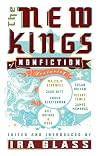
Every time I finished an article in this collection, I immediately wanted to tell everyone all about it--they're that interesting and thought-provoking and entertaining. But then I'd stop myself and just say "You've really got to read this book", because I realized that half the joy of reading these articles is in discovering them yourself. So, the only thing I'm going to say on this collection is to read Ira Glass's introduction after reading the articles; he's so giddy about how awesome show more they are that he ends up spoiling some of their surprise--not "plot"-wise, but the surprise of what makes them so good. It's worth discovering that part for yourself. show less
Lost Buildings: An on-stage radio & picture collaboration between Ira Glass and Chris Ware by Ira Glass

Rather than have my parents buy me something (clothes, housewares, etc.) for my birthday one year, I told them to just donate to the local public radio station in my name. I did this knowing full well the gift would be this great little book/DVD by This American Life's Ira Glass with cartoonist Chris Ware, two staples of Chicago hipness. Their subject is historic preservation, Louis Sullivan and Richard Nickel, as told by cultural historian Tim Samuelson. It's a gem, a multimedia feast with show more Glass's words and Ware's images on the DVD (a slideshow/film that originally screened with audio accompaniment in front of a theater audience) and illustrations from Samuelson's archive adorning the book. show less
I'm about halfway through, but what seems to have gone unmentioned by Mr. Glass in his introduction is that all of these essays are connected by a central theme: the idea that the status quo, the rules that make the world work, the day-to-day way the world works, is all bullshit. Every one of these essays are about someone who has managed to work that out and take advantage of it in some way, by realizing that our everyday assumptions are valueless, existing only because we assume that they show more do exist, rather than because they are even remotely true.
...
And having finished the book, that evaluation remains the same. Every one of these essays, in some fashion, just hammers away at the simultaneous omnipotence and powerlessness of living in a world so defined by perception. Because even while perception defines and controls our existence, all it takes is for one person to realize that the only thing holding perception in place is the common consensus to bring down the whole edifice.
The essays themselves are all pretty great. I thought the poker one was probably the weakest, but that might have more to do with the fact that I've found poker a lot more boring now that so many have spent so much time thinking about it. Stripped of mystery and magic, it's just a bunch of math problems dressed up in personality and showdowns. "Jonathan Lebed's Extracurricular Activities," "The American Man, Age Ten," and "Host" were among my favorites, but I think the best essay is Lee Sandlin's "Losing the War." It seemed a bit pointless at first, but it really sneaks up on you, becoming even more potent as it goes along. show less
...
And having finished the book, that evaluation remains the same. Every one of these essays, in some fashion, just hammers away at the simultaneous omnipotence and powerlessness of living in a world so defined by perception. Because even while perception defines and controls our existence, all it takes is for one person to realize that the only thing holding perception in place is the common consensus to bring down the whole edifice.
The essays themselves are all pretty great. I thought the poker one was probably the weakest, but that might have more to do with the fact that I've found poker a lot more boring now that so many have spent so much time thinking about it. Stripped of mystery and magic, it's just a bunch of math problems dressed up in personality and showdowns. "Jonathan Lebed's Extracurricular Activities," "The American Man, Age Ten," and "Host" were among my favorites, but I think the best essay is Lee Sandlin's "Losing the War." It seemed a bit pointless at first, but it really sneaks up on you, becoming even more potent as it goes along. show less

A collection of articles, most of them originally published in magazines, on a wide range of topics. Among other things, it includes a look into the lives of a conservative talk radio host, a teenager indicted by the SEC for stock market fraud, Saddam Hussein, Val Kilmer, and a random American ten-year-old.
The somewhat clumsy title isn't entirely accurate. Certainly it's stretching the definition of "new"; the oldest of the articles first appeared in 1985, and several of them feel a bit show more dated now. Also, the field it draws from is a little more limited than the broad term "nonfiction" implies. All the articles are what editor Ira Glass calls "original reporting" (as opposed to, say, reflective essays), and all are to one degree or another presented with the kind of personal touch that Glass apparently favors.
As to whether the authors presented here are the "kings" of this particular kind of nonfiction... Well, a couple of these pieces I didn't care for. The hand-by-hand description of a poker tournament, for instance, was pretty much guaranteed to put a glazed look on my face, no matter how much testosterone and adrenalin the author tried to inject. But otherwise the writing ranged from moderately interesting all the way to utterly compelling. Bill Buford's piece on soccer hooligans made me immediately go out and add the book it was excerpted from to my wishlist, even though I would pretty much never have expected to find myself interested in a book about soccer hooligans. And Lee Sandlin's discussion of World War II in the perceptions and memories of the American people and in the actual experiences of soldiers on the battlefield was as fascinating and thought-provoking as anything I've read in ages. I think this book would feel worthwhile just for those two articles alone. show less
The somewhat clumsy title isn't entirely accurate. Certainly it's stretching the definition of "new"; the oldest of the articles first appeared in 1985, and several of them feel a bit show more dated now. Also, the field it draws from is a little more limited than the broad term "nonfiction" implies. All the articles are what editor Ira Glass calls "original reporting" (as opposed to, say, reflective essays), and all are to one degree or another presented with the kind of personal touch that Glass apparently favors.
As to whether the authors presented here are the "kings" of this particular kind of nonfiction... Well, a couple of these pieces I didn't care for. The hand-by-hand description of a poker tournament, for instance, was pretty much guaranteed to put a glazed look on my face, no matter how much testosterone and adrenalin the author tried to inject. But otherwise the writing ranged from moderately interesting all the way to utterly compelling. Bill Buford's piece on soccer hooligans made me immediately go out and add the book it was excerpted from to my wishlist, even though I would pretty much never have expected to find myself interested in a book about soccer hooligans. And Lee Sandlin's discussion of World War II in the perceptions and memories of the American people and in the actual experiences of soldiers on the battlefield was as fascinating and thought-provoking as anything I've read in ages. I think this book would feel worthwhile just for those two articles alone. show less
You May Also Like


Associated Authors
Statistics
- Works
- 17
- Also by
- 7
- Members
- 1,116
- Popularity
- #23,017
- Rating
- 4.0
- Reviews
- 29
- ISBNs
- 10
- Languages
- 1