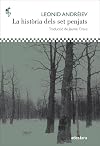
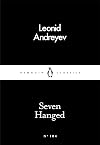
The Seven Who Were Hanged
by Leonid Andreyev
On This Page
Description
A Russian classic by author Leonid Andreyev. Seven men, five terrorists and two common peasants, are condemned to death by hanging. The book follows each of the men's personal journey as they seek to deal with their fate.Tags
Recommendations














Member Recommendations

Member Reviews
There has always been a childhod memory lurking in the back of my mind, of a painting or photograph in an old Russian history book: young revolutionaries being hanged together, among them a young woman. I’m not sure why it made such a strong impression, but it was the first thing I thought of when I discovered Leonid Andreyev’s Seven Hanged].
Andreyev was a lawyer, with a side job of court reporter, so he was thoroughly acquainted with the Russian legal system and those caught up in it on both sides. Five of the seven here were idealistic young revolutionaries, bent on assassinating a government minister, but betrayed by an unknown person. The other two, in a kind of crucifixion echo, were common criminals. The trials of those being show more hanged are told here only briefly, as almost peripheral events. Andreyev was concentrating on what it means to the individual to know life will end at a given date and time and in a terrible way.
Initially, he describes each of his defendants as they were in real life, life before their lives were interrupted, giving the reader an idea of what is being lost in this senseless state directed slaughter. Even before that, however, he spends time on the minister who has been told of the plot to assassinate him the next day. This man, knowing the plot has been subverted, can easily continue in his belief that he is immortal, for death doesn’t come to such as he.
The minister constrasts sharply with the intinerant Estonian peasant, barely able to comprehend Russian, completely alone in the world. Sentenced to death, he can only say “Not hang me”. Such a fate was beyond his imagination. Then there was Gypsy Mike, for whom there was no hope. In court, he asked for permission to whistle.
The desperate agony of a man being murdered, the savage thrill of a killer, a terrible pang of foreboding, a call for help, the darkness of foul weather in an autumn night, a sense of solitude - all of these things were there in that shrieking, wailing sound, which belonged to neither man nor beast... And with easy hearts, without pity or any feelings of remorse, the judges sentenced Gypsy Mike to death.
Writing of the five, Andreyev’s portrayal of the suddeness and finality of the trial, the sentence and the thirty-six hours left of life is almost visceral. Each approaches the inevitable in a different way. One is terrified, unable even to walk. One, nameless, is the classic revolutionary, “grown weary of living and struggling”. The young girl, Musya, is almost accepting.
By following these seven and their thoughts right to the steps of the scaffold, Andreyev’s plea against capital punishment is an existential masterpiece with the impossible hope of moving the Russian establishment.
This book was initially published in 1908, at a time when Andreyev was considered by many to be the greatest living Russian author, an assessment he would have agreed with, although most added the caveat ‘next to Tolstoy’. However he opposed the Bolsheviks and in 1917 moved to Finland, where he died in 1919. His works were suppressed in the Soviet Union and he has only been rehabilitated there since its collapse. As early as 1909, however, this book was translated into English by the Russian born American Herman Bernstein, with an introduction by Andreyev, explaining his opposition to capital punishment, which unfortunately is not included in this Penguin edition.
In an essay in BBC Arts, the translator Anthony Briggs suggests that ironically other anarchists, particularly those who murdered the Archduke Franz Ferdinand, were influenced in completely the opposite way than that intended by Andreyev. The ringleader of that plot, Danilo Ilic, had actually translated Andreyev’s book. In Briggs’s words, Instead of condemning the young activists for their naive and immoral conduct, he was won over by their idealism, selfless sincerity and courage. show less
Andreyev was a lawyer, with a side job of court reporter, so he was thoroughly acquainted with the Russian legal system and those caught up in it on both sides. Five of the seven here were idealistic young revolutionaries, bent on assassinating a government minister, but betrayed by an unknown person. The other two, in a kind of crucifixion echo, were common criminals. The trials of those being show more hanged are told here only briefly, as almost peripheral events. Andreyev was concentrating on what it means to the individual to know life will end at a given date and time and in a terrible way.
Initially, he describes each of his defendants as they were in real life, life before their lives were interrupted, giving the reader an idea of what is being lost in this senseless state directed slaughter. Even before that, however, he spends time on the minister who has been told of the plot to assassinate him the next day. This man, knowing the plot has been subverted, can easily continue in his belief that he is immortal, for death doesn’t come to such as he.
The minister constrasts sharply with the intinerant Estonian peasant, barely able to comprehend Russian, completely alone in the world. Sentenced to death, he can only say “Not hang me”. Such a fate was beyond his imagination. Then there was Gypsy Mike, for whom there was no hope. In court, he asked for permission to whistle.
The desperate agony of a man being murdered, the savage thrill of a killer, a terrible pang of foreboding, a call for help, the darkness of foul weather in an autumn night, a sense of solitude - all of these things were there in that shrieking, wailing sound, which belonged to neither man nor beast... And with easy hearts, without pity or any feelings of remorse, the judges sentenced Gypsy Mike to death.
Writing of the five, Andreyev’s portrayal of the suddeness and finality of the trial, the sentence and the thirty-six hours left of life is almost visceral. Each approaches the inevitable in a different way. One is terrified, unable even to walk. One, nameless, is the classic revolutionary, “grown weary of living and struggling”. The young girl, Musya, is almost accepting.
By following these seven and their thoughts right to the steps of the scaffold, Andreyev’s plea against capital punishment is an existential masterpiece with the impossible hope of moving the Russian establishment.
This book was initially published in 1908, at a time when Andreyev was considered by many to be the greatest living Russian author, an assessment he would have agreed with, although most added the caveat ‘next to Tolstoy’. However he opposed the Bolsheviks and in 1917 moved to Finland, where he died in 1919. His works were suppressed in the Soviet Union and he has only been rehabilitated there since its collapse. As early as 1909, however, this book was translated into English by the Russian born American Herman Bernstein, with an introduction by Andreyev, explaining his opposition to capital punishment, which unfortunately is not included in this Penguin edition.
In an essay in BBC Arts, the translator Anthony Briggs suggests that ironically other anarchists, particularly those who murdered the Archduke Franz Ferdinand, were influenced in completely the opposite way than that intended by Andreyev. The ringleader of that plot, Danilo Ilic, had actually translated Andreyev’s book. In Briggs’s words, Instead of condemning the young activists for their naive and immoral conduct, he was won over by their idealism, selfless sincerity and courage. show less
Wat zou er in je omgaan als je de doodstraf krijgt opgelegd? Wat zou je doen, wachtend in je kleine gevangeniscel op die laatste dag?
Dit boek volgt het verhaal over 5 terroristen en 2 misdadigers die de doodstraf krijgen, daarop moeten wachten, en vervolgens moeten ondergaan. Het lot van hen allen is hetzelfde, maar hoe zij hier mee omgaan is verschillend van persoon tot persoon. De een word gek, de andere focust op trainen en weer een ander ziet het leven op een nieuwe manier. Veel van het leed dat word ondergaan in de cellen word uiteindelijk veroorzaakt door hun eigen gedachtengangen en geest. De grootste boosdoener in die cellen is dus uiteindelijk henzelf.
Het taalgebruik in deze novelle is absoluut prachtig. Zoals bijvoorbeeld hier show more bij een beschrijving over een ervaring van een van de gevangenen:
Andreyev: "En het leven werd nieuw. Hij probeerde wat hij zag niet meer als vroeger in woorden uit te drukken, die woorden bestonden niet in de arme, karige mensentaal. De kleine laagheid die bij hem minachting voor de mens had gewekt, soms zelfs afkeer van een gezicht, was totaal weg: zoals een ballonvaarder gore steegjes beneden ziet verdwijnen en lelijkheid fraai ziet worden."
Het is voorzien van een nawoord dat is verzorgd door Bert Natter dat nog een beetje achtergrond geeft over de totstandkoming van dit vertaalde werk en over de auteur, en het boek zelf. Voor de 140 pagina's die het boek lang is, is het zeker je tijd meer dan dubbel en dwars waard. show less
Dit boek volgt het verhaal over 5 terroristen en 2 misdadigers die de doodstraf krijgen, daarop moeten wachten, en vervolgens moeten ondergaan. Het lot van hen allen is hetzelfde, maar hoe zij hier mee omgaan is verschillend van persoon tot persoon. De een word gek, de andere focust op trainen en weer een ander ziet het leven op een nieuwe manier. Veel van het leed dat word ondergaan in de cellen word uiteindelijk veroorzaakt door hun eigen gedachtengangen en geest. De grootste boosdoener in die cellen is dus uiteindelijk henzelf.
Het taalgebruik in deze novelle is absoluut prachtig. Zoals bijvoorbeeld hier show more bij een beschrijving over een ervaring van een van de gevangenen:
Andreyev: "En het leven werd nieuw. Hij probeerde wat hij zag niet meer als vroeger in woorden uit te drukken, die woorden bestonden niet in de arme, karige mensentaal. De kleine laagheid die bij hem minachting voor de mens had gewekt, soms zelfs afkeer van een gezicht, was totaal weg: zoals een ballonvaarder gore steegjes beneden ziet verdwijnen en lelijkheid fraai ziet worden."
Het is voorzien van een nawoord dat is verzorgd door Bert Natter dat nog een beetje achtergrond geeft over de totstandkoming van dit vertaalde werk en over de auteur, en het boek zelf. Voor de 140 pagina's die het boek lang is, is het zeker je tijd meer dan dubbel en dwars waard. show less
Wat zou er in je omgaan als je de doodstraf krijgt opgelegd? Wat zou je doen, wachtend in je kleine gevangeniscel op die laatste dag?
Dit boek volgt het verhaal over 5 terroristen en 2 misdadigers die de doodstraf krijgen, daarop moeten wachten, en vervolgens moeten ondergaan. Het lot van hen allen is hetzelfde, maar hoe zij hier mee omgaan is verschillend van persoon tot persoon. De een word gek, de andere focust op trainen en weer een ander ziet het leven op een nieuwe manier. Veel van het leed dat word ondergaan in de cellen word uiteindelijk veroorzaakt door hun eigen gedachtengangen en geest. De grootste boosdoener in die cellen is dus uiteindelijk henzelf.
Het taalgebruik in deze novelle is absoluut prachtig. Zoals bijvoorbeeld hier show more bij een beschrijving over een ervaring van een van de gevangenen:
Andreyev: "En het leven werd nieuw. Hij probeerde wat hij zag niet meer als vroeger in woorden uit te drukken, die woorden bestonden niet in de arme, karige mensentaal. De kleine laagheid die bij hem minachting voor de mens had gewekt, soms zelfs afkeer van een gezicht, was totaal weg: zoals een ballonvaarder gore steegjes beneden ziet verdwijnen en lelijkheid fraai ziet worden."
Het is voorzien van een nawoord dat is verzorgd door Bert Natter dat nog een beetje achtergrond geeft over de totstandkoming van dit vertaalde werk en over de auteur, en het boek zelf. Voor de 140 pagina's die het boek lang is, is het zeker je tijd meer dan dubbel en dwars waard. show less
Dit boek volgt het verhaal over 5 terroristen en 2 misdadigers die de doodstraf krijgen, daarop moeten wachten, en vervolgens moeten ondergaan. Het lot van hen allen is hetzelfde, maar hoe zij hier mee omgaan is verschillend van persoon tot persoon. De een word gek, de andere focust op trainen en weer een ander ziet het leven op een nieuwe manier. Veel van het leed dat word ondergaan in de cellen word uiteindelijk veroorzaakt door hun eigen gedachtengangen en geest. De grootste boosdoener in die cellen is dus uiteindelijk henzelf.
Het taalgebruik in deze novelle is absoluut prachtig. Zoals bijvoorbeeld hier show more bij een beschrijving over een ervaring van een van de gevangenen:
Andreyev: "En het leven werd nieuw. Hij probeerde wat hij zag niet meer als vroeger in woorden uit te drukken, die woorden bestonden niet in de arme, karige mensentaal. De kleine laagheid die bij hem minachting voor de mens had gewekt, soms zelfs afkeer van een gezicht, was totaal weg: zoals een ballonvaarder gore steegjes beneden ziet verdwijnen en lelijkheid fraai ziet worden."
Het is voorzien van een nawoord dat is verzorgd door Bert Natter dat nog een beetje achtergrond geeft over de totstandkoming van dit vertaalde werk en over de auteur, en het boek zelf. Voor de 140 pagina's die het boek lang is, is het zeker je tijd meer dan dubbel en dwars waard. show less
Wat zou er in je omgaan als je de doodstraf krijgt opgelegd? Wat zou je doen, wachtend in je kleine gevangeniscel op die laatste dag?
Dit boek volgt het verhaal over 5 terroristen en 2 misdadigers die de doodstraf krijgen, daarop moeten wachten, en vervolgens moeten ondergaan. Het lot van hen allen is hetzelfde, maar hoe zij hier mee omgaan is verschillend van persoon tot persoon. De een word gek, de andere focust op trainen en weer een ander ziet het leven op een nieuwe manier. Veel van het leed dat word ondergaan in de cellen word uiteindelijk veroorzaakt door hun eigen gedachtengangen en geest. De grootste boosdoener in die cellen is dus uiteindelijk henzelf.
Het taalgebruik in deze novelle is absoluut prachtig. Zoals bijvoorbeeld hier show more bij een beschrijving over een ervaring van een van de gevangenen:
Andreyev: "En het leven werd nieuw. Hij probeerde wat hij zag niet meer als vroeger in woorden uit te drukken, die woorden bestonden niet in de arme, karige mensentaal. De kleine laagheid die bij hem minachting voor de mens had gewekt, soms zelfs afkeer van een gezicht, was totaal weg: zoals een ballonvaarder gore steegjes beneden ziet verdwijnen en lelijkheid fraai ziet worden."
Het is voorzien van een nawoord dat is verzorgd door Bert Natter dat nog een beetje achtergrond geeft over de totstandkoming van dit vertaalde werk en over de auteur, en het boek zelf. Voor de 140 pagina's die het boek lang is, is het zeker je tijd meer dan dubbel en dwars waard. show less
Dit boek volgt het verhaal over 5 terroristen en 2 misdadigers die de doodstraf krijgen, daarop moeten wachten, en vervolgens moeten ondergaan. Het lot van hen allen is hetzelfde, maar hoe zij hier mee omgaan is verschillend van persoon tot persoon. De een word gek, de andere focust op trainen en weer een ander ziet het leven op een nieuwe manier. Veel van het leed dat word ondergaan in de cellen word uiteindelijk veroorzaakt door hun eigen gedachtengangen en geest. De grootste boosdoener in die cellen is dus uiteindelijk henzelf.
Het taalgebruik in deze novelle is absoluut prachtig. Zoals bijvoorbeeld hier show more bij een beschrijving over een ervaring van een van de gevangenen:
Andreyev: "En het leven werd nieuw. Hij probeerde wat hij zag niet meer als vroeger in woorden uit te drukken, die woorden bestonden niet in de arme, karige mensentaal. De kleine laagheid die bij hem minachting voor de mens had gewekt, soms zelfs afkeer van een gezicht, was totaal weg: zoals een ballonvaarder gore steegjes beneden ziet verdwijnen en lelijkheid fraai ziet worden."
Het is voorzien van een nawoord dat is verzorgd door Bert Natter dat nog een beetje achtergrond geeft over de totstandkoming van dit vertaalde werk en over de auteur, en het boek zelf. Voor de 140 pagina's die het boek lang is, is het zeker je tijd meer dan dubbel en dwars waard. show less
The book tells the story of five terrorists, arrested before they could carry out their assassination of a government minister, and two criminals guilty of murder. But it begins with the minister’s horrified discovery that the assassins had planned to kill him at one o’clock that day, and he couldn’t stop thinking about the cruel fate that some people had had in store for him because it’s not death that’s terrifying, only knowing about it. By focussing on this minister’s terror, Andreyev shows the horror of judicial execution at its most fundamental.
One of the stories tour guides like to tell in St Petersburg is the story of Dostoevsky’s last minute reprieve from the firing squad. As a member of a Russian intellectual show more literary group known as the Petrashevsky Circle, he (like the others) had been sentenced to death for being critical of the Tsar. We were told that it was at the St Peter and Paul Fortress that a rider hurtled into the square with orders from the Tsar that the execution was not to take place, and those of us who knew who Dostoevsky was were suitably impressed at his narrow escape. But it turns out that although Dostoevsky was certainly imprisoned at the fortress for months, not only did this reprieve take place elsewhere at Semyonov Square, but also it was not a show of mercy in response to international outrage, but a mock execution, designed to foster fear, terror and gratitude. (See here). The Tsar knew that it was the horror of knowing the hour of imminent death that is the most gruesome experience that can be inflicted.
To read the rest of my review please visit https://anzlitlovers.com/2018/10/06/seven-hanged-by-leonid-andreyev-translated-b... show less
One of the stories tour guides like to tell in St Petersburg is the story of Dostoevsky’s last minute reprieve from the firing squad. As a member of a Russian intellectual show more literary group known as the Petrashevsky Circle, he (like the others) had been sentenced to death for being critical of the Tsar. We were told that it was at the St Peter and Paul Fortress that a rider hurtled into the square with orders from the Tsar that the execution was not to take place, and those of us who knew who Dostoevsky was were suitably impressed at his narrow escape. But it turns out that although Dostoevsky was certainly imprisoned at the fortress for months, not only did this reprieve take place elsewhere at Semyonov Square, but also it was not a show of mercy in response to international outrage, but a mock execution, designed to foster fear, terror and gratitude. (See here). The Tsar knew that it was the horror of knowing the hour of imminent death that is the most gruesome experience that can be inflicted.
To read the rest of my review please visit https://anzlitlovers.com/2018/10/06/seven-hanged-by-leonid-andreyev-translated-b... show less
Wat zou er in je omgaan als je de doodstraf krijgt opgelegd? Wat zou je doen, wachtend in je kleine gevangeniscel op die laatste dag?
Dit boek volgt het verhaal over 5 terroristen en 2 misdadigers die de doodstraf krijgen, daarop moeten wachten, en vervolgens moeten ondergaan. Het lot van hen allen is hetzelfde, maar hoe zij hier mee omgaan is verschillend van persoon tot persoon. De een word gek, de andere focust op trainen en weer een ander ziet het leven op een nieuwe manier. Veel van het leed dat word ondergaan in de cellen word uiteindelijk veroorzaakt door hun eigen gedachtengangen en geest. De grootste boosdoener in die cellen is dus uiteindelijk henzelf.
Het taalgebruik in deze novelle is absoluut prachtig. Zoals bijvoorbeeld hier show more bij een beschrijving over een ervaring van een van de gevangenen:
Andreyev: "En het leven werd nieuw. Hij probeerde wat hij zag niet meer als vroeger in woorden uit te drukken, die woorden bestonden niet in de arme, karige mensentaal. De kleine laagheid die bij hem minachting voor de mens had gewekt, soms zelfs afkeer van een gezicht, was totaal weg: zoals een ballonvaarder gore steegjes beneden ziet verdwijnen en lelijkheid fraai ziet worden."
Het is voorzien van een nawoord dat is verzorgd door Bert Natter dat nog een beetje achtergrond geeft over de totstandkoming van dit vertaalde werk en over de auteur, en het boek zelf. Voor de 140 pagina's die het boek lang is, is het zeker je tijd meer dan dubbel en dwars waard. show less
Dit boek volgt het verhaal over 5 terroristen en 2 misdadigers die de doodstraf krijgen, daarop moeten wachten, en vervolgens moeten ondergaan. Het lot van hen allen is hetzelfde, maar hoe zij hier mee omgaan is verschillend van persoon tot persoon. De een word gek, de andere focust op trainen en weer een ander ziet het leven op een nieuwe manier. Veel van het leed dat word ondergaan in de cellen word uiteindelijk veroorzaakt door hun eigen gedachtengangen en geest. De grootste boosdoener in die cellen is dus uiteindelijk henzelf.
Het taalgebruik in deze novelle is absoluut prachtig. Zoals bijvoorbeeld hier show more bij een beschrijving over een ervaring van een van de gevangenen:
Andreyev: "En het leven werd nieuw. Hij probeerde wat hij zag niet meer als vroeger in woorden uit te drukken, die woorden bestonden niet in de arme, karige mensentaal. De kleine laagheid die bij hem minachting voor de mens had gewekt, soms zelfs afkeer van een gezicht, was totaal weg: zoals een ballonvaarder gore steegjes beneden ziet verdwijnen en lelijkheid fraai ziet worden."
Het is voorzien van een nawoord dat is verzorgd door Bert Natter dat nog een beetje achtergrond geeft over de totstandkoming van dit vertaalde werk en over de auteur, en het boek zelf. Voor de 140 pagina's die het boek lang is, is het zeker je tijd meer dan dubbel en dwars waard. show less
Condemned in Tsarist Russia
Review of the Amazon Kindle Public Domain eBook edition (2012) translated from the Russian language original Рассказ о семи повешенных (The Tale of the Seven Hanged) (1908)
I was not at all familiar with Leonid Andreyev's work until I chanced upon my GR friend Kiekiat's 4-star rating for The Seven... and I had to investigate further. Seeing that there was an Estonian character named Ivan Yanson (would have Jaan Jaanson in Estonian, or John Johnson in English) I took that as a sign to be sure to read it.
As it happens, Yanson is the most pathetic character of The Seven... and is one of two condemned murderers alongside the five members of a terror cell who had planned an assassination of a show more government minister. Andreyev paints portraits of each of seven in individual chapters and manages to convey the various states of fear, defiance, stoicism, acceptance, and other emotions that occur. These are simplified by being assigned 1 to 1 to each character. It is quite the unique novella and it is curious that it passed the Tsarist censors at the time. Admittedly it doesn't criticize the regime, but allowing sympathy for the condemned is not something that you would expect in repressive totalitarian states.
The public domain translation is that of Herman Bernstein who produced it as early as 1909. It still reads very well although some archaic spellings are present e.g. "Esthonians" instead of the present day "Estonians".
The Seven... is based on a true 1908 case where an anti-Tsarist terror cell was arrested and charged with the planned assassinations of Grand Duke Nikolai Nikolaevich (a grandson of Tsar Nicholas I) and the Minister of Justice I.G. Shcheglovitova. The plot was disclosed by an informer. The group was tried by a Military Tribunal and 7 of them were hanged, with 2 sentenced to 15 years of hard labour. 3 of the group members were women, including 2 of the hanged. I found this background information from the Russian Wikipedia entry for the book, the English Wikipedia entry has only a short summary of the novel itself.
Trivia and Links
The character Werner in The Seven... was based on the real-life Vsevolod Lebedintsev who was arrested under the name of Mario Calvino as he had re-entered Russia with identity papers borrowed from that Italian socialist. Fearing prosecution after Lebedintsev's execution, Calvino emigrated to the Americas where his famous author son Italo Calvino was born in Cuba. The family later returned to Italy.
The Seven... has been adapted into film and stage plays several times. The most recent film version is the Slovak language Balada o siedmich obesených (1968) dir. Martin Holly. show less
Review of the Amazon Kindle Public Domain eBook edition (2012) translated from the Russian language original Рассказ о семи повешенных (The Tale of the Seven Hanged) (1908)
I was not at all familiar with Leonid Andreyev's work until I chanced upon my GR friend Kiekiat's 4-star rating for The Seven... and I had to investigate further. Seeing that there was an Estonian character named Ivan Yanson (would have Jaan Jaanson in Estonian, or John Johnson in English) I took that as a sign to be sure to read it.
As it happens, Yanson is the most pathetic character of The Seven... and is one of two condemned murderers alongside the five members of a terror cell who had planned an assassination of a show more government minister. Andreyev paints portraits of each of seven in individual chapters and manages to convey the various states of fear, defiance, stoicism, acceptance, and other emotions that occur. These are simplified by being assigned 1 to 1 to each character. It is quite the unique novella and it is curious that it passed the Tsarist censors at the time. Admittedly it doesn't criticize the regime, but allowing sympathy for the condemned is not something that you would expect in repressive totalitarian states.
The public domain translation is that of Herman Bernstein who produced it as early as 1909. It still reads very well although some archaic spellings are present e.g. "Esthonians" instead of the present day "Estonians".
The Seven... is based on a true 1908 case where an anti-Tsarist terror cell was arrested and charged with the planned assassinations of Grand Duke Nikolai Nikolaevich (a grandson of Tsar Nicholas I) and the Minister of Justice I.G. Shcheglovitova. The plot was disclosed by an informer. The group was tried by a Military Tribunal and 7 of them were hanged, with 2 sentenced to 15 years of hard labour. 3 of the group members were women, including 2 of the hanged. I found this background information from the Russian Wikipedia entry for the book, the English Wikipedia entry has only a short summary of the novel itself.
Trivia and Links
The character Werner in The Seven... was based on the real-life Vsevolod Lebedintsev who was arrested under the name of Mario Calvino as he had re-entered Russia with identity papers borrowed from that Italian socialist. Fearing prosecution after Lebedintsev's execution, Calvino emigrated to the Americas where his famous author son Italo Calvino was born in Cuba. The family later returned to Italy.
The Seven... has been adapted into film and stage plays several times. The most recent film version is the Slovak language Balada o siedmich obesených (1968) dir. Martin Holly. show less
Members
- Recently Added By
Lists

Books Read in 2020
4,379 works; 124 members

Schwob Nederland
207 works; 2 members

Trinity College Booklist (1951): Class Nine, Foreign Literatures
161 works; 3 members

Canon de la narrativa universal del s. XX (cicutadry)
499 works; 3 members
Author Information

202+ Works 1,490 Members
Leonid Andreyev became one of the most popular writers of the first decade of the twentieth century because of his ability to combine modernist and realist techniques and his willingness to break taboos of theme. His subjects included topics, such as venereal disease, and various abnormalities. His works caused a scandal but won their author a show more wide following. In the aftermath of 1905, Andreyev dealt with the defeated revolutionaries' moral and psychological dilemmas and with the intelligentsia as a whole, while in The Tale of the Seven Who Were Hanged (1909), he produced a stunning condemnation of the death penalty. Andreyev had a talent for depicting the dark, irrational forces in life within existential dilemmas. However, his pessimism and mysticism are sometimes undercut by a blatant tugging on the heartstrings and a lack of personal engagement and authenticity. Andreyev died in 1919. (Bowker Author Biography) show less
Some Editions
Awards and Honors
Series
Belongs to Publisher Series
Work Relationships
Common Knowledge
- Canonical title
- The Seven Who Were Hanged
- Original title
- Рассказ о семи повешенных
- Alternate titles
- Les Sept pendus
- Original publication date
- 1908; 1909 (Herman Bernstein's English translation) (Herman Bernstein's English translation)
- People/Characters*
- Yevno azef; Vsevolod Lebedintsev; Anna Rasputina; Terrorists; SR; Ivan Sjtjeglovitov (show all 10); Ivan Shcheglovitov; Lydia sture; Lev Sinegub; Sergei Baranov
- Important places*
- St Petersburg, Russia; Russian Empire
- Important events*
- Assassination attempt on Ivan Sjtjeglovitov (1908)
- Related movies*
- Balada o siedmich obesených (1968); Ballad of the Seven Hanged (1968 | IMDb)
- Original language*
- Russisch
*Some information comes from Common Knowledge in other languages. Click "Edit" for more information.
Classifications
- Genres
- Fiction and Literature, General Fiction
- DDC/MDS
- 891.73 — Literature & rhetoric Literatures of other languages East Indo-European and Celtic literatures Russian and East Slavic languages Russian fiction
- LCC
- PG3452 — Language and Literature Slavic languages and literatures. Baltic languages. Albanian language Slavic. Baltic. Albanian Russian literature Individual authors and works 1870-1917 Andreev
- BISAC
Statistics
- Members
- 366
- Popularity
- 87,176
- Reviews
- 12
- Rating
- (3.90)
- Languages
- 15 — Czech, Danish, Dutch, English, Finnish, French, German, Italian, Norwegian (Bokmål), Portuguese, Russian, Slovak, Spanish, Swedish, Turkish
- Media
- Paper, Audiobook, Ebook
- ISBNs
- 69
- ASINs
- 23