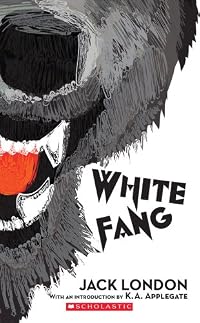
White Fang
by Jack London
On This Page
Description
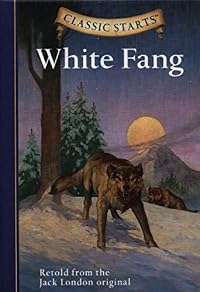
The adventures in the northern wilderness of a dog who is part wolf and how he comes to make his peace with man.Tags
Recommendations






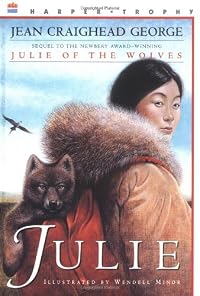
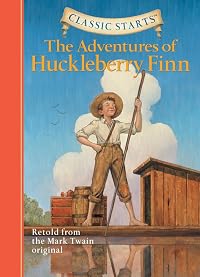
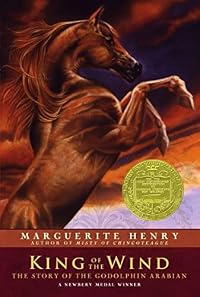





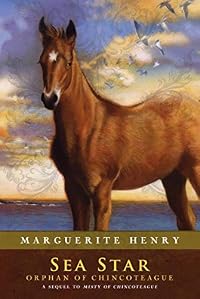
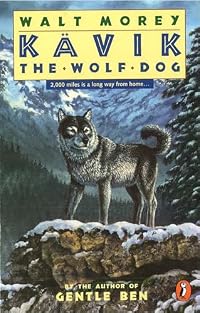
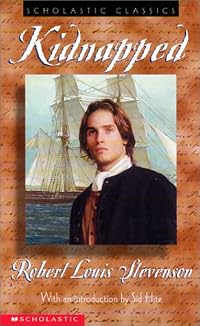
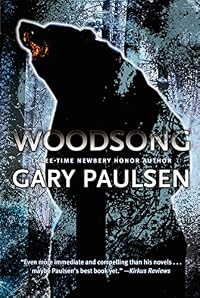
Member Recommendations



Member Reviews
White Fang is, much like Black Beauty, unrelenting in its depiction of animal misery. As an adult, I find the misery rather tiresome, but it would have no doubt been far more bestirring when I was child. It's emotionally evocative, and it forces the reader to embody an animal perspective very different from their own and confront the pain caused by animal cruelty.
I still want to make note that it's an unrealistic depiction of wolf mentality. While books about animals don't have to be realistic, the wolves in White Fang are unrealistic in ways that uphold longstanding harmful narratives about wolves and the wilderness. In White Fang, the fact that wolves are not obedient to humans is a problem--and it doesn't just make them bad pets, but show more bad in terms of their moral character. In White Fang, the wild wolf is cruel, brutal, and lonely because nature requires it, because wolves cannot think beyond their selfish individual needs without human help and love--even though in nature, unlike the novel, wolves are highly social and companionable with one another, and rarely benefit from increased contact with humans. Wolves are not especially violent or dangerous animals, and the idea that they are has fueled the anti-wolf policies still in place in much of their natural territory today.
All of that is bad enough; still worse, the idea that wilderness and wild animals are a problem that must be solved feeds directly into the novel's harmful depiction of Native Americans. Just as White Fang is part-wolf and part-dog, Native Americans in this novel are presented as part-wild and part-civilized. And just as White Fang benefits from being tamed and becoming more doglike, it's clear that Native Americans would benefit from becoming more civilized, like their colonizers. This bias is not subtle: when White Fang meets Native Americans for the first time, he sees them as gods; and when he meets white people for the first time, he explicitly states that they are superior gods. Add to that the fact that the primary Native American character is an animal abuser and an alcoholic (a common stereotype) and the depiction becomes especially distasteful. I'd suggest reading Black Beauty instead. show less
I still want to make note that it's an unrealistic depiction of wolf mentality. While books about animals don't have to be realistic, the wolves in White Fang are unrealistic in ways that uphold longstanding harmful narratives about wolves and the wilderness. In White Fang, the fact that wolves are not obedient to humans is a problem--and it doesn't just make them bad pets, but show more bad in terms of their moral character. In White Fang, the wild wolf is cruel, brutal, and lonely because nature requires it, because wolves cannot think beyond their selfish individual needs without human help and love--even though in nature, unlike the novel, wolves are highly social and companionable with one another, and rarely benefit from increased contact with humans. Wolves are not especially violent or dangerous animals, and the idea that they are has fueled the anti-wolf policies still in place in much of their natural territory today.
All of that is bad enough; still worse, the idea that wilderness and wild animals are a problem that must be solved feeds directly into the novel's harmful depiction of Native Americans. Just as White Fang is part-wolf and part-dog, Native Americans in this novel are presented as part-wild and part-civilized. And just as White Fang benefits from being tamed and becoming more doglike, it's clear that Native Americans would benefit from becoming more civilized, like their colonizers. This bias is not subtle: when White Fang meets Native Americans for the first time, he sees them as gods; and when he meets white people for the first time, he explicitly states that they are superior gods. Add to that the fact that the primary Native American character is an animal abuser and an alcoholic (a common stereotype) and the depiction becomes especially distasteful. I'd suggest reading Black Beauty instead. show less
I don't know how many times I have enjoyed this classic, but I'd say this reading makes at least three. The last time what struck me for some reason was White Fang's battle with the bull dog; White Fang's accomplishment as a fighter. This time, being older and having just read Are We Smart Enough to Know How Smart Animals Are?, I am struck by how effectively (though I don't know if accurately), London has imagined the wolf's umwelt; it's point of view including deification of humans and a love for the hunt.
London I find so wondrously explores the ragged edge of where nature meets the human realm, and considers the drama arising from a citizen of one realm acting in the other. The scope of this tale is quite ambitious. The story begins show more before the wolf-dog hybrid White Fand is born, with two men and their sled dog team on a journey to deliver a coffin to a remote town and a large pack of starving wolves over the course of several days makes meal of this 'outllander' team. Then cub White Fang returns to where his wolfdog mother hailed and grows to become a savage, callous, morose, solitary, and deadly fighter, "the enemy of his kind" among mankind. The story ends with White Fang relaxing in the sun with the puppies he has fathered with a sheep-dog Collie making for a moving, tale across three canine generations.
There is also, I feel, a real not to Plato here in how White Fang seeks to make sense of the shadow-world of the cave before forming his philosophy upon interacting with the real 'forms' in the world outside of the cave. show less
London I find so wondrously explores the ragged edge of where nature meets the human realm, and considers the drama arising from a citizen of one realm acting in the other. The scope of this tale is quite ambitious. The story begins show more before the wolf-dog hybrid White Fand is born, with two men and their sled dog team on a journey to deliver a coffin to a remote town and a large pack of starving wolves over the course of several days makes meal of this 'outllander' team. Then cub White Fang returns to where his wolfdog mother hailed and grows to become a savage, callous, morose, solitary, and deadly fighter, "the enemy of his kind" among mankind. The story ends with White Fang relaxing in the sun with the puppies he has fathered with a sheep-dog Collie making for a moving, tale across three canine generations.
There is also, I feel, a real not to Plato here in how White Fang seeks to make sense of the shadow-world of the cave before forming his philosophy upon interacting with the real 'forms' in the world outside of the cave. show less
I expected to like this more than Call of the Wild because it was supposed to be London's book where he got all nitty-gritty about writing from the wolf's perspective in a real as opposed to a kind of anthropomorphic epical way, and there was some good stuff in that vein early on, with the baby wolf figuring out how the world works, and I think the "nature faker" label is somewhat unreasonable to apply to him unless you were expecting actual nature writing and not tall tale shit. (But only somewhat, since the fact that White Fang's narrative arc is basically that he is wild and magnif and then bad humans make him ornery and vicious and then good humans bring him into the light of civ gives the ecocritic-type, show more let-the-animals-be-animals-irretrievably-Other criticisms levelled against London by Teddy Roosevelt (!) at least three legs to stand on.)
No, the problem with this book has nothing to do with nature--it's London's atittudes toward humanity that are the problem. We see how nails-tough Grey Beaver and the other native people who first semi-domesticate White Fang are, but then when he wanders into the white man's town he sees--apocalyptic revelation!--that those "gods" (humans are gods) are as nothing before the pale gods, and you're like, why exactly, given that the white people in this are mostly a bunch of drunks and fuckups. London's racial ideology is accompanied by this thing where the scion of the judge's family in California comes in and stomps the vicious lumpen goldpanners who are forcing White Fang to dogfight ("You beasts!" he shrieks, manicured fists flying, superman curl coming unstuck. "You beasts!"). And White Fang is redeemed by being brought into the manor of the patriarch, the Judge of the Law. London himself said this book was an expression of "worship of power" and evoked Nietzsche, but it's a pretty thin Nietzscheanism--more Leibnizian all-is-for-the-best-in-this or Calvinist elect: those who rule are the strongest by virtue of ruling, not vice versa. Like, this guy's a socialist???? But then you read further that London saw this book as a fable-retelling of his own stratospheric rise from working-class kid to millionaire author, and you're like, no, he may think he's a socialist but he's actually the worst kind of fuckhead. show less
No, the problem with this book has nothing to do with nature--it's London's atittudes toward humanity that are the problem. We see how nails-tough Grey Beaver and the other native people who first semi-domesticate White Fang are, but then when he wanders into the white man's town he sees--apocalyptic revelation!--that those "gods" (humans are gods) are as nothing before the pale gods, and you're like, why exactly, given that the white people in this are mostly a bunch of drunks and fuckups. London's racial ideology is accompanied by this thing where the scion of the judge's family in California comes in and stomps the vicious lumpen goldpanners who are forcing White Fang to dogfight ("You beasts!" he shrieks, manicured fists flying, superman curl coming unstuck. "You beasts!"). And White Fang is redeemed by being brought into the manor of the patriarch, the Judge of the Law. London himself said this book was an expression of "worship of power" and evoked Nietzsche, but it's a pretty thin Nietzscheanism--more Leibnizian all-is-for-the-best-in-this or Calvinist elect: those who rule are the strongest by virtue of ruling, not vice versa. Like, this guy's a socialist???? But then you read further that London saw this book as a fable-retelling of his own stratospheric rise from working-class kid to millionaire author, and you're like, no, he may think he's a socialist but he's actually the worst kind of fuckhead. show less
As much as I admire and respect Shakespeare, Dickens and John Steinbeck, it is Jack London whose books should be taught in schools if teachers wish to foster a love for literature in the young. His prose is clean and straightforward yet also possessing of great power and beauty. His characters and plot are simple and direct yet gripping and possessing of a fierce energy and aching pathos. He taps into our innate human warmth and feelings of companionship towards animals, particularly dogs, but does not shy away from the brutality inflicted on them both by humankind and the impersonal savagery of nature itself. Young people don't like to be mollycoddled or patronised; London's plain-speaking prose and acknowledgement that life can be show more cruel and unfair would be respected.
White Fang is, with no disrespect intended, essentially The Call of the Wild in reverse. Whereas that earlier short novel saw a domesticated dog heading for the freedom of the northern wilds and extricating himself from human civilisation and the 'ancient covenant' with man, White Fang sees a wild wolf growing up and learning to adapt to the various human 'masters' he encounters. But whilst they are essentially two sides of the same coin – the prose, characterisations and tone are almost identical – White Fang addresses different themes and on this basis should be treated on its own merit. It is more than just a companion piece for The Call of the Wild.
The dominant theme – beyond evoking the companionship between man and dog – is civilization and how it tames nature. This is not Buck – from The Call of the Wild – learning the sole 'law of tooth and fang' in the wild; the wolf White Fang must learn myriad laws of human society, of what he can and cannot do. Above all, he learns that in "life there was limitations and restraints" (pp60-61) and that the "chief thing demanded by… civilisation was control, restraint" (pg. 212). The book shows the wolf's exploration of his consciousness in the learning of these laws, and how it shapes his behaviour. There is a repeated phrase used throughout the book of the 'clay' of White Fang being moulded by his surroundings. He is vicious when pressed into a fighting ring by the evil Beauty Smith, and affectionate when rescued and loved by Weedon Scott. Often, his temper is made harsher by society because he is compelled to do things that go against his nature or his instinct (pg. 132) and, through White Fang, we begin to see how we ourselves are shaped by our surroundings, our society and the compromises we have to make everyday.
This is why White Fang (and The Call of the Wild too) is so effective and so useful a novel. We relate to the animal characters (and not only White Fang) not out of any deliberate anthropomorphic designs on the part of the author but because we recognise the similarities between their nature and our own. The book gives us the gentle and uninsulting reminder that we ourselves are, beneath our intellectual and social finery, animals too. London encourages the recognition of this kinship between man and animal. He presents, for all the harshness of nature depicted, a message of love. He shows how love, even when it is hard-won, can be the most natural thing in the world. show less
White Fang is, with no disrespect intended, essentially The Call of the Wild in reverse. Whereas that earlier short novel saw a domesticated dog heading for the freedom of the northern wilds and extricating himself from human civilisation and the 'ancient covenant' with man, White Fang sees a wild wolf growing up and learning to adapt to the various human 'masters' he encounters. But whilst they are essentially two sides of the same coin – the prose, characterisations and tone are almost identical – White Fang addresses different themes and on this basis should be treated on its own merit. It is more than just a companion piece for The Call of the Wild.
The dominant theme – beyond evoking the companionship between man and dog – is civilization and how it tames nature. This is not Buck – from The Call of the Wild – learning the sole 'law of tooth and fang' in the wild; the wolf White Fang must learn myriad laws of human society, of what he can and cannot do. Above all, he learns that in "life there was limitations and restraints" (pp60-61) and that the "chief thing demanded by… civilisation was control, restraint" (pg. 212). The book shows the wolf's exploration of his consciousness in the learning of these laws, and how it shapes his behaviour. There is a repeated phrase used throughout the book of the 'clay' of White Fang being moulded by his surroundings. He is vicious when pressed into a fighting ring by the evil Beauty Smith, and affectionate when rescued and loved by Weedon Scott. Often, his temper is made harsher by society because he is compelled to do things that go against his nature or his instinct (pg. 132) and, through White Fang, we begin to see how we ourselves are shaped by our surroundings, our society and the compromises we have to make everyday.
This is why White Fang (and The Call of the Wild too) is so effective and so useful a novel. We relate to the animal characters (and not only White Fang) not out of any deliberate anthropomorphic designs on the part of the author but because we recognise the similarities between their nature and our own. The book gives us the gentle and uninsulting reminder that we ourselves are, beneath our intellectual and social finery, animals too. London encourages the recognition of this kinship between man and animal. He presents, for all the harshness of nature depicted, a message of love. He shows how love, even when it is hard-won, can be the most natural thing in the world. show less
An incredible novel, and only partly for the fact that it was written 100 years ago. It's not anthropomorphic like Watership Down, instead it just portrays the life of a wolf dog in the most natural and convincing way - London could have been a researcher in animal behaviour judging by the depth of understanding he expresses. The narrative is compelling and at points distressing. The hunt scene of the first chapter is gripping. And the descriptions of abuse and dog fighting are horrific. But most of all, the process by which a fighting dog can be rehabilitated by providing for his social and emotional needs - it just seems like this book was way ahead of its time.
I know why I loved this as a kid. It is a raw adventure, with a natural charm, and the idea of a wild wolf-dog that is tamed by one man’s kindness would have been irresistible to my nine year old self. Even as an adult, it reads like a heroic tale, as White Fang fights his way through life’s difficulties, like Odysseus trying to find his way home. There can be little doubt that Jack London understood the nature of a wild animal and the dangerous life in the Northern climes.
The descriptive powers of London made me shiver with the chill of the cold and the fear that must accompany a night spent with a fire being the only thing standing between a man and a hungry wolf pack. There are moments of animal cruelty and even nature’s show more cruelty that make one cringe, but the story is true to life, and life is often unkind. But there is also a feeling of hope, of the possibility of survival, and of the love that a dog, or even a wolf, can offer a man, whether he deserves it or not. show less
The descriptive powers of London made me shiver with the chill of the cold and the fear that must accompany a night spent with a fire being the only thing standing between a man and a hungry wolf pack. There are moments of animal cruelty and even nature’s show more cruelty that make one cringe, but the story is true to life, and life is often unkind. But there is also a feeling of hope, of the possibility of survival, and of the love that a dog, or even a wolf, can offer a man, whether he deserves it or not. show less
White Fang is a love letter to the struggle of the wild and civilization in all of us. Though some of the narrative elements do not hold up to today's standard, it is still an adventure worth a read.
The author’s love for the wild is obvious from the get-go. Every time he describes the alpine forests you can feel the cold air searing your lungs and the loneliness of the trees standing sentry over the ages. When he wants to paint a picture, he does a good job, as when he wants to immerse you in the story and character. White Fang himself is an understandable, but ferocious character, becoming a true demon in wolf-dog form as the story unfolds. Yet the path to this point is well examined. Instead of hating him, we pity him. He is a show more unique character to follow. He is never a saint, he is relatable and helps bring the themes out.
The author walks the fine tightrope of humanizing his furry lead without taking it to far. Though White Fang has emotions and self-awareness like a human, it is more of a matter of internal experiences. This makes the story relatable and the themes of the wild vs our inner natures feel believable. The area where the story is dated is in some of its depictions Native Americans. Compared to how the author talks and treats “white men” in the book, the others were unfairly devoid of nuance. Where we see both civilized and uncivilized ‘white men,’ for the others we see only one aspect: harshness. You could argue this complements the themes, since the native americans are closer to the wild, but this feels flat compared to the white men who walk the line between the two worlds as well. The book is still an excellent story as long as you can distance yourself from old cultural norms.
White Fang might not have the most action-packed adventure story, but the journey of the character is riveting and captivating. This is a story where the main draw isn't exploring a far off world, but the constant shifting world of an unlikely main character. Younger readers should read this as an excellent use of theme and character and older reads should check it out for the author’s masterful blending of our reality with that of the wild wolf's. show less
The author’s love for the wild is obvious from the get-go. Every time he describes the alpine forests you can feel the cold air searing your lungs and the loneliness of the trees standing sentry over the ages. When he wants to paint a picture, he does a good job, as when he wants to immerse you in the story and character. White Fang himself is an understandable, but ferocious character, becoming a true demon in wolf-dog form as the story unfolds. Yet the path to this point is well examined. Instead of hating him, we pity him. He is a show more unique character to follow. He is never a saint, he is relatable and helps bring the themes out.
The author walks the fine tightrope of humanizing his furry lead without taking it to far. Though White Fang has emotions and self-awareness like a human, it is more of a matter of internal experiences. This makes the story relatable and the themes of the wild vs our inner natures feel believable. The area where the story is dated is in some of its depictions Native Americans. Compared to how the author talks and treats “white men” in the book, the others were unfairly devoid of nuance. Where we see both civilized and uncivilized ‘white men,’ for the others we see only one aspect: harshness. You could argue this complements the themes, since the native americans are closer to the wild, but this feels flat compared to the white men who walk the line between the two worlds as well. The book is still an excellent story as long as you can distance yourself from old cultural norms.
White Fang might not have the most action-packed adventure story, but the journey of the character is riveting and captivating. This is a story where the main draw isn't exploring a far off world, but the constant shifting world of an unlikely main character. Younger readers should read this as an excellent use of theme and character and older reads should check it out for the author’s masterful blending of our reality with that of the wild wolf's. show less
Members
- Recently Added By
Lists

Favorite Childhood Books
1,646 works; 517 members
1001 Children's Books You Must Read Before You Grow Up
774 works; 100 members

Favorite Animal Fiction
359 works; 156 members

Best Books About Animals
143 works; 48 members

Winter Books
127 works; 17 members

1900s (Decade, not century)
73 works; 17 members
Nonhuman Protagonists
235 works; 34 members

Books about/set in Alaska
50 works; 12 members

Best Adventure Stories
66 works; 13 members

Satori Smiles Children's Book List
262 works; 7 members
Works That Inspired Disney Movies
119 works; 13 members
Ambleside Books
459 works; 18 members

Blue Pyramid 1,276 Best Books of All Time
1,248 works; 32 members

CCE 1000 Good Books List
1,033 works; 12 members

Ryan's Books
34 works; 1 member

Out of Copyright
244 works; 14 members

Best Dog Stories
109 works; 13 members

Accessible Classics
8 works; 1 member

Puffin Books 70th anniversary handbook recommendations
537 works; 10 members

American Lit for Eng 11 Research Project
368 works; 6 members

Books Read in 2023
5,547 works; 145 members
Children's Adventure
53 works; 4 members

HMS: Make Your Child a Lover of Books, Books for Boys
28 works; 2 members

Books We Loved As Children
603 works; 252 members
Survival, dogs -- children's/young adult fiction
73 works; 2 members

2025 Reading List
51 works; 2 members

20th Century Literature
1,161 works; 55 members

Wolf hybrids (half wolf, half dog) -- children's/young adult fiction
19 works; 1 member

The Works of Jack London
44 works; 1 member
Wolves -- children's/young adult fiction
53 works; 2 members

Recommend the 20 best books you've read in the last five years
2,168 works; 606 members

A Rainbow of Books: Colors in the Title
570 works; 24 members
Dogs -- children's/young adult fiction
1,317 works; 9 members

Authors from the United States
245 works; 3 members

Books Read in 2016
4,666 works; 199 members

A Dog's Eye View
11 works; 1 member
Author Information

1,800+ Works 81,439 Members
One of the pioneers of 20th century American literature, Jack London specialized in tales of adventure inspired by his own experiences. London was born in San Francisco in 1876. At 14, he quit school and became an "oyster pirate," robbing oyster beds to sell his booty to the bars and restaurants in Oakland. Later, he turned on his pirate show more associates and joined the local Fish Patrol, resulting in some hair-raising waterfront battles. Other youthful activities included sailing on a seal-hunting ship, traveling the United States as a railroad tramp, a jail term for vagrancy and a hazardous winter in the Klondike during the 1897 gold rush. Those experiences converted him to socialism, as he educated himself through prolific reading and began to write fiction. After a struggling apprenticeship, London hit literary paydirt by combining memories of his adventures with Darwinian and Spencerian evolutionary theory, the Nietzchean concept of the "superman" and a Kipling-influenced narrative style. "The Son of the Wolf"(1900) was his first popular success, followed by 'The Call of the Wild" (1903), "The Sea-Wolf" (1904) and "White Fang" (1906). He also wrote nonfiction, including reportage of the Russo-Japanese War and Mexican revolution, as well as "The Cruise of the Snark" (1911), an account of an eventful South Pacific sea voyage with his wife, Charmian, and a rather motley crew. London's body broke down prematurely from his rugged lifestyle and hard drinking, and he died of uremic poisoning - possibly helped along by a morphine overdose - at his California ranch in 1916. Though his massive output is uneven, his best works - particularly "The Call of the Wild" and "White Fang" - have endured because of their rich subject matter and vigorous prose. (Bowker Author Biography) show less
Some Editions
Awards and Honors
Distinctions
Notable Lists
Series
Belongs to Publisher Series
Airmont Classic (CL36)
KOD (7)
The Teaching of English (260)
Teaching of English (260)
Scholastic T (6)
Kompaß-Bücherei (197)
Vintage Scholastic (T0006)
El País Aventuras (15)
Corticelli [Mursia] (21)
Airmont Classics (36)
Grandes Novelas de Aventuras (XVIII)
Panther Books (1596)
rororo (19)
dtv (1298)
Gallimard, Folio (6405)
Work Relationships
Is contained in
Novels and Stories: Call of the Wild / White Fang / The Sea-Wolf / Klondike and Other Stories by Jack London (indirect)
Children's Classic Compendium: Hound of the Baskervilles / White Fang / Dr Jekyll and Mr Hyde by Arthur Conan Doyle
The Call of the Wild / Tales of the Fish Patrol / The Cruise of the Dazzler / The Son of the Wolf and Other Stories / White Fang by Jack London
The Adventure Collection: Treasure Island, The Jungle Book, Gulliver's Travels, White Fang, The Merry Adventures of Robin by Jonathan Swift
90 Masterpieces You Must Read (Vol.1): Novels, Poetry, Plays, Short Stories, Essays, Psychology & Philosophy by Various
Has the (non-series) sequel
Has the adaptation
Is abridged in
Inspired
Has as a commentary on the text
Has as a student's study guide
Has as a teacher's guide
Common Knowledge
- Canonical title
- White Fang
- Original title
- White Fang
- Original publication date
- 1906
- People/Characters
- White Fang; Beauty Smith; Collie; Grey Beaver; Kiche; Matt (show all 7); Weedon Scott
- Important places
- Alaska, USA; Sierra Vista, USA
- Important events
- Klondike Gold Rush (1896 | 1899)
- Related movies
- White Fang (1925 | IMDb); White Fang (1936 | IMDb); Belyy klyk (1946 | IMDb); Zanna Bianca (1973 | IMDb); White Fang (1991/I | IMDb); White Fang (1993 | IMDb) (show all 7); White Fang (1997 | IMDb)
- First words
- Dark spruce forest frowned on either side the frozen waterway.
- Last words
- (Click to show. Warning: May contain spoilers.)This passed away as the puppies' antics and mauling continued, and he lay with half-shut, patient eyes, drowsing in the sun.
- Original language
- English
- Disambiguation notice
- This is the main work for White Fang by Jack London. Please do not combine with any abridgements, adaptations, annotated editions, etc.
Classifications
Statistics
- Members
- 14,136
- Popularity
- 525
- Reviews
- 147
- Rating
- (3.89)
- Languages
- 27 — Catalan, Chinese, Czech, Danish, Dutch, English, Estonian, Finnish, French, German, Greek, Hebrew, Hungarian, Italian, Japanese, Lithuanian, Norwegian (Bokmål), Polish, Romanian, Russian, Serbian, Spanish, Swedish, Turkish, Ukrainian, Vietnamese, Portuguese (Portugal)
- Media
- Paper, Audiobook, Ebook
- ISBNs
- 1,005
- UPCs
- 9
- ASINs
- 268