On This Page
Description
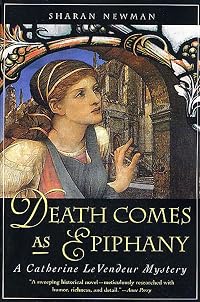
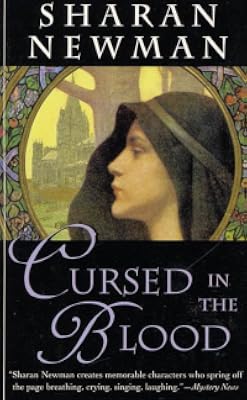
Catherine LeVendeur is a young scholar come to conquer her sin of pride at the Convent of the Paraclete, famous for learning, prayer, and its abbess, the fabled Heloise. When a manuscript the convent produced for the great Abbe Suger disappears, rumors surface saying the book contains sacrilegious passages and will be used to condemn Heloise's famous lover, Peter Abelard. To save her Order, and protect all she holds dear, Catherine must find the manuscript and discover who altered the text. show more She will risk disgrace, the wrath of her family and the Church, and confront an evil older than Time itself--and, if she isn't careful, lose her immortal soul. With "Death Comes As Epiphany, the first in the Catherine LeVendeur mystery series, medievalist Sharan Newman has woven dark mystery and sparkling romance into a fascinating and richly detailed tapestry of everyday life in twelfth-century France, and one of the most moving love stories of all time: Abelard and Heloise. show lessTags
Recommendations











Member Reviews
It’s late 1139, and Catherine LeVendeur is a novice in the convent of the Paraclete, whose abbess, Heloise, is the former lover of Abelard. A psalter has disappeared from the convent, one that could severely damage the already-damaged Abelard, and Heloise sends Catherine away from the convent, ostensibly in disgrace for misbehavior, to get the book back. But at the Abbey of Saint Denis, a stone mason literally falls dead, and it’s up to the intrepid Catherine to figure out, using her wits, what happened.
The historical detail is quite good. I understand that the author has a PhD in medieval history, and she definitely shows it off a bit. Those who aren’t well versed in medieval history might find themselves wishing that the book show more provided a glossary of terms; the author continually uses words and phrases like bliaut (a women's loose-fitting overgarment), aversier, bricon (rascal), chainse (a linen chemise), gaufre (waffles), braies (an undergarment tied at the waist) awaeris thu, and mesel (a leper). There’s also a fair amount of Latin that's used in this book. Still, this is the kind of historical verisimilitude that I look for in a historical novel.
But I liked the story; it’s mostly original (though there are one or two things that are a bit predictable), and it moves at a relatively fast pace. The main character is spunky, and the relationship between herself and Edgar, the English stone carver, held my interest throughout. I also enjoyed how philosophy and reason are interwoven throughout the story, contrasting them with sheer, blind faith, and I enjoyed watching Catherine use her wits in order to figure out what happened to the psalter. The addition of real historical figures didn’t weigh heavily on the story or feel too contrived, either. I look forward to reading what’s next for Catherine LeVendeur. show less
The historical detail is quite good. I understand that the author has a PhD in medieval history, and she definitely shows it off a bit. Those who aren’t well versed in medieval history might find themselves wishing that the book show more provided a glossary of terms; the author continually uses words and phrases like bliaut (a women's loose-fitting overgarment), aversier, bricon (rascal), chainse (a linen chemise), gaufre (waffles), braies (an undergarment tied at the waist) awaeris thu, and mesel (a leper). There’s also a fair amount of Latin that's used in this book. Still, this is the kind of historical verisimilitude that I look for in a historical novel.
But I liked the story; it’s mostly original (though there are one or two things that are a bit predictable), and it moves at a relatively fast pace. The main character is spunky, and the relationship between herself and Edgar, the English stone carver, held my interest throughout. I also enjoyed how philosophy and reason are interwoven throughout the story, contrasting them with sheer, blind faith, and I enjoyed watching Catherine use her wits in order to figure out what happened to the psalter. The addition of real historical figures didn’t weigh heavily on the story or feel too contrived, either. I look forward to reading what’s next for Catherine LeVendeur. show less
I never thought I'd find a mystery set in the Medieval era that would be so plainly boring, but I have. And it wasn't just boring, it was painfully bad.
The main character is naive and full of bad choices, even though she's supposed to pass as oh! so intelligent and oh! so ahead of her times. However, in every interaction of hers, she comes across as docile, avoiding conflict with all those who plainly tell her they have the right to control her choices and her life. Her relatives, from her parents to her sister, her uncle, her brother, everyone is a complete boring brute. The only character who is remotely acceptable is Edgar. The mystery itself is not interesting at all, the twists are laughable, and I am pretty certain that the show more dialogue is far from the way in which French people of the era used to talk. It was outrageous to come across so many modern idioms, it was cringe-worthy.
The only elements that kept me reading until the end were Eloise and Abelárd's presence and the descriptions of Medieval France. I had high expectations for this novel, judging by the reviews, but I suppose it wasn't for me. It goes without saying that I will not attempt to start the following installments in the series. show less
The main character is naive and full of bad choices, even though she's supposed to pass as oh! so intelligent and oh! so ahead of her times. However, in every interaction of hers, she comes across as docile, avoiding conflict with all those who plainly tell her they have the right to control her choices and her life. Her relatives, from her parents to her sister, her uncle, her brother, everyone is a complete boring brute. The only character who is remotely acceptable is Edgar. The mystery itself is not interesting at all, the twists are laughable, and I am pretty certain that the show more dialogue is far from the way in which French people of the era used to talk. It was outrageous to come across so many modern idioms, it was cringe-worthy.
The only elements that kept me reading until the end were Eloise and Abelárd's presence and the descriptions of Medieval France. I had high expectations for this novel, judging by the reviews, but I suppose it wasn't for me. It goes without saying that I will not attempt to start the following installments in the series. show less
Catherine LeVendeur is a novice nun who, while devoted to God, is more interested in the fact that living in a convent allows her to study and learn. When a psalter she helped write is defiled, the abbess sends her home to discover the vandal. In the midst of this she is swept up in a mystery of murder, theft, and vanity, as well as a timid budding romance with a secretive man. I enjoyed this one, which surprised me a little since I'm not much of a mystery reader, but I think what fascinated me most was the detailed description of life in the 12th century. It was very different from now, and it takes a talented writer to convincingly portray such characters without showing them in a modern light. Sure, perhaps Catherine herself is more show more progressive than was likely for a woman of those years, but she is engaging enough that one can overlook it. I may have to look up some other Newman books. show less
An engrossing plot, charming heroine and intriguing historical details. The main characters were well-drawn and likeable, and the use of Heloise and Abelard did not seem ponderous or contrived (as use of historical personages in fiction sometimes does.) I liked the thorough depiction of the culture, especially the way people's belief in the supernatural was pervasive and convincing.
My only quibble was with the occasional forays into the perspective of secondary characters. I felt it added little to the story while sacrificing some of the mystery. A small quibble: I'll definitely be reading more of these.
Note on the audiobook: The narrator was great. Her voices varied, she read dramatically but not bombastically, and her Francophone show more pronunciation of names added to the atmosphere. show less
My only quibble was with the occasional forays into the perspective of secondary characters. I felt it added little to the story while sacrificing some of the mystery. A small quibble: I'll definitely be reading more of these.
Note on the audiobook: The narrator was great. Her voices varied, she read dramatically but not bombastically, and her Francophone show more pronunciation of names added to the atmosphere. show less
Enjoyable mystery with a competent main character. Catherine is smart and sassy. Edgar is…fine, I guess. He’s a bit bland. Hopefully he’ll get more characterization in future books.
Meh. 2 and a half stars. [a:Margaret Frazer|57428|Margaret Frazer|https://d.gr-assets.com/authors/1356051263p2/57428.jpg] does it better in her Dame Frevisse mysteries.
The elements of medieval religious life were not very well integrated, and the key character and plot turns happened so quickly that it felt rather superficial to me.
Disappointing overall.
The elements of medieval religious life were not very well integrated, and the key character and plot turns happened so quickly that it felt rather superficial to me.
Disappointing overall.
This struck me as a book the author really enjoyed writing. The dialogue and character reactions are occasionally melodramatic but also often deliberately funny (the last few lines of the book made me laugh aloud).
One nice thing about this book (and the sequel, so far) is that the murder is not the sole focus; other storylines and relationships get more development than I'm used to in mysteries, meaning that the mystery development gets stale less quickly. I suspect this will be a boon for the series as a whole, if the same continues to be true.
The writing style is sometimes distracting, which is a big part of why I didn't rate the book higher; for example, the main character holds conversations with voices in her head that don't serve show more much of a purpose. I felt like some of the conflicts were resolved too quickly and too easily. Nonetheless, as my note about the sequel indicates, I'm already reading the next book, and I'm looking for the others. This was a fun and promising start to the series. show less
One nice thing about this book (and the sequel, so far) is that the murder is not the sole focus; other storylines and relationships get more development than I'm used to in mysteries, meaning that the mystery development gets stale less quickly. I suspect this will be a boon for the series as a whole, if the same continues to be true.
The writing style is sometimes distracting, which is a big part of why I didn't rate the book higher; for example, the main character holds conversations with voices in her head that don't serve show more much of a purpose. I felt like some of the conflicts were resolved too quickly and too easily. Nonetheless, as my note about the sequel indicates, I'm already reading the next book, and I'm looking for the others. This was a fun and promising start to the series. show less
Members
- Recently Added By
Published Reviews
ThingScore 100
[...] Newman's tale really doesn't fit neatly into any genre pigeonhole. It's history in two senses at once, both a tale of times past and an account that follows Catherine regardless of where her adventures take her. Though it is fantasy in no sense whatsoever, it shares a brand of idealism and impulsiveness that fantasy readers will find eminently familiar.
added by Nevov
Lists

Best Historical Crime
44 works; 17 members

Series to Try Out
92 works; 1 member
Author Information

27+ Works 3,786 Members
Sharan Newman is a medieval historian and author. She took her Master's degree in Medieval Literature at Michigan State University and then did her doctoral work at the University of California at Santa Barbara in Medieval Studies, specializing in twelfth-century France. She is a member of the Medieval Academy and the Medieval Association of the show more Pacific. Newman has done research at the Bibliotheque Nationale in Paris, the centre National de la Recherche Scientifique France Meridionale et Espagne at the University of Toulouse and the Institute for Jewish History at the University of Trier, as well as many departmental archives. show less
Some Editions
Awards and Honors
Awards
Series

Common Knowledge
- Canonical title
- Death Comes as Epiphany
- Original publication date
- 1993-06-01
- People/Characters
- Catherine LeVendeur; Héloïse; Peter Abelard (1079-1142)
- Important places
- France
- First words
- Catherine was working in the vegetable garden with the over novices on the morning Sister Ursula's family came to take her away.
Classifications
Statistics
- Members
- 523
- Popularity
- 57,242
- Reviews
- 15
- Rating
- (3.62)
- Languages
- English, French, German, Portuguese
- Media
- Paper, Audiobook, Ebook
- ISBNs
- 10
- ASINs
- 5