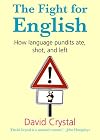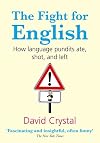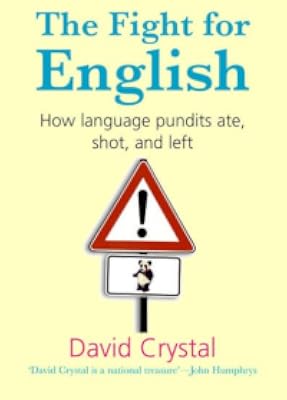
The Fight for English: How Language Pundits Ate, Shot, and Left
by David Crystal
On This Page
Description
"Angst over the apostrophe and hysteria over hyphens: the English language has become a combat zone. Why are people so passionate about language? How has the fighting over English usage come about?" "David Crystal charts the clashes from Anglo-Saxon times via the language of Shakespeare and Samuel Johnson to our own time of texting and the greengrocer's apostrophe. While others have fought to impose their views on spelling and grammar, David Crystal - as ever scholarly yet entertaining - show more explains why we should say no to zero tolerance."--Jacket. show lessTags
Recommendations


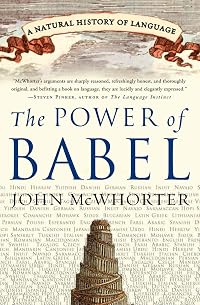

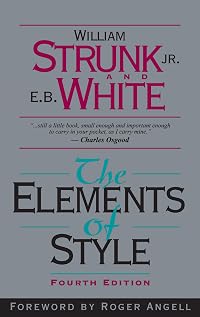
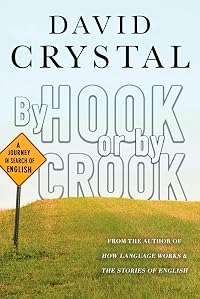
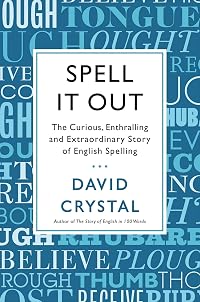



Member Recommendations

davidt8 Another history of the English Language, companion book for the TV series.
Member Reviews
This deceptively lightweight book should be compulsory reading for every obsessive pedant and equally for those who take a totally laissez faire approach to usage. And in fact, everyone else.
This is not an obscure reference work, but a good overview that is accessible to a general audience. For a slightly more academic approach, consider Henry Hitchings' The Language Wars (see my review HERE).
Language Change: Rules versus Comprehension
David Crystal, a respected linguistics professor, cares about rules and grammar (and has written grammar guides), but he cares far more about meaning, comprehension and effect.
He explains the history (and future) of the English language, especially in its written form, in lots of short chapters. It is show more anecdotal, rather than academic, though it has plenty of facts and references to sources as well.
Our language is a melting pot, not a salad bowl, and language change is inevitable. It has been complained about since Chaucer’s time, yet we still have great writers. Crystal concludes that we shouldn't panic about it and that understanding appropriateness is paramount.
Context and Discernment
Knowing how an engine works does not make you a good driver: you need a feel for the medium and situation as well. Consequently, he pleads for discernment in applying rules; appropriateness and context are recurring themes. The purpose of grammar is for words to make sense; it isn’t an end in itself.
Split Infinitives and Rhythm
There are some intriguing slants on familiar debates. Crystal suggests one reason we are drawn to splitting infinitives is the more natural (iambic) rhythm that can result. (“To boldly go” is weak-strong-weak-strong, but “to go boldly” is weak-strong-strong-weak) He also gives examples where it changes the meaning (“He completely failed to understand” and “He failed to completely understand.”).
Standard English - When it's Good, and When it's Not
Crystal argues that standard English is important so that people from different groups and regions can understand each other, but that non-standard dialects are important for diversity and for group identity. We wear different clothes for different situations and similarly we use different language. Prescriptivists are too fond of “always” and “never”, ignoring context. They are so afraid of ambiguity they seek it where context means it doesn’t exist, and then they apply rules blindly, without exception. He even suggests some of them were so bullied by strict grammarians that they developed Stockholm Syndrome!
That intriguing hyperbole aside, I agree with almost every word in this well-balanced book and can’t recommend it enough.
Potted History and Random Thoughts
Over and Passive Learning: Written and Spoken Language
The written word requires overt teaching in a way that speech does not. It also requires a degree of standardisation because there are no cues of intonation and body language and recipient cannot indicate if they do not understand.
Hybrid Language
In many cases we have the richness of triplets of subtly different words from Saxon, French and Latin (ask, question, interrogate and rest, remainder, residue).
Many of the other silent letters in English were added to help people by indication the Latin route (e.g. “det” became “debt” from “debitum”).
Neologisms are Fine
Why do we worry about neologisms when Shakespeare coined 1,700 words?
(Except he probably didn't coin them. He wrote them down, and his works survive.)
Standardisation (Dictionaries and Usage Guides) to Limit Change
The first serious attempts at standardisation came with the printing press in 1476. There were no dictionaries, local spelling varied hugely (partly because of differing accents), and many of Caxton’s typesetters were Dutch (inserting “gh” in words such as “ghost”), so plenty of inconsistencies slipped through.
In 1664, there was a possibility of an English Academy (along the lines of Académie française), supported by Dryden and Defoe. The Inkhorn Debate (against excessively long Latinate and Greek words) and the Great Vowel Shift get their fair share of space.
Johnson’s wasn’t the first dictionary, but it was a milestone in comprehensiveness and the fact it included quotations as examples.
Spelling is not immutable. Dr Johnson’s dictionary of ~250 years ago includes many spellings that are completely unfamiliar today, and hyphenation changes too (Swift wrote “now a-days”).
Usage changes, even at a fundamental level. For example, Dryden used double comparatives, such as “Contain your spirit in more stricter bounds”.
The first usage guides appeared in the 18th century and these introduced many rules that bore little relation to English as it was used then (even in literate circles) and which persist today. Often they were extrapolations of Latin grammar that had no relevance to English. The obvious example is the rule about not splitting infinitives because it’s impossible to do so in Latin (each is a single word) although that wasn’t banned till the 19th century. The ban on ending a sentence with a preposition comes from the fact that pre-positions were positioned before nouns. Additional motivation for such rules was to distinguish “polite” speech from “impolite”.
Punctuation Change
Punctuation was largely ignored by dictionaries and usage guides till recently, but is still prone to fashion (e.g. Dickens’ use of semi colons).
For possessive “its” lacking an apostrophe (along with “his” and “hers”), Crystal blames 18th century printers who applied the new rule to nouns but forgot to apply it to pronouns.
Political Change - Noah Webster
Webster deliberately changed American spelling, partly to simplify it, but explicitly to distinguish it from the language of the former colonial power: "As an independent nation, our honor requires us to have a system of our own, in language as well as government. Great Britain should no longer be OUR standard; for the taste of her writers is already corrupted, and her language on the decline." (I don't think that quotation is in this book, but it's relevant for this review.)
Accent Snobbery
96% of the UK population has a regional accent, yet in WW2 people complained they couldn’t believe the news when it was read by someone with a regional accent. For much more about this, see Crystal's Sounds Appealing (see my review HERE).
Cover
The title, cover and introduction imply this is largely a response to Lynne Truss' Eats, Shoots & Leaves (see my review HERE), but it’s much broader, though she gets many mentions. He was a collaborator on the radio series that spawned her book and he praises and condemns her by turns. Crystal’s main objection is the concept of zero tolerance. show less
This is not an obscure reference work, but a good overview that is accessible to a general audience. For a slightly more academic approach, consider Henry Hitchings' The Language Wars (see my review HERE).
Language Change: Rules versus Comprehension
David Crystal, a respected linguistics professor, cares about rules and grammar (and has written grammar guides), but he cares far more about meaning, comprehension and effect.
He explains the history (and future) of the English language, especially in its written form, in lots of short chapters. It is show more anecdotal, rather than academic, though it has plenty of facts and references to sources as well.
Our language is a melting pot, not a salad bowl, and language change is inevitable. It has been complained about since Chaucer’s time, yet we still have great writers. Crystal concludes that we shouldn't panic about it and that understanding appropriateness is paramount.
Context and Discernment
Knowing how an engine works does not make you a good driver: you need a feel for the medium and situation as well. Consequently, he pleads for discernment in applying rules; appropriateness and context are recurring themes. The purpose of grammar is for words to make sense; it isn’t an end in itself.
Split Infinitives and Rhythm
There are some intriguing slants on familiar debates. Crystal suggests one reason we are drawn to splitting infinitives is the more natural (iambic) rhythm that can result. (“To boldly go” is weak-strong-weak-strong, but “to go boldly” is weak-strong-strong-weak) He also gives examples where it changes the meaning (“He completely failed to understand” and “He failed to completely understand.”).
Standard English - When it's Good, and When it's Not
Crystal argues that standard English is important so that people from different groups and regions can understand each other, but that non-standard dialects are important for diversity and for group identity. We wear different clothes for different situations and similarly we use different language. Prescriptivists are too fond of “always” and “never”, ignoring context. They are so afraid of ambiguity they seek it where context means it doesn’t exist, and then they apply rules blindly, without exception. He even suggests some of them were so bullied by strict grammarians that they developed Stockholm Syndrome!
That intriguing hyperbole aside, I agree with almost every word in this well-balanced book and can’t recommend it enough.
Potted History and Random Thoughts
Over and Passive Learning: Written and Spoken Language
The written word requires overt teaching in a way that speech does not. It also requires a degree of standardisation because there are no cues of intonation and body language and recipient cannot indicate if they do not understand.
Hybrid Language
In many cases we have the richness of triplets of subtly different words from Saxon, French and Latin (ask, question, interrogate and rest, remainder, residue).
Many of the other silent letters in English were added to help people by indication the Latin route (e.g. “det” became “debt” from “debitum”).
Neologisms are Fine
Why do we worry about neologisms when Shakespeare coined 1,700 words?
(Except he probably didn't coin them. He wrote them down, and his works survive.)
Standardisation (Dictionaries and Usage Guides) to Limit Change
The first serious attempts at standardisation came with the printing press in 1476. There were no dictionaries, local spelling varied hugely (partly because of differing accents), and many of Caxton’s typesetters were Dutch (inserting “gh” in words such as “ghost”), so plenty of inconsistencies slipped through.
In 1664, there was a possibility of an English Academy (along the lines of Académie française), supported by Dryden and Defoe. The Inkhorn Debate (against excessively long Latinate and Greek words) and the Great Vowel Shift get their fair share of space.
Johnson’s wasn’t the first dictionary, but it was a milestone in comprehensiveness and the fact it included quotations as examples.
Spelling is not immutable. Dr Johnson’s dictionary of ~250 years ago includes many spellings that are completely unfamiliar today, and hyphenation changes too (Swift wrote “now a-days”).
Usage changes, even at a fundamental level. For example, Dryden used double comparatives, such as “Contain your spirit in more stricter bounds”.
The first usage guides appeared in the 18th century and these introduced many rules that bore little relation to English as it was used then (even in literate circles) and which persist today. Often they were extrapolations of Latin grammar that had no relevance to English. The obvious example is the rule about not splitting infinitives because it’s impossible to do so in Latin (each is a single word) although that wasn’t banned till the 19th century. The ban on ending a sentence with a preposition comes from the fact that pre-positions were positioned before nouns. Additional motivation for such rules was to distinguish “polite” speech from “impolite”.
Punctuation Change
Punctuation was largely ignored by dictionaries and usage guides till recently, but is still prone to fashion (e.g. Dickens’ use of semi colons).
For possessive “its” lacking an apostrophe (along with “his” and “hers”), Crystal blames 18th century printers who applied the new rule to nouns but forgot to apply it to pronouns.
Political Change - Noah Webster
Webster deliberately changed American spelling, partly to simplify it, but explicitly to distinguish it from the language of the former colonial power: "As an independent nation, our honor requires us to have a system of our own, in language as well as government. Great Britain should no longer be OUR standard; for the taste of her writers is already corrupted, and her language on the decline." (I don't think that quotation is in this book, but it's relevant for this review.)
Accent Snobbery
96% of the UK population has a regional accent, yet in WW2 people complained they couldn’t believe the news when it was read by someone with a regional accent. For much more about this, see Crystal's Sounds Appealing (see my review HERE).
Cover
The title, cover and introduction imply this is largely a response to Lynne Truss' Eats, Shoots & Leaves (see my review HERE), but it’s much broader, though she gets many mentions. He was a collaborator on the radio series that spawned her book and he praises and condemns her by turns. Crystal’s main objection is the concept of zero tolerance. show less
Having read, and enjoyed, Eats Shoots and Leaves, I just had to read this one. The subtitle hooked me: "How language pundits ate, shot, and left".
David Crystal argues against a "zero tolerance" approach to punctuation changes and other evolutions in the English language. Language has evolved for centuries; the only languages that don't evolve are dead. Mr. Crystal chronicals some of the evolutions in usage, pronunciation, spelling and punctuation. He argues that the understanding of changes and of the appropriatness of different usages in different contexts is more important than learning strict rules of grammar. I agree...although I still get angry when I see a sign in a parking lot saying "small car's only"!
David Crystal argues against a "zero tolerance" approach to punctuation changes and other evolutions in the English language. Language has evolved for centuries; the only languages that don't evolve are dead. Mr. Crystal chronicals some of the evolutions in usage, pronunciation, spelling and punctuation. He argues that the understanding of changes and of the appropriatness of different usages in different contexts is more important than learning strict rules of grammar. I agree...although I still get angry when I see a sign in a parking lot saying "small car's only"!
Just happen to be reading this at the same time as [b:You Have a Point There: A New & Complete Guide to Punctuation|1411860|You Have a Point There A New & Complete Guide to Punctuation|Eric Partridge|https://d202m5krfqbpi5.cloudfront.net/books/1327883966s/1411860.jpg|1402181]. Interesting juxtaposition of Prescriptive and Descriptive - but both authors have some respect for both perspectives so it's cool.
Ok Done. Wow. What a great overview from Abbot AElfric through Johnson and Webster up to [a:Lynne Truss|5571|Lynne Truss|https://d202m5krfqbpi5.cloudfront.net/authors/1215628380p2/5571.jpg] about all the different ways people have tried to bring order to the English language, and to impose their standards on others. More than just a show more history, though, and not a usage manual - a graceful and witty and quick read that really gets at the heart of the prescriptive/descriptive debate and even provides great hope for the future. After all, as he points out, a talented mechanic is not necessarily a great driver, and a competent grammarian isn't necessarily an effective communicator. But people can learn any skill, if well taught.
I'm thinking about tossing all my other language books out unread. But several of them are by Crystal, so probably I won't. ;)
Must reading for anyone interested in grammar, spelling, pronunciation, or vocabulary. Strongly recommended for fans of [b:Eats, Shoots & Leaves|228579|Eats, Shoots & Leaves The Zero Tolerance Approach to Punctuation|Lynne Truss|https://d202m5krfqbpi5.cloudfront.net/books/1386924010s/228579.jpg|854886] and for journalists and other writers. I'd love to put it in the hands of every pedant I know - but as I'm one of them I'm not sure this will be going a'roaming any time soon. show less
Ok Done. Wow. What a great overview from Abbot AElfric through Johnson and Webster up to [a:Lynne Truss|5571|Lynne Truss|https://d202m5krfqbpi5.cloudfront.net/authors/1215628380p2/5571.jpg] about all the different ways people have tried to bring order to the English language, and to impose their standards on others. More than just a show more history, though, and not a usage manual - a graceful and witty and quick read that really gets at the heart of the prescriptive/descriptive debate and even provides great hope for the future. After all, as he points out, a talented mechanic is not necessarily a great driver, and a competent grammarian isn't necessarily an effective communicator. But people can learn any skill, if well taught.
I'm thinking about tossing all my other language books out unread. But several of them are by Crystal, so probably I won't. ;)
Must reading for anyone interested in grammar, spelling, pronunciation, or vocabulary. Strongly recommended for fans of [b:Eats, Shoots & Leaves|228579|Eats, Shoots & Leaves The Zero Tolerance Approach to Punctuation|Lynne Truss|https://d202m5krfqbpi5.cloudfront.net/books/1386924010s/228579.jpg|854886] and for journalists and other writers. I'd love to put it in the hands of every pedant I know - but as I'm one of them I'm not sure this will be going a'roaming any time soon. show less
A simply, but entertainingly-written reposte to language pedants. Crystal manages in this short book to cover the history of and main arguments for and against correct usage. His own view - that language use should suit its context and that while there are rules for language use, clarity of meaning is most important - is well laid-out. Crystal is not the 'anything goes' relativist he has been depicted as, and while he points out the faults he sees in books by Lynne Truss and John Humphreys, he is also hugely sympathetic to their motivations.
A very enjoyable book on the history and cultural issues that have brought us to our current usage of English today. He argues a bit too strongly to separate himself from the prescriptive barons of the English language. Yet at the end of the book we find that he too needs some prescriptive rules to take us into the green pastures of communicative clarity. I would have given him five stars but for the fact that he didn't have a chapter on profanity!
Parts of it are basically [b:The Stories of English|207741|The Stories of English|David Crystal|https://d.gr-assets.com/books/1388276993s/207741.jpg|385460] Lite. Crystal explores the successions of language critics in an entertaining fashion, but spends too long discussing the British National Curriculum. The whole book is basically an argument against the zero tolerance approach to English.
On second thought, giving it 3.5 stars for helping identify why I so dislike sentence fragments that leave me looking for the verb. Or rather, for identifying why I'd be looking for a verb that isn't there.
[Answer: really long subjects are hard to parse in English, so I hold that long subject in my head for the length of the fragment (which takes show more effort), don't find it, backtrack, still don't find it, etc. Lesson: avoid long subjects and pointless sentence fragments.] show less
On second thought, giving it 3.5 stars for helping identify why I so dislike sentence fragments that leave me looking for the verb. Or rather, for identifying why I'd be looking for a verb that isn't there.
[Answer: really long subjects are hard to parse in English, so I hold that long subject in my head for the length of the fragment (which takes show more effort), don't find it, backtrack, still don't find it, etc. Lesson: avoid long subjects and pointless sentence fragments.] show less
I enjoy David Crystal's writings on language very much and having read - and loved - Lynn Truss' Eats, Shoots and Leaves, to which this book is somewhat of a response, I was excited to read this.
It is both a historical survey of the evolution of the idea of "correct" language - how there came to be such an idea - and a thematic survey of what the sticking points have been in defining "correct language". Crystal is more broad than Truss, focusing on more than just punctuation, which was nice.
The strongest points of the book were the explanatory chapters. Crystal shows how the English language used to allow a much wider range of variation in spelling, grammar, punctuation, etc. than it has come to do. The weakest points are when Crystal show more goes on the attack against Truss and others espousing rigid ideas about language "correctness." These sections seem petty, irrelevant, and tacked on in an attempt to capitalize on the success of Truss' book. Fortunately, despite what the title may indicate, these episodes are fairly minor and are confined mostly to the latter part of the book.
Overall, this book was acceptable to me. I did not find many new ideas in it but it reinforced concepts about language change that I had previously touched on in other readings. show less
It is both a historical survey of the evolution of the idea of "correct" language - how there came to be such an idea - and a thematic survey of what the sticking points have been in defining "correct language". Crystal is more broad than Truss, focusing on more than just punctuation, which was nice.
The strongest points of the book were the explanatory chapters. Crystal shows how the English language used to allow a much wider range of variation in spelling, grammar, punctuation, etc. than it has come to do. The weakest points are when Crystal show more goes on the attack against Truss and others espousing rigid ideas about language "correctness." These sections seem petty, irrelevant, and tacked on in an attempt to capitalize on the success of Truss' book. Fortunately, despite what the title may indicate, these episodes are fairly minor and are confined mostly to the latter part of the book.
Overall, this book was acceptable to me. I did not find many new ideas in it but it reinforced concepts about language change that I had previously touched on in other readings. show less
Members
- Recently Added By
Lists

2024 Reading List
49 works; 1 member
Author Information

103+ Works 14,169 Members
David Crystal is Honorary Professor of Linguistics at the University of Wales, Bangor.
Work Relationships
Common Knowledge
- Original publication date
- 2006
- First words
- Prologue
Unimaginable millions have bought Lynn Truss’s book Eats, Shoots and Leaves.
Chapter 1
Who was the first person ever to worry about English usage? - Blurbers
- McGough, Roger
Classifications
Statistics
- Members
- 311
- Popularity
- 102,825
- Reviews
- 11
- Rating
- (4.01)
- Languages
- English
- Media
- Paper, Ebook
- ISBNs
- 3
- ASINs
- 3