On This Page
Description
Julius Caesar, at war with Pompey, lays siege to Massilia, where Gordianus the Finder searches for his son Meto, a rumored traitor, and witnesses a young woman's fall from Sacrifice Rock.Tags
Recommendations







Member Reviews
When we catch up to Gordianus the Finder in 49 B.C. he is on a quest to find his missing adopted son, rumored to have been murdered. It's a tricky situation. Meto was caught betraying Caesar, or so the story goes.
Gordianus has taken Darus, his son-in-law, for companionship to the besieged port city of Massilia. (Massilia is modern day Marseille, by the way.) Once there, he encounters more mystery than he knows what to do with. In the middle of a bloody civil war between Caesar and Pompey a smaller, quieter war is underway. A beautiful woman is missing. Gordianus may or may not have witnessed her death. Was it a suicide? Did she jump or was she pushed. Different eyes see different things. An innocent man is doomed to death; a scapegoat show more by the priests of Artemis, for the sins of his family. Nothing is as it seems. All the while Gordianus is a guest or prisoner of Massilia, seeking the truth of his son. show less
Gordianus has taken Darus, his son-in-law, for companionship to the besieged port city of Massilia. (Massilia is modern day Marseille, by the way.) Once there, he encounters more mystery than he knows what to do with. In the middle of a bloody civil war between Caesar and Pompey a smaller, quieter war is underway. A beautiful woman is missing. Gordianus may or may not have witnessed her death. Was it a suicide? Did she jump or was she pushed. Different eyes see different things. An innocent man is doomed to death; a scapegoat show more by the priests of Artemis, for the sins of his family. Nothing is as it seems. All the while Gordianus is a guest or prisoner of Massilia, seeking the truth of his son. show less
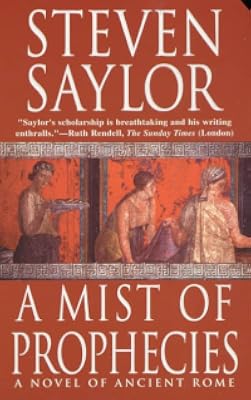
In Last Seen in Massilia, the eighth book in the Sub Roma series by Steven Saylor, our hero Gordianus the Finder has traveled with his strong son-in-law Davus to Massilia (present-day Marseille) because he's received a note telling him that his son Meto died there and, being the Finder that he is, he has to learn the truth. As he arrives in Massilia, the place is under seige by Caesar's Roman forces because the city-state had refused him entry some time earlier and instead thrown in their lot with Pompey, Caesar's rival for what will become the Roman Empire. The city has its own scapegoat, pampered until required to take on the sins of the people and sacrifice himself, and that individual takes in Gordianus and Davos mainly to have show more someone to talk to (as the citizens of the city shun the scapegoat even as they rely upon him). But there are machinations within machinations in the city, and when Gordianus and his companions witness a death on a sacred rock, and disagree as to whether they've seen a murder or a suicide, Gordianus must follow his nature and investigate - and perhaps, if he isn't killed, he'll discover what has happened to Meto as well.... I actually began reading A Mist of Prophecies, the ninth book in the series (which I picked up at a used mystery bookstore while on vacation in Victoria, B.C.), but soon realized I needed to know what had happened in this book to make sense of that one; yay for Kindle that makes all books instantly possible! But the story itself is engrossing, the characters are as always very well-drawn and, well, as a history geek I have to say one of my favourite parts of Saylor's books is reading his end notes, where he cites the actual historical sources that underpin his series. If you don't know the series already, you can start here if you like - just don't go to Mist until you've read this one! Recommended! show less
With this episode in the continuing saga of Gordianus the Finder, our hero leaves the mundane plane of every day existence and gains the rarified status of a super-hero. I say this as in this novel Gordianus survives several dangerous escapades, by rather incredulous means, escapades which would land any ordinary person (not a super-hero) in their urn.
The story: Gordianus, on hearing of the death of his son Meto, in the Greek colony of Massilia, travels to the city to see for himself just what is going on. He finds Massilia besieged by Caesar's troops, but he manages to enter the city (a tale in itself), and then meets an amazing variety of people, including the arch Roman exiles Verres and Milo. Adventures, death, gainful employment, show more and murder ensue. At novel's end father and son are reunited, but Gordianus disgusted by the intrigue and deception in his son's life as a follower of Caesar, renounces Meto.
As with every Saylor, a bright and detailed account of life in the ancient world is presented. Massilia itself is shown warts and all, and its customs revealed to our gaze, including that of the "scapegoat". One criticism, these later Gordianus novels suffer from being part of a series. They do not stand on their own as well as they should, however, this is the inevitable effect of a long running series. show less
The story: Gordianus, on hearing of the death of his son Meto, in the Greek colony of Massilia, travels to the city to see for himself just what is going on. He finds Massilia besieged by Caesar's troops, but he manages to enter the city (a tale in itself), and then meets an amazing variety of people, including the arch Roman exiles Verres and Milo. Adventures, death, gainful employment, show more and murder ensue. At novel's end father and son are reunited, but Gordianus disgusted by the intrigue and deception in his son's life as a follower of Caesar, renounces Meto.
As with every Saylor, a bright and detailed account of life in the ancient world is presented. Massilia itself is shown warts and all, and its customs revealed to our gaze, including that of the "scapegoat". One criticism, these later Gordianus novels suffer from being part of a series. They do not stand on their own as well as they should, however, this is the inevitable effect of a long running series. show less
Steven Saylor's Gordianus the Finder books are high among my favorites. I actually own copies of all of them but I reread sometimes and this one is especially good, so I bought the ebook to reread it when travelling. I love the way real historical happenings provide a great big backdrop to the personal challenges and the growing and changing family of Gordianus. Portrayals of historical figures are believable and entertaining. I just love this whole series!
I think this was one of Saylor's better mysteries...lots of mistaken ideas/identities and twists at the end. Also a neat look into Massilia (modern Marseilles) at the time of the civil war between Caesar and Pompey. Biggest twist concerns Gordianus' relationship with Meto.
No sooner has Gordianus returned to Rome with his son-in-law to his loving family that he receives an unsigned note that his son, Meto, had been killed. Meto had gone to Massilia (present day Marseilles). Had he gone as a spy for Caesar or had he left Caesar?
With his son-in-law, Davus, he goes to Massilia to find Caesar's troops laying siege to the fortified city. Caesar himself has gone to Spain. As in the previous book, the reader is given a front row seat to all of the events as described by the engineer, Vitruvius himself. Vital to Gordianus's plan is the information of a tunnel being dug under the city walls. Gordianus manages to insinuate Davus and himself into the troops that will emerge from the tunnel, however, the tunnel show more comes out under a reservoir. Gordianus and Davus miraculously survive and find themselves inside the city and rescued by an unlikely helper, the scapegoat, Hieronymus.
Saylor continues to enmesh the reader in the lives of Gordianus and his family as they carefully wind their ways through the treacherous times in 40s BC Rome. show less
With his son-in-law, Davus, he goes to Massilia to find Caesar's troops laying siege to the fortified city. Caesar himself has gone to Spain. As in the previous book, the reader is given a front row seat to all of the events as described by the engineer, Vitruvius himself. Vital to Gordianus's plan is the information of a tunnel being dug under the city walls. Gordianus manages to insinuate Davus and himself into the troops that will emerge from the tunnel, however, the tunnel show more comes out under a reservoir. Gordianus and Davus miraculously survive and find themselves inside the city and rescued by an unlikely helper, the scapegoat, Hieronymus.
Saylor continues to enmesh the reader in the lives of Gordianus and his family as they carefully wind their ways through the treacherous times in 40s BC Rome. show less
This is a later book in the series, and this review may include spoilers for earlier books.
In this book in the Roma Sub Rosa series, Gordianus and his son-in-law Davus go to Massilia in search of his missing, possibly dead, son Meto. After finding a way into the beseiged city, Gordianus is drawn into the investigation of the death of a woman who either committed suicide or was pushed to her death from the city's Sacrifice Rock. In some of the later volumes in the series, the mystery feels rather squeezed-in and unnecessary. For most of the book, this seems to be the case here, but the "real plot" and the mystery are tied rather neatly together at the end. This book is rather an improvement on most of the books since Gordianus' official show more retirement, in that his older son Eco, who took over the family business, is back home in Rome. For once, Gordianus doesn't have to be forced into taking the case himself rather than handing it over to his son. I had wondered if somewhere down the line, Eco was going to take over as narrator of the story, thereby allowing the series to deal with events that take place when Gordianus is too old to continue investigating, or dead. However, if that were going to happen, I suspect Eco would have become a more major character by now. We can only hope that Gordianus outlives Cicero, and that Saylor finds reasons for him to come out of retirement more like this one than in previous books. show less
In this book in the Roma Sub Rosa series, Gordianus and his son-in-law Davus go to Massilia in search of his missing, possibly dead, son Meto. After finding a way into the beseiged city, Gordianus is drawn into the investigation of the death of a woman who either committed suicide or was pushed to her death from the city's Sacrifice Rock. In some of the later volumes in the series, the mystery feels rather squeezed-in and unnecessary. For most of the book, this seems to be the case here, but the "real plot" and the mystery are tied rather neatly together at the end. This book is rather an improvement on most of the books since Gordianus' official show more retirement, in that his older son Eco, who took over the family business, is back home in Rome. For once, Gordianus doesn't have to be forced into taking the case himself rather than handing it over to his son. I had wondered if somewhere down the line, Eco was going to take over as narrator of the story, thereby allowing the series to deal with events that take place when Gordianus is too old to continue investigating, or dead. However, if that were going to happen, I suspect Eco would have become a more major character by now. We can only hope that Gordianus outlives Cicero, and that Saylor finds reasons for him to come out of retirement more like this one than in previous books. show less
Members
- Recently Added By
Lists

The 100 Best Crime Novels and Thrillers since 1945
100 works; 6 members
Author Information

61+ Works 13,637 Members
Steven Saylor (born March 23, 1956) is an American author of historical novels. He is a graduate of the University of Texas at Austin, where he studied history and Classics. Although he also has written novels about Texas history, Saylor's best-known work is his Roma Sub Rosa series, set in ancient Rome. The novels' hero is a detective named show more Gordianus the Finder, active during the time of Sulla, Cicero, Julius Caesar, and Cleopatra. He divides his time residing in California and texas. (Bowker Author Biography) show less
Awards and Honors
Series

Work Relationships
Common Knowledge
- Canonical title
- Last Seen in Massilia
- Original title
- Last Seen in Massilia
- Original publication date
- 2000-10-17
- People/Characters
- Gordianus the Finder
- Important places
- Rome, Roman Empire; Rome, Italy; Marseille, Bouches-du-Rhône, Provence-Alpes-Côte d'Azur, France (Massilia, Gaul); Massilia, Gaul
- Epigraph
- Ubi tu es qui colere mores Massiliensis postulas?
Nunc tu si uis subigitare me, probast occasio.
- Plautus, Casina (963-964) - Dedication
- For my Sister , Gwyn
THIS BOOK - First words
- "Madness!" I muttered.
- Last words
- (Click to show. Warning: May contain spoilers.)Rome and the uncertain future lay ahead.
- Blurbers
- Jacobi, Derek; Rendell, Ruth
Classifications
Statistics
- Members
- 700
- Popularity
- 40,936
- Reviews
- 13
- Rating
- (3.77)
- Languages
- 7 — Dutch, English, French, Hungarian, Polish, Portuguese, Spanish
- Media
- Paper, Audiobook, Ebook
- ISBNs
- 21
- ASINs
- 10