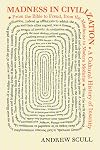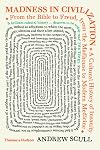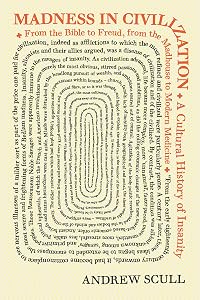
Madness in Civilization: A Cultural History of Insanity, from the Bible to Freud, from the Madhouse to Modern Medicine
by Andrew Scull
On This Page
Description
"The loss of reason, a sense of alienation from the commonsense world we all like to imagine we inhabit, the shattering emotional turmoil that seizes hold and won't let go--these are some of the traits we associate with madness. Today, mental disturbance is most commonly viewed through a medical lens, but societies have also sought to make sense of it through religion or the supernatural, or by constructing psychological or social explanations in an effort to tame the demons of unreason. show more Madness in Civilization traces the long and complex history of this affliction and our attempts to treat it. Beautifully illustrated throughout, Madness in Civilization takes readers from antiquity to today, painting a vivid and often harrowing portrait of the different ways that cultures around the world have interpreted and responded to the seemingly irrational, psychotic, and insane. From the Bible to Sigmund Freud, from exorcism to mesmerism, from Bedlam to Victorian asylums, from the theory of humors to modern pharmacology, the book explores the manifestations and meanings of madness, its challenges and consequences, and our varied responses to it. It also looks at how insanity has haunted the imaginations of artists and writers and describes the profound influence it has had on the arts, from drama, opera, and the novel to drawing, painting, and sculpture." -- Publisher's description. show lessTags
Recommendations






























Member Reviews
Trying to bring together so many source materials, from scripture to Chinese history to pretty much everything else, the author's reach occasionally exceeds his grasp, but in the end he paints a too convincing portrait of the ultimate fultility of human beings to understand the source (or aetiology) of madness. This is a book much more about the treatness of madness than madness itself, and it just gets worse as it goes along--the treatments, I mean, not the book. From bloodletting and other purges to lobotomies to today's big pharma-driven (i.e., profit-driven) diagnoses of millions of people with conditions that require prescriptions for medications that have never been shown to work that well and have horrible side-effects. It would show more all be pretty depressing, if it didn't make you scared to act depressed for fear someone would prescribe a drug that would take away your sex drive, your appetite, or perhaps even your will to live. No one comes off innocent here, certainly not the self-aggrandizing Sigmund Freud or his disciples, although at least they were less likely to want to take a scalpel--or, in the worst case, an ice pick--to your brain. The horrors here are endless. Still, highly recommended. And if anyone ever pulls out the DSM in your presence, just slap them silly. show less
This book covers several hundred years of recorded history, and several approaches to madness, therapy and care. Dr. Scull attempts to provide a cross-cultural discussion with refererence to Asian sources, but concentrates on the Western European and Anglo-American histories. Dr. Scull often discusses the costs of madness to the families and communities that had to deal with mentally ill people without medical help or insight, and often without resources. Generally Dr. Scull has to deal with the history of ideas, science, medicine and instutions. Dr. Scull's discussion of the medical profession and pharmacology addresses the aspirations of medical doctors to find and treat the causes - biological or psychological - of illness, and to be show more respected and remunerated. He tracks the transition for asylums and institutional care to the development of the diagnostic manuals (World Health Organization'sInternational Classication of Disease and the American Psychiatric Association's Diagnostic and Statistical Manual) to make diagnosis less subjective and more efficient, and the incentives to manufacture and prescribe drugs that moderate symptoms but never cure mental illness. Dr. Scull covers the social movements to make treatment more 'humane that led to mass institutionalization, and the transition to the era when patients are medicated extensively and managed (or not) as part of the unemployed underclass of industrial society. It is worthwhile book, somewhat densely written. It is full of detail and nuance with little unneccessary jargon, For instance, Dr. Scull relate how Freudian analysis became dominant in American medicine and popular culture, and was eviscerated in the writing of the DSM III (1980) and later versions of the DSM show less
Madness in Civilization
Andrew Scull
Sunday, August 2, 2015
I finished this book over the 4th of July weekend.
A cultural history of madness, skimming ancient times up to modern times, about the beginning of the triumph of pharmacological psychiatry. The asylum era and the unchaining of the madmen receives full attention. The author draws from literature and popular sources for descriptions of the melancholic in the Renaissance, and the madmen and witches of the medieval age. Galen’s theories were the dominant explanation for madness until the modern world, and are discussed thoroughly. Freud is the centerpiece of the later part of the volume, and the author also ventures into movies and popular novels in the mid-20th century. R.D. Laing show more and Thomas Szasz receive their mentions. The book has good illustrations, many color plates.
I am not sure if I will return to it again, but enjoyed the topic, and the serviceable prose.
Was Freud more or less correct than Galen about madness and human nature? Have there any advance in understanding and defining madness from ancient times to the present? Is madness a cultural construct or an affliction in the mind? show less
Andrew Scull
Sunday, August 2, 2015
I finished this book over the 4th of July weekend.
A cultural history of madness, skimming ancient times up to modern times, about the beginning of the triumph of pharmacological psychiatry. The asylum era and the unchaining of the madmen receives full attention. The author draws from literature and popular sources for descriptions of the melancholic in the Renaissance, and the madmen and witches of the medieval age. Galen’s theories were the dominant explanation for madness until the modern world, and are discussed thoroughly. Freud is the centerpiece of the later part of the volume, and the author also ventures into movies and popular novels in the mid-20th century. R.D. Laing show more and Thomas Szasz receive their mentions. The book has good illustrations, many color plates.
I am not sure if I will return to it again, but enjoyed the topic, and the serviceable prose.
Was Freud more or less correct than Galen about madness and human nature? Have there any advance in understanding and defining madness from ancient times to the present? Is madness a cultural construct or an affliction in the mind? show less
A good, but flawed, poorly paced account at times, of the history of insanity within civilisation, starting with the Ancient World and ending in twenty first century. Enjoyable yet, sickening, whether dicussing medieval torture or modern Big Pharma, this is a harrowing time which at times feels like hard work, but is ultimately rewarding. There are more accessible easier texts.
Ratings
Members
- Recently Added By
Lists

John Carey's Sunday Best
82 works; 3 members

Books recommended by Calgary Public Library staff
1,588 works; 4 members
Author Information

19 Works 815 Members
Andrew Scull is Distinguished Research Professor of Sociology and Science Studies at the University of California, San Diego. He is past president of the Society for the Social History of Medicine and the author of numerous books including Madness in Civilization, Hysteria and others.
Awards and Honors
Awards
Distinctions
Common Knowledge
- Original publication date
- 2015-03-23
Classifications
- Genres
- Nonfiction, History, General Nonfiction, Religion & Spirituality
- DDC/MDS
- 616.89009 — Applied science & technology Medicine & health Diseases, Allergies, Skin Conditions Nervous Disorders: Autism, Anorexia, OCD Mental disorders: bi-polar/schizophrenia History, geographic treatment, biography
- LCC
- RC438 .S39483 — Medicine Internal medicine Internal medicine Neurosciences. Biological psychiatry. Neuropsychiatry Psychiatry
- BISAC
Statistics
- Members
- 252
- Popularity
- 128,213
- Reviews
- 4
- Rating
- (3.79)
- Languages
- 6 — Chinese, Czech, English, Portuguese, Spanish, Turkish
- Media
- Paper, Ebook
- ISBNs
- 14
- ASINs
- 3