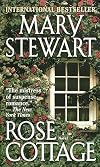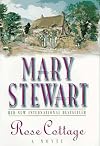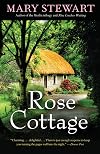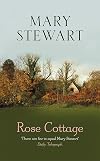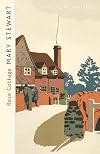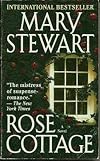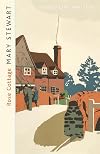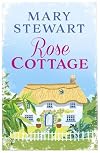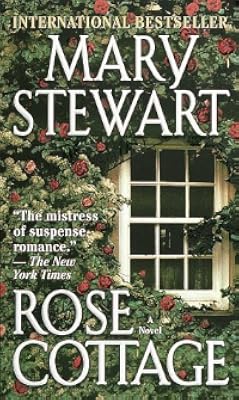
Rose Cottage
by Mary Stewart
On This Page
Description
In the summer of 1947, Kate Herrick, widowed by the war, returns to Rose Cottage, her childhood home. A tiny, thatched dwelling nestled in an idyllic country setting, Rose Cottage at first appears the picture of tranquility. But Kate soon discovers that someone has broken in, and valuable family papers have disappeared. The village seethes with gossip. How harmless are her elderly neighbors, who are suspected of witchcraft? And what is behind their reports of nighttime prowlers and ghosts in show more the cottage garden? Determined to uncover the truth, Kate seeks the help of childhood friends and neighbors. Her quest leads her along a trail of family bitterness, jealousy, and revenge-and into an exploration of her own past. show lessTags
Recommendations
















Member Recommendations
Member Reviews
Lovely. A little romance, a little mystery - the Mary Stewart patented kind, with lots of maybe-nastiness that dissolves away into happiness at the end. The final convention in the cottage is laugh-out-loud funny, starting with the bit about Bunny. The setting is fascinating, too - 1948 and still under rationing, and the similarities and differences between Scottish Strathbeg, English Todhall, and London. A highly enjoyable story.
Always lovely to spend a little time with Mary Stewart. She is one of my favorite authors, and while this is not one of my favorites of her books, it is sweet and soothing and a happy place to sink into. I am often at a loss to say what it is that makes me love reading Stewart so much. She is unique and brings to her work a kind of homecoming feeling, like being wrapped in a warm blanket on a cold winter’s night and having a loving mother offer you a cup of homemade soup.
Kate Henrick, formerly known as Kathy Welland, returns to her childhood home to collect a few things for her Grandmother and sort out the closing of Rose Cottage. She runs into a number of old friends and neighbors, including a handsome young man with whom she shared show more her school years. There is a minor mystery going on, a bit of the past to sort out, and a struggle for this young woman to figure out if she is Kate, the woman she has been since leaving this village, or Kathy, the woman she was when she lived here.
Stewart brings her inimitable writing style to this novel, as to all her others. Her descriptions of the gardens and animals alone would make the read worthwhile.
The burn, lapsing in whispers, is, apart from the bees, the only sound in the day. Both are drowned in the sudden ‘hear ye, hear ye’ preliminary whistle of a curlew, and the the sky is filled, it seems with the beautiful long, liquid call that is perhaps the loveliest, the most thrilling of all birds’ songs.
And, there is wisdom sprinkled in among the flowing descriptions of nature and architecture:
Why was it that one always regretted change? Things were not made to stay fixed, preserved in amber. Perhaps the only acceptable amber was memory. I had ‘helped’ in this kitchen so many times. I could remember when the table tops were above my eye-level, and I shared the floor under the table with the dog, waiting, both of us, for the piece of cake or biscuit to be handed down and shared. The kitchen, the heart of the house, with its warmth and its wonderful smells of baking, or the delectable smell of roasting meat, and the sizzle and spit as the joint was speared and turned in the pan. The clashing of pots and dishes and the cheerful chatter of women’s voices. A whole world, once. And now changed, and soon to be changed again. And, surely, for the better? One had to believe that the world was changing for the better, or else why live? That, arguably, was one of the facets of what Christians called faith?
Only a person who has never sat is a kitchen that was the center of a family’s life, helped make a Sunday dinner with a grandmother and a mother and sisters chattering all about them, or stood in a house that was full of memories but about to be sold away, could fail to understand the sentiments expressed here.
Along the way, Mary Stewart throws out a few very well-placed red herrings (I gobbled them up), builds a sweet bit of romance, and makes you feel as if the world, no matter how topsy-turvy it might seem, can be put right again. Perhaps there is another key to her charm, she makes you believe in happy endings. show less
Kate Henrick, formerly known as Kathy Welland, returns to her childhood home to collect a few things for her Grandmother and sort out the closing of Rose Cottage. She runs into a number of old friends and neighbors, including a handsome young man with whom she shared show more her school years. There is a minor mystery going on, a bit of the past to sort out, and a struggle for this young woman to figure out if she is Kate, the woman she has been since leaving this village, or Kathy, the woman she was when she lived here.
Stewart brings her inimitable writing style to this novel, as to all her others. Her descriptions of the gardens and animals alone would make the read worthwhile.
The burn, lapsing in whispers, is, apart from the bees, the only sound in the day. Both are drowned in the sudden ‘hear ye, hear ye’ preliminary whistle of a curlew, and the the sky is filled, it seems with the beautiful long, liquid call that is perhaps the loveliest, the most thrilling of all birds’ songs.
And, there is wisdom sprinkled in among the flowing descriptions of nature and architecture:
Why was it that one always regretted change? Things were not made to stay fixed, preserved in amber. Perhaps the only acceptable amber was memory. I had ‘helped’ in this kitchen so many times. I could remember when the table tops were above my eye-level, and I shared the floor under the table with the dog, waiting, both of us, for the piece of cake or biscuit to be handed down and shared. The kitchen, the heart of the house, with its warmth and its wonderful smells of baking, or the delectable smell of roasting meat, and the sizzle and spit as the joint was speared and turned in the pan. The clashing of pots and dishes and the cheerful chatter of women’s voices. A whole world, once. And now changed, and soon to be changed again. And, surely, for the better? One had to believe that the world was changing for the better, or else why live? That, arguably, was one of the facets of what Christians called faith?
Only a person who has never sat is a kitchen that was the center of a family’s life, helped make a Sunday dinner with a grandmother and a mother and sisters chattering all about them, or stood in a house that was full of memories but about to be sold away, could fail to understand the sentiments expressed here.
Along the way, Mary Stewart throws out a few very well-placed red herrings (I gobbled them up), builds a sweet bit of romance, and makes you feel as if the world, no matter how topsy-turvy it might seem, can be put right again. Perhaps there is another key to her charm, she makes you believe in happy endings. show less
I'd never heard of this author until a few days before I started this historical mystery.
Oh, it isn't a mystery in the sense of a detective or an amateur sleuth trying to solve a murder case or what have you, and it isn't "edge of your seat" suspenseful reading. Rather, it's a low-key, thoughtfully paced, small-town story with a heroine trying to figure out some mysterious family matters.
The read involves a somewhat creepy factor, but it's the "Scooby-Doo" kind. That is, the kind where "the scary monsters" aren't really monsters. And given the pleasant descriptions of flowers and sunny skies, warm scones and cups of tea, friendly neighbors, gentle hints of romance—and in the edition I read, the cozy little illustrations at the start show more of each chapter—even the creepy-ish bits couldn't make this story dark or anything.
However, what kept this from ever really becoming a comfortable read for me were the expressions of bigotry toward a certain people group. The bigotry in the story doesn't come off as malicious but shows through several of the characters as fear, certain ignorant blanket presumptions they make, etc. It isn't fictional characters' bigotry that necessarily bothers me but rather when those undertones or overtones are pretty much presented like mere character quirks, or like "that's just the way it is."
Hopefully that isn't an issue in all or most of this author's novels, because I plan on trying at least one more sometime.
Note:
• brief mention of a past, childhood fight that resulted in bloody noses or something on that level
• a couple of uses of "damn" and "hell" in nonliteral senses
• no explicit sexual content show less
Oh, it isn't a mystery in the sense of a detective or an amateur sleuth trying to solve a murder case or what have you, and it isn't "edge of your seat" suspenseful reading. Rather, it's a low-key, thoughtfully paced, small-town story with a heroine trying to figure out some mysterious family matters.
The read involves a somewhat creepy factor, but it's the "Scooby-Doo" kind. That is, the kind where "the scary monsters" aren't really monsters. And given the pleasant descriptions of flowers and sunny skies, warm scones and cups of tea, friendly neighbors, gentle hints of romance—and in the edition I read, the cozy little illustrations at the start show more of each chapter—even the creepy-ish bits couldn't make this story dark or anything.
However, what kept this from ever really becoming a comfortable read for me were the expressions of bigotry toward a certain people group. The bigotry in the story doesn't come off as malicious but shows through several of the characters as fear, certain ignorant blanket presumptions they make, etc. It isn't fictional characters' bigotry that necessarily bothers me but rather when those undertones or overtones are pretty much presented like mere character quirks, or like "that's just the way it is."
Hopefully that isn't an issue in all or most of this author's novels, because I plan on trying at least one more sometime.
Note:
• brief mention of a past, childhood fight that resulted in bloody noses or something on that level
• a couple of uses of "damn" and "hell" in nonliteral senses
• no explicit sexual content show less
This pleasant novel was written late in Mary Stewart's life. Set in 1947, shortly after the end of World War II, the past plays a huge part in this story. Past "sins" come to light and are resolved in typical Mary Stewart gentleness.
I always enjoy Stewart's descriptions; they really paint the scene. I return to her when I need a dose of kindness.
Recommended for those who like a hint of suspense and romance in their novels.
I always enjoy Stewart's descriptions; they really paint the scene. I return to her when I need a dose of kindness.
Recommended for those who like a hint of suspense and romance in their novels.
Well-written as always, this Stewart novel was much lighter on the suspense. In fact, though it was still easy to read, there was a lot less going on. The strength of this novel lies in main character Kate Herrick, as she returns to the village of her childhood and unearths secrets about her family's past. The love angle was sweet and subtle, and some of the secondary characters were delicious (especially the spinsters). The mystery isn't that mysterious, though, and it definitely isn't the focus. Rose Cottage is a very peaceful read.
A very enjoyable light read. Kathy is the main protagonist (and narrator) and she tells a good story. It's character-based, primarily, with just a hint of intrigue and an even smaller hint of a possible romance. It barely fits in Mary Stewart's 'romantic thriller' or 'romantic suspense' genre, but is all the more enjoyable for avoiding the violence and unpleasantness that appears unexpectedly in some of her other novels.
There are some delightful villagers in this, including three old biddies (who are probably no older than I am now..): their scenes are gently humorous as well as being important in the telling of the story. It's set in 1947, just after the second World War, and feels very realistic, even though it wasn't published until show more fifty years later.
Definitely recommended if you like light women's fiction with just a tiny bit of suspense.
Full review here: https://suesbookreviews.blogspot.com/2021/02/rose-cottage-by-mary-stewart.html show less
There are some delightful villagers in this, including three old biddies (who are probably no older than I am now..): their scenes are gently humorous as well as being important in the telling of the story. It's set in 1947, just after the second World War, and feels very realistic, even though it wasn't published until show more fifty years later.
Definitely recommended if you like light women's fiction with just a tiny bit of suspense.
Full review here: https://suesbookreviews.blogspot.com/2021/02/rose-cottage-by-mary-stewart.html show less
Twenty-four-year-old widow Kate Herrick née Kathy Welland returns to Scotland from London to see her ailing grandmother, Mary Welland. Gran, who once worked for a titled family in Todhall village in the north of England, relocated to their manor in Strathbeg, Scotland, at the start of World War II. She’s decided to remain in Scotland for good and asks Kate to return to Todhall to pack up some of the furniture at Rose Cottage and — especially important — recover some cheap but sentimental jewelry and personal papers hidden in a wallpaper-covered wall safe.
Except that the wall safe has been burgled, Kate finds. Who could possibly want such worthless stuff? And who’s been hanging about the empty Rose Cottage? Author Mary show more Stewart’s probably best known for this cozy mystery, and it’s easy to see why. In exploring this current mystery, Kate stumbles on secrets from the past in this very intriguing novel. I read the entire thing in one day. Highly recommended. show less
Except that the wall safe has been burgled, Kate finds. Who could possibly want such worthless stuff? And who’s been hanging about the empty Rose Cottage? Author Mary show more Stewart’s probably best known for this cozy mystery, and it’s easy to see why. In exploring this current mystery, Kate stumbles on secrets from the past in this very intriguing novel. I read the entire thing in one day. Highly recommended. show less
Members
- Recently Added By
Lists

Books Read in 2018
4,360 works; 110 members

Books Read in 2023
5,547 works; 145 members
Author Information

51+ Works 40,210 Members
Mary Stewart was born on September 17, 1916 in Sunderland, County Durham, England. She received a First Class Honours B.A. in English from Durham University in 1938 and a teaching certificate in 1939. She taught in elementary school until 1941 when she was offered a post at Durham University. She taught there until 1945 and received a M.A. in show more English during that time. Her first book, Madam, Will You Talk?, was published in 1955. Her other works included My Brother Michael, Touch Not the Cat, This Rough Magic, Nine Coaches Waiting, Thornyhold, Rose Cottage, and the Merlin Trilogy. She also wrote children's books including Ludo and the Star Horse and A Walk in Wolf Wood. She died on May 9, 2014 at the age of 97. (Bowker Author Biography) show less
Series
Belongs to Publisher Series
Work Relationships
Is contained in
Common Knowledge
- Canonical title
- Rose Cottage
- Original title
- Rose Cottage
- Original publication date
- 1997
- People/Characters
- Kate Herrick (aka Kathy Welland); Gran; Aunt Betsy; Annie Pascoe; Jim Pascoe; Davey Pascoe (show all 14); Morag; Mrs Drew; Lady Brandon; Lilias Welland; Mr Blaney; Miss Agatha Pope; Miss Mildred Pope; Miss Bella Linsey
- Important places
- England, UK; Scotland, UK
- Dedication
- To the gentle shades of Henry, George, Patsy, Nip,
Rosy, Maudie and Muffin, and all the other friends
whom I met again in my stroll down Memory Lane. - First words
- It is 1947, a calm, still day of June.
- Quotations
- He looked to be about my age, a capable-looking young man with brown hair and grey eyes, where I thought I could still see the quiet, clever seventeen-year-old who had been in my class at school.
I could hear, too, that my voice had taken back, as a kind of echo, some of the country sounds it had rejected. Kate Herrick or Kathy Welland? Which was I? Which did I want to be?
I remembered the Miss Popes as being deeply interested in all that went on in the village; at least, that was how they would have put it; the village called them, briefly and with adjectives that varied according to the stati... (show all)on of the speaker, interfering old tabbies.
When I paused at the garden gate Miss Mildred was visible only as a flowered cotton rump sticking up among the lupins. - Last words
- (Click to show. Warning: May contain spoilers.)The kitten, no doubt assuming that I meant him, purred.
- Disambiguation notice
- ISBN 0380781433 is for Somewhere I'll Find You by Lisa Kleypas
Classifications
Statistics
- Members
- 965
- Popularity
- 27,316
- Reviews
- 20
- Rating
- (3.47)
- Languages
- English
- Media
- Paper, Audiobook, Ebook
- ISBNs
- 22
- UPCs
- 1
- ASINs
- 8