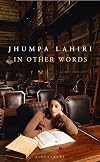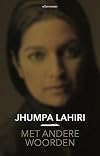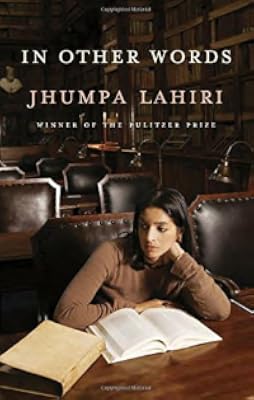
In Other Words
by Jhumpa Lahiri
On This Page
Description
From the best-selling author and Pulitzer Prize winner, a powerful nonfiction debut—an "honest, engaging, and very moving account of a writer searching for herself in words." —Kirkus Reviews (starred)In Other Words is a revelation. It is at heart a love story—of a long and sometimes difficult courtship, and a passion that verges on obsession: that of a writer for another language. For Jhumpa Lahiri, that love was for Italian, which first captivated and capsized her during a trip to show more Florence after college. Although Lahiri studied Italian for many years afterward, true mastery always eluded her.
Seeking full immersion, she decides to move to Rome with her family, for "a trial by fire, a sort of baptism" into a new language and world. There, she begins to read, and to write—initially in her journal—solely in Italian. In Other Words, an autobiographical work written in Italian, investigates the process of learning to express oneself in another language, and describes the journey of a writer seeking a new voice.
Presented in a dual-language format, this is a wholly original book about exile, linguistic and otherwise, written with an intensity and clarity not seen since Vladimir Nabokov: a startling act of self-reflection and a provocative exploration of belonging and reinvention.
Read by the Author, in both English and the original Italian
From the Compact Disc edition.. show less
Tags
Recommendations




Member Reviews
I wanted the reading experience to be as authentic as possible, so I stumbled through the Italian. I read it out loud, slowly, carefully sounding out the syllables, but my mouth kept forming the words with English phonetics, French sounds, wanting to keep to the languages I knew. Every time I came across a familiar-looking word - "leggere", "curiosa" - my jaw muscles relaxed. It also helped that English was just across the binding. I glanced at it after every line. It was like the edge of the pool, something safe, like the shore of Lahiri's pond.
This struggle to sound out foreign letters left me astounded at Lahiri's perseverance. It must have been a Herculean effort, to completely cut out something that she knew she knew, to embrace show more something that she knew she would never know completely. And yet, despite of her imperfection, because of her imperfection, I could feel the lightness of her words, the loveliness of her metaphors.
I have read reviews where readers found this book self-indulgent. Perhaps it is. But one could argue that all books are self-indulgent, to satisfy a whim of the author. I found In Other Words wonderfully relatable. Living on the margins myself, I know what it feels like to feel exiled, to feel suspended, and yet I never knew how to express these feelings in words. Lahiri wrote them out for me. For this, I feel grateful. show less
This struggle to sound out foreign letters left me astounded at Lahiri's perseverance. It must have been a Herculean effort, to completely cut out something that she knew she knew, to embrace show more something that she knew she would never know completely. And yet, despite of her imperfection, because of her imperfection, I could feel the lightness of her words, the loveliness of her metaphors.
I have read reviews where readers found this book self-indulgent. Perhaps it is. But one could argue that all books are self-indulgent, to satisfy a whim of the author. I found In Other Words wonderfully relatable. Living on the margins myself, I know what it feels like to feel exiled, to feel suspended, and yet I never knew how to express these feelings in words. Lahiri wrote them out for me. For this, I feel grateful. show less
I really loved this first of Lahiri's writings in Italian, even though I was unsure how to read a bilingual book when I only read one of the languages. It felt odd to just read one side of it so I glanced over at the Italian now and then and recalled my pandemic Duolingo Italian phase. I did not persevere with Italian because I gave up when it got hard but am making more of an effort now with Swedish and I felt just a glimmer of understanding of her foray into Italian and Italy. I learned so much more about her as writer and now want to read more and more. I still have two novels from her pre-Italian works and one post so I am looking forward to both.
In her afterword, Lahiri writes, "I have an ambivalent relationship with this book, and probably always will." In sum, my feelings on this book are probably the same. There are parts of it that were so captivating, that I re-read lines, sentences, paragraphs to try to capture the words and the feelings within them. Most of those chapters were her most introspective - linking language to identity, to love, and to belonging. Other sections were honestly, a drudge. Where I would begin skimming, or put the book down for weeks at a time when it was too much of a bother. Understandably, those chapters were of her learning, understanding, her becoming an Italian speaker. She took us along for that journey, and at the end of the book I show more appreciate that the slog was necessary to have the introspection. Having finished, I am quite likely to pick up the book again to read, as well as to recommend. show less
I read this (earlier) book, in its English translation, out of curiosity after finishing the author's latest work, a novella that she wrote in Italian and then translated into English. In this set of essays she discusses her experiences with learning the Italian language, and she writes a bit about living in Rome for a temporary period. She focuses within herself and emphasizes reading and writing Italian rather than speaking it. As she explains, writing is a solitary activity which provides her with an opportunity for self reflection; that is evident as she ruminates on how her writing process, and perhaps even aspects of her personality, have changed since learning a new language. Her interior monologues describe her feelings of show more imperfection and inadequacy around learning Italian--although she wrote this book originally in Italian, so I wonder how limited her talent really is!
I would have liked to read more about the author's experiences with speaking Italian. While there are numerous quotes from Italian writers, there is almost nothing here about Italian people speaking their own language. The author seems to regard learning Italian as a personal intellectual challenge more than a way to connect with Italians (or perhaps that is a subject for her next book?). Her focus on the personal, and the interior, is occasionally frustrating. For example, in one of the few essays about speaking Italian, she describes a "wall," determined by her physical appearance as a South Asian woman, that leads native Italian speakers to discount her fluency in and passion for the language. I wish she would call out these Italians on their racism and sexism (they assume her husband, a White presenting man, knows more Italian than she does), but she seems to have internalized the problem. I also wanted the author to acknowledge her own privilege; she is already an accomplished writer in English and does not "need" to learn a new language. What about immigrants to Italy, including Bangladeshis who speak the same language she does (as do I), who do not have the luxury of a fallback career and homeland if native Italians reject them? The author makes no mention of these individuals, for whom language is a survival skill, not an intellectual exercise.
Recommended for all readers, especially adults who are trying to learn a new language. show less
I would have liked to read more about the author's experiences with speaking Italian. While there are numerous quotes from Italian writers, there is almost nothing here about Italian people speaking their own language. The author seems to regard learning Italian as a personal intellectual challenge more than a way to connect with Italians (or perhaps that is a subject for her next book?). Her focus on the personal, and the interior, is occasionally frustrating. For example, in one of the few essays about speaking Italian, she describes a "wall," determined by her physical appearance as a South Asian woman, that leads native Italian speakers to discount her fluency in and passion for the language. I wish she would call out these Italians on their racism and sexism (they assume her husband, a White presenting man, knows more Italian than she does), but she seems to have internalized the problem. I also wanted the author to acknowledge her own privilege; she is already an accomplished writer in English and does not "need" to learn a new language. What about immigrants to Italy, including Bangladeshis who speak the same language she does (as do I), who do not have the luxury of a fallback career and homeland if native Italians reject them? The author makes no mention of these individuals, for whom language is a survival skill, not an intellectual exercise.
Recommended for all readers, especially adults who are trying to learn a new language. show less
I’ve read Lahiri’s The Lowland, Namesake, and Interpreter of Maladies. In Other Words is her memoir of choosing to inhabit the Italian language, leaving both English and Bengali behind.
Often an author describes a particular experience, and the reader says, “Oh! That’s me!” Even though it would appear they have never had an experience remotely like the one described. For me, this book describes the emotions of cross-cultural identities and boundary-crossing in relationships. It describes the struggle toward something extremely difficult rather than resting in the security of where mastery has been achieved.
Time and space are collapsed today. We can barely evade constant connection and presence. Lahiri writes of languages as show more places where distances still exist. There are no shortcuts from one language to another, and few can truly make the journey. There is no true knowing or belonging without common language.
She is an American who grew up with English and Bengali as her mother tongues. She fell in love with Italian on a visit to Florence in 1994, and writes:
… What I hear, in the shops, in the restaurants, arouses an instantaneous, intense, paradoxical reaction. It’s as if Italian were already inside me and, at the same time, completely external. It doesn’t seem like a foreign language, although I know it is. It seems strangely familiar. I recognized something, in spite of the fact that I understand almost nothing.
What do I recognize? It’s beautiful, certainly, but beauty doesn’t enter into it. It seems like a language with which I have to have a relationship. It’s like a person met one day by chance, with whom I immediately feel a connection, of whom I feel fond. As if I had known it for years, even though there is still everything to discover. I would be unsatisfied, incomplete, if I didn’t learn it. …
Lahiri describes her journey into Italian. From “exile” in her home in the U.S. to moving her family to Italy for total immersion. From sharing space with her other languages to complete commitment to Italian only.
She writes only in Italian now. This book has Italian on the right side, translated into English on the left by Ann Goldstein. Lahiri did not translate for herself, as to do so would drag her back to where she no longer wanted to be. It would sap creativity from her new ventures – her discoveries and struggle – by an overlay of her English mastery. She would too naturally bring her former ways of saying.
I like her thoughts about not translating backwards to a former way of being. It confines, allowing prior ways to conquer the present.
I appreciate hearing her experience of intentionally becoming a novice after achieving status, proficiency, and authority.
I like her thoughts on a passionate devotion to something “meaningless,” never validated or allowed. But go there anyway. show less
Often an author describes a particular experience, and the reader says, “Oh! That’s me!” Even though it would appear they have never had an experience remotely like the one described. For me, this book describes the emotions of cross-cultural identities and boundary-crossing in relationships. It describes the struggle toward something extremely difficult rather than resting in the security of where mastery has been achieved.
Time and space are collapsed today. We can barely evade constant connection and presence. Lahiri writes of languages as show more places where distances still exist. There are no shortcuts from one language to another, and few can truly make the journey. There is no true knowing or belonging without common language.
She is an American who grew up with English and Bengali as her mother tongues. She fell in love with Italian on a visit to Florence in 1994, and writes:
… What I hear, in the shops, in the restaurants, arouses an instantaneous, intense, paradoxical reaction. It’s as if Italian were already inside me and, at the same time, completely external. It doesn’t seem like a foreign language, although I know it is. It seems strangely familiar. I recognized something, in spite of the fact that I understand almost nothing.
What do I recognize? It’s beautiful, certainly, but beauty doesn’t enter into it. It seems like a language with which I have to have a relationship. It’s like a person met one day by chance, with whom I immediately feel a connection, of whom I feel fond. As if I had known it for years, even though there is still everything to discover. I would be unsatisfied, incomplete, if I didn’t learn it. …
Lahiri describes her journey into Italian. From “exile” in her home in the U.S. to moving her family to Italy for total immersion. From sharing space with her other languages to complete commitment to Italian only.
She writes only in Italian now. This book has Italian on the right side, translated into English on the left by Ann Goldstein. Lahiri did not translate for herself, as to do so would drag her back to where she no longer wanted to be. It would sap creativity from her new ventures – her discoveries and struggle – by an overlay of her English mastery. She would too naturally bring her former ways of saying.
I like her thoughts about not translating backwards to a former way of being. It confines, allowing prior ways to conquer the present.
I appreciate hearing her experience of intentionally becoming a novice after achieving status, proficiency, and authority.
I like her thoughts on a passionate devotion to something “meaningless,” never validated or allowed. But go there anyway. show less
I love Jhumpa Lahiri. I love her beautiful storytelling and her ability to turn everyday moments into quiet monuments. This book is different, and I knew it would be, but I had mixed feelings reading it, and mid-book, I didn't know if I wanted to keep reading. What I find completely fascinating and incredible is how astutely Lahiri predicted my exact reaction to this memoir. She knew that I'd be annoyed that she was pursuing something that might change her writing for good. She knew the depth of her readers' feeling of proprietorship over her writing. I spent about half this book being very concerned that Lahiri was basically announcing that she'd never write a book in English again (again, shame on me), but then came a point where she show more addressed her struggle to feel a sense of belonging, both culturally and linguistically. She wrote of the feelings her readers have projected on her (readers' expectations cannot be easy to contend with, as a writer/artist), and it began to dawn on me how important this book is for Lahiri and for her oeuvre. I began to see how generous it is of her to allow us into her vulnerable attempt to delve into a language she chose for herself, and the trials and travails that followed. And not only that... but to publish this book as she did: showing the Italian she wrote it in on one page, and on the facing page, the English translation... amazing! Everything out there for all to read. Jhumpa Lahiri is no fool, and beyond that, she's one of the most courageous authors out there. She's brilliant and true to her art, and more importantly, she's true to herself. I'm grateful she wrote this book. show less
I wasn’t intending to read this tonight. In fact, I’m immersed in a mystery novel by a Swedish writer, which will be reviewed here in the next day or so–or so because I visited my library account and saw that this book was about to expire and that there were 55 people waiting for the other copies. I shrugged, signed up for renewal, and thought that I might just scan the first chapter to see what I would be missing.
Now it’s two hours and 11 minutes later (thanks nifty counter in Overdrive) and I have read Jhumpa Lahiri’s collection of essays and two fictional, albeit semi-autobiographical, stories chronicling her immersion into the Italian language. This book was the outcome. It was translated by Ann show more Goldstein.
51wnsrzeh6l-_ac_us160_As I began reading, the first word that came to mind was: courage. Anyone who goes to another country barely knowing the language and becomes completely immersed, speaking the language, even if it is faltering, is courageous. To have as a goal to write a complete book in that language seems to go way beyond courageous.
Lahiri offers many reasons as to why she has done this. Some of the reasons arise from alienation, others from the need to express oneself artistically. She writes: “Maybe because from a creative point of view there is nothing so dangerous as security.” She talks about metamorphosis and exploration and discovery in regard to learning and expressing oneself in another language. How it allows one to be vulnerable and how she felt that while writing in Italian she was writing from her true place.
As I was reading, I was struck by the poetry of the language and images. But here I have to stop. First, I have never read any of Lahiri’s novels (not yet, anyway; the adage so many books, so little time is alive and well in my world) so I can’t make a blanket statement about her writing style in English. Second, my year of college Italian will not permit me to read Lahiri’s actual text in anything close to 2 hours, nor the actual 17 hours I have before the book expires, so I wrestle with the idea of what is Lahiri’s and what is Goldstein’s before I comment on lyricism. I’m probably not going to wrestle. I’m just going to say that what I read was beautifully written, so beautifully written and so well-considered that it gripped me enough to sit on this uncomfortable chair at my computer and read the entire memoir on this computer screen.
A recent review talked about the spate of memoirs hitting the market and how the more interesting ones were those in which the writer described an activity they were involved in rather than the typical celebrity name-dropping or tell-all. Here you have such a memoir. While it is a book about a famous writer leaning a new language, a love affair, if you will, it is also a discussion of the writer’s past, the first language she learned, the second, how those languages ultimately formed her. There is a great deal of introspection here and philosophizing, which I rather enjoy, but realize that they might not be everyone’s cup of tea. I guess it could come across as self-indulgent, but it is a memoir and that strikes me as redundant.
Who would enjoy this book? Anyone who is a fan of Lahiri’s would probably find it well worth reading and perhaps a little distressing, wondering if she would ever write in English again. Also, writers and aspiring writers would probably find a lot of what she has to say interesting as she writes about the place where writers write from.
DISCLAIMER: IT’S LATE AND I LIKE TO WRITE THESE REVIEWS WHEN I’M A BIT MORE ON MY GAME, BUT THOUGHT IF I DIDN’T WRITE IT WHILE IT WAS FRESH, IT WOULDN’T GET WRITTEN UNTIL I COULD REVISIT THE BOOK, WHICH I’LL PROBABLY DO ANYWAY. SO, I APOLOGIZE FOR ANY VERBOSITY AND INCOHERENCE. show less
Now it’s two hours and 11 minutes later (thanks nifty counter in Overdrive) and I have read Jhumpa Lahiri’s collection of essays and two fictional, albeit semi-autobiographical, stories chronicling her immersion into the Italian language. This book was the outcome. It was translated by Ann show more Goldstein.
51wnsrzeh6l-_ac_us160_As I began reading, the first word that came to mind was: courage. Anyone who goes to another country barely knowing the language and becomes completely immersed, speaking the language, even if it is faltering, is courageous. To have as a goal to write a complete book in that language seems to go way beyond courageous.
Lahiri offers many reasons as to why she has done this. Some of the reasons arise from alienation, others from the need to express oneself artistically. She writes: “Maybe because from a creative point of view there is nothing so dangerous as security.” She talks about metamorphosis and exploration and discovery in regard to learning and expressing oneself in another language. How it allows one to be vulnerable and how she felt that while writing in Italian she was writing from her true place.
As I was reading, I was struck by the poetry of the language and images. But here I have to stop. First, I have never read any of Lahiri’s novels (not yet, anyway; the adage so many books, so little time is alive and well in my world) so I can’t make a blanket statement about her writing style in English. Second, my year of college Italian will not permit me to read Lahiri’s actual text in anything close to 2 hours, nor the actual 17 hours I have before the book expires, so I wrestle with the idea of what is Lahiri’s and what is Goldstein’s before I comment on lyricism. I’m probably not going to wrestle. I’m just going to say that what I read was beautifully written, so beautifully written and so well-considered that it gripped me enough to sit on this uncomfortable chair at my computer and read the entire memoir on this computer screen.
A recent review talked about the spate of memoirs hitting the market and how the more interesting ones were those in which the writer described an activity they were involved in rather than the typical celebrity name-dropping or tell-all. Here you have such a memoir. While it is a book about a famous writer leaning a new language, a love affair, if you will, it is also a discussion of the writer’s past, the first language she learned, the second, how those languages ultimately formed her. There is a great deal of introspection here and philosophizing, which I rather enjoy, but realize that they might not be everyone’s cup of tea. I guess it could come across as self-indulgent, but it is a memoir and that strikes me as redundant.
Who would enjoy this book? Anyone who is a fan of Lahiri’s would probably find it well worth reading and perhaps a little distressing, wondering if she would ever write in English again. Also, writers and aspiring writers would probably find a lot of what she has to say interesting as she writes about the place where writers write from.
DISCLAIMER: IT’S LATE AND I LIKE TO WRITE THESE REVIEWS WHEN I’M A BIT MORE ON MY GAME, BUT THOUGHT IF I DIDN’T WRITE IT WHILE IT WAS FRESH, IT WOULDN’T GET WRITTEN UNTIL I COULD REVISIT THE BOOK, WHICH I’LL PROBABLY DO ANYWAY. SO, I APOLOGIZE FOR ANY VERBOSITY AND INCOHERENCE. show less
Members
- Recently Added By
Published Reviews
Nothing reminds you how far you are from home more than trying to speak in someone else’s tongue. As Jhumpa Lahiri writes in her gorgeous new memoir, “In Other Words,” a language is as vast as an ocean; the most a foreigner can ever hope to make of it is the size of a lake.
“In Other Words” presents the same author with a different voice. The English we read is not hers, but belongs show more to her translator, Ann Goldstein, who has garnered well-deserved praise for her translations of Elena Ferrante’s recent Neapolitan novels. Lahiri wrote “In Other Words” in Italian, refusing — wisely, I think — to translate her own work because she wished to maintain the discipline that has enabled her to write exclusively in Italian the past few years. show less
“In Other Words” presents the same author with a different voice. The English we read is not hers, but belongs show more to her translator, Ann Goldstein, who has garnered well-deserved praise for her translations of Elena Ferrante’s recent Neapolitan novels. Lahiri wrote “In Other Words” in Italian, refusing — wisely, I think — to translate her own work because she wished to maintain the discipline that has enabled her to write exclusively in Italian the past few years. show less
added by sneuper
Her unusual, personalised and relentless new book, which she describes as “a project”, is an impressionistic and unexpectedly painful, clinical and at times strained, account of her struggle to master Italian.
Perhaps Lahiri in time will find in Italian the passion and irony absent from her graciously melancholic fiction. She would do well to heed Makine’s opinion: “Language is just show more grammar. The real language of literature is created in the heart, not a grammar book.” It is difficult to detect any warmth within In Other Words only an aspiration to excel and, after all, ambition can prove a distancing motivation, as it does here. There is no celebration, only struggle; no humour merely frustration. show less
Perhaps Lahiri in time will find in Italian the passion and irony absent from her graciously melancholic fiction. She would do well to heed Makine’s opinion: “Language is just show more grammar. The real language of literature is created in the heart, not a grammar book.” It is difficult to detect any warmth within In Other Words only an aspiration to excel and, after all, ambition can prove a distancing motivation, as it does here. There is no celebration, only struggle; no humour merely frustration. show less
added by sneuper
Lahiri’s book feels starved of actual experiences of Italy, or reflections on how that language gives form to its different world. Monkishly, all her contemplation is turned inwards on to her own processes of learning, not outwards on the messy imperfect matter the language works to express. Very likely this period of withdrawal and purgation will turn out to have been necessary to finding show more her next step as a writer. But if we want our babies to live, we need to reconcile ourselves to their hairy adolescence, and then their necessarily fraught and compromised maturity. I was relieved when at the end of the book Lahiri was packing to return to America – and, presumably, however reluctantly, to English, which is her language, because she uses it with grownup mastery. show less
added by sneuper
Lists

Italian Literature
558 works; 43 members

Books Read in 2016
4,666 works; 199 members

To Read
617 works; 7 members

Translingualism
191 works; 4 members

Best of 2022
2 works; 1 member

Books Read in 2023
5,638 works; 147 members
Author Information

59+ Works 39,608 Members
Jhumpa Lahiri was born in London, England on July 11, 1967. She received a B.A. in English literature from Barnard College in 1989, and a M.A. in English, a M.A. in Creative Writing, a M.A. in Comparative Studies in Literature and the Arts, and a Ph.D. in Renaissance Studies from Boston University. Lahiri taught creative writing at Boston show more University and the Rhode Island School of Design. Her debut work, Interpreter of Maladies, won the Pulitzer Prize for fiction in 2000. She has also won the PEN/Hemmingway Award, an O. Henry Award, The New Yorker's best debut of the year award, and an Addison Metcalf award. Her other works include The Namesake, which was made into a movie in 2007, Unaccustomed Earth, and The Lowland, which won 2015 DSC Prize for South Asian Literature. (Bowker Author Biography) show less
Some Editions
Awards and Honors
Distinctions
Common Knowledge
- Canonical title*
- In altre parole
- Original title
- In altre parole
- Original language
- Italian
*Some information comes from Common Knowledge in other languages. Click "Edit" for more information.
Classifications
Statistics
- Members
- 883
- Popularity
- 30,724
- Reviews
- 49
- Rating
- (3.71)
- Languages
- 7 — Dutch, English, French, German, Italian, Spanish, Swedish
- Media
- Paper, Audiobook, Ebook
- ISBNs
- 31
- ASINs
- 6