On This Page
Description
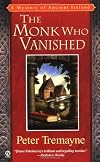
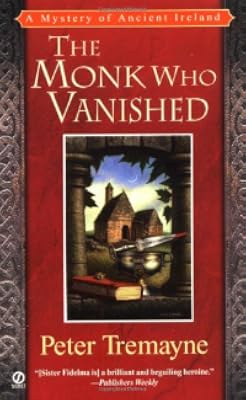
In September of 666 A.D., an aged monk and a set of relics disappear during the night from the Abbey of Imleach. The missing monk is a matter of great concern for the abbey. But the relics are a disaster of a much higher order. They are the priceless holy relics of St. Ailbe, the man who, in the fifth century, brought Christianity to the Irish kingdom of Muman, converted and baptized it's king, and founded the abbey. The relics themselves are the political symbol of the entire kingdom and show more their disappearance threatens to disrupt its continued peace and stability. On a visit to the Abbey of Imleach, Sister Fidelma, sister to Colgu, the current King of Muman, and an advocate of the Brehon Courts, is asked to investigate. With the help of her friend and traveling companion, the Saxon monk Brother Eadulf, Fidelma begins to slowly unravel the mystery behind the twin disappearances. But there are dark forces at work, which will stop at nothing - even murder - to achieve their aims. show lessTags
Recommendations












Member Reviews
In this seventh installment, Fidelma seems to have come into her own. Tremayne doesn't need to remind us as often that she is a dalaigh, sister to the King, etc., etc. The mystery here has all the right ingredients: a robbery, an assassination plot, political intrigue, multiple locations, shady-but-not-really characters and wholesome-but-not-really characters. It was a good time, and I'll admit being a bit surprised at the end, which is a bonus! The violence seems to be greater than in previous books, but not particularly gory. The relationship between Fidelma and Eadulf grows (slowly) more complex, and there are good passages wherein Eadulf clearly has to grapple with the pagan ideas that inform and are present in medieval Irish show more Christianity (for some, it turns out), but Tremayne never gets too heavy-handed with the theological musings, so they are important bits of context, not the story itself. I still get mildly frustrated (as do some of the characters) with the final court/tribunal scene (in many of the books) wherein Fidelma relishes the slooooooooooow reveal, but there's enough elsewhere to make this a worthwhile and engaging read. show less
No. 7 in the Sister Fidelma series.
I sometimes (no, often) ask myself why I keep up with this series, since it’s not particularly well written and its protagonist, Sister Fidelma, is one of the most uninteresting in the genre. What few (and far between) expressions of emotion she has must be so startling to Tremayne that he does a terrible job of writing about them. She may be smart, but she is also bloodless and therefore colorless.
That said, the plots are good and Tremayne’s writing has improved a good deal since the first book. This installment has sister Fidelma investigating the disappearance of an old monk along with the holy relics belonging to St. Ailbe, who brought Christianity to the Irish kingdom of Muman in the 5th show more century.
We learn fast enough that it’s the usual power struggle, of course—an effort to bring down Fidelma’s brother who is the King of Muman.
This book shows the continued improvement in both plot and writing over the others. The plot is nicely done. The ins and outs of ancient Irish law are interesting. In fact, it all is—except for the characters and especially excepting Fidelma. You can enjoy this book, but you do have to more or less ignore Fidelma. At the end of the book, Fidelma is disappointed over Brother Eadulf's seeming lack of interest in her. Surprise, surprise--he probably wants someone alive!
I’ll probably continue with the series, although I'm not exactly sure why. show less
I sometimes (no, often) ask myself why I keep up with this series, since it’s not particularly well written and its protagonist, Sister Fidelma, is one of the most uninteresting in the genre. What few (and far between) expressions of emotion she has must be so startling to Tremayne that he does a terrible job of writing about them. She may be smart, but she is also bloodless and therefore colorless.
That said, the plots are good and Tremayne’s writing has improved a good deal since the first book. This installment has sister Fidelma investigating the disappearance of an old monk along with the holy relics belonging to St. Ailbe, who brought Christianity to the Irish kingdom of Muman in the 5th show more century.
We learn fast enough that it’s the usual power struggle, of course—an effort to bring down Fidelma’s brother who is the King of Muman.
This book shows the continued improvement in both plot and writing over the others. The plot is nicely done. The ins and outs of ancient Irish law are interesting. In fact, it all is—except for the characters and especially excepting Fidelma. You can enjoy this book, but you do have to more or less ignore Fidelma. At the end of the book, Fidelma is disappointed over Brother Eadulf's seeming lack of interest in her. Surprise, surprise--he probably wants someone alive!
I’ll probably continue with the series, although I'm not exactly sure why. show less
During a diplomatic visit by the Prince of the Uí Fidgente, would-be assassins shoot both the visiting prince and Sister Fidelma's brother Colgú, King of Cashel. Although neither of them are killed, accusations and counter-accusations of treachery fly and Fidelma and Eadulf have to sort out who was actually behind the attempted assassinations.
Another good historical mystery, though here's another romantic pair oblivious to their mutual attraction who need their heads banging together.
Another good historical mystery, though here's another romantic pair oblivious to their mutual attraction who need their heads banging together.
So far the best Fidelma book I've read (which I have to admit is only the third after [b:Valley of the Shadow|1525161|Valley of the Shadow (Sister Fidelma, #6)|Peter Tremayne|http://photo.goodreads.com/books/1184721116s/1525161.jpg|1517089] and [b:Smoke in the Wind|379141|Smoke in the Wind (Sister Fidelma, #11)|Peter Tremayne|http://photo.goodreads.com/books/1309211278s/379141.jpg|1856031]). The story begins with two apparently unrelated incidents: Firstly a monk vanishes along with a set of holy relics. Secondly two lords from adversarial groups are injured when an archer shoots at them when they arrive for peace talks. One of those lords is Fidelma's brother, the king, and his enemies at once suspect him of plotting against them while show more his allies suspect the other party. It is decided that a court of law should be held to settle the matter. For this Fidelma as the advocate for her brother has nine days time to prepare her defence. Every new clue she finds seems to lead to a new mystery instead of a solution.
As always I find the insight into old Irish law very interesting, being a law student myself. But the law doesn't take over too much of the story, which makes it interesting and suspenseful for everyone who likes a good mystery. I enjoyed myself very much indeed and only began to suspect the solution near the end. show less
As always I find the insight into old Irish law very interesting, being a law student myself. But the law doesn't take over too much of the story, which makes it interesting and suspenseful for everyone who likes a good mystery. I enjoyed myself very much indeed and only began to suspect the solution near the end. show less
Another interesting 7th century mystery as Sister Fidelma and her faithful companion Tonto, in his Saxon guise as
Brother Eadulf., pursue a saint's relics and a missing monk. Tremayne continues to use his knowledge of Celtic Language and history to tell insightful tales of jurisprudence as practiced in ancient Ireland.
Brother Eadulf., pursue a saint's relics and a missing monk. Tremayne continues to use his knowledge of Celtic Language and history to tell insightful tales of jurisprudence as practiced in ancient Ireland.
The setting of this story is Ireland in the Seventh Century. Sister Fidelma, the main character, must discover what and who is behind an assassination attempt on her brother and another prince of the realm. I enjoyed this story very much, though a few times it was obvious that certain elements were inserted for their "teaching" value, they were interesting and I didn't mind being taught. The mystery was easily solvable, but no less enjoyable for that fact. I do like Fidelma, though her sidekick, Eadulf, I found inconsistent in the story. I will be looking for the rest of Peter Tremayne's mysteries though, as I thoroughly enjoyed reading this.
Been doing a binge of Sister Fidelma books. This one is a great read with an attempted murder being branded as an attempted political assination, it is but not by the obvious culprit. She has to find out before it all leads to war.
Members
- Recently Added By
Lists

Stories set in The British Isles
51 works; 1 member

MysteryCAT: Historical Crime
27 works; 7 members

al.vick-parents books
301 works; 1 member
Author Information

148+ Works 14,997 Members
Peter Tremayne is the fiction writing pseudonym of the Celtic scholar and author Peter Berresford Ellis, who was born in Coventry, Warwickshire, England on March 10, 1943. Even though he received a BA and an MA in Celtic Studies, he decided to become a journalist and worked at numerous weekly newspapers throughout England and Ireland. In 1968, he show more published is first book, Wales: A Nation Again, about the Welsh struggle for political independence. He became a full-time writer in 1975 and has published over 90 books under his own name and the pseudonyms Peter Tremayne and Peter MacAlan. One of his best known works under his real name is The Cornish Language and its Literature, which is considered the definitive history of the language. In 1988, he received an Irish Post Award in recognition of his services to Irish historical studies. Under the pseudonym Peter Tremayne, he writes the Sister Fidelma Mystery series. He received the French Prix Historia for the best historical mystery novel of 2010 for Le Concile des Maudits (The Council of the Cursed). (Bowker Author Biography) show less
Series

Work Relationships
Is contained in
Common Knowledge
- Canonical title
- The Monk Who Vanished
- Original title
- The Monk Who Vanished
- Original publication date
- 1999-02 (Headline Book Publishing, London) (Headline Book Publishing, London)
- People/Characters
- Sister Fidelma (dalaigh); Brother Eadulf (Saxon); Colgu of Cashel (King); Donndubhain (tanist); Donennach mac Oengus (Prince); Gionga (bodyguard) (show all 28); Conchobar (astrologer | apothecary); Capa (bodyguard); Brehon Rumann; Brehon Dathal; Brehon Fachtna; Aona (innkeeper); Adag; Cred (tavern keeper); Brother Daig; Brother Dardan (apothecary); Della; Finguine mac Cathal (Prince); Brother Madagan (rechtaire); Brother Mochta (Keeper of the Holy Relics); Nion (bo-aire | smith); Osloir; Samradan (merchant); Sister Scothnat; Segdae (bishop and abbot); Solam (dalaigh); Suibne; Brother Tomar (stableman)
- Important places
- Ireland
Classifications
Statistics
- Members
- 476
- Popularity
- 63,855
- Reviews
- 16
- Rating
- (3.73)
- Languages
- 5 — Dutch, English, French, German, Spanish
- Media
- Paper, Audiobook, Ebook
- ISBNs
- 19
- UPCs
- 2
- ASINs
- 10