
The Nine Billion Names of God
by Arthur C. Clarke
On This Page
Description
This volume is of special interest -- included are a wide range of classic stories, including the title story, "Jupiter Five," "The Deep Range," "Second Dawn," and the earliest of the splendidly comic narratives told by Harry Purvis for the benefit of the denizens of the White Hart.Tags
Recommendations


















Member Reviews
I'm really impressed with this anthology. While some stories are definitely weaker than others, I didn't feel like there were any 'clunkers' in the collection. There's a thoughtfulness to the work. I can't pin down the emotion half the stories make me feel - the closest I can come to quiet contemplation, such as with The Sentinel,
* The Nine Billion Names of God - Absolutely fantastic, with a gallows humor flair and foreboding tone. I know some people complain thatfossil radiation means that the stars wouldn't wink out like that , but I think it adds to the otherworldly horror of the story.
* I Remember Babylon - One of the weaker ones, but its about porn, so, hey, balances out.
* Summertime on Icarus - Very tense, heavy horror elements. show more
* The Possessed - Swarming mental parasite aliens attempt to find an intelligent host on ancient earth.
* Death and the Senator - Memento mori in short story form.
* Superiority - Loved it and its warning about adopting technology too fast.
* The Reluctant Orchid - Unexpectedly hilarious!
* The Star - One of my favorites. show less
* The Nine Billion Names of God - Absolutely fantastic, with a gallows humor flair and foreboding tone. I know some people complain that
* I Remember Babylon - One of the weaker ones, but its about porn, so, hey, balances out.
* Summertime on Icarus - Very tense, heavy horror elements. show more
* The Possessed - Swarming mental parasite aliens attempt to find an intelligent host on ancient earth.
* Death and the Senator - Memento mori in short story form.
* Superiority - Loved it and its warning about adopting technology too fast.
* The Reluctant Orchid - Unexpectedly hilarious!
* The Star - One of my favorites. show less
In the introduction to The Nine Billion Names of God, Clarke writes that the thread that ties this collection together is that it is comprised of his favorite stories from his repertoire. Interestingly, it turns out that Clarke's favorite stories also turn out to include pretty much all of his best and most famous stories that were published between 1953 and 1966, which makes this an excellent collection. Whether one is unfamiliar with Clarke and trying to get a high-quality sampling of his work, or a long-time fan who wants to read through some of Clarke's best stories, this is a great collection to pick up.
The highlights of the book are, unsurprisingly, among Clarke's best pieces: the title story The Nine Billion Names of God, Rescue show more Party, Hide and Seek, The Wall of Darkness, Superiority, "If I Forget Thee, Oh Earth . . . ", and The Sentinel. (For those who do not know, the movie and book 2001: A Space Odyssey is an expanded treatment of The Sentinel. While these are the high points, pretty much every story in this volume is good - there is a reason that Clarke was considered one of the giants of the genre for the bulk of his career.
This is not to say that there are no missteps in the stories. Some of the story elements seem quaint now - the result of the stories having been written many decades ago. So, for example, the scene in The Sentinel in which the protagonist makes himself and his fellow lunar explorers breakfast by frying up some sausages seems, in retrospect, quite silly. The story Hide and Seek only works because the "seeker" doesn't have something as simple as a landing shuttle, which seems to me to be pretty weak engineering. And so on. Even still, most of the stories seem to have aged fairly well, with only a few elements here and there that have been invalidated by the passage of time.
The stories are mostly quite short, which should be easy enough to figure out when one realizes that twenty-five stories are packed into a volume that is a mere 240 pages long. Clarke's style is pretty straightforward and direct - each story had a main idea, and one or two central characters. Many of the stories, such as Hide and Seek or Summertime on Icarus, are what I call "engineering puzzle" stories in which the protagonist confronts a problem that threatens his life and uses basic science and engineering to solve it. Many others are "wonder" stories, such as Transience, The Nine Billion Names of God, or The Star, in which the reader is presented with the awesome majesty of the universe and invited to gaze in wonder. There are silly, humorous stories, such as Superiority and The Reluctant Orchid (although Superiority has a serious message hidden in its humor), and "shaggy god" stories such as Encounter at Dawn. And there are stories about both man's reach for greatness, such as The Call of the Stars, and man's foolish self-destructiveness, such as I Remember Babylon. In short, this collection is a huge grab bag that touches on almost every popular science fiction story type of the mid-Twentieth century.
Clarke is a practitioner and serial abuser of the "deep and meaningful last sentence" method of storytelling, as this device is used in several of the stories in this volume. To a certain extent, this probably stems from the era that the stories were written insofar as they first appeared in pulp magazines of the 1950s and 1960s, and this sort of "big reveal" moment was probably what the market demanded. Even still, the repeated used of this literary device gets a little wearying.
One story that I found particularly prescient was Death and the Senator. The science fiction of the story - the idea that an orbital hospital could be constructed and that patients would experience great benefits from being treated and recovering in zero-gravity conditions - appears to be somewhat optimistic. However, Clarke's narrative is dead-on when it comes to the short sightedness of politicians deciding whether or not to fund long-term scientific projects, and how this is likely to turn around and have substantial negative consequences as a result of our limited vision. Every time someone says "establishing a base on the moon will take a decade, so we can't start now", I think of this story and get a little bit angry.
Despite the various quibbles, the stories in the book are almost all good, with several rightly considered "great". The only stories I though were average at best were A Walk in the Dark, The Possessed, and Patent Pending and given that there are twenty-two other stories in the volume, all of superior quality, this is a minor point. Simply put, this is an excellent collection of stories from one of the top writers in the field of science fiction, and well worth reading for anyone who is a fan of the genre.
This review has also been posted to my blog Dreaming About Other Worlds. show less
The highlights of the book are, unsurprisingly, among Clarke's best pieces: the title story The Nine Billion Names of God, Rescue show more Party, Hide and Seek, The Wall of Darkness, Superiority, "If I Forget Thee, Oh Earth . . . ", and The Sentinel. (For those who do not know, the movie and book 2001: A Space Odyssey is an expanded treatment of The Sentinel. While these are the high points, pretty much every story in this volume is good - there is a reason that Clarke was considered one of the giants of the genre for the bulk of his career.
This is not to say that there are no missteps in the stories. Some of the story elements seem quaint now - the result of the stories having been written many decades ago. So, for example, the scene in The Sentinel in which the protagonist makes himself and his fellow lunar explorers breakfast by frying up some sausages seems, in retrospect, quite silly. The story Hide and Seek only works because the "seeker" doesn't have something as simple as a landing shuttle, which seems to me to be pretty weak engineering. And so on. Even still, most of the stories seem to have aged fairly well, with only a few elements here and there that have been invalidated by the passage of time.
The stories are mostly quite short, which should be easy enough to figure out when one realizes that twenty-five stories are packed into a volume that is a mere 240 pages long. Clarke's style is pretty straightforward and direct - each story had a main idea, and one or two central characters. Many of the stories, such as Hide and Seek or Summertime on Icarus, are what I call "engineering puzzle" stories in which the protagonist confronts a problem that threatens his life and uses basic science and engineering to solve it. Many others are "wonder" stories, such as Transience, The Nine Billion Names of God, or The Star, in which the reader is presented with the awesome majesty of the universe and invited to gaze in wonder. There are silly, humorous stories, such as Superiority and The Reluctant Orchid (although Superiority has a serious message hidden in its humor), and "shaggy god" stories such as Encounter at Dawn. And there are stories about both man's reach for greatness, such as The Call of the Stars, and man's foolish self-destructiveness, such as I Remember Babylon. In short, this collection is a huge grab bag that touches on almost every popular science fiction story type of the mid-Twentieth century.
Clarke is a practitioner and serial abuser of the "deep and meaningful last sentence" method of storytelling, as this device is used in several of the stories in this volume. To a certain extent, this probably stems from the era that the stories were written insofar as they first appeared in pulp magazines of the 1950s and 1960s, and this sort of "big reveal" moment was probably what the market demanded. Even still, the repeated used of this literary device gets a little wearying.
One story that I found particularly prescient was Death and the Senator. The science fiction of the story - the idea that an orbital hospital could be constructed and that patients would experience great benefits from being treated and recovering in zero-gravity conditions - appears to be somewhat optimistic. However, Clarke's narrative is dead-on when it comes to the short sightedness of politicians deciding whether or not to fund long-term scientific projects, and how this is likely to turn around and have substantial negative consequences as a result of our limited vision. Every time someone says "establishing a base on the moon will take a decade, so we can't start now", I think of this story and get a little bit angry.
Despite the various quibbles, the stories in the book are almost all good, with several rightly considered "great". The only stories I though were average at best were A Walk in the Dark, The Possessed, and Patent Pending and given that there are twenty-two other stories in the volume, all of superior quality, this is a minor point. Simply put, this is an excellent collection of stories from one of the top writers in the field of science fiction, and well worth reading for anyone who is a fan of the genre.
This review has also been posted to my blog Dreaming About Other Worlds. show less
This is a collection of VERY short stories, some of which are only 2-3 pages. They run the gamut of end of the world to alien contact. The only short story I really liked was "Rescue Party" as it had a bit of meat on the bone, describing an alien consortium trying to save something of Earth before the Sun explodes. I won't spoil it by describing the story but it has a nice twist and is humourous at times too . "I Remember Babylon" was mildly interesting in that it postulated satellite communication and predicted pirate radio (TV actually). Most of the others though had little character development so they become quite forgettable to me.
This is a selection of some of Clarke's short stories. Most of the stories are quite short, only a few pages. I find it difficult to read short story collections straight through, so this took me a while.
I liked some of the stories a lot (e.g. "Superiority"), while others didn't age so well (e.g. the gender stereotypes in "Reluctant Orchid"). Many end with a clever twist (also making them stand better on their own than in a collection where there's a clever twist ending every 3 pages).
I liked some of the stories a lot (e.g. "Superiority"), while others didn't age so well (e.g. the gender stereotypes in "Reluctant Orchid"). Many end with a clever twist (also making them stand better on their own than in a collection where there's a clever twist ending every 3 pages).
This 1967 collection of the author's favorite short stories was a bit of a mixed bag. Twenty-one of the twenty-five stories were new to me. The style tends towards dry and humorless, with little or no character development. Many of these are short "gimmick" stories. Several of them are efforts to deal with the newly minted horror of the atomic bomb. And several of them are blatant space program propaganda (some of these were amongst the better stories in the book).
For me the better stories were those where Clarke built a bit of emotional connection to the characters, stories like "The Call of the Stars," "'If I Forget Thee, Oh Earth'," "Rescue Party," and "A Walk in the Dark." I was moderately disappointed by the famous title story, show more which shows up near the top of numerous all time best scifi story lists; it features an intriguing concept but not much else. show less
For me the better stories were those where Clarke built a bit of emotional connection to the characters, stories like "The Call of the Stars," "'If I Forget Thee, Oh Earth'," "Rescue Party," and "A Walk in the Dark." I was moderately disappointed by the famous title story, show more which shows up near the top of numerous all time best scifi story lists; it features an intriguing concept but not much else. show less
This collection calls itself "the best short stories of Arthur C. Clarke", and it may well be. Certainly, the title story is one of his most memorable, one of the best science fiction short stories on religion I have seen, and one which I think should be read by all fundamentalists of any faith. Other stories of particular interest are "Rescue Party", "Summertime on Icarus", "Hide and Seek", "Out of the Sun", "No Morning After", "The Sentinel", which was the genesis for "2001: a Space Odyssey", and "The Star", the finest and most moving science fiction story to deal with religion I have read - perhaps the finest of any genre.
A collection of Arthur C. Clarke's own favorite short stories that still impresses even some 70 or so years after they were originally written. The one titled "The Nine Billion Names of God" still ranks as one of my favorite science fiction short stories of all time. However, this collection also has "The Possessed" and "The Star," along with many other great ones that are still timeless and awe-inspiring.
Members
- Recently Added By
Lists

Generation Joshua
115 works; 3 members

Our Favorite Comfort Reads
334 works; 200 members
Author Information

861+ Works 130,789 Members
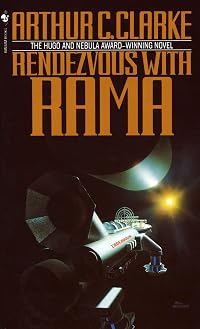
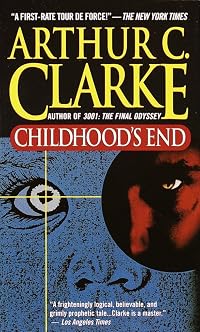
Arthur C. Clarke was born in Minehead, Somerset, England, on December 16, 1917. During World War II, he served as a radar specialist in the RAF. His first published piece of fiction was Rescue Party and appeared in Astounding Science, May 1946. He graduated from King's College in London with honors in physics and mathematics, and worked in show more scientific research before turning his attention to writing fiction. His first book, Prelude to Space, was published in 1951. He is best known for his book 2001: A Space Odyssey, which was later turned into a highly successful and controversial film under the direction of Stanley Kubrick. His other works include Childhood's End, Rendezvous with Rama, The Garden of Rama, The Snows of Olympus, 2010: A Space Odyssey II, 2062: Odyssey III, and 3001: The Final Odyssey. During his lifetime, he received at least three Hugo Awards and two Nebula Awards. He died of heart failure on March 19, 2008 at the age of 90. (Bowker Author Biography) show less
Work Relationships
Is contained in
Contains
Common Knowledge
- Canonical title
- The Nine Billion Names of God
- Original title
- The Nine Billion Names of God
- Original publication date
- 1974; 1953 [The nine billion names of god]; 1960 [I remember babylon]; 1960 [Trouble with time]; 1946 [Rescue party]; 1953 [The curse] (show all 26); 1960 [Summertime on icarus]; 1962 [Dog star]; 1949 [Hide and seek]; 1958 [Out of the sun]]; 1949 [The wall of darkness]; 1954 [No morning after]; 1952 [The possessed]; 1961 [Death and the senator]; 1958 [Who's there?]; 1961 [Before eden]; 1951 [Superiority]; 1950 [A walk in the dark]; 1957 [The call of the stars]; 1956 [The reluctant orchid]; 1953 [Encounter at dawn]; 1951 [If I forget thee, oh earth . . .]; 1954 [Patent pending]; 1951 [The sentinel]; 1949 [Transcience]; 1955 [The star]
- Dedication
- To "Mitty" (Captain E. B. Mitford)
who encouraged my initial scribblings
at Huish's Grammar School, 1930-36,
and became my first editor. - Disambiguation notice
- This is the collection. Do not combine with the individual short story with the same title.
Classifications
Statistics
- Members
- 1,121
- Popularity
- 22,775
- Reviews
- 12
- Rating
- (4.04)
- Languages
- Czech, English, French, Turkish
- Media
- Paper, Audiobook
- ISBNs
- 15
- ASINs
- 10